In 2026, projects are not being delayed because demand disappeared. They are being delayed because lenders changed how they evaluate risk. Financing has become more selective, more analytical, and far less tolerant of uncertainty. Many contractors still believe that if a project pencils on paper and demand exists, capital will follow. That assumption no longer holds.
Lenders today are not just financing construction. They are underwriting volatility, execution risk, labor instability, cost escalation, and schedule credibility. This shift means that projects which would have been approved quickly a few years ago now face extended review cycles, additional documentation requests, and, in many cases, reduced leverage or outright rejection.
Understanding what lenders are actually asking for before they greenlight a project has become essential for contractors, developers, and owners who want to keep pipelines moving.


Why lenders have become more cautious even when markets look strong
From the lender’s perspective, the last few years exposed multiple failure points. Projects stalled due to labor shortages. Budgets were blown by material volatility. Schedules slipped because lead times were underestimated. Insurance costs rose mid-project. Some borrowers ran out of contingency before reaching substantial completion.
As a result, lenders no longer assume that strong demand guarantees successful delivery. They assume disruption by default. Their new approach focuses on downside protection rather than upside participation.
This is not fear-driven behavior. It is data-driven behavior.
The new documentation lenders expect upfront
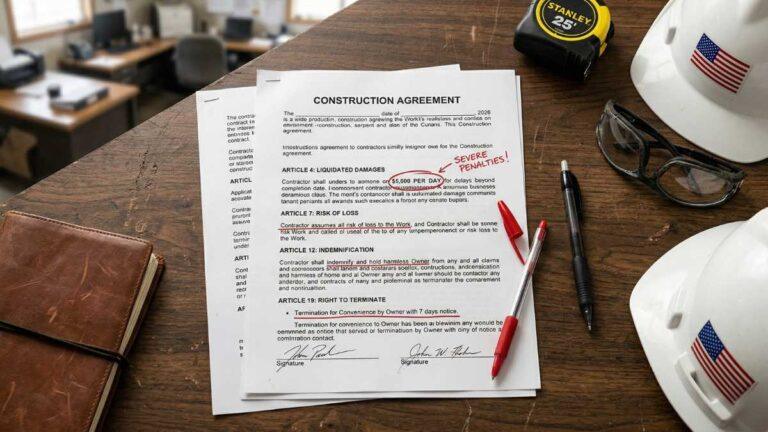
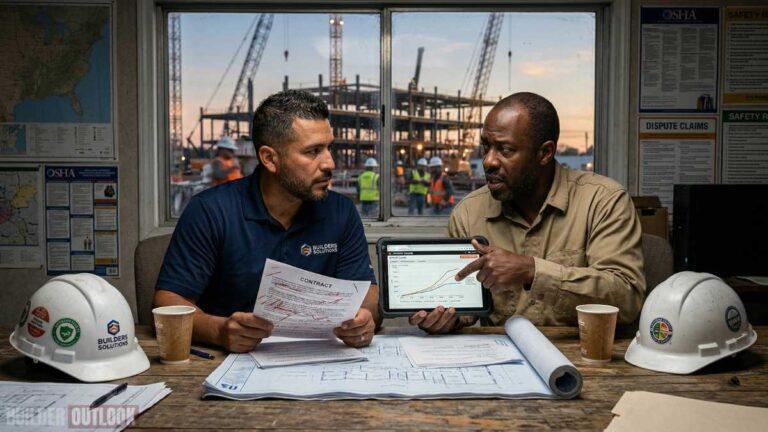
Lenders now expect far more than a basic pro forma and preliminary schedule. They want detailed cost breakdowns tied to current pricing realities. They want clarity on how escalation is handled contractually. They want confirmation that subcontractors are secured, insured, and financially stable.
Schedule logic is under scrutiny. Lenders look for realistic sequencing, buffer time for procurement, and contingency planning for labor gaps. Optimistic schedules without supporting assumptions are increasingly flagged as red risks.
Projects that cannot clearly explain how they survive disruption struggle to move forward.
Contractor credibility has become a financing variable
One of the biggest shifts in 2026 is that contractor selection now influences financing outcomes more directly. Lenders evaluate contractor track records, backlog health, dispute history, safety performance, and staffing depth.
A project backed by a contractor with weak operational systems is now considered higher risk, regardless of market demand. Conversely, contractors with disciplined execution histories help projects secure better financing terms.
This makes contractor positioning, documentation, and transparency more important than ever.

How labor and subcontractor risk factor into lender decisions
Labor instability is no longer treated as an abstract industry issue. Lenders ask specific questions. Who is staffing the project. Which trades are locked in. What happens if key subcontractors fail. How much self-perform capability exists.
Projects overly dependent on fragile subcontractor chains raise concern. Lenders want evidence that workforce risk has been addressed, not assumed away.
This is especially true in competitive labor markets where industrial and infrastructure work pulls talent away from commercial and residential projects.
The insurance and bonding layer lenders cannot ignore
Insurance and bonding requirements have tightened significantly. Lenders
want confirmation that coverage limits are sufficient, that exclusions do not create exposure gaps, and that bonding capacity aligns with project size.
In some cases, projects stall simply because insurance structures cannot satisfy lender standards. This reinforces the reality that insurance is now part of financing strategy, not a post-approval task.
GEO reality in lending decisions
Location matters more than ever. Lenders assess regional risk profiles tied to climate exposure, litigation environments, labor availability, and regulatory friction. A project that is financeable in one state may face higher hurdles in another.
Contractors operating nationally must understand that lender expectations are GEO-sensitive. Treating financing assumptions as uniform across markets leads to delays and renegotiation.
What successful projects are doing differently
Projects that move forward smoothly in 2026 share common traits. They present conservative assumptions. They demonstrate operational discipline. They document risk mitigation clearly. They align contractors, schedules, insurance, and financing narratives from day one.
They do not sell optimism. They sell preparedness.
Why this changes how contractors must prepare
Contractors can no longer treat financing as the owner’s problem. Contractor readiness now directly affects whether capital is deployed. That means better documentation, more realistic scheduling, stronger subcontractor controls, and clearer communication.
In 2026, lenders reward predictability more than ambition.
More from Builder Inteligence


FAQ – What lenders require before financing construction projects
1. Why are lenders delaying construction financing approvals in
2026?
Lenders are delaying approvals because they are accounting for higher
execution risk, cost volatility, labor instability, and schedule uncertainty. They now require deeper analysis to ensure projects can survive disruptions without
defaulting.
2. What financial documents do lenders scrutinize most closely?
Lenders focus on detailed cost breakdowns, contingency assumptions, escalation clauses, insurance coverage, and realistic cash flow projections tied to construction milestones rather than optimistic timelines.
3. How does contractor selection impact financing approval?
Contractor track record, backlog health, safety performance, and dispute
history directly influence lender confidence. Strong contractors reduce
perceived execution risk, improving approval odds and financing terms.
4. Why are schedules under more scrutiny from lenders?
Schedules often failed in recent years due to underestimated lead times and
labor gaps. Lenders now require logic-based schedules with buffers, not
best-case projections.
5. How does labor availability affect lender decisions?
Labor shortages increase delay risk. Lenders want clarity on staffing plans,
subcontractor commitments, and contingency strategies if workforce assumptions break down.
6. What role does insurance play in financing approval?
Insurance validates risk transfer. Inadequate coverage, exclusions, or bonding
capacity can block financing because lenders must protect their capital against
catastrophic loss.
7. Are lenders more cautious in certain regions?
Yes. Regions with climate exposure, high litigation rates, or volatile labor
markets face stricter scrutiny. Financing standards vary by GEO conditions.
8. Can strong demand offset weak project fundamentals?
No. Demand alone no longer guarantees financing. Lenders prioritize execution credibility and downside protection over market enthusiasm.
9. How can contractors help projects secure financing faster?
By providing realistic schedules, transparent cost assumptions, verified
subcontractor participation, and clear risk mitigation strategies aligned with
lender expectations.
10. Is this lending behavior temporary?
No. It reflects a structural shift toward risk-adjusted capital deployment
driven by recent market failures and long-term volatility trends.