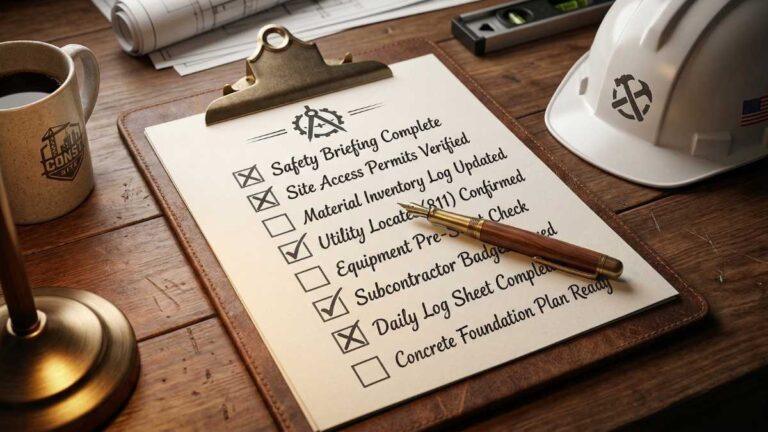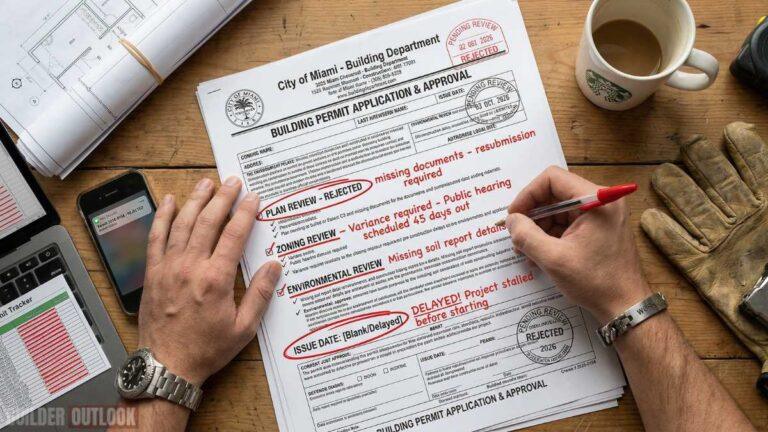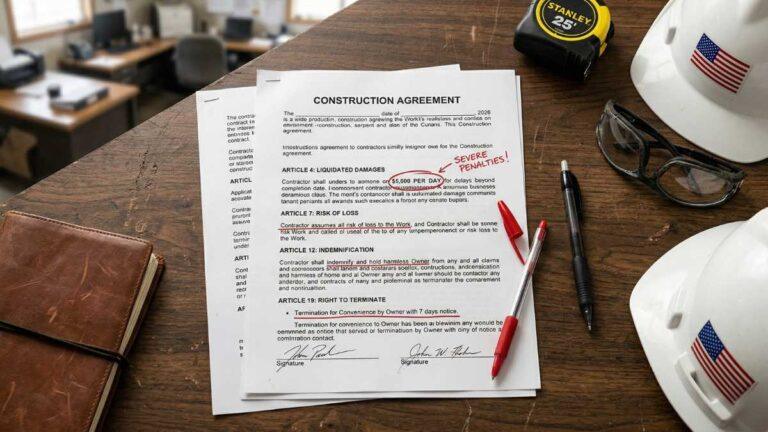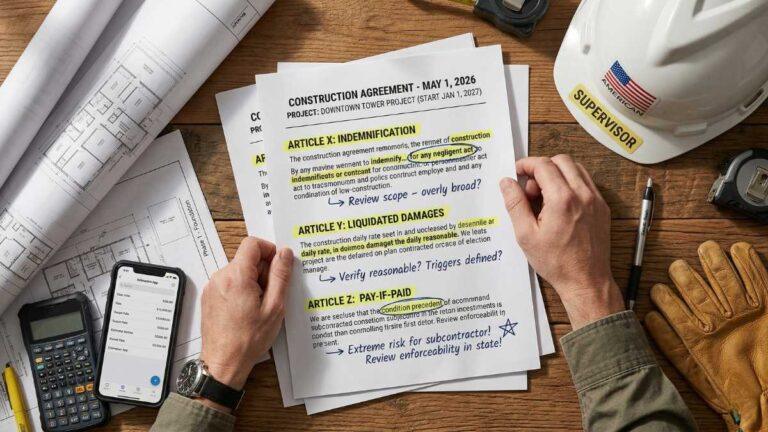
In 2026, a quiet but powerful shift is happening inside construction proposals across the United States. The numbers still look familiar on the surface, but embedded within them is a new layer that many owners struggle to identify and many contractors struggle to explain. This layer is not labeled clearly, yet it influences final pricing more than almost any single cost input. It is the risk premium.
The risk premium is not greed, padding, or inefficiency. It is a rational response to a market where uncertainty has become persistent rather than cyclical. Contractors are no longer pricing only materials, labor, and overhead. They are pricing exposure. Exposure to volatility. Exposure to delay. Exposure to insurance gaps. Exposure to subcontractor failure. Exposure to schedule compression. Exposure to legal and financial consequences that did not exist at the same scale in prior cycles.
Why the risk premium exists even when costs look stable
One of the most confusing aspects for owners is that risk premiums appear even when certain costs seem temporarily stable. Material pricing may flatten for a quarter. Interest rates may pause. Labor wage growth may slow in a specific trade. Yet proposals continue to rise.
This happens because contractors price forward risk, not snapshot conditions. They understand that volatility does not announce itself in advance. A stable bid window does not guarantee stable execution conditions. When lead times can change overnight, insurance terms can tighten mid-project, and labor availability can evaporate due to competing sectors, contractors must protect themselves against future exposure, not past averages.
The risk premium reflects uncertainty over time, not current price lists.
Advertising
Risk has shifted upstream into pricing
Historically, much of construction risk surfaced during execution. Delays happened. Claims followed. Negotiations occurred after problems appeared. In 2026, that model is breaking down. Contractors can no longer afford to absorb risk first and negotiate later. Cash flow sensitivity, bonding constraints, and insurer scrutiny force risk decisions earlier.
As a result, risk is priced upfront. The proposal becomes the first and sometimes only chance to protect margin. Once a contract is signed, flexibility disappears quickly. The risk premium is the contractor’s acknowledgment that not all exposure can be transferred or absorbed downstream.
What risks are being priced into proposals now
The modern construction risk premium includes multiple overlapping factors. Schedule uncertainty caused by material lead times. Labor disruption from workforce shortages and wage volatility. Insurance premium escalation and higher deductibles. Financing delays that extend general conditions. Subcontractor insolvency or nonperformance. Regulatory changes. Weather intensity. Litigation exposure.
Each of these risks alone might be manageable. Combined, they create nonlinear exposure. Contractors price not only the probability of risk, but the compounding effect when multiple risks occur simultaneously.
Why owners feel surprised by higher bids
Owners often compare proposals to historical benchmarks. They expect incremental increases, not step changes. When bids arrive significantly higher than anticipated, owners assume inefficiency or opportunism.
What they often miss is that previous benchmarks were built in a different risk environment. In 2026, the baseline assumption of predictability is gone. Contractors are not pricing “what it should cost.” They are pricing “what could go wrong.”
The risk premium fills the gap between those two realities.

Regional GEO pressure magnifies risk premiums
Risk premiums vary significantly by region. In Florida, insurance volatility and climate exposure drive pricing behavior. In Texas and Arizona, labor competition from infrastructure, energy, and data center projects increases execution risk. In California and New York, regulatory complexity and documentation requirements expand liability.
National averages hide these realities. Contractors who operate locally understand that GEO-specific exposure must be priced locally. Owners who ignore regional dynamics misinterpret proposal behavior.
Why the risk premium is rarely labeled explicitly
Most proposals do not include a line item called “risk premium.” Doing so invites immediate resistance. Instead, risk is distributed across general conditions, contingency, unit rates, allowances, and schedule assumptions.
This opacity creates mistrust. Owners feel contractors are hiding margin. Contractors feel owners underestimate exposure. The absence of explicit risk dialogue fuels adversarial negotiation rather than alignment.
How risk premiums affect competition and bid spreads
Risk premiums widen bid spreads. Contractors with higher risk tolerance submit lower numbers. Contractors with disciplined risk management submit higher numbers. The difference is not efficiency. It is philosophy.
Owners often choose the lowest bid without understanding that they are also choosing the contractor willing to absorb more uncertainty. That decision may reduce upfront cost while increasing downstream conflict.
Why risk premiums are not going away
The risk premium is not a temporary response. It is a structural feature of the 2026 construction market. As long as volatility remains embedded in supply chains, labor markets, insurance systems, and financing structures, contractors will continue pricing exposure.
The only alternative is failure. Contractors who ignore risk premiums do not become more competitive. They become more fragile.
What owners and contractors must do differently
Owners who want better outcomes must engage risk earlier, not suppress it. Contractors who want trust must explain exposure clearly, not hide it. Transparent risk discussion reduces fear. Silence amplifies it.
In 2026, the proposal is not just a price. It is a risk narrative.
Advertising

FAQ – Risk premium in construction proposals in 2026
1. What is the risk premium in construction proposals?
The risk premium is the portion of pricing that covers exposure to uncertainty, including schedule delays, labor volatility, insurance escalation, subcontractor performance risk, regulatory changes, and compounding execution risks that cannot be predicted precisely at bid time.
2. Why is the risk premium higher in 2026 than before?
Because volatility is structural rather than cyclical. Contractors face persistent uncertainty across multiple inputs simultaneously, forcing them to price future exposure rather than rely on historical averages.
3. Is the risk premium the same as contingency?
No. Contingency traditionally covers known unknowns within a defined scope. The risk premium addresses systemic uncertainty across time, supply chains, labor markets, insurance conditions, and external disruptions.
4. Why don’t contractors clearly label the risk premium?
Explicitly labeling risk premiums often leads to immediate pushback from owners. As a result, risk is distributed across pricing components, which can create misunderstanding and mistrust.
5. How do regional factors affect risk premiums?
Local labor shortages, insurance markets, regulatory environments, climate exposure, and infrastructure competition vary by region. GEO-specific risk drives GEO-specific pricing behavior.
6. Do higher risk premiums mean contractors are less competitive?
Not necessarily. Higher risk premiums often reflect disciplined risk management. Lower bids may signal higher risk tolerance, which can lead to disputes, delays, and claims later.
7. Can owners reduce the risk premium in proposals?
Yes. Clear scopes, realistic schedules, early procurement alignment, shared risk language, and transparent communication reduce uncertainty and allow contractors to lower risk pricing.
8. Will the risk premium disappear if markets stabilize?
Only partially. Even if some inputs stabilize, contractors will remain cautious as long as systemic uncertainty persists across labor, insurance, logistics, and financing.