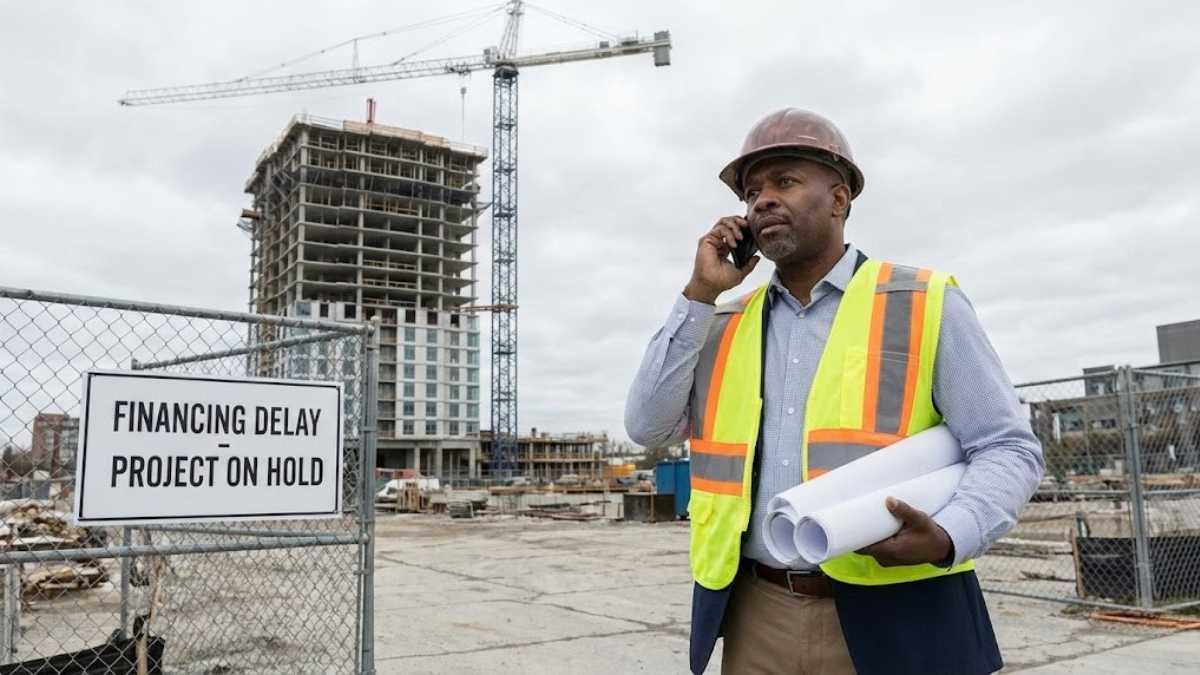
In 2026, one of the most confusing realities for contractors across the United States is the gap between visible demand and actual project starts. Pipelines look full. Developers are talking. Planning activity remains active. Yet many projects stall, delay, or quietly disappear before reaching bid day. The primary reason is not lack of demand. It is financing friction driven by interest rates, capital discipline, and lender behavior that has fundamentally changed since the pre-2020 cycle.
Interest rates today act less like a simple cost variable and more like a gatekeeper. They shape not only whether a project pencils, but how risk is allocated, how timelines are structured, and how much uncertainty owners are willing to absorb. Contractors who fail to understand how financing decisions are made misread the market and overestimate near-term opportunity.
Demand still exists. Execution slows because money now moves differently.
Builder Inteligence
Advertising

Why higher interest rates freeze decisions before construction begins
Higher interest rates do not simply increase borrowing costs. They reshape the psychology of decision-making. Owners become more sensitive to timing, volatility, and downside exposure. Projects that once moved forward with thin contingencies now require larger buffers, longer feasibility phases, and stronger exit strategies before capital is released.
This shift creates hesitation even when a project appears viable. Developers may continue design and entitlement work to preserve optionality, but delay final commitments until financing terms stabilize or risk is reduced elsewhere. From the outside, this looks like healthy activity. From inside the capital stack, it is controlled hesitation.
For contractors, this means more conversations, more early engagement, and fewer projects converting into immediate starts.
How lenders changed underwriting standards after volatility
Lenders in 2026 are no longer underwriting optimism. They are underwriting resilience. Interest rate volatility over the past years forced banks and private lenders to reassess exposure, especially in construction lending where timelines are long and cost certainty is fragile.
Underwriting now places heavier weight on sponsor strength, contractor track record, cost control systems, and schedule credibility. Interest rates amplify risk, so lenders compensate by tightening requirements. Projects face more conditions precedent, higher equity contributions, and deeper scrutiny of assumptions.
This slows approvals even when projects remain fundamentally sound, pushing starts further into the future.
Financing friction is uneven across sectors and regions
Not all construction sectors feel financing pressure equally. Industrial, data center, and infrastructure projects often access capital more easily due to long-term demand visibility and institutional backing. Residential and speculative commercial projects face far more scrutiny.
Regionally, lenders favor markets with population growth, diversified economies, and stable regulatory environments. Projects in slower-growth regions face longer approval cycles and higher financing costs, regardless of local demand narratives.
Contractors operating nationally must recognize that financing risk is geographically uneven and adjust forecasting accordingly.

Why demand alone no longer guarantees starts
In previous cycles, strong demand often translated quickly into construction starts. In 2026, demand must pass through multiple financial filters before execution begins. Interest rates magnify every weakness in scope definition, schedule realism, and cost certainty.
Projects stall not because owners lack interest, but because financing conditions require near-perfect alignment before capital is deployed. This creates a lag that contractors often underestimate, leading to inflated backlog expectations.
Understanding this lag is critical for realistic workforce planning and cash flow management.
What this means for contractors forecasting work
Contractors must stop reading demand signals in isolation. Financing conditions now dictate timing more than market interest. Strong contractors differentiate themselves by helping owners reduce financing friction through accurate estimating, credible schedules, and transparent risk management.
Those who understand lender expectations position themselves earlier and convert more opportunities into real starts. Those who ignore financing realities chase work that never materializes.
In 2026, the ability to align with capital behavior is as important as technical capability.
More from Builder Inteligence



FAQ – Interest rates and financing: what slows projects even when demand exists
1. Why do projects stall even when demand is strong?
Because higher interest rates increase financing scrutiny, causing lenders and owners to delay commitments until risk and volatility are reduced.
2. Are interest rates the only reason projects slow down?
No. Interest rates amplify concerns about cost certainty, schedule risk, and sponsor strength, making financing approval more complex.
3. How have lenders changed construction underwriting?
Lenders now require stronger equity positions, deeper contingencies, and more credible execution plans before releasing funds.
4. Which sectors are least affected by financing pressure?
Infrastructure, data centers, and industrial projects typically face less friction due to long-term demand and institutional backing.
5. Why do some regions see more starts than others?
Lenders favor regions with population growth, economic diversity, and stable regulatory environments, accelerating approvals there.
6. How can contractors reduce financing delays?
By improving estimate accuracy, schedule credibility, and demonstrating strong cost control systems to owners and lenders.
7. Does planning activity still matter in 2026?
Yes, but planning no longer guarantees execution. Financing alignment determines when and if projects start.
8. What is the biggest forecasting mistake contractors make?
Assuming demand automatically converts into near-term starts without accounting for financing friction.