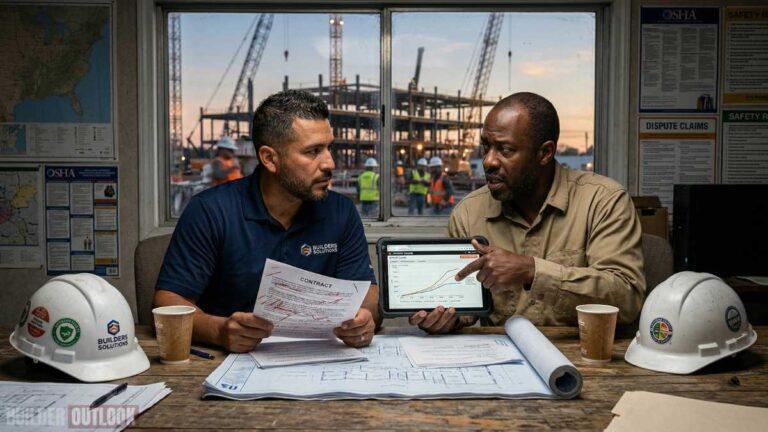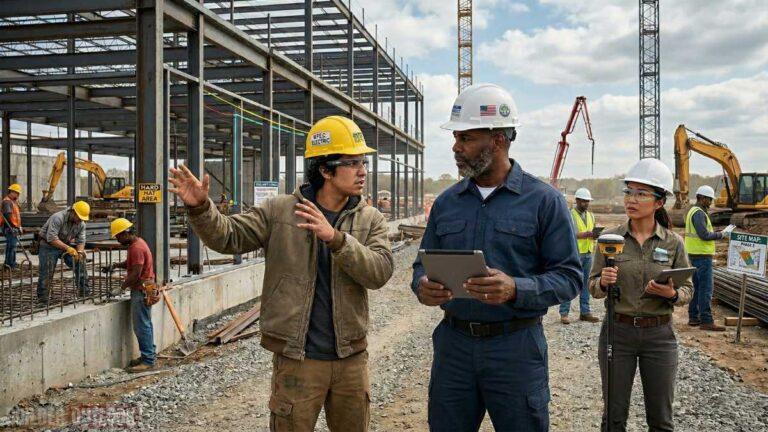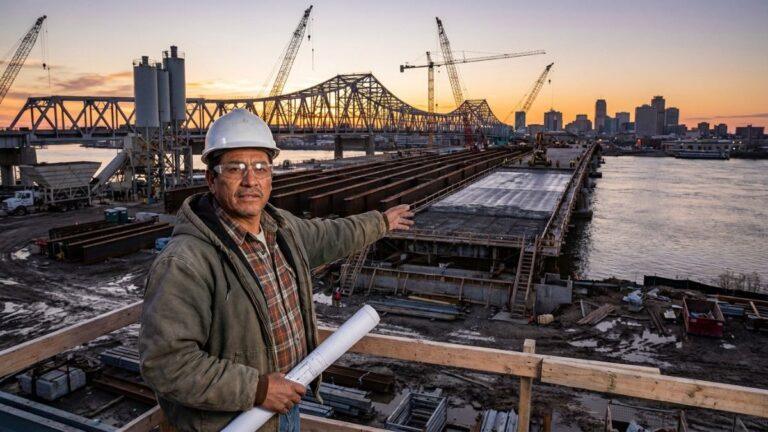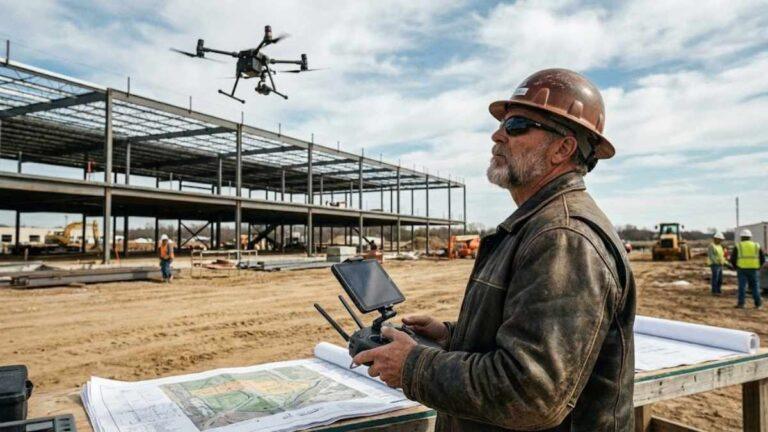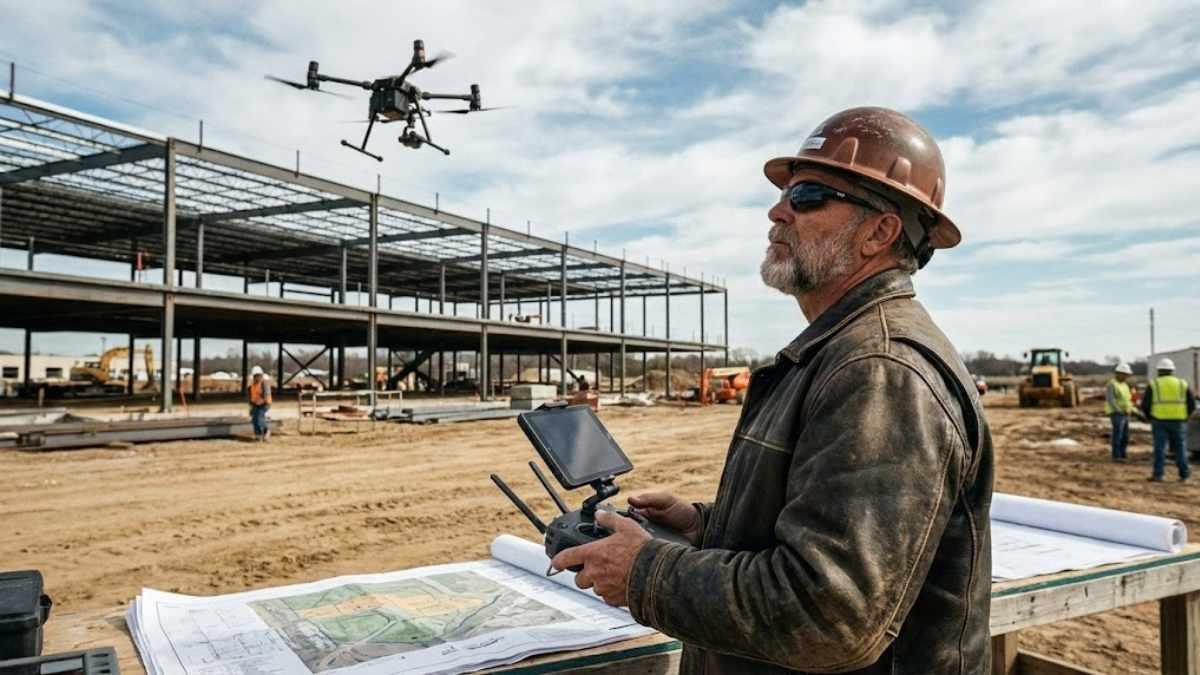
The use of drones on construction jobsites has shifted from novelty to expectation in many segments of the U.S. construction market. What started as a visual documentation tool is now deeply connected to how owners evaluate progress, transparency, and risk. In 2026, drones are no longer viewed as optional technology on serious projects. They are increasingly seen as an operational lens through which owners observe execution quality, schedule reliability, and site organization.
From the owner’s perspective, drones offer visibility without friction. Weekly or biweekly aerial captures provide a clear, unbiased view of jobsite conditions, sequencing, and progress that traditional reports often fail to communicate. For large commercial, industrial, infrastructure, and multi-phase developments, drone footage has become a trusted verification layer that complements schedules, pay applications, and progress meetings.
For contractors, however, drones introduce a dual reality. While they create opportunities for trust-building and operational clarity, they also expose weaknesses faster and more publicly than ever before. In this environment, the value of drones depends less on the technology itself and more on how contractors control narrative, process, and expectations around what drone data actually represents.
Why owners love drones on construction projects
Owners value drones because they reduce uncertainty. Aerial imagery offers spatial context that written reports and photos from ground level cannot match. Owners can quickly understand site layout, material staging, access routes, safety conditions, and sequencing decisions without relying solely on interpretations from project teams.
Another reason owners embrace drones is consistency. Drone flights conducted on a regular cadence create a visual timeline of the project. This allows owners, lenders, and stakeholders to compare planned versus actual progress over time. In disputes or delays, this historical record becomes a neutral reference point that supports accountability and fact-based discussions.
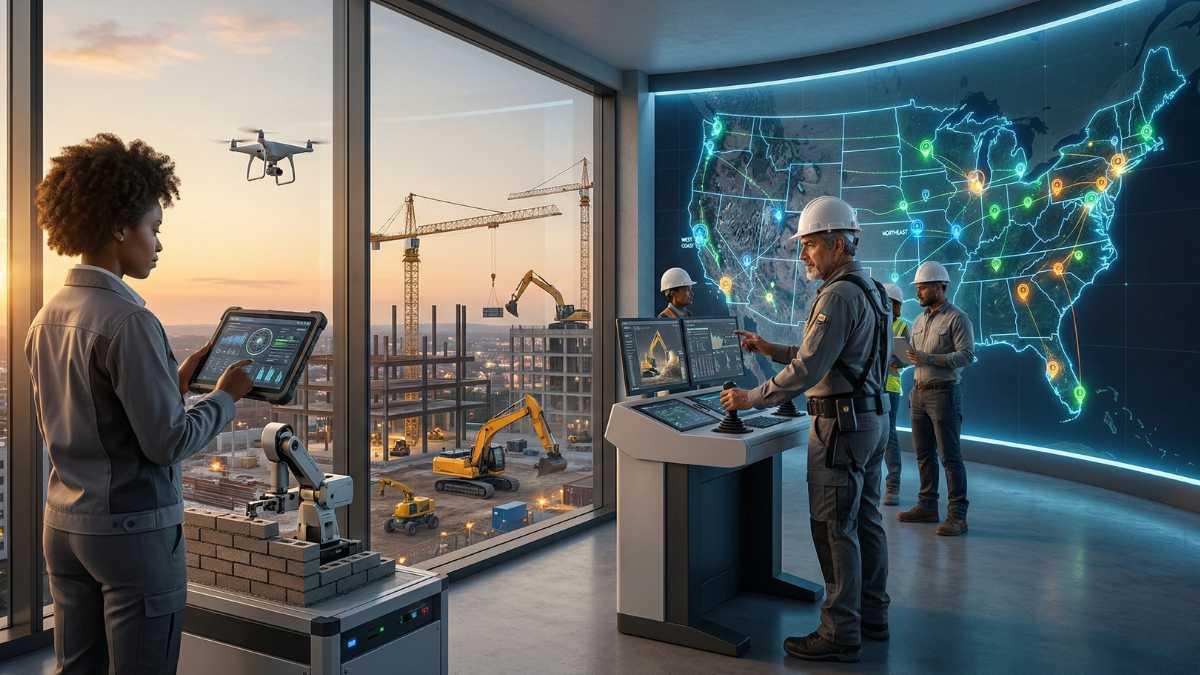
Drones also enhance trust at scale. For owners managing multiple projects across regions or states, drone footage standardizes visibility. Instead of relying on subjective updates from different teams, owners receive a consistent visual language across all sites. This consistency increasingly influences which contractors are viewed as transparent, organized, and low risk.

What drones actually improve on the jobsite
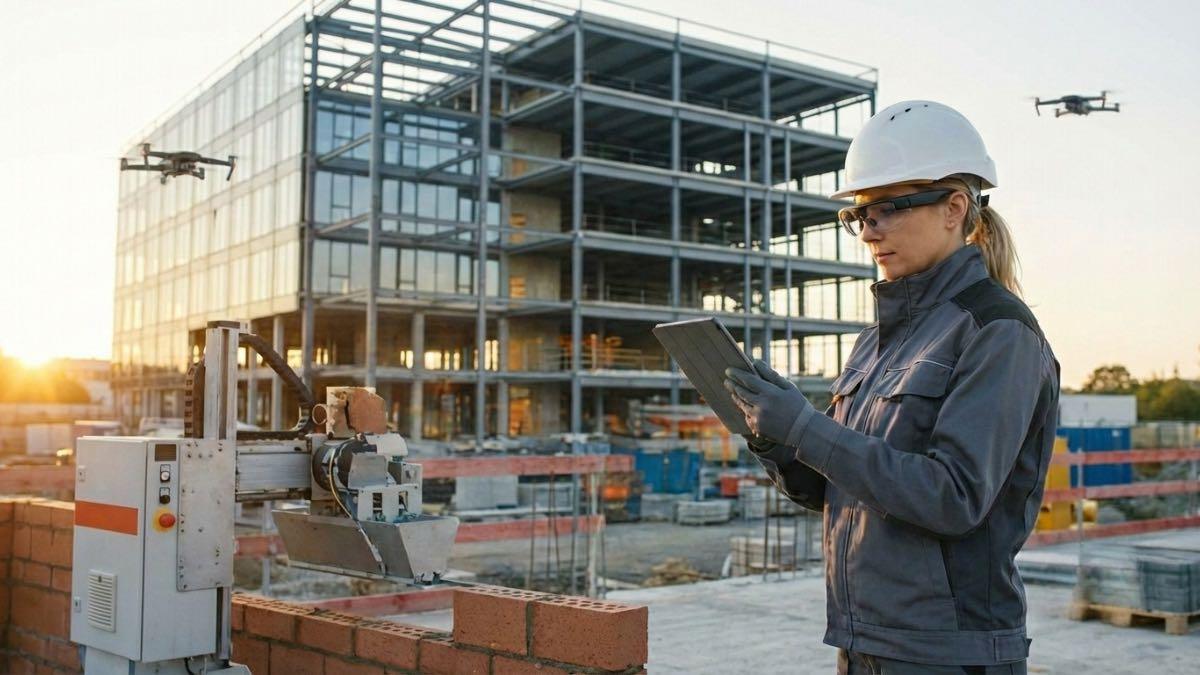
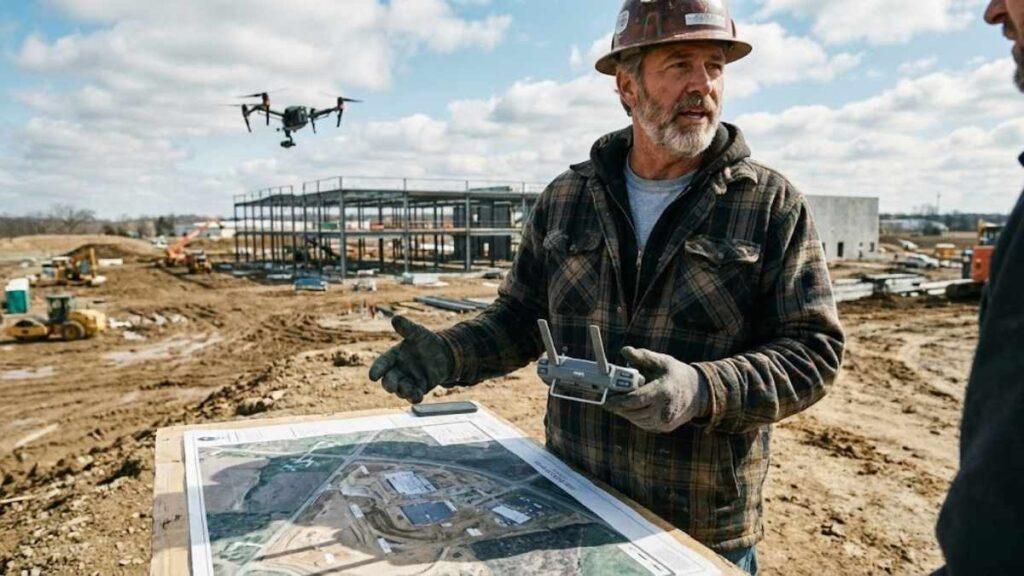
When properly integrated, drones improve coordination and planning. Aerial views help project teams identify spatial conflicts, inefficient staging, access bottlenecks, and sequencing issues earlier than ground-level observation alone. This allows corrective action before problems compound into delays or rework.
Drones also strengthen documentation. High-resolution imagery tied to specific dates supports progress verification, pay applications, and change order discussions. This documentation reduces ambiguity around what work was completed, when it was completed, and under what conditions. In 2026, this level of documentation is increasingly expected, not exceptional.
Safety awareness is another area where drones add value. Aerial perspectives reveal site conditions that may be overlooked on foot, such as improper barricades, congested work zones, or unsafe material storage. When used proactively, drone data supports safety planning rather than serving as a reactive audit tool.
What contractors must control when using drones
Despite their benefits, drones can create risk if contractors fail to control interpretation. Drone footage captures moments in time, not full operational context. Without proper explanation, owners may misinterpret temporary conditions, sequencing logic, or incomplete work as inefficiency or delay. Contractors must proactively frame what owners are seeing and why conditions look the way they do.
Contractors must also control data ownership and access. Who flies the drone, who stores the data, who distributes the footage, and how long records are retained are critical questions. Uncontrolled distribution of drone imagery can expose contractors to unnecessary scrutiny, misrepresentation, or liability if images are taken out of context.
Another key control point is cadence. Inconsistent drone flights create misleading narratives. Large gaps between captures may exaggerate perceived lack of progress, while overly frequent flights may highlight normal day-to-day variability. Smart contractors establish a predictable reporting rhythm that aligns with milestones, schedules, and owner expectations.
Drones as a narrative tool, not just a câmera
The most successful contractors treat drones as part of their communication strategy. Drone footage is paired with progress explanations, schedule updates, and forward-looking plans. This transforms raw imagery into a story of execution rather than a silent inspection.
Internally, leading firms use drone data to educate teams, improve planning, and refine processes. Lessons learned from aerial reviews inform future projects, improving layout efficiency and sequencing decisions over time. In this way, drones contribute not only to transparency but to organizational learning.
In 2026, drones are not about surveillance. They are about alignment. Contractors who understand this distinction leverage drones to build credibility and trust. Those who ignore narrative control risk allowing technology to define their performance instead of supporting it.


FAQ – Drones on construction jobsites
1. Why are owners increasingly requesting drone footage on projects?
Owners request drone footage because it provides objective, visual confirmation of progress, site conditions, and sequencing. It reduces reliance on subjective reporting and allows stakeholders to understand projects quickly, even when they are not physically present on site.
2. Do drones replace traditional progress reports?
No. Drones complement reports but do not replace them. Aerial imagery shows what exists, but written and verbal explanations provide context, intent, and reasoning behind site conditions, schedules, and decisions that images alone cannot convey.
3. Can drone footage increase dispute risk for contractors?
Yes, if not managed properly. Without narrative control, owners may misinterpret temporary conditions or incomplete work. Contractors must proactively explain what drone imagery shows to prevent incorrect assumptions that lead to disputes.
4. Who should control drone operations on a jobsite?
Ideally, contractors should define drone protocols, including flight schedules, data storage, access rights, and distribution. Clear agreements prevent misuse of footage and ensure imagery supports project objectives rather than creating unnecessary exposure.
5. Are drones becoming standard in construction contracts?
In many sectors, yes. Drones are increasingly referenced in reporting expectations, progress verification, and documentation requirements, particularly on large commercial, infrastructure, and multi-phase developments.
6. How do drones impact contractor credibility?
When used consistently and professionally, drones signal transparency, organization, and operational maturity. Contractors who integrate drone reporting effectively are often perceived as lower risk and more reliable partners.
7. What is the biggest mistake contractors make with drones?
The biggest mistake is treating drones as passive cameras rather than communication tools. Without framing, explanation, and integration into reporting systems, drone footage can create confusion instead of clarity.