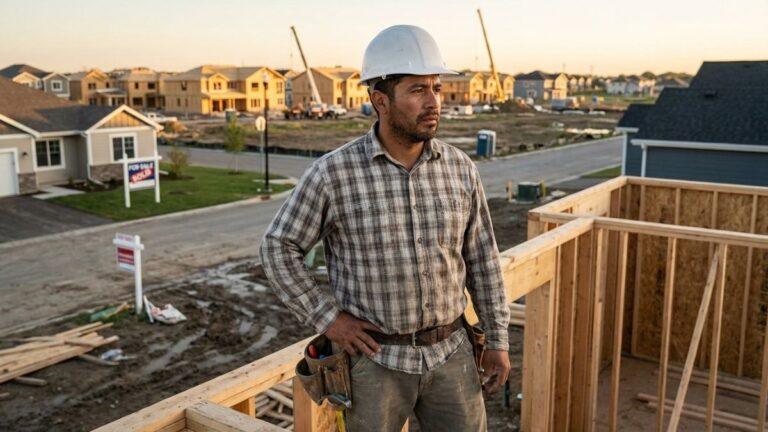
U.S. homebuilder sentiment declined again in February 2026, remaining below neutral levels as affordability pressures continue to shape residential construction decisions across the country. While mortgage rates have moderated compared to prior peaks, elevated land acquisition costs, labor expenses, regulatory burdens, and insurance premiums are maintaining upward pressure on home prices. The result is a market defined less by demand collapse and more by constrained purchasing power.
Sentiment indicators in construction matter because they act as leading signals. Builders adjust land purchases, permit applications, workforce planning, and capital deployment based on forward expectations. When confidence softens, pipeline discipline increases. In 2026, the persistent gap between home prices and household income growth is forcing residential developers to rely on incentives, price adjustments, and financing concessions to sustain transaction volume.
This environment is not uniform across all U.S. markets. High-growth states such as Texas, Florida, Arizona, and the Carolinas continue to attract population inflows, yet affordability constraints are moderating absorption rates even in these strong migration corridors. Builders are navigating a complex balancing act between preserving margins and maintaining sales velocity. The sentiment decline reflects this structural tension rather than a collapse in underlying housing demand.
For contractors, subcontractors, lenders, and suppliers, declining sentiment does not necessarily translate into immediate contraction. Instead, it signals a period of strategic recalibration. Residential construction in early 2026 is being reshaped by affordability math, not by a disappearance of long-term housing needs.

Affordability as the dominant constraint in 2026
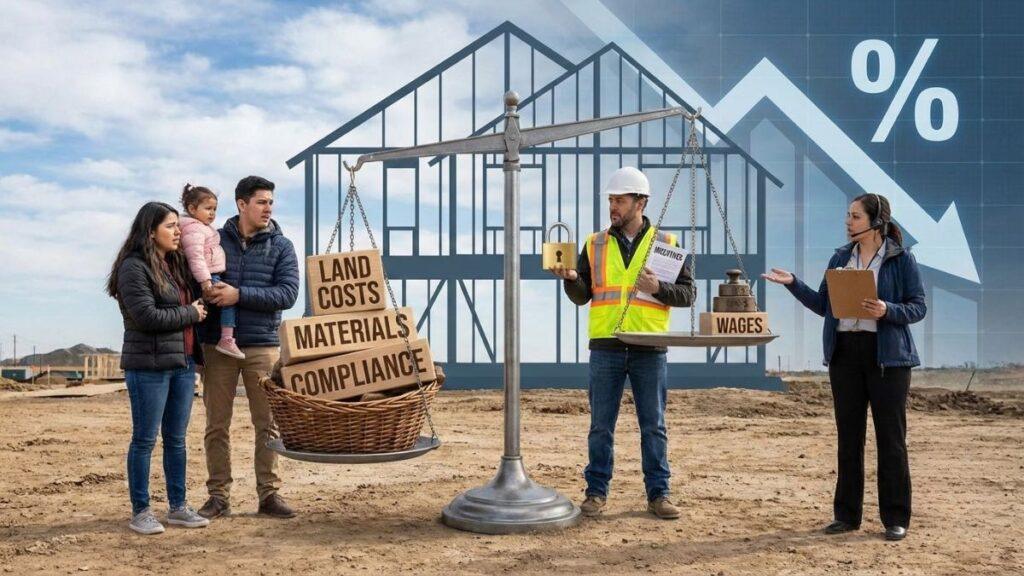
Affordability has become the central variable influencing U.S. residential construction. Even with modest mortgage rate stabilization, elevated purchase prices driven by land scarcity, material costs, and compliance expenses limit buyer qualification thresholds. Wage growth has not kept pace with cumulative housing cost increases over the past several years, compressing the pool of qualified buyers.
Builders are responding with targeted incentives. Rate buy-down programs, closing cost contributions, and selective price reductions are increasingly common strategies to convert hesitant buyers. These tools help protect absorption rates but place pressure on gross margins. Publicly traded homebuilders report narrower pricing flexibility as input costs remain structurally elevated.
This dynamic varies by metro region. Markets with constrained supply and strong employment growth demonstrate greater pricing resilience. In contrast, regions experiencing slower population inflows or higher regulatory costs face more pronounced price sensitivity. The divergence underscores that national sentiment masks highly localized realities within the U.S. housing market.
Land, labor, and regulatory cost pressures
Land acquisition remains one of the most significant cost drivers in residential development. Limited entitled land availability, rising development fees, and prolonged approval timelines increase carrying costs for builders. These factors compress margins before construction even begins.
Labor costs also remain elevated. Skilled trades, particularly in high-growth Sunbelt markets, continue to command premium wages amid workforce shortages. Builders must balance schedule certainty with cost discipline, often paying higher rates to secure reliable subcontractors. Workforce volatility amplifies uncertainty in project budgeting.
Regulatory pressures further compound the equation. Local zoning requirements, environmental compliance mandates, and infrastructure contribution obligations increase per-unit costs. Even where demand exists, regulatory friction slows new supply introduction, reinforcing price rigidity. Sentiment surveys capture the cumulative weight of these structural pressures.
Incentives, pricing discipline, and market psychology
Builders in 2026 are navigating a psychologically sensitive market. Buyers remain cautious, influenced by macroeconomic headlines, inflation concerns, and financing unpredictability. Even small changes in monthly payment calculations influence decision timing. This creates a sales environment where incentives become tactical tools rather than optional marketing strategies.
Price reductions are used selectively to stimulate absorption without signaling broad market weakness. Builders must carefully manage pricing optics to avoid triggering appraisal challenges or eroding neighborhood comparables. Strategic discounting often targets specific inventory or phases rather than entire developments.
This environment requires disciplined inventory management. Overbuilding in softening submarkets increases carrying risk. Conversely, underbuilding in resilient corridors forfeits opportunity. Builders closely monitor traffic patterns, conversion rates, and cancellation metrics to calibrate production volumes. Sentiment dips reflect the need for heightened operational vigilance.

Implications for contractors and the broader ecosystem
For general contractors and specialty trades tied to residential construction, declining sentiment demands flexibility rather than alarm. While volume growth may moderate in certain submarkets, structural housing undersupply remains a long-term driver. Contractors who align with financially stable developers and diversified portfolios reduce exposure to localized softness.
Material suppliers and manufacturers may experience demand variability, particularly in discretionary upgrades. Builders facing margin pressure often scale back premium features to protect pricing. This influences specification patterns and procurement cycles.
Lenders and investors monitor sentiment closely because it affects financing appetite. Lower confidence can tighten underwriting standards or alter capital allocation timelines. However, as long as employment remains stable and demographic demand persists, housing remains a foundational U.S. economic sector. The key variable in 2026 is affordability calibration, not demand disappearance.


FAQ – U.S. Homebuilder Sentiment Dips Again As Affordability Challenges Persist
1.Why does homebuilder sentiment matter for the construction industry?
Homebuilder sentiment serves as a leading indicator for land purchases, permit activity, and workforce planning. When confidence declines, builders adopt more cautious capital deployment strategies, influencing project pipelines across the residential construction ecosystem.
Not necessarily. Current sentiment reflects affordability strain rather than systemic financial instability. Unlike prior downturns, underwriting standards remain stronger and structural housing undersupply continues to support baseline demand across many U.S. markets.
Builders are using targeted incentives such as mortgage rate buy-downs, closing cost assistance, and selective price adjustments. These strategies help preserve absorption rates while attempting to protect margins within a competitive sales environment.
High-cost coastal markets experience pronounced sensitivity, but even high-growth Sunbelt regions face price resistance when wage growth lags. Local supply conditions, regulatory frameworks, and employment strength determine regional variation.
Contractors should track building permit trends, traffic-to-contract conversion rates, mortgage rate stability, and local employment data. These indicators provide early signals of whether sentiment stabilization translates into sustained construction activity.