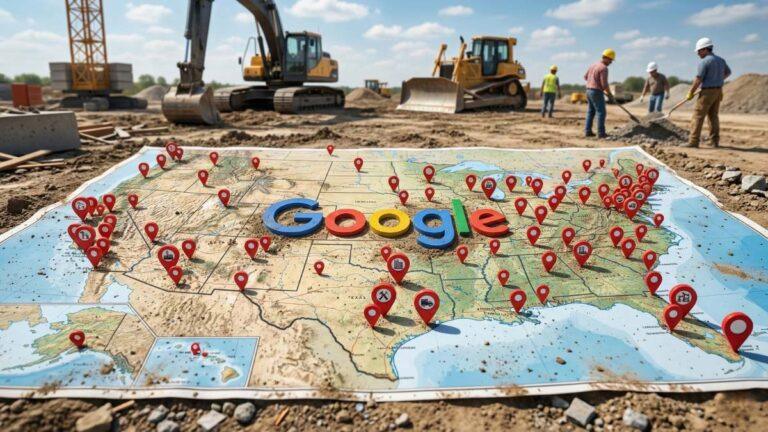
Before a phone ever rings, before an email is answered, and long before a proposal is reviewed, most construction companies have already been evaluated and silently eliminated. In today’s construction market, especially across competitive regions in the United States, owners, developers, and procurement teams make decisions earlier than most contractors realize. These decisions are not emotional or random. They are based on signals. Digital signals. Operational signals. Trust signals. When those signals are weak, inconsistent, or missing, contracts are lost without feedback, without negotiation, and without a chance to recover.
The biggest mistake contractors make is assuming that sales start with a conversation. In reality, sales start with perception. The first call is no longer the beginning of the buying process. It is often the final confirmation of a decision that has already been made. Contractors who do not understand this shift keep optimizing the wrong part of their business, focusing on estimating speed, bid formatting, or follow-up scripts, while the real losses happen upstream, where visibility, credibility, and clarity should exist.
Another critical factor is that modern buyers in construction are under pressure. They are managing risk, timelines, financing, insurance exposure, and internal approvals. They do not have time to educate contractors or to guess whether a company is capable. When uncertainty appears, they move on. This is why so many builders feel that projects “disappear” or that owners “ghost” after initial interest. The truth is simpler and harsher. The contractor failed a silent screening process before contact was ever made.
Builder Inteligence
Advertising

The silent screening process that eliminates contractors early
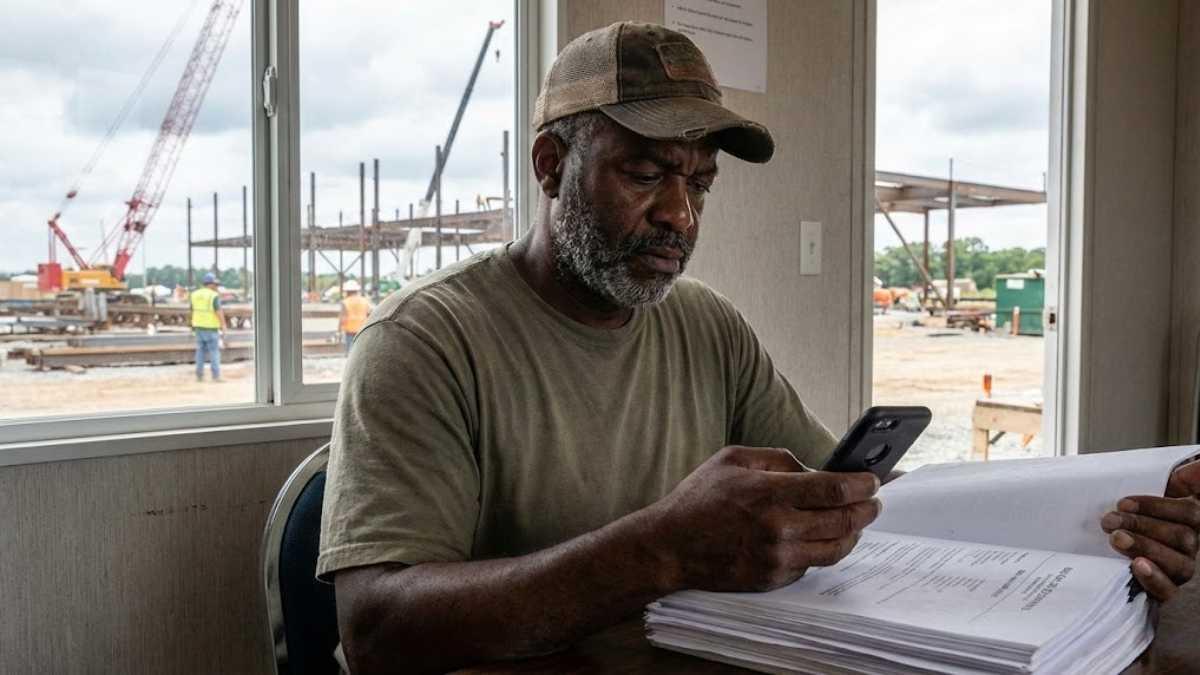
Every serious construction buyer runs an informal but consistent screening process before reaching out. This process usually starts with a Google search, followed by a scan of the company website, reviews, recent projects, and digital footprint. The goal is not to admire design. The goal is to reduce risk. Buyers want fast answers to basic questions. Is this company real. Is it active. Is it credible. Is it experienced in projects like mine. Can I defend choosing them internally.
When a contractor’s website is outdated, slow, vague, or generic, it signals operational weakness. When project photos are old or missing context, it signals stagnation. When reviews are sparse, outdated, or unmanaged, it signals lack of scale or poor systems. None of these issues require deep analysis. They are perceived in seconds. This is why contractors lose contracts before the first call. The buyer never feels confident enough to reach out.
Another overlooked element is inconsistency. Many construction companies look different across platforms. One logo on the website, another on Google Business Profile, outdated information on directories, and inactive social channels. This inconsistency creates friction. Friction creates doubt. Doubt kills momentum. In high-value construction decisions, momentum matters. Buyers choose the path of least resistance, not the lowest price.
Finally, silence is interpreted as weakness. Contractors who do not publish, do not update, and do not communicate appear inactive, even if they are busy. In modern construction markets, silence does not mean stability. It means invisibility. Invisibility removes you from consideration.
Why most contractors try to fix the wrong problem
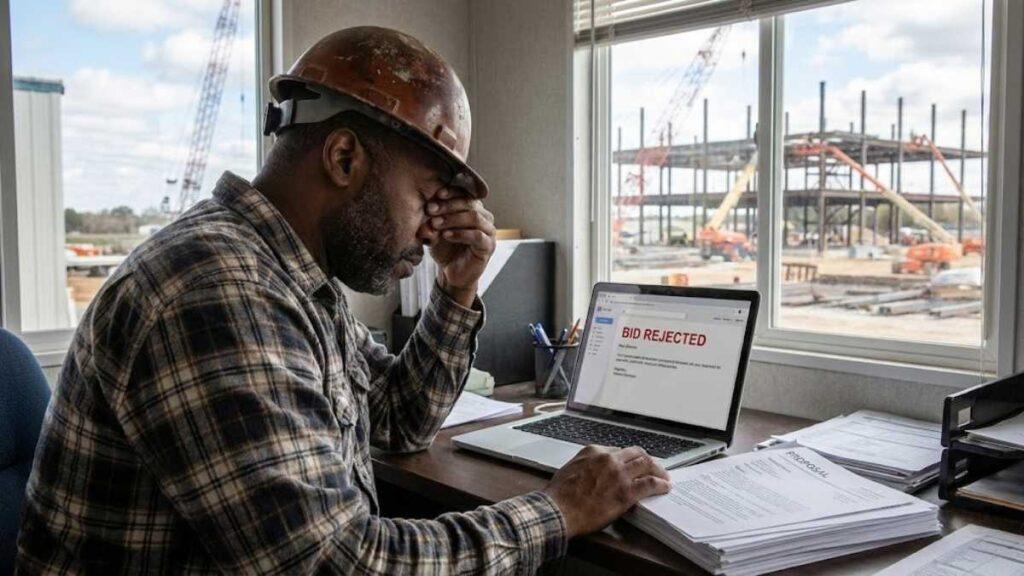
When contractors notice declining win rates, their instinct is to improve proposals, sharpen pricing, or increase bid volume. While these actions feel productive, they do not address the root cause. If fewer qualified buyers are reaching out, the problem is not closing. The problem is qualification and trust before contact. Improving proposals only helps once you are already shortlisted. Many contractors never reach that stage.
Another common reaction is paid advertising. Contractors invest in ads hoping to generate more leads, but without fixing credibility gaps, ads only amplify problems. They attract price shoppers, tire kickers, and poorly qualified prospects. This creates frustration, wasted time, and the illusion that “marketing does not work.” In reality, the system is broken because the foundation is weak.
Some companies attempt to delegate sales to junior staff or external reps, believing volume will solve the issue. This often accelerates losses. Sales teams cannot overcome trust gaps created by weak digital presence, unclear positioning, or lack of proof. The sales process collapses under the weight of unanswered questions that should have been resolved before the first call.
The companies that grow are not closing harder. They are filtering better. They control the narrative before contact, so that when the call happens, the buyer already believes.
How to stop losing contracts before the first call
The first step is to accept that your website is not a brochure. It is a sales asset. It must answer real buyer questions immediately. Who you serve. What you build. Where you operate. What makes you reliable. What proof supports your claims. If a visitor cannot understand your value in ten seconds, you are losing contracts.
The second step is to align visibility with operations. Your digital presence should reflect your real capabilities, scale, and process. This includes project documentation, clear service descriptions, updated certifications, and region-specific messaging. Buyers want relevance, not hype. They want to see themselves in your work.
Third, consistency must be enforced across all platforms. Branding, messaging, contact information, and positioning should match everywhere a buyer might look. Consistency reduces friction and increases trust. Trust increases reach-out rates.
Finally, contractors must think like risk managers, not marketers. Every piece of content, every page, every review is a risk-reduction tool for the buyer. When you help buyers justify choosing you, contracts stop disappearing before the first call.
More from Builder Inteligence
Advertising

FAQ – Why construction companies lose contracts before the first call (and how to stop it)
1. Why do construction companies lose contracts without ever being contacted?
Construction companies lose contracts early because buyers perform silent evaluations online before making contact. If a contractor’s website, reviews, or digital presence fail to establish trust, relevance, and operational credibility quickly, buyers eliminate them to reduce risk and move on to competitors that appear clearer and more reliable.
2. How important is a website in winning construction contracts today?
A website is critical because it acts as the first qualification tool for buyers. It must clearly communicate services, experience, project relevance, and professionalism within seconds. A weak or outdated website signals operational risk, causing buyers to avoid contact regardless of actual construction capabilities.
3. Do online reviews really affect serious construction buyers?
Yes, online reviews strongly influence perception, even for high-value projects. Buyers use reviews to validate reliability, consistency, and past performance. A lack of reviews or unmanaged feedback creates uncertainty, which often leads buyers to choose competitors with clearer social proof.
4. Can paid ads compensate for weak positioning or credibility gaps?
Paid ads cannot fix credibility issues. Without strong positioning and trust signals, ads attract low-quality leads and price shoppers. Effective growth requires fixing visibility, messaging, and proof before scaling traffic, otherwise marketing spend is wasted and sales efficiency declines.
5. What is the most effective way to stop losing contracts before the first call?
The most effective approach is controlling the pre-contact narrative. This means improving website clarity, ensuring consistent branding, publishing relevant project proof, and aligning digital presence with real operations. When buyers feel confident early, they initiate contact already inclined to choose you.