Builders who keep attracting price shoppers usually blame the market, the economy, or “cheap competitors.” That’s comforting, but it’s rarely true. In 2026, premium clients still exist in every metro, every county, every price tier. The difference is that premium clients filter builders differently. They are not shopping for a bid. They are shopping for certainty. If your digital presence, intake process, estimate structure, and messaging don’t signal certainty, you will keep pulling the wrong crowd. So, let’s learn how builders win premium clients not price shoppers!
Premium clients don’t pay more because they love spending. They pay more because they hate risk. They pay for predictability, communication, documentation, accountability, and clean scope control. If your brand presentation feels generic, your proposals look like every other PDF, and your online footprint doesn’t show structured proof, the market will categorize you as “replaceable.” Replaceable businesses attract price shoppers. That’s not a marketing problem. That’s a positioning problem.
Winning premium clients is a system. It starts before the first call, it shows up in what you publish, it’s reinforced by how you qualify leads, and it becomes obvious in how you present scope and pricing. When this system is right, you stop “convincing” people. Premium clients self-select because your business looks like the low-risk option.
The core shift builders must make is simple: stop trying to be chosen, start building a filtering machine. Your goal isn’t more leads. Your goal is fewer, higher-quality leads that already accept your standards. In 2026, the builders who win are the ones who can say “no” fast, protect their time, and keep their pipeline clean.
Premium clients buy risk reduction, not craftsmanship
Most builders assume premium clients are impressed by materials, finishes, or craftsmanship. Those matter, but they are not the primary buying trigger. Premium clients assume competence. They look for operational maturity. They want to see how you handle change orders, how you communicate schedule shifts, how you document decisions, how you protect the jobsite, and how you prevent scope creep from becoming conflict. In other words, they buy the system behind the build.
If your marketing focuses only on “beautiful results,” you sound like everyone else. Price shoppers respond to that because it’s aesthetic and comparable. Premium buyers respond to process proof because it’s hard to fake. The most persuasive content for premium clients is not a gallery. It’s a case study that shows constraints, decisions, trade-offs, and outcomes. It signals leadership. That leadership is what premium buyers pay for.
Premium clients also want boundaries. They want a builder who controls the project, not one who gets dragged by clients, subs, or chaos. If your content and sales language over-index on “we can do anything” and “we’re flexible,” you may think you’re being attractive, but you’re sending the wrong signal. Premium clients hear that as “scope is negotiable” and “expect surprises.” They don’t want that. They want structure.
This is why premium positioning is less about luxury and more about discipline. Your brand, website, proposal, and client intake must reflect a contractor who runs projects with control. When you communicate like a system-driven operator, you attract clients who value certainty and have budgets aligned with that certainty.
The pre-qualification framework that eliminates price shoppers early
Price shoppers don’t become price shoppers at the estimate stage. They were price shoppers before they found you. Your job is to detect them fast, politely, and consistently. The mistake most builders make is treating every inquiry like an opportunity, then wasting hours educating, meeting, measuring, revising, and negotiating. Premium builders treat qualification as a protective barrier. They don’t “sell” until a lead proves they qualify.
In 2026, the cleanest pre-qualification system is a two-step filter: a structured intake form plus a short pre-call script. The intake form should ask for project type, location, timeline, decision-maker status, scope clarity, and budget range. Not “what’s your budget?” in a timid way, but “Which range best matches your expected investment?” with clear bands that reflect your pricing reality. This forces honesty without confrontation and filters out people who don’t belong in your pipeline.
Then comes the pre-call script. Premium builders ask questions that reveal risk tolerance and decision habits. “What matters more to you: speed, cost control, or minimal disruption?” “How do you prefer decisions to be documented?” “Who else needs to approve scope changes?” These questions do two things: they expose price shoppers (who usually avoid structure), and they elevate you as the professional running the process. Premium clients like that. Price shoppers resist it.
A crucial point: pre-qualification is not rude when done professionally. It’s leadership. It protects your schedule and protects the client from entering a process that won’t fit them. When you filter hard, your close rate goes up and your stress goes down. That is how premium builders maintain momentum without drowning in low-quality leads.
Why most builders lose premium clients in the proposal, not the jobsite
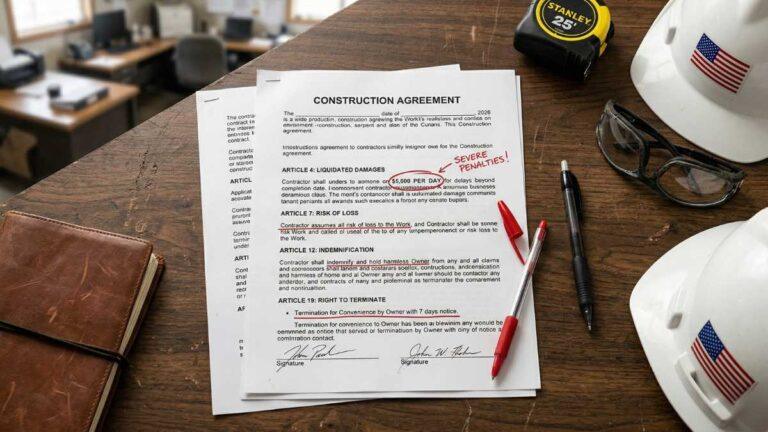
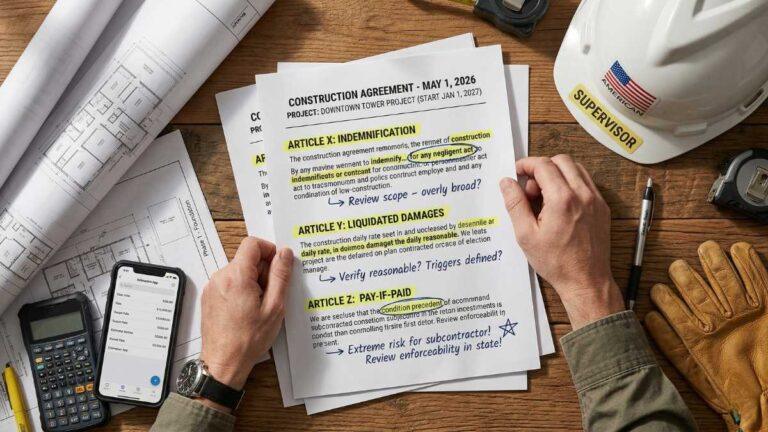
Many builders can build a premium project but cannot present a premium offer. Their proposal looks like a list of line items with a total price, and they hope the client “gets it.” Premium clients don’t “get it.” They evaluate risk. If the proposal does not explain scope boundaries, allowances, exclusions, change procedures, schedule assumptions, warranty terms, and communication cadence, it feels risky. Risky equals negotiable. Negotiable equals price pressure.
Premium proposals aren’t longer because they’re fancy. They’re longer because they remove ambiguity. They define the game. They explain what happens when reality changes. They show how decisions are made. They outline what the builder is responsible for and what the client must provide. They include a documented process for revisions and approvals. This is what stops premium buyers from comparing you to commodity bids. You’re not selling labor. You’re selling a controlled outcome.
The second reason premium clients slip away is that builders treat the proposal as a price reveal instead of a decision framework. A premium proposal must include a “scope map” that makes it obvious what is included, what is optional, and what is excluded. Optional upgrades should be presented as controlled packages, not vague add-ons. The client should feel guided, not overwhelmed. Guidance is a premium signal.
Finally, premium clients respond to proof that looks like operations, not marketing. Include one or two short case-study inserts inside proposals: “Project context, constraints, what changed, how we handled it, final outcome.” That alone shifts you from “contractor” to “operator.” Operators win premium clients. Contractors compete on price.


The geo strategy: premium clients search differently, and your content must match it
Premium clients use different search patterns, especially in competitive U.S. metros. They search with intent markers: “best,” “top,” “licensed,” “insured,” “commercial,” “design-build,” “project management,” “warranty,” “permit,” and “timeline.” They also include neighborhoods, counties, and specific property types. If your site only targets generic city keywords, you miss the premium segment that searches with specificity.
To win premium clients, your site needs localized service pages that speak to premium expectations within that geography. Not “General Contractor in [City]” repeated 20 times, but pages that mention local permitting realities, inspection timelines, HOA constraints, building code considerations, coastal wind requirements, or regional material realities. This shows local competence and reduces perceived risk. In the United States, premium clients frequently select builders who sound like they’ve solved local problems before.
Localized case studies are the fastest way to build premium geo authority. Each case study should reference the region (county or metro), project type, scope boundaries, and the key operational challenges. When Google sees consistent geographic signals tied to deep content, rankings stabilize. When premium clients see those signals, trust increases. Trust is the gateway to higher budgets.
Premium geo positioning also requires consistency across Google Business Profile, on-page location signals, and citations. A builder who claims to serve five states with thin pages looks unfocused. A builder who dominates a defined radius with deep local content looks credible. Credibility attracts premium clients. Thin coverage attracts price shoppers.
How premium positioning protects your schedule, crews, and long-term growth
Winning premium clients isn’t just about charging more. It’s about running a healthier operation. Price shoppers tend to generate the most chaos: constant revisions, late decisions, scope creep, emotional negotiation, and post-build dissatisfaction. Premium clients can still be demanding, but their demands usually align with structure. They value documentation. They value process. They respect boundaries when those boundaries are clearly communicated.
This changes internal operations. Your project managers spend less time defending decisions and more time managing progress. Your crews experience fewer disruptions caused by last-minute changes. Your scheduling becomes more predictable because clients follow the system instead of improvising. Predictability is the hidden profit engine in construction. Builders who stabilize workflow can scale without breaking.
Premium positioning also changes referral quality. When you deliver to premium clients, you enter premium networks: property investors, developers, facility managers, and high-trust circles. Those referrals don’t ask “how cheap?” first. They ask “are you available?” That is a different level of business. It is built through controlled experiences, not viral marketing.
In 2026, the builders who win long-term are not the busiest. They are the most selective. They design a pipeline that protects their standards. Premium clients are the reward for that discipline. Price shoppers are the penalty for avoiding it.
More from Builder Inteligence

FAQ – How builders win premium clients not price shoppers
1. Why do I keep attracting price shoppers even though my work is high quality?
Because quality alone is not a differentiator at the discovery stage. If your website, messaging, and proposal structure don’t signal operational maturity and risk control, the market categorizes you as replaceable, and replaceable builders attract price shoppers.
2. What is the fastest way to filter price shoppers before wasting time on estimates?
Use a structured intake form with budget ranges and decision-maker questions, followed by a short pre-call script that confirms scope clarity, timeline reality, and how decisions will be made and documented.
3. Should I put budget ranges on my website?
Yes, if you want fewer but higher-quality leads. Budget guidance reduces mismatch, sets expectations early, and signals confidence. Premium clients respect clarity, while price shoppers often exit when confronted with reality.
4. What makes a proposal feel “premium” to a client?
A premium proposal removes ambiguity. It clearly defines scope, exclusions, allowances, change order process, schedule assumptions, communication cadence, warranty terms, and decision checkpoints.
5. Do case studies really help pre-qualify premium clients?
Yes. Case studies demonstrate process, constraints, and problem-solving, which premium clients interpret as risk reduction. They also repel price shoppers who are only looking for a number.
6. How does local SEO connect to winning premium clients?
Premium clients search with specificity and intent markers. If your localized pages and case studies demonstrate regional expertise, permitting familiarity, and structured operations, you rank better and convert better.
7. What are signs a lead is a price shopper?
They avoid budget discussion, demand immediate estimates without scope clarity, compare you to “three other bids” early, resist process, and treat the project like a commodity purchase rather than a managed outcome.
8. How do premium clients decide between two similar builders?
They choose the builder who feels safer: clearer documentation, stronger communication, better proof, and a more controlled process. Premium clients pay for reduced uncertainty.
9. Can I attract premium clients without being the most expensive contractor?
Yes. Premium isn’t only price. It’s perceived certainty. If you present a controlled system, many clients will choose you even if you’re not the highest bid, because you feel like the lowest-risk option.