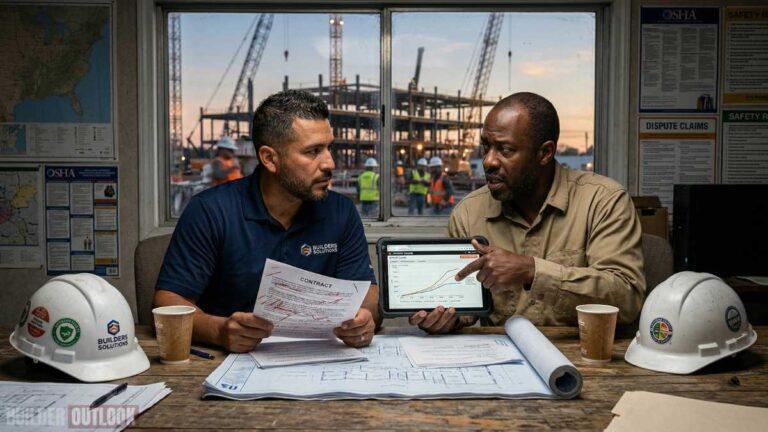
The biggest misconception in construction sales is believing that selling starts when the phone rings. In reality, the sales system of a modern contractor begins long before direct contact. By the time a prospect reaches out, most of the decision has already been shaped by what they saw, read, and inferred online. Website structure, online reviews, content authority, and follow-up processes operate together as a single system, not as isolated tools.
In 2026, contractors who still treat sales as a purely human interaction are losing ground to companies that have engineered a repeatable sales system. This system works silently in the background, qualifying prospects, filtering expectations, and establishing trust before the first conversation. When this system is weak or fragmented, even strong operators struggle to convert interest into signed contracts.
A contractor sales system is not about aggressive persuasion. It is about reducing friction, uncertainty, and perceived risk at every step of the buyer’s journey. Each component reinforces the others, and weakness in one area creates drag across the entire operation.
Builder Inteligence


How the website functions as the first sales conversation
The website is not a digital brochure. It is the first sales conversation, happening without your presence. Owners and developers arrive with questions about reliability, scope control, experience, and professionalism. If those questions are not answered clearly and immediately, they move on.
A high-performing construction website communicates three things fast. What problems you solve. Who you solve them for. Why you are safe to hire. This clarity reduces cognitive load and signals operational maturity. Slow sites, generic language, or vague positioning introduce doubt, even if unintentionally.
The website also sets pricing expectations. When messaging is unclear, prospects assume flexibility and negotiate aggressively later. When positioning is precise, it frames value early and protects margin downstream.
Why reviews are not social proof but risk indicators
Reviews are often treated as reputation assets, but in construction they function primarily as risk indicators. Owners are not looking for perfection. They are looking for patterns. Consistency, communication, and accountability matter more than five-star averages.
A contractor sales system actively manages reviews, not by manipulating feedback, but by encouraging volume, responding professionally, and addressing concerns publicly. This behavior demonstrates control and transparency. Silence signals avoidance.
When reviews are integrated into the sales system, they preempt objections. Many concerns that would otherwise surface during negotiation are resolved silently when prospects see how issues were handled in the past.

Content as pre-qualification, not marketing noise
Content is where most contractors waste effort by producing material that attracts attention but not alignment. In a proper sales system, content exists to pre-qualify. It educates prospects on process, trade-offs, timelines, and responsibilities, making it clear who is a good fit and who is not.
Authoritative content reduces sales friction. Prospects arrive informed, realistic, and aligned with how you operate. This shortens sales cycles and improves close rates. It also reduces post-contract conflict because expectations were set early.
In 2026, content that avoids hard truths creates more problems than silence. Clarity filters better than persuasion.
Follow-up as the most underestimated revenue lever
Follow-up is where most construction sales systems break. Leads arrive, conversations happen, and then momentum fades. Not because interest disappeared, but because structure was missing. A defined follow-up process maintains presence without pressure.
Effective follow-up reinforces value, answers unspoken questions, and reminds prospects why you are the safe choice. It does not chase. It supports decision-making. Consistency here often matters more than speed.
When follow-up is systematic, sales become predictable. When it is improvised, results fluctuate and pipelines feel unreliable.
More from Builder Inteligence

FAQ – The contractor sales system: website, reviews, content, and follow-up
- Why is a contractor sales system more important than individual sales skills?
Because systems create consistency. Individual skill varies by person and circumstance, while a structured system ensures every prospect receives the same level of clarity, trust-building, and follow-through regardless of who handles the interaction. - Can a small contractor realistically build a full sales system?
Yes. A sales system scales to size. Even small contractors benefit disproportionately because structure compensates for limited bandwidth and prevents missed opportunities caused by overload. - How does content reduce sales friction instead of creating more work?
Good content answers repetitive questions in advance. This reduces back-and-forth, shortens decision timelines, and attracts prospects who already understand the process and constraints. - Why do reviews matter more than referrals today?
Referrals still matter, but they are now verified through Google. Prospects trust referrals more when reviews confirm consistency and professionalism at scale. - What is the biggest mistake contractors make in follow-up?
Stopping too early. Many deals are lost not to competitors, but to silence. A lack of structured follow-up creates uncertainty that stalls decisions indefinitely.