Subcontractor selection has always been one of the most important decisions in construction, but in 2026, it has become one of the most dangerous points of failure in the entire project lifecycle. While many contractors still treat subcontractor selection as a pricing exercise tied to bid day outcomes, the reality across the United States is that the subcontractor market has fundamentally changed. Labor instability, backlog pressure, workforce fragmentation, and aggressive bidding behavior have created a scenario where the gap between what is promised and what can actually be delivered is wider than at any point in the last decade.
In states like Texas, Florida, Arizona, and Nevada, where construction demand remains high but workforce availability is uneven, subcontractors are often overcommitted before the project even begins. In markets like California and New York, where regulatory complexity increases execution friction, subcontractors are exposed to higher compliance risk that directly impacts performance. Across the Midwest, where margins are tighter and competition is intense, subcontractors are pricing aggressively to win work, sometimes at levels that do not reflect real execution capacity.
The problem is not that subcontractors are unreliable. The problem is that the system used to evaluate them is outdated.
Most contractors still select subcontractors based on three variables: price, familiarity, and availability. In today’s environment, those variables are insufficient. A subcontractor can offer a competitive price, have worked with you before, and still fail to deliver under current market conditions.
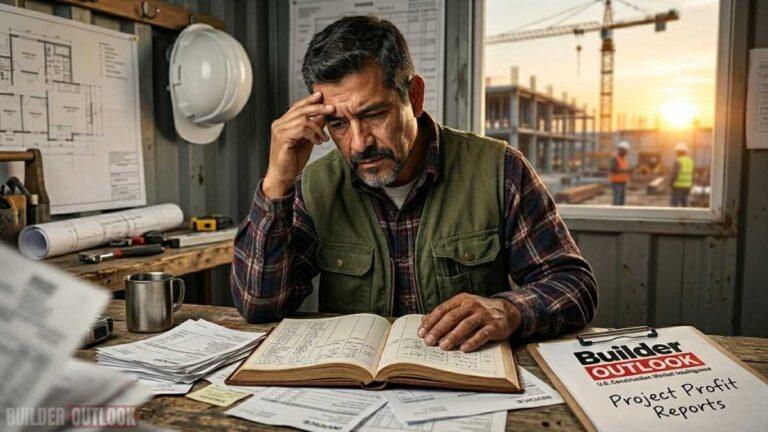
The real risk is not visible at bid day. It becomes visible during execution — when schedule slips, quality drops, coordination fails, and disputes begin. At that point, the cost of a wrong decision is no longer controllable.
This article is not about subcontractor management after contract signing. It is about what serious contractors in the United States are doing before award to reduce risk, validate capability, and protect project outcomes in an environment where execution certainty is becoming more valuable than price.
WHY SUBCONTRACTOR RISK HAS INCREASED ACROSS U.S. CONSTRUCTION MARKETS
The subcontractor market in the United States is under structural pressure, and understanding that pressure is essential to understanding why traditional selection methods are failing. Over the past few years, construction demand has remained strong in key sectors such as data centers, infrastructure, industrial facilities, and select residential markets, but workforce growth has not kept pace. This has created a capacity imbalance where subcontractors are forced to stretch resources across multiple projects, often beyond what their internal systems can handle.
At the same time, material volatility and supply chain inconsistency have forced subcontractors to take on additional risk at the pricing stage. Many are locking in numbers based on assumptions that may not hold by the time procurement and installation occur. This introduces uncertainty into bids that is not immediately visible during evaluation.
Another layer of complexity comes from the fragmentation of the subcontractor market itself. Smaller subcontractors are entering larger projects, larger subcontractors are becoming more selective, and mid-sized firms are caught between scaling pressure and operational limitations. This creates variability in performance that cannot be captured through traditional prequalification forms or past relationships alone.
In regions with high regulatory oversight, such as California, Massachusetts, and parts of the Northeast, subcontractors must also navigate permitting, compliance, and inspection challenges that directly affect schedule reliability. In faster-moving markets like Texas and Florida, the challenge is less about regulation and more about coordination under speed — where the margin for error is minimal.
The result is a national environment where subcontractor risk is not isolated to specific trades or regions. It is systemic.
WHAT CONTRACTORS GET WRONG WHEN SELECTING SUBCONTRACTORS
The most common mistake contractors make is assuming that past performance guarantees future reliability. While historical relationships are valuable, they do not account for current workload, workforce changes, financial exposure, or internal operational shifts within the subcontractor’s organization. A subcontractor that performed well on a project two years ago may be operating under completely different conditions today.
Another critical mistake is over-reliance on bid numbers as a proxy for efficiency. A lower price is often interpreted as better execution capability, when in reality it may reflect underestimation, incomplete scope, or aggressive bidding behavior driven by backlog pressure. Without dissecting how the price was constructed, contractors are effectively making decisions based on incomplete information.
Contractors also frequently fail to evaluate subcontractor capacity in real time. It is not enough to know how many projects a subcontractor has completed in the past. What matters is how many they are currently managing, how their crews are distributed, and whether they have the ability to scale without compromising quality or schedule.
Financial stability is another overlooked factor. Subcontractors operating with tight cash flow are more vulnerable to disruption, especially in projects with delayed payments, retention structures, or change order complexity. These financial pressures often translate into performance issues during execution.
Finally, many contractors underestimate the importance of communication and coordination capability. Technical skill alone does not ensure successful project delivery. Subcontractors must be able to integrate into the project team, respond to issues quickly, and maintain alignment with schedule and scope requirements.
Builder Inteligence


THE REAL EVALUATION SYSTEM USED BY HIGH-PERFORMANCE CONTRACTORS
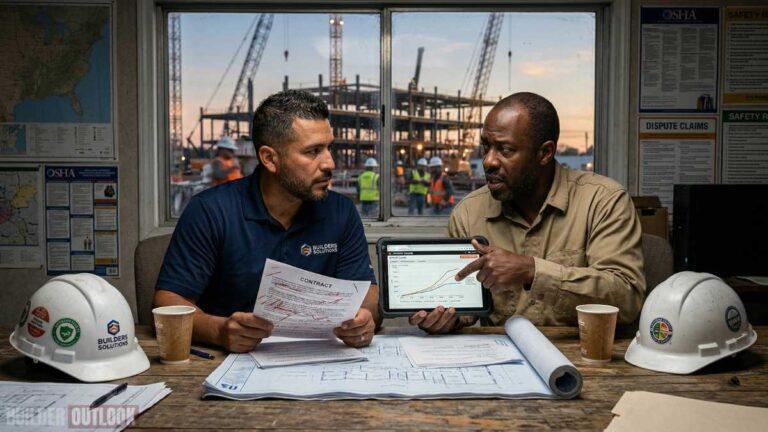
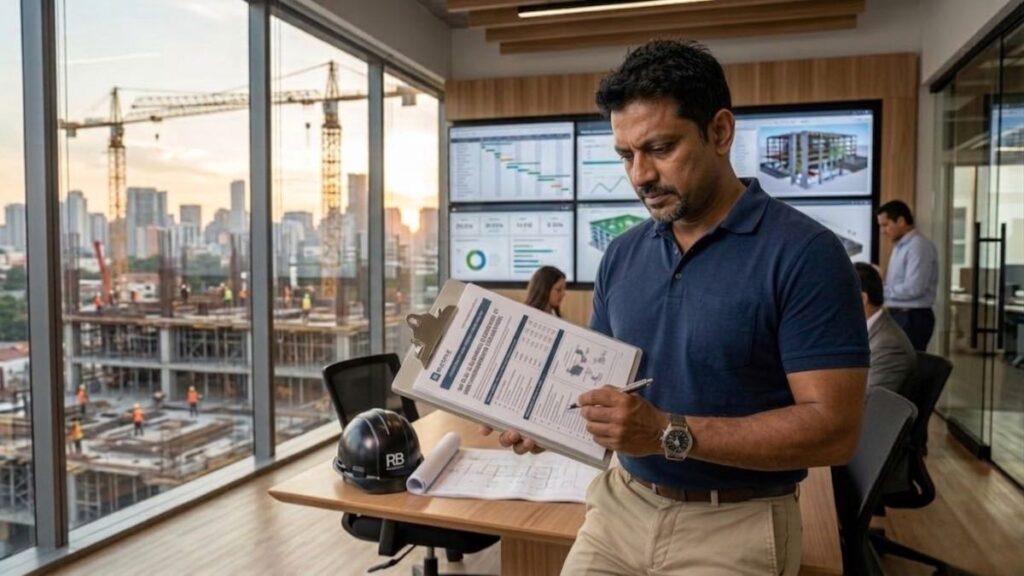
Contractors operating at a high level have moved beyond informal selection methods and developed structured evaluation systems that combine quantitative analysis with qualitative judgment. The process begins with scope validation, ensuring that each subcontractor’s proposal is fully aligned with project requirements. This involves detailed review of inclusions, exclusions, assumptions, and interface responsibilities with other trades.
Once scope alignment is established, the focus shifts to capacity analysis. Contractors assess current workload, crew availability, and the subcontractor’s ability to allocate resources to the project without overextension. This often requires direct conversations, not just documentation review.
Financial health is evaluated through indicators such as payment history, bonding capacity, and overall business stability. While not always publicly available, experienced contractors develop methods to assess these factors through industry relationships and prior experience.
Operational capability is examined through past project performance, but with a focus on recent and relevant work rather than historical reputation alone. Contractors look for evidence of consistent delivery under conditions similar to the current project.
Communication and coordination ability are assessed through interaction during the bidding process itself. Responsiveness, clarity, and willingness to engage in detailed discussions are indicators of how the subcontractor will perform during execution.
The final decision is not based on a single factor. It is based on a composite view that balances price, risk, capacity, and alignment with project objectives.
WHY SUBCONTRACTOR SELECTION NOW DEFINES PROJECT OUTCOME
In the current construction environment, many of the issues that affect project performance originate before construction begins. Subcontractor selection is one of the earliest and most impactful of these decisions.
Choosing a subcontractor who cannot maintain schedule integrity introduces delays that cascade across the entire project. Selecting a subcontractor with weak coordination capability creates conflicts between trades that result in rework and inefficiency. Engaging a subcontractor with financial instability increases the likelihood of disruption during critical phases of construction.
These issues are not isolated. They compound over time, affecting cost, schedule, and overall project quality.
Contractors who understand this treat subcontractor selection as a strategic function. They invest time and resources into evaluation because they recognize that the cost of a wrong decision is significantly higher than the cost of a more thorough selection process.
HOW LEADING CONTRACTORS IN THE U.S. ARE REDUCING SUBCONTRACTOR RISK
Leading contractors are not eliminating risk — they are managing it more effectively. One of the key strategies is early engagement. By involving subcontractors during preconstruction, contractors gain insight into pricing, constructability, and potential challenges before formal bidding begins.
Another approach is selective bidding. Instead of opening bids to a broad pool, contractors invite subcontractors who meet specific criteria related to capacity, performance, and alignment with project requirements. This reduces variability and increases the reliability of bids.
Contractors are also investing in relationship-based procurement, building long-term partnerships with subcontractors who consistently deliver. While this may limit short-term price competition, it improves long-term project outcomes.
Data is playing an increasing role as well. Contractors are tracking subcontractor performance across projects, creating internal benchmarks that inform future selection decisions. This allows for more objective evaluation over time.
Finally, communication standards are being formalized. Clear expectations around reporting, coordination, and issue resolution are established before contract award, reducing ambiguity during execution.
Subcontractor selection is no longer a routine step in the construction process. It is a critical decision point that determines whether a project will move forward with stability or struggle under avoidable challenges.
In 2026, the construction environment in the United States demands a higher level of precision, analysis, and strategic thinking. Contractors who continue to rely on outdated selection methods will face increasing risk, while those who adopt structured evaluation systems will gain a significant advantage.
The difference is not in the availability of subcontractors.
It is in how they are selected.
More from Builder Inteligence



FAQ – Subcontractor selection risk in the United States: how contractors actually evaluate, qualify, and avoid project failure before contract award in 2026
1. Why is subcontractor selection more risky in 2026?
Because labor shortages, cost volatility, and high demand have increased the gap between subcontractor bids and their real execution capacity.
2. Should contractors prioritize price when selecting subcontractors?
No. Price is only one factor. Capacity, reliability, and financial stability are equally important in determining project success.
3. How can contractors evaluate subcontractor capacity?
By analyzing current workload, crew availability, and the subcontractor’s ability to manage additional projects without overextension.
4. What are common mistakes in subcontractor selection?
Over-reliance on price, ignoring capacity constraints, assuming past performance guarantees future results, and failing to validate scope details.
5. Does subcontractor financial stability matter?
Yes. Financial instability can lead to delays, quality issues, and project disruption, especially in long or complex projects.
6. How do leading contractors reduce subcontractor risk?
Through structured evaluation systems, selective bidding, early engagement, and long-term relationships with reliable subcontractors.
7. Can subcontractor risk be eliminated completely?
No. But it can be significantly reduced through better evaluation, planning, and communication.
8. How does subcontractor selection affect project profitability?
Poor selection leads to delays, rework, and disputes, which directly impact costs and reduce overall project margins.