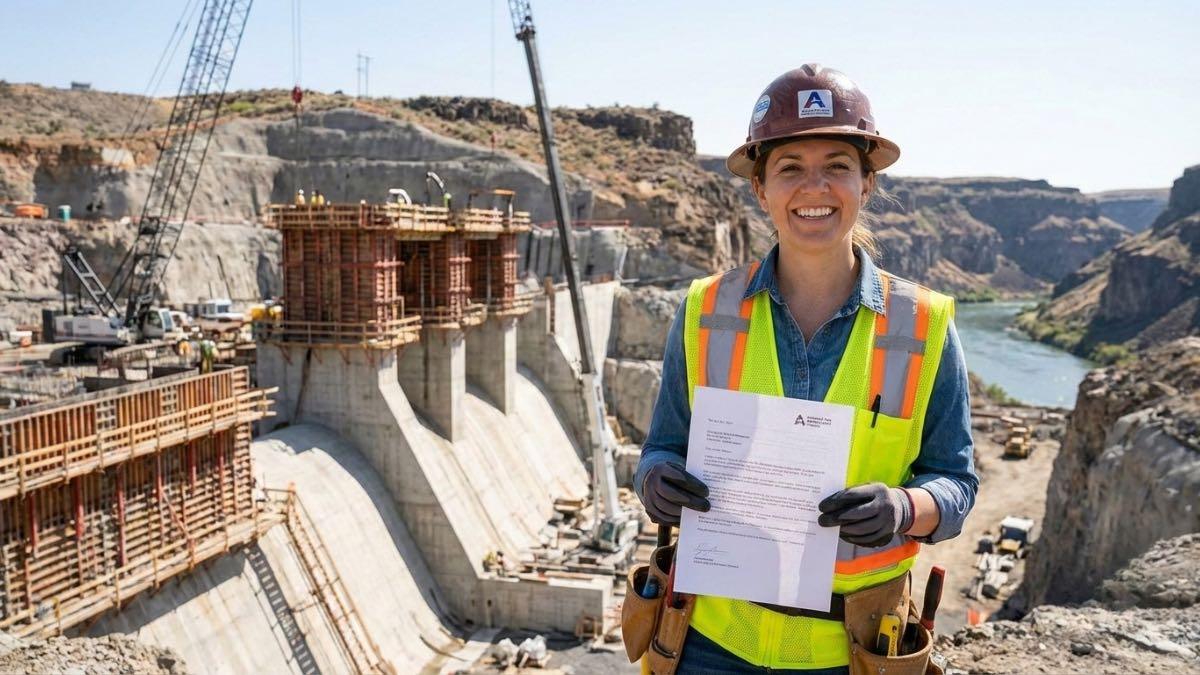
Construction contracts in 2026 are no longer passive documents that sit in a drawer until something goes wrong. They have become active risk-management tools that directly shape cash flow stability, dispute exposure, scheduling control, and even a contractor’s ability to secure future work. The combination of cost volatility, labor uncertainty, insurance pressure, and tighter financing has forced owners, lenders, and developers to push far more risk into contract language than in previous cycles. Contractors who fail to review and renegotiate key clauses are often accepting operational risks they cannot realistically control.
What makes contract review more dangerous in 2026 is not the presence of “new” clauses, but the quiet evolution of familiar ones. Many provisions that used to be boilerplate are now being rewritten with sharper teeth, broader definitions, and fewer escape valves. Clauses related to delays, force majeure, indemnification, scope clarification, and payment timing are being adjusted to reflect a world where schedules slip for reasons outside any single party’s control. Contractors who rely on past assumptions are discovering too late that the contract no longer protects them the way it once did.
This is why contract review in 2026 cannot be treated as a legal formality delegated entirely to outside counsel. Operational leaders, project executives, estimators, and finance teams must understand how contract language translates into real jobsite behavior. The clauses below are the ones that deserve the most scrutiny because they directly affect margin protection, dispute prevention, and survival during uncertainty.
Builder Inteligence



Force majeure and delay responsibility clauses
Force majeure clauses have expanded significantly since the pandemic era, but that expansion has not always benefited contractors. Many contracts now acknowledge material shortages, labor disruptions, and supply chain delays, yet still limit the relief available when those events occur. Contractors must examine whether force majeure language provides true schedule relief, cost relief, or merely excuses performance without compensation.
In 2026, owners are increasingly separating time relief from cost relief. A clause may grant additional days but explicitly deny extended general conditions, escalation recovery, or standby costs. This creates a hidden financial exposure where contractors absorb prolonged overhead without revenue alignment. Understanding this distinction is critical before signing any agreement that involves long lead materials or specialized trades.
Another emerging issue is the narrowing of what qualifies as “unforeseeable.” Some contracts argue that market volatility itself is now foreseeable, which weakens force majeure protections. Contractors should push back against language that retroactively redefines risk awareness and makes normal market instability a contractor-only burden.
Price escalation and material volatility clauses
Escalation clauses have moved from optional riders to essential protections in many markets, yet their wording varies widely. In 2026, some contracts include escalation language that appears generous but is practically unusable due to restrictive documentation requirements, narrow material categories, or delayed reimbursement mechanisms.
Contractors must carefully review how escalation is calculated, which indices are accepted, and when adjustments can be submitted. Clauses that require proof of supplier invoices only after purchase can expose contractors to massive cash flow gaps. Similarly, caps on escalation recovery may protect owners but leave contractors carrying uncontrollable exposure.
Equally important is how downward price movement is treated. Some contracts allow owners to recapture savings without symmetry in upward adjustments. This imbalance can distort bid strategy and penalize contractors who acted responsibly during procurement.
Payment timing and conditional payment clauses
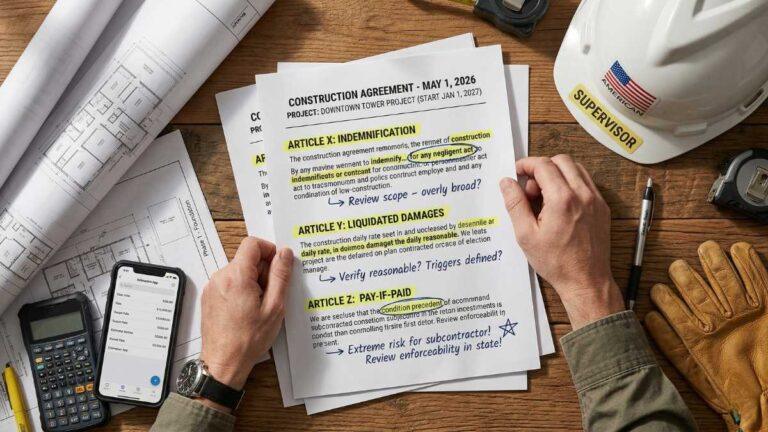
Payment clauses are becoming more aggressive as financing tightens. Conditional payment language such as pay-if-paid or pay-when-paid is appearing even in markets where it was previously resisted. Contractors must understand not only whether these clauses exist, but how they interact with lien rights, retention, and dispute resolution timelines.
In 2026, delayed payment is not just an inconvenience but a serious operational risk. Subcontractor relationships, labor retention, and supplier trust all hinge on predictable cash flow. Contracts that shift owner financing risk downstream can quietly destabilize entire projects.
Contractors should scrutinize notice requirements tied to payment disputes. Missing a short notice window can permanently waive rights, even when nonpayment is clearly not the contractor’s fault. These administrative traps are becoming more common and more strictly enforced.

Indemnification and risk transfer language
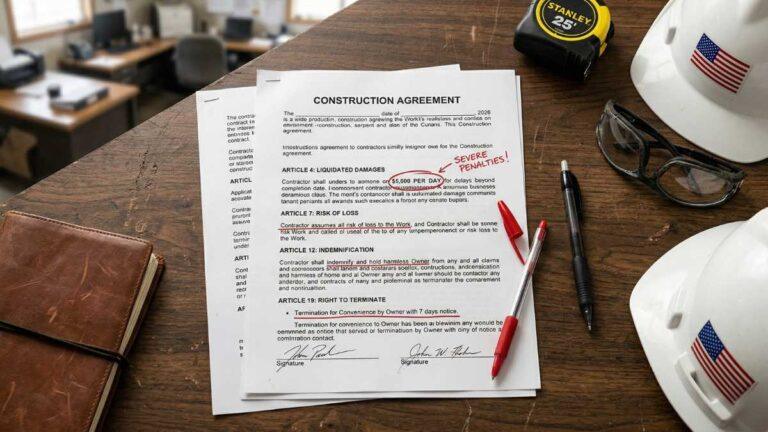
Indemnification clauses are being rewritten to broaden contractor responsibility beyond traditional negligence standards. In some contracts, contractors are asked to indemnify owners for claims arising from conditions they do not control, including design deficiencies or third-party failures.
The danger in 2026 is the misalignment between indemnification language and insurance coverage. Contractors may agree to obligations that exceed what their policies actually cover. This gap creates personal balance sheet exposure that many companies only discover during litigation.
Contractors should ensure indemnification clauses are proportional, tied to fault, and consistent with available insurance. Vague language that shifts “all claims arising out of the work” onto contractors should be treated as a red flag requiring revision.
Schedule acceleration and liquidated damages clauses
Acceleration clauses are becoming more common as owners demand certainty without acknowledging uncertainty. Contracts may grant owners the right to demand acceleration without clearly defining compensation mechanisms. This can force contractors into overtime, premium labor, and logistical chaos without guaranteed recovery.
Liquidated damages clauses also deserve renewed scrutiny. In 2026, damage rates are increasing, and grace periods are shrinking. Contractors must assess whether the damages are genuinely pre-estimated losses or punitive leverage disguised as standard language.
The interaction between acceleration demands and liquidated damages creates a trap where contractors are pressured to absorb costs to avoid penalties, even when delays are outside their control. Clear carve-outs and compensation rights are essential.
Dispute resolution and claims waiver provisions
Dispute resolution clauses now often favor speed over fairness. Mandatory mediation timelines, shortened claim submission windows, and pre-dispute waivers are being used to limit contractor leverage. In some contracts, failure to follow a precise procedural sequence can eliminate otherwise valid claims.
Contractors should pay close attention to how disputes must be documented, escalated, and preserved. In 2026, claims are less about proving entitlement and more about proving compliance with process. Operational teams must understand these requirements long before conflicts arise.
Arbitration versus litigation choices also matter more as legal costs rise. Contractors should evaluate whether dispute forums align with project size, complexity, and jurisdictional realities.
Change order definition and scope clarity clauses
Change order language has tightened considerably, with broader definitions of “included scope” and narrower recognition of extras. Some contracts now treat coordination, minor design interpretation, or trade overlap as contractor responsibility by default.
In 2026, poorly defined scope clauses are a leading cause of disputes that begin in estimating rather than on site. Contractors must ensure that drawings, specifications, and assumptions are clearly referenced and that ambiguities are not automatically resolved against them.
Change order timing requirements are another risk area. Clauses that require notice within days of discovery can be impossible to meet on complex projects. Contractors should negotiate realistic notice periods that reflect actual jobsite conditions.
Why contract review is now an operational discipline
The most important shift in 2026 is recognizing that contract clauses shape behavior long before disputes arise. They influence how teams schedule work, procure materials, manage subcontractors, and communicate with owners. A contract that looks acceptable on paper can quietly force bad operational decisions under pressure.
Contractors who treat contract review as a strategic process, involving operations, finance, and legal perspectives, are better positioned to protect margins and relationships. Those who do not are often surprised by risks they unknowingly accepted.
In a volatile construction environment, the contract is no longer a safety net. It is the operating system of the project. Understanding its clauses is no longer optional.
More from Builder Inteligence


FAQ – The most important construction contract clauses to review in 2026
1. Why are construction contract clauses more important in 2026 than in previous years?
Construction contract clauses matter more in 2026 because volatility in pricing, labor, insurance, and financing has increased the consequences of risk allocation. Small wording changes can shift large financial and operational burdens onto contractors, making contract language a direct driver of profitability and survival.
2. Which contract clauses expose contractors to the most hidden risk today?
The most dangerous clauses are often force majeure limitations, conditional payment provisions, broad indemnification language, and aggressive schedule enforcement terms. These clauses can appear standard while quietly transferring risks that contractors cannot control or insure against.
3. How should contractors approach contract review differently in 2026?
Contractors should treat contract review as an operational strategy rather than a legal checkbox. This means involving project managers, estimators, and finance teams in understanding how clauses affect real jobsite decisions, cash flow timing, and risk exposure.
4. Are escalation clauses always effective protection against price volatility?
No. Many escalation clauses in 2026 are written with restrictions that limit practical recovery. Contractors must review how escalation is calculated, documented, and reimbursed to ensure the clause provides real financial protection rather than symbolic language.
5. What happens if a contractor ignores restrictive dispute resolution clauses?
Ignoring dispute resolution clauses can result in waived claims, lost payment rights, or forced arbitration under unfavorable conditions. In 2026, procedural compliance is often more important than the underlying merit of a dispute, making early awareness essential.