General contractors across the United States are facing a cost environment that no longer behaves like previous cycles. In 2026, pressure is not coming from a single direction. It is layered, persistent, and often invisible until margins are already compromised.
What makes this moment different is not just higher costs, but the inability to confidently predict where those costs will land when a project reaches execution. For general contractors, the traditional buffers that once absorbed volatility are no longer sufficient.
Cost pressure has become structural.
Why cost pressure no longer comes only from materials
Material pricing remains volatile, but it is no longer the dominant variable. Labor premiums, insurance costs, financing carry, compliance expenses, subcontractor risk transfer, and schedule uncertainty now combine to compress margins from multiple angles at once.
General contractors are absorbing pressure upstream and downstream. Owners push for price certainty. Subcontractors demand escalation clauses. Lenders tighten contingency requirements. Insurers raise deductibles and narrow coverage.
The result is a margin squeeze that cannot be solved by sharper estimating alone.
Builder Inteligence
Advertising

Labor costs are rising unevenly and unpredictably
Wage pressure in 2026 is not uniform. Certain trades experience double-digit increases, while others remain flat. This uneven escalation makes composite bids difficult to stabilize.
General contractors are forced to assume risk on labor availability, overtime, crew continuity, and productivity loss. Even when base wages are locked, schedule slippage increases labor exposure beyond original assumptions.
Labor is no longer a fixed input. It is a moving liability.
Insurance and bonding amplify cost exposure
Insurance premiums and bonding requirements continue to rise, particularly in high-growth and high-risk states such as Florida, Texas, California, and New York.
General contractors often absorb these increases mid-cycle. Projects priced months earlier suddenly carry higher general liability, builders risk, professional liability, and umbrella coverage costs.
Bonding capacity is also under pressure, limiting the ability to pursue new work without restructuring balance sheets.
Schedule uncertainty multiplies every cost variable
Every day a project extends beyond its planned duration increases exposure across labor, equipment, supervision, insurance, and financing.
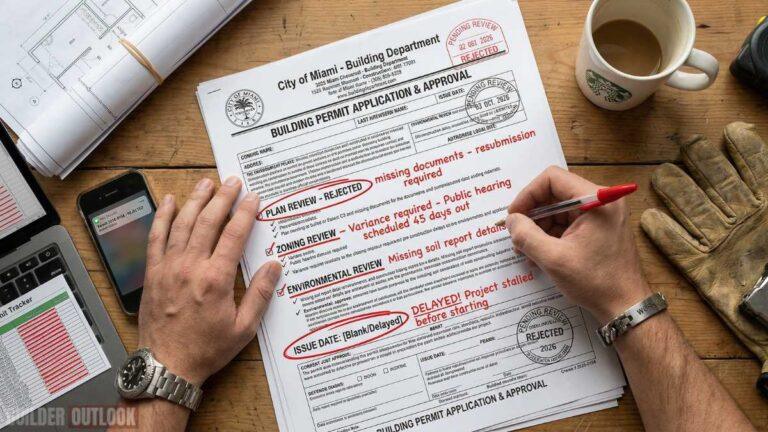
In 2026, schedules are harder to protect. Material lead times shift. Subcontractors juggle overlapping commitments. Permitting timelines stretch. Weather events disrupt sequencing.
Cost pressure compounds through time.
Owners underestimate how cost pressure accumulates
Many owners still view cost increases in isolation. They focus on line items instead of system-wide exposure.
General contractors experience the opposite reality. Cost pressure accumulates across procurement, execution, and closeout. Small overruns across multiple categories create significant erosion when combined.
This disconnect fuels disputes and strained relationships.

GEO factors intensify cost pressure regionally
Certain regions experience amplified pressure due to local conditions. Labor shortages in Texas and Arizona. Insurance volatility in Florida and California. Regulatory friction in New York. Infrastructure competition in the Southeast.
General contractors operating nationally must manage regional cost behavior, not just national averages.
Why traditional risk transfer no longer works
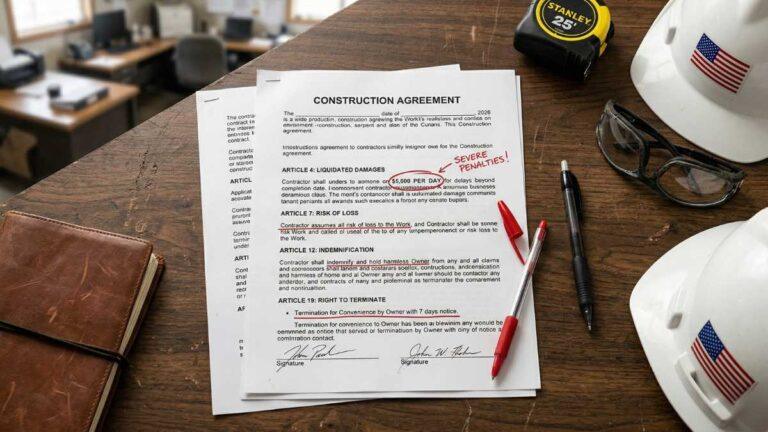
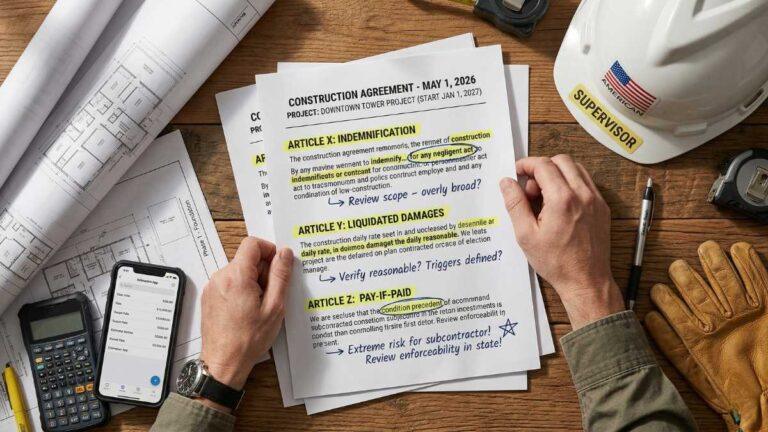
Passing risk downstream through contracts is becoming less effective. Subcontractors resist absorbing volatility they cannot control. They price defensively or refuse fixed commitments altogether.
General contractors are increasingly forced to retain risk internally, even when contract language suggests otherwise.
The new margin reality for general contractors
Margins in 2026 are protected not by aggressive bidding, but by disciplined risk management. Contractors who survive are those who understand cost behavior, communicate constraints early, and align expectations before execution.
The era of absorbing pressure quietly is over.
More from Builder Inteligence

FAQ – Cost pressure for general contractors in 2026
1. Why is
cost pressure worse for general contractors in 2026 than before?
Cost pressure is worse because it comes from multiple directions
simultaneously. Materials, labor, insurance, financing, schedules, and
compliance all fluctuate at once, making traditional contingency planning
insufficient.
2. Are
material prices still the biggest cost risk?
Materials remain volatile, but labor availability, insurance premiums, and
schedule uncertainty now create equal or greater exposure for general
contractors.
3. How does
labor volatility affect project margins?
Labor volatility increases overtime, disrupts productivity, and extends
schedules. Even locked wage rates do not protect contractors from indirect
labor cost escalation.
4. Why are
insurance costs impacting margins so heavily?
Insurance premiums and exclusions often rise after bids are submitted.
Contractors absorb these increases mid-project, reducing profitability.
5. How does
schedule uncertainty amplify cost pressure?
Extended schedules increase labor, supervision, equipment, insurance, and
financing costs simultaneously. Time becomes a multiplier of risk.
6. Do
regional factors really change cost behavior?
Yes. Local labor markets, regulatory environments, climate risk, and
infrastructure demand create region-specific cost dynamics that general
contractors must manage.
7. Why
can’t contractors simply transfer risk downstream?
Subcontractors resist absorbing uncontrollable volatility. They price
defensively or refuse fixed commitments, forcing general contractors to retain
risk.
8. What
protects margins in 2026?
Disciplined estimating, early risk communication, realistic scheduling, and
strong preconstruction alignment protect margins more than aggressive pricing.