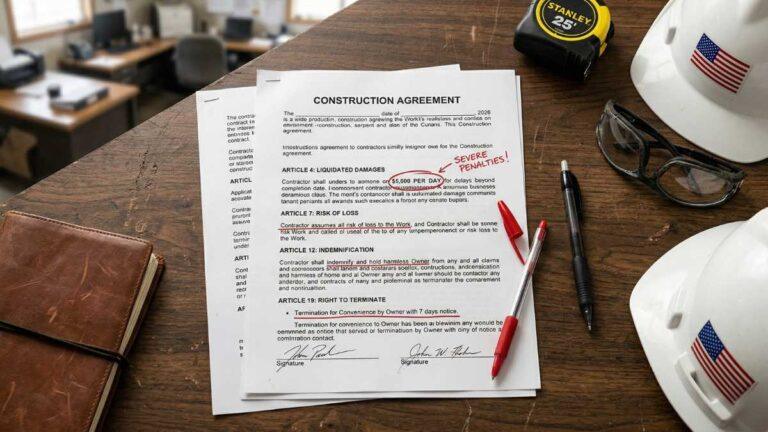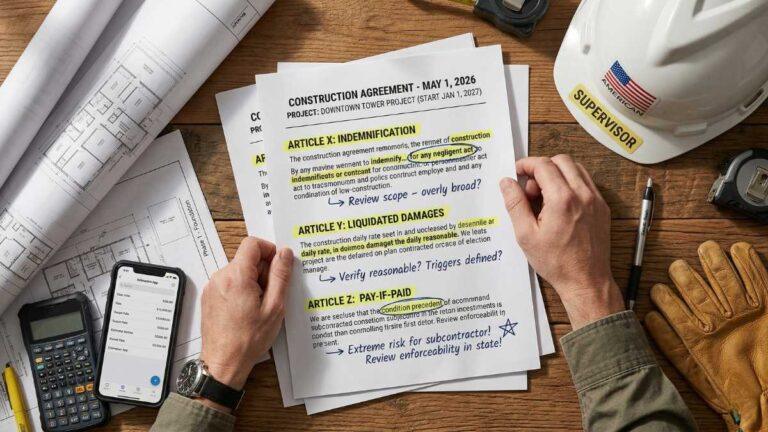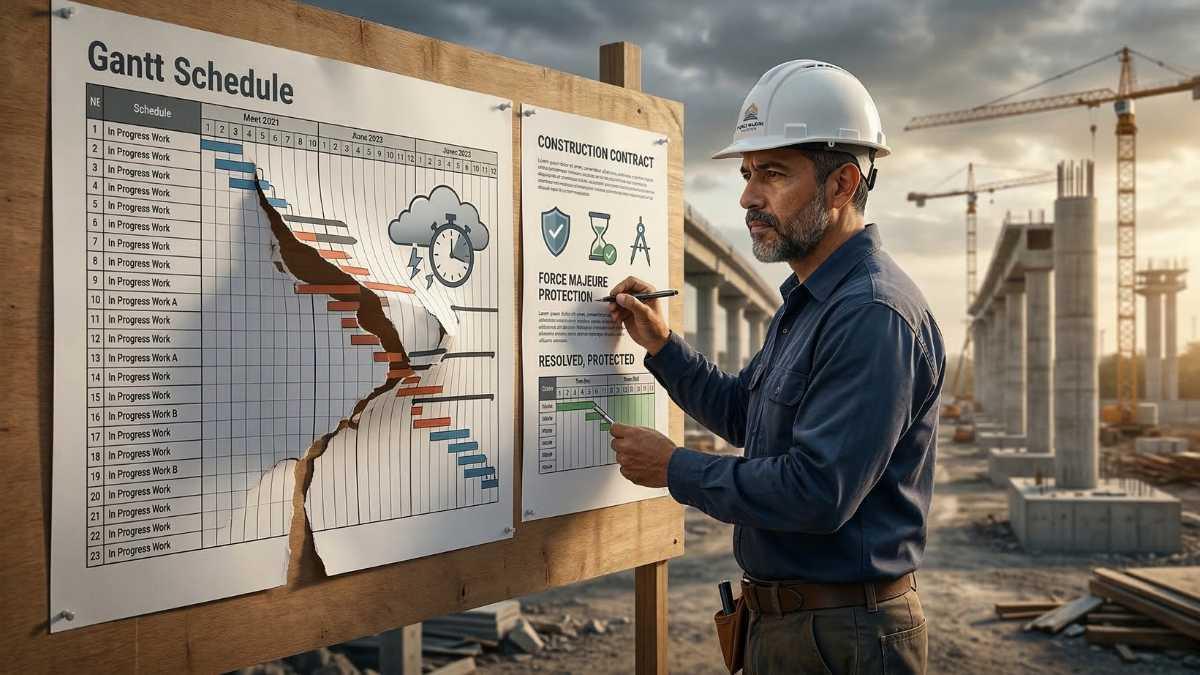
Force majeure clauses became widely discussed across the construction industry after global events such as the COVID-19 pandemic exposed how vulnerable construction projects can be to external disruptions. While contractors have always faced operational challenges such as weather, supply chain interruptions, and regulatory delays, the pandemic highlighted a deeper reality: not every delay can be controlled by the contractor, the owner, or the project team. When large-scale events disrupt the ability to perform work, construction contracts rely on force majeure provisions to determine how the consequences of those disruptions will be handled.
A force majeure clause defines what happens when unexpected events outside the control of the contracting parties prevent or delay project performance. In most construction agreements, this clause allows contractors to request schedule extensions when extraordinary events make it impossible or impractical to complete work according to the original timeline. Without such provisions, contractors could theoretically be held responsible for delays that arise from circumstances completely outside their operational control.
For contractors, understanding force majeure provisions is not simply a legal technicality. These clauses can determine whether the contractor is protected from schedule penalties, liquidated damages, and breach-of-contract claims when major disruptions occur. Because construction projects typically operate on tight schedules with complex supply chains and regulatory dependencies, the absence of clear force majeure protections can expose contractors to substantial financial risk.
The practical value of force majeure clauses lies in their ability to allocate risk for events that cannot reasonably be predicted or controlled. Natural disasters, labor strikes, government shutdowns, pandemics, and severe supply chain interruptions can all affect the ability of contractors to perform work as planned. When such events occur, the contract must determine whether the contractor is entitled to additional time, financial relief, or both.
For builders and construction managers, the key challenge is understanding how force majeure clauses operate in real contract scenarios. Some clauses provide broad protection against many types of disruptions, while others are narrowly drafted and may only apply to specific categories of events. Contractors who do not analyze these provisions carefully may assume they are protected when, in fact, the contract provides little relief for the particular disruption affecting the project.
What force majeure means in construction contracts
The term force majeure originates from French legal terminology and translates roughly to “superior force.” In construction law, the concept refers to extraordinary events that prevent one or both parties from fulfilling their contractual obligations despite reasonable efforts to perform.
Force majeure clauses are designed to address situations where performance becomes impossible or severely disrupted due to events beyond the control of the contracting parties. In construction contracts, these provisions usually allow contractors to request schedule extensions when such events delay the progress of work.
Typical examples of force majeure events include hurricanes, floods, earthquakes, large-scale fires, acts of terrorism, war, government-imposed shutdowns, labor strikes, or sudden supply chain disruptions affecting critical materials. In some cases, pandemics and public health emergencies are also included as force majeure events.
However, the specific events covered by a force majeure clause depend entirely on the wording of the contract. Some contracts include long lists of qualifying events, while others rely on broader language describing events beyond the control of the parties. Contractors must carefully review this language to determine whether the clause actually covers the types of disruptions most likely to affect the project.
It is also important to understand that force majeure provisions typically provide relief in the form of schedule extensions rather than financial compensation. In many cases, the contractor may receive additional time to complete the project but not additional payment for the costs associated with the delay.
Why force majeure clauses matter for contractors
Construction schedules depend on a large number of variables that contractors cannot fully control. Material suppliers, transportation networks, weather patterns, permitting authorities, inspection agencies, and labor availability all influence the timeline of a project. When major disruptions occur in any of these systems, contractors may be unable to maintain the planned schedule despite strong project management.
Force majeure clauses help prevent contractors from being unfairly penalized for these disruptions. Without such protections, contractors could face liquidated damages or breach-of-contract claims even when delays result from circumstances beyond their control.
For example, a hurricane that damages the jobsite or disrupts regional supply chains may halt construction activities for several weeks. If the contract does not include appropriate force majeure protections, the contractor could technically be held responsible for failing to meet the original completion deadline.
By contrast, a properly drafted force majeure clause allows the contractor to request a schedule extension reflecting the duration of the disruption. This ensures that the contractor is not penalized for events that could not have been anticipated or prevented.
Common events covered by force majeure provisions
Force majeure clauses generally cover a range of extraordinary events that interfere with project performance. Although the specific language varies across contracts, several categories of events are commonly included.
Natural disasters are among the most traditional examples. Hurricanes, earthquakes, floods, and severe storms can damage construction sites, disrupt transportation networks, and halt project activities entirely. These events are typically considered classic force majeure situations because they occur without warning and cannot be controlled by project participants.
Government actions also frequently appear in force majeure provisions. Regulatory shutdowns, emergency orders, border restrictions, or changes in public safety regulations may prevent contractors from continuing work. During the COVID-19 pandemic, many construction projects were affected by government restrictions that limited workforce availability or halted construction activities altogether.
Labor disruptions are another potential force majeure event. Large-scale strikes affecting critical trades or transportation systems may disrupt project schedules even when the contractor has taken reasonable steps to manage labor resources.
Supply chain failures have also become increasingly relevant in modern construction contracts. When key materials such as structural steel, electrical equipment, or specialized mechanical components become unavailable due to global manufacturing disruptions, contractors may be unable to maintain the planned construction schedule.
Understanding which events are included in the contract is essential for evaluating the level of protection available to contractors.
Builder Inteligence


How contractors must document force majeure claims
Although force majeure clauses provide potential relief, contractors must still follow specific procedures to claim that relief. Most construction contracts require contractors to notify the owner promptly when a force majeure event occurs and to explain how the event affects the project schedule.
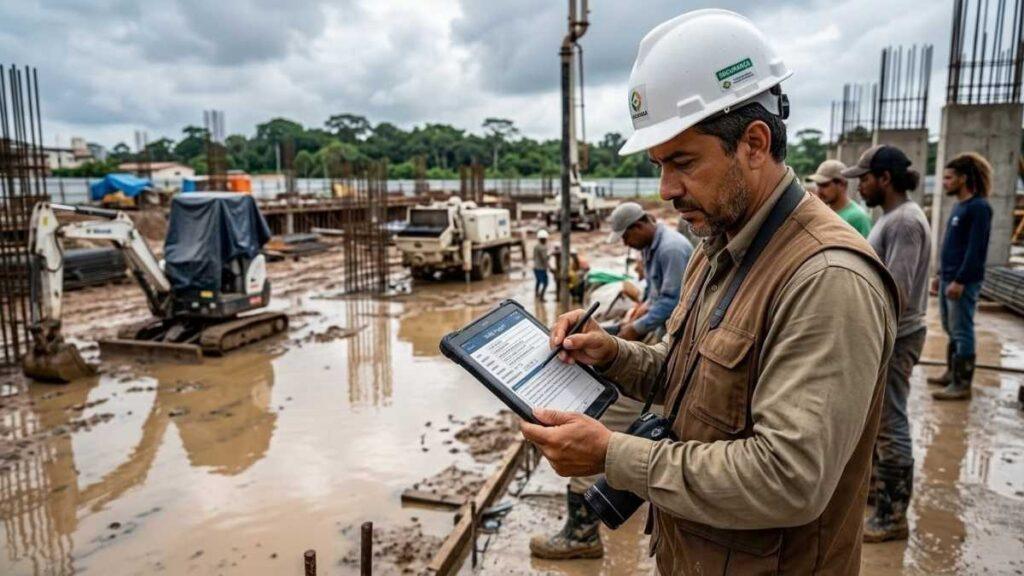
Documentation plays a critical role in this process. Contractors should maintain records showing how the disruptive event affected project operations, including delays in material delivery, labor shortages, jobsite shutdowns, or regulatory restrictions. Photographs, correspondence, supplier notifications, and schedule updates can all help demonstrate the impact of the event.
Without clear documentation, contractors may struggle to prove that the delay qualifies as a force majeure event under the terms of the contract. Owners may argue that the contractor could have mitigated the delay or adjusted the project schedule to compensate for the disruption.
For this reason, contractors should treat force majeure claims as part of formal project management rather than informal discussions. Proper documentation ensures that the contractor’s request for schedule relief is supported by objective evidence.
Why force majeure clauses became critical after global disruptions
The global construction industry learned valuable lessons from the COVID-19 pandemic. Many contractors discovered that their contracts did not clearly address large-scale disruptions such as public health emergencies, supply chain breakdowns, or government shutdowns. As a result, numerous disputes arose over whether pandemic-related delays qualified as force majeure events.
Since that time, construction contracts have increasingly included more detailed force majeure provisions. Many modern contracts now specifically reference pandemics, supply chain interruptions, and regulatory shutdowns as potential qualifying events.
Contractors who negotiate contracts today must pay close attention to these provisions. The goal is not only to ensure that extraordinary events are covered but also to clarify how schedule extensions will be calculated and how financial consequences will be handled.
By carefully reviewing and negotiating force majeure clauses, contractors can significantly reduce the legal uncertainty associated with major disruptions.
Why contractors must understand force majeure risk allocation
Force majeure clauses ultimately serve as mechanisms for allocating risk between the parties involved in a construction project. When extraordinary events occur, the contract determines who bears the consequences of those disruptions.
For contractors, understanding this allocation is essential for evaluating project risk. If the contract provides strong force majeure protections, the contractor may receive schedule extensions and avoid liquidated damages when disruptions occur. If the clause is narrowly written, however, the contractor may still be exposed to penalties even when delays result from uncontrollable events.
Because construction projects often span many months or years, the likelihood of encountering some form of external disruption is significant. Contractors who understand how force majeure clauses operate can negotiate contracts more effectively and manage project risks more strategically.
In an industry where financial margins can be tight and project timelines are often aggressive, the ability to navigate contractual protections such as force majeure clauses can make the difference between a manageable delay and a costly dispute.
More from Builder Inteligence
Advertising

FAQ – Force majeure in construction contracts: how builders protect themselves from uncontrollable delays
1. What is a force majeure clause in construction contracts?
A force majeure clause is a contract provision that protects parties when extraordinary events outside their control prevent them from fulfilling contractual obligations. In construction projects, these clauses usually allow contractors to request schedule extensions when events such as natural disasters, government shutdowns, or supply chain disruptions delay the project.
2. Do force majeure clauses automatically excuse contractors from delays?
No. Force majeure clauses typically provide schedule relief but require contractors to demonstrate that the delay was caused by a qualifying event described in the contract. Contractors must also follow notification and documentation procedures to claim protection under the clause.
3. What types of events qualify as force majeure?
Common examples include hurricanes, earthquakes, floods, government shutdowns, labor strikes, acts of terrorism, pandemics, and major supply chain disruptions. The exact events covered depend on the wording of the contract.
4. Do contractors receive additional payment for force majeure delays?
In most cases, force majeure clauses provide time extensions rather than financial compensation. Contractors may receive additional time to complete the project but may still bear some costs associated with the disruption unless the contract provides additional protections.
5. How should contractors document force majeure events?
Contractors should maintain detailed records showing how the disruptive event affected the project schedule. Documentation may include supplier notices, jobsite photographs, correspondence with project stakeholders, and updated construction schedules reflecting the delay.
6. Are pandemics considered force majeure events?
Many modern construction contracts explicitly include pandemics and public health emergencies as force majeure events. However, older contracts may not include such language, making interpretation more complex.
7. Why are force majeure clauses negotiated during contract drafting?
Contract negotiations determine how risk for extraordinary events will be distributed between project participants. Contractors seek clauses that allow schedule relief for events beyond their control while owners seek clarity on how delays will be handled.
8. Why did force majeure clauses become more important after COVID-19?
The pandemic demonstrated that global disruptions can halt construction activities across entire regions. As a result, contractors and owners began drafting more detailed force majeure clauses to address supply chain interruptions, labor shortages, and government restrictions.