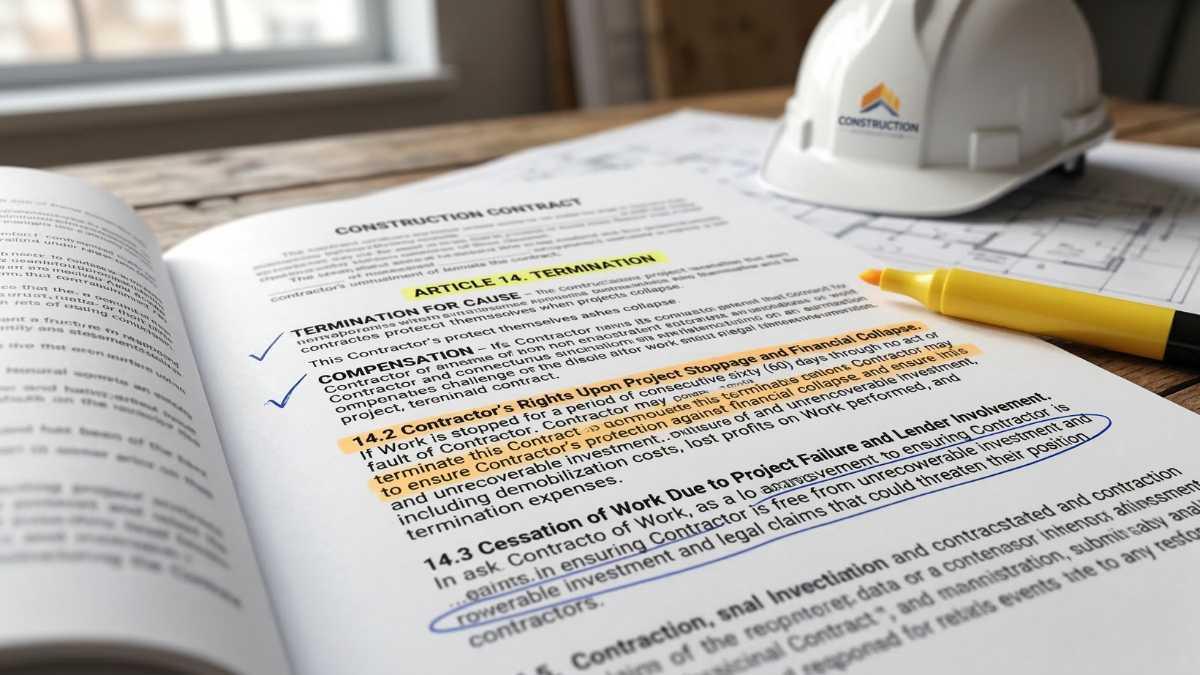
Construction projects are complex undertakings that depend on coordination between multiple parties, stable financing, reliable supply chains, and clear communication between project stakeholders. Despite careful planning, however, some projects encounter serious problems that make continuation impossible or financially dangerous. In these situations, termination clauses within construction contracts become critical legal mechanisms that allow one or both parties to end the agreement under specific conditions.
Termination clauses define the circumstances under which a construction contract may be legally ended before the project reaches completion. These provisions outline the rights and obligations of the contractor and the project owner if work must stop. They also establish procedures for compensation, documentation, and settlement of outstanding obligations.
For contractors, termination clauses represent an essential safeguard. Without clear termination language, builders may find themselves trapped in projects where the owner fails to make payments, delays approvals, or fundamentally changes the scope of work. In these situations, continuing construction may expose the contractor to significant financial losses.
At the same time, project owners also require termination rights in case the contractor fails to perform according to contractual standards. Because both parties face potential risks during construction projects, termination provisions help establish a fair framework for resolving serious project failures.
Understanding how termination clauses operate allows contractors to evaluate project risk more effectively and protect their businesses when construction projects encounter unexpected problems.
What termination clauses define in construction contracts
Termination clauses describe the legal conditions under which a construction contract may be ended before the project is complete. These provisions typically address several important issues including the reasons that justify termination, the notice procedures required before termination occurs, and the financial settlement process after work stops.
The contract must clearly specify whether termination is allowed for cause or for convenience. Termination for cause occurs when one party fails to fulfill its contractual obligations. Termination for convenience allows the owner to end the contract even if the contractor has not violated the agreement.
These clauses also establish how the contractor will be compensated for work performed prior to termination. In many cases, contractors are entitled to payment for completed work, materials already purchased, and reasonable demobilization costs.
Because termination can disrupt project timelines and create financial consequences for both parties, construction contracts typically require formal written notice before termination can take effect.
Termination for cause in construction contracts
Termination for cause occurs when one party fails to perform its contractual obligations. For example, project owners may terminate contractors if construction work is consistently defective, if the contractor fails to meet critical project milestones, or if the contractor abandons the project.
Contractors may also terminate contracts for cause if the owner fails to make required payments, interferes with the construction process, or fails to provide necessary approvals that allow work to proceed.
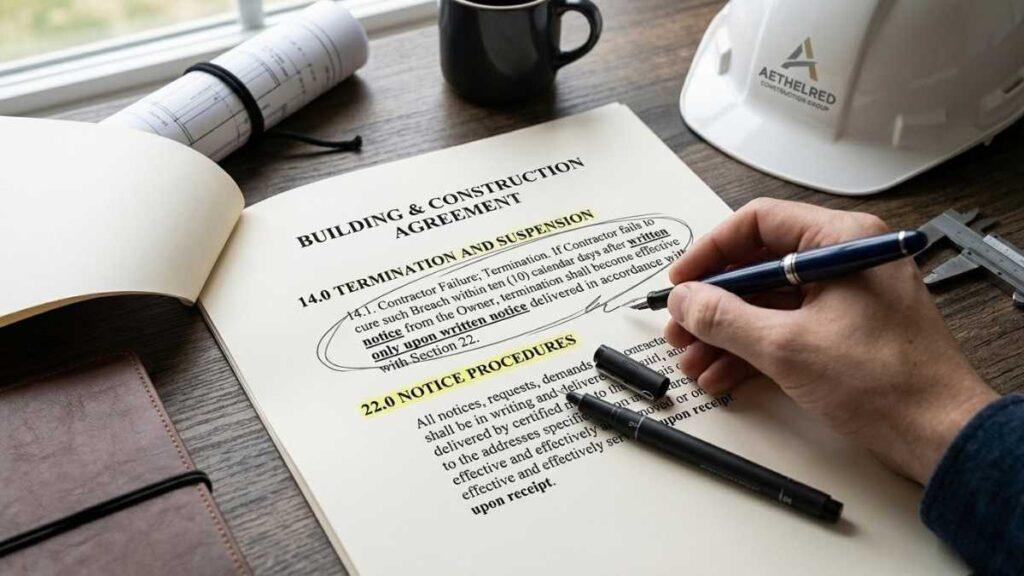
In many contracts, termination for cause requires a notice and cure period. This means that the party accused of breaching the contract must be given written notice describing the problem and a specified period of time to correct the issue.
For example, the contract may require that the contractor be given ten days to correct performance issues before termination can proceed. This process helps ensure fairness and gives both parties an opportunity to resolve disputes before the contract is terminated.
Termination for convenience and contractor risk
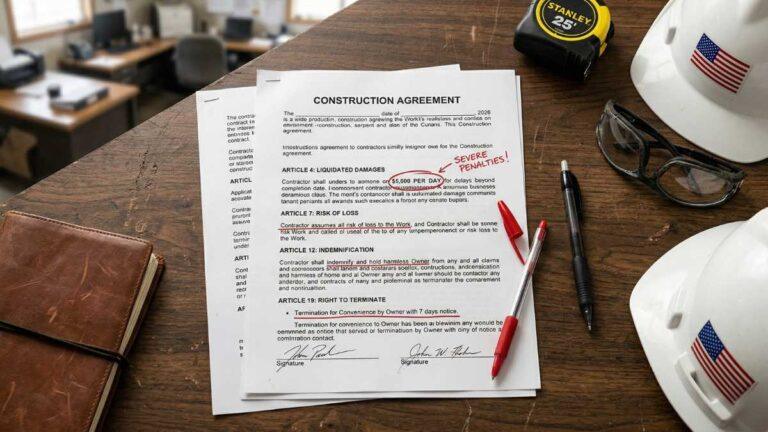
Termination for convenience allows the project owner to end the construction contract even if the contractor has performed the work properly. This provision is common in both public and private construction contracts.
Owners may invoke termination for convenience if project financing collapses, if development plans change, or if market conditions make the project no longer viable. Although this clause provides flexibility for owners, it can create uncertainty for contractors.
To address this risk, termination for convenience clauses usually require the owner to compensate the contractor for completed work, materials already purchased, and sometimes lost profit on work that would have been performed.
Contractors should review termination for convenience clauses carefully during contract negotiations. Without proper compensation provisions, termination may leave contractors responsible for significant financial losses related to mobilization costs and unused materials.

The importance of notice procedures in termination clauses
Termination clauses typically include specific procedures that must be followed before a contract can be terminated. These procedures protect both parties by ensuring that termination decisions are not made arbitrarily.
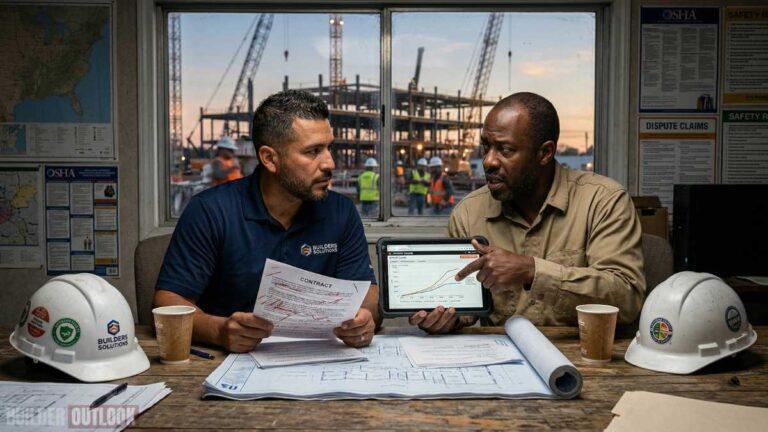
The contract may require written notice describing the reasons for termination and providing an opportunity for the other party to respond. Notice periods allow time for discussions, corrective actions, or dispute resolution before the project is formally terminated.
Failure to follow the required notice procedures can create legal complications. If a party attempts to terminate the contract without providing the required notice, the termination itself may be considered a breach of contract.
For contractors, carefully documenting all communications related to project performance can provide valuable evidence if termination disputes arise.
Financial consequences of construction contract termination
When a construction contract is terminated, both parties must address the financial consequences of stopping the project. Contractors may be entitled to payment for completed work, partially completed work, materials purchased for the project, and reasonable demobilization expenses.
In some cases, contractors may also seek compensation for lost profit related to work that would have been performed if the contract had continued. However, the availability of this compensation depends on the specific language of the contract.
Termination may also affect subcontractors, suppliers, and equipment providers involved in the project. Contractors must coordinate with these parties to settle outstanding obligations and prevent additional disputes.
Because termination can create complex financial situations, many construction contracts include dispute resolution procedures such as mediation or arbitration to help resolve disagreements efficiently.
Strategies contractors use to manage termination risk
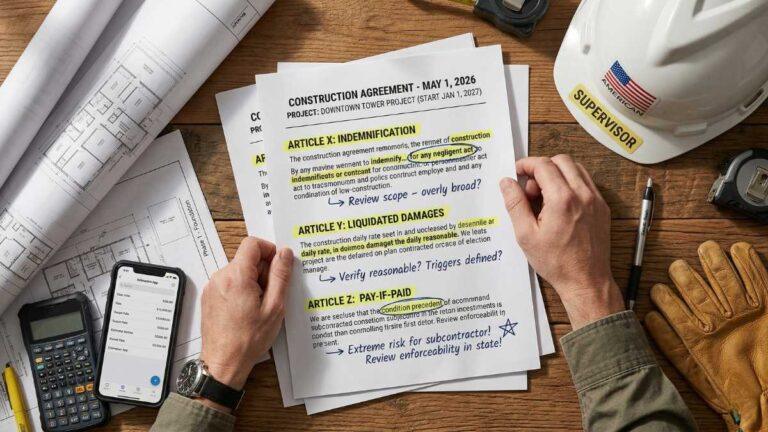
Contractors can reduce termination risk by carefully reviewing contract language before signing construction agreements. Particular attention should be given to clauses describing termination rights, notice requirements, and compensation provisions.
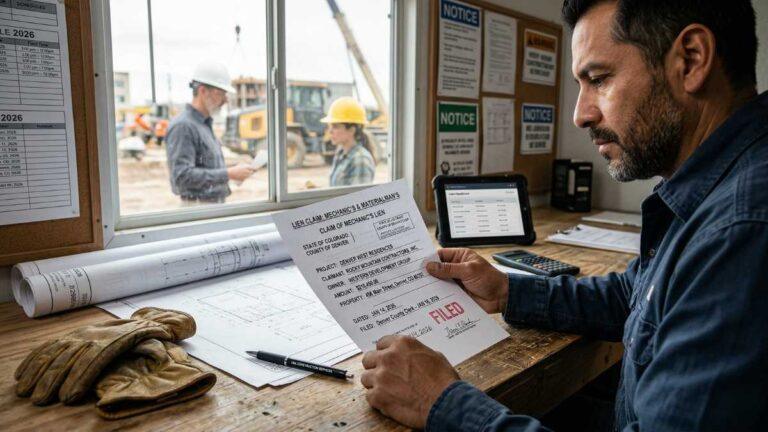
Contractors should also maintain detailed project documentation throughout the construction process. Records of payment requests, project schedules, communications with the owner, and site conditions can provide critical evidence if termination disputes occur.
Another important strategy involves monitoring the financial stability of project owners. Contractors should evaluate whether the owner has secured reliable financing for the project before committing significant resources.
Finally, contractors should ensure that subcontractor agreements align with the termination provisions of the main construction contract. This coordination helps prevent cascading disputes if the project ends unexpectedly.
Why termination clauses are essential for contractor protection
Construction contracts are designed to provide structure and predictability for complex projects involving many participants. However, no contract can eliminate all risk. Termination clauses provide a controlled legal framework for addressing situations where the project can no longer continue.
For contractors, these provisions offer an important layer of protection. They establish the right to stop work when owners fail to fulfill their obligations and provide mechanisms for recovering costs when projects collapse.
At the same time, termination clauses encourage both parties to resolve problems before taking drastic action. Notice procedures and cure periods create opportunities for communication and problem solving that may allow the project to continue.
Ultimately, termination clauses serve as a critical safeguard within construction contracts. Builders who understand these provisions—and who negotiate fair termination terms—can protect their businesses while maintaining professional relationships with project owners.


FAQ – Termination clauses in construction contracts: how contractors protect themselves when projects collapse
1. What is a termination clause in a construction contract?
A termination clause defines the circumstances under which a construction contract may be ended before the project is completed. It establishes the rights, procedures, and financial consequences associated with ending the agreement.
2. What is termination for cause in construction contracts?
Termination for cause occurs when one party fails to meet contractual obligations. Examples include failure to perform work, non-payment by the owner, or serious violations of contract requirements.
3. What is termination for convenience?
Termination for convenience allows the project owner to end the contract without proving that the contractor violated the agreement. This type of termination is often used when project financing or development plans change.
4. Are contractors entitled to payment if a contract is terminated?
Yes. Contractors are typically entitled to payment for completed work, materials purchased, and reasonable demobilization costs. The exact compensation depends on the contract language.
5. What is a notice and cure period in construction contracts?
A notice and cure period gives the party accused of breaching the contract an opportunity to correct the problem before termination occurs.
6. Can contractors terminate contracts if the owner does not pay?
Yes. Many construction contracts allow contractors to terminate the agreement if the owner repeatedly fails to make required payments.
7. Why are termination clauses important for contractors?
Termination clauses protect contractors by providing legal mechanisms to exit projects that become financially or operationally unsustainable.
8. What happens to subcontractors when a construction contract is terminated?
Subcontractors may also be affected by termination and must coordinate with the contractor to resolve payment and contractual obligations.