In the current U.S. construction environment, one of the most underestimated sources of financial loss is not execution failure, labor shortage, or material volatility — it is the decision to pursue the wrong project. Contractors across the United States are still investing significant time, estimating resources, and operational attention into projects that should have been filtered out before the bidding process even began.
In 2026, this problem has intensified.
Bid opportunities are more frequent, but they are not necessarily better. Owners are releasing projects under pressure, timelines are often compressed, documentation is sometimes incomplete, and project feasibility is increasingly uncertain due to financing conditions, permitting risk, and market volatility. At the same time, contractors are under pressure to maintain backlog, which leads many to pursue opportunities without properly qualifying them.
The result is a misallocation of one of the most valuable resources in any construction company: estimating capacity.
Estimating is not just a technical process. It is a strategic investment of time and expertise. Every hour spent pricing a project that should not have been pursued is an hour not spent on a viable opportunity. Over time, this creates a hidden cost that directly impacts profitability and operational efficiency.
The contractors who are winning consistently in 2026 are not the ones bidding the most projects. They are the ones bidding the right projects.
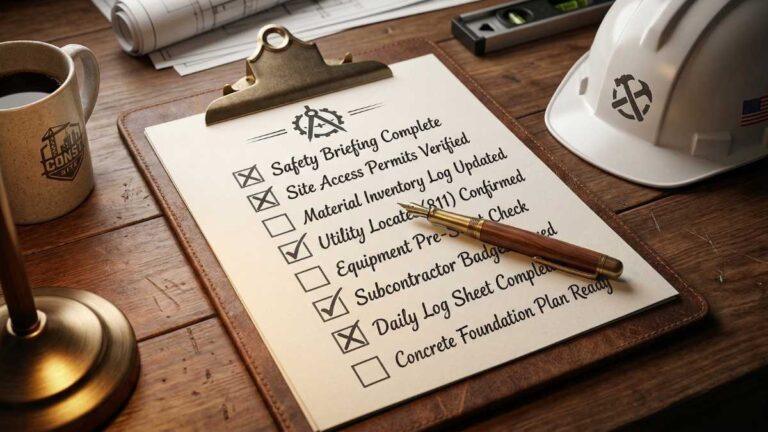
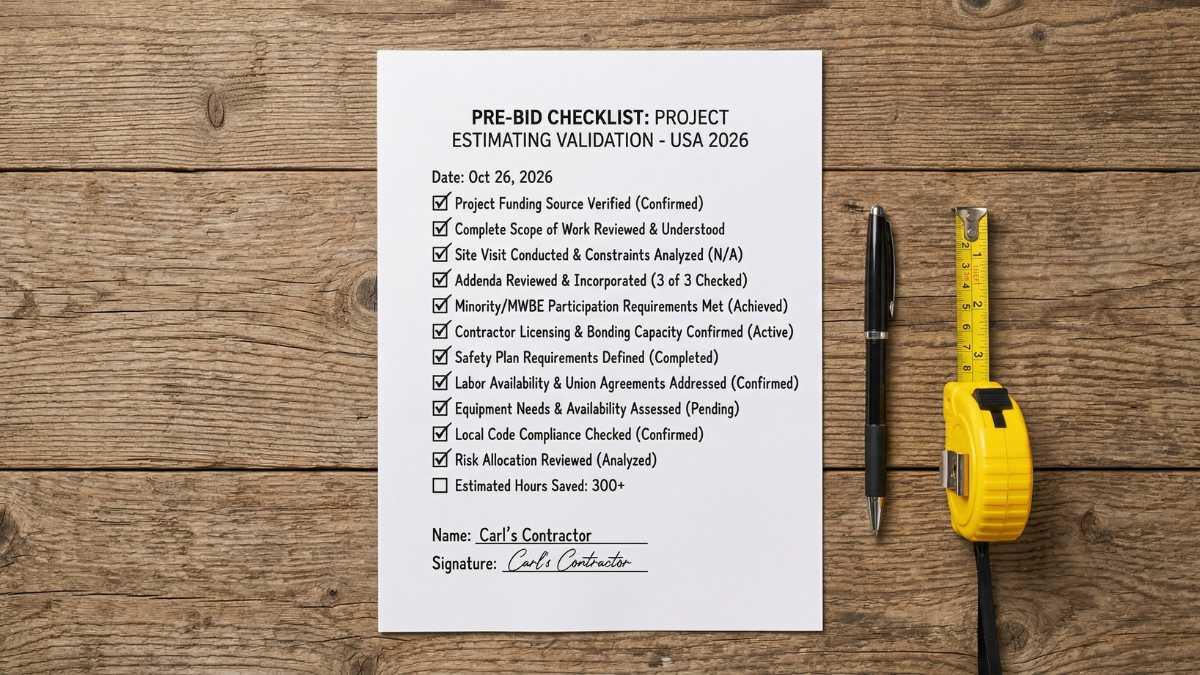
This is where a structured pre-bid checklist becomes critical. Not as a formality, but as a decision system that filters opportunities, identifies risk early, and ensures that estimating resources are deployed where they actually create value.
WHY PRE-BID VALIDATION IS NOW A STRATEGIC FUNCTION
Historically, pre-bid qualification was treated as a quick review process — a brief assessment of project size, location, and scope before moving into estimating. In today’s environment, that approach is insufficient.
Construction projects in the United States are now influenced by a broader set of variables than ever before. Financing conditions can shift between preconstruction and start. Permitting timelines are less predictable. Subcontractor availability varies significantly by region. Material lead times can disrupt schedules even when pricing appears stable.
Ignoring these variables at the pre-bid stage does not eliminate them. It simply delays their impact.
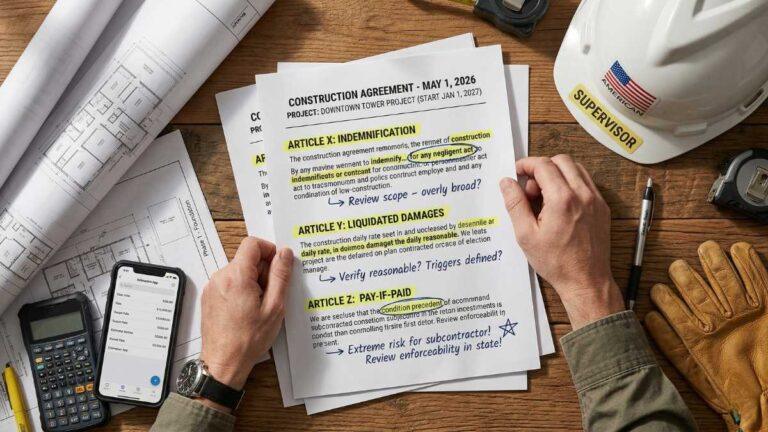
Contractors who move directly into estimating without validating these factors are essentially pricing uncertainty without understanding it. This leads to inaccurate bids, poor project selection, and exposure to risks that could have been identified earlier.
Pre-bid validation, when done correctly, transforms bidding from a reactive process into a controlled decision system. It allows contractors to assess not only whether they can win a project, but whether they should pursue it in the first place.
THE REAL COST OF SKIPPING PRE-BID ANALYSIS
The cost of skipping a structured pre-bid checklist is rarely visible in a single project. It accumulates over time.
Estimating teams become overloaded, reducing the quality of analysis.
Project managers inherit jobs with hidden risks that were not identified early.
Operational teams are forced to adapt to conditions that could have been anticipated.
Most importantly, contractors commit to projects that do not align with their capabilities, resources, or strategic goals.
In markets like Texas and Florida, where project volume is high, contractors often chase multiple opportunities simultaneously without proper filtering. This creates a situation where estimating teams are stretched thin, and decisions are made based on incomplete information.
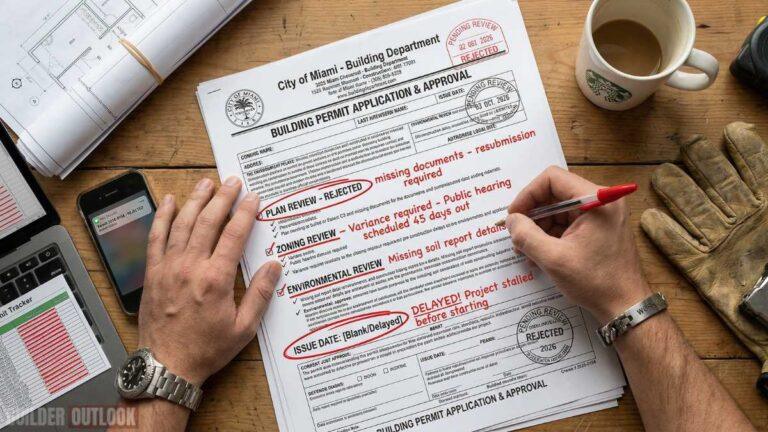
In more regulated markets such as California and New York, the cost of poor pre-bid analysis is even higher. Projects may appear viable at first glance but encounter permitting delays, compliance challenges, or financing constraints that significantly impact execution.
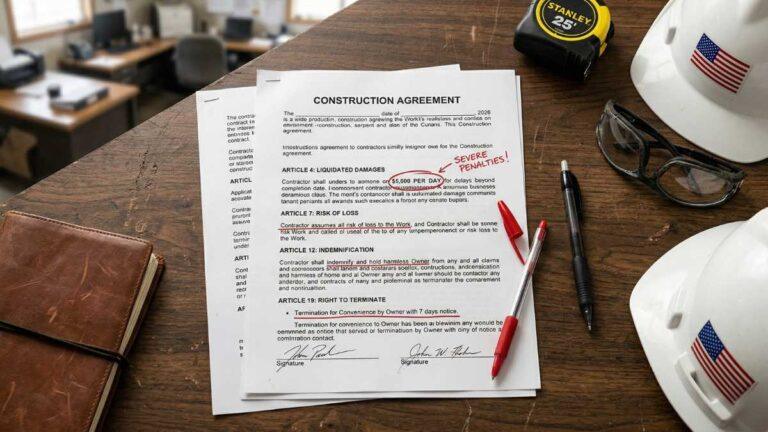
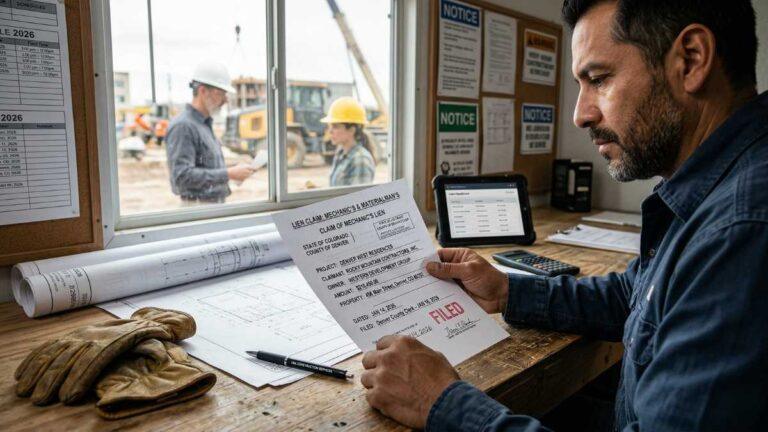
The hidden cost is not just financial. It is operational stress, reduced efficiency, and increased exposure to disputes.
Builder Inteligence
Advertising


WHAT HIGH-PERFORMANCE CONTRACTORS ACTUALLY VALIDATE BEFORE BIDDING
Contractors operating at a high level approach pre-bid analysis as a structured evaluation process that covers multiple dimensions of the project. The goal is not to eliminate all risk — that is impossible — but to understand it well enough to make informed decisions.
The first dimension is project feasibility.
This includes assessing whether the project is likely to move forward as planned. Contractors evaluate financing status, owner credibility, and market conditions to determine whether the project is viable. A project with uncertain funding or unrealistic timelines may consume estimating resources without ever reaching execution.
The second dimension is scope clarity.
Incomplete or ambiguous documentation is a major source of risk. Contractors review drawings, specifications, and bid documents to identify gaps, inconsistencies, or areas that may require assumptions. The more assumptions required, the higher the risk.
The third dimension is permitting and regulatory exposure.
In 2026, permitting is not a secondary concern. Contractors assess zoning requirements, approval timelines, and potential regulatory challenges that could delay the project. Ignoring these factors at the pre-bid stage often leads to schedule disruptions later.
The fourth dimension is subcontractor availability.
Even if a project is viable, it cannot be executed without the right subcontractors. Contractors evaluate whether qualified subcontractors are available in the region and whether they have the capacity to take on the work within the required timeframe.
The fifth dimension is internal alignment.
Not every project fits every contractor. High-performance builders assess whether the project aligns with their operational strengths, resource availability, and strategic direction. Pursuing projects outside of core competencies increases risk and reduces efficiency.
WHY MOST CONTRACTORS STILL OVERLOOK THESE FACTORS
The primary reason contractors skip thorough pre-bid validation is pressure.
Pressure to maintain backlog.
Pressure to stay competitive.
Pressure to respond quickly to opportunities.
In a fast-moving market, slowing down to analyze a project may feel counterintuitive. However, the cost of moving too fast without clarity is significantly higher.
Another reason is the lack of structured systems. Many contractors rely on informal decision-making processes based on experience rather than standardized evaluation criteria. While experience is valuable, it is not always sufficient in a rapidly changing environment.
Finally, there is a cultural factor. In some organizations, bidding is seen as a numbers game — the more bids submitted, the higher the chance of winning work. This approach ignores the quality of opportunities and focuses solely on quantity.
In 2026, this mindset is becoming increasingly ineffective.
HOW LEADING CONTRACTORS TURN PRE-BID ANALYSIS INTO COMPETITIVE ADVANTAGE
Contractors who treat pre-bid validation as a strategic function gain several advantages.
They allocate estimating resources more efficiently, focusing on projects with higher probability of success and better alignment with their capabilities.
They identify risks early, allowing them to adjust strategy, pricing, or scope before committing to a bid.
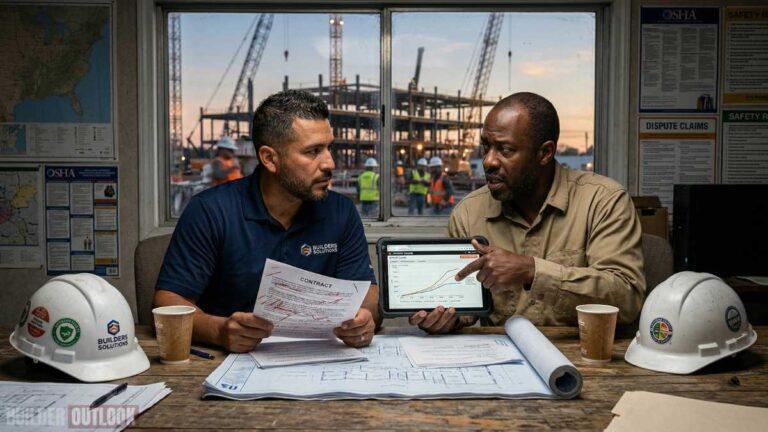
They improve internal coordination by ensuring that all stakeholders — estimating, operations, and management — are aligned before pursuing a project.
They build stronger relationships with owners and subcontractors by engaging in projects where they can deliver consistent performance.
Most importantly, they maintain control over their pipeline.
Instead of reacting to every opportunity, they choose where to compete.
In the current U.S. construction landscape, the decision to bid is as important as the execution of the project itself. Contractors who continue to approach bidding as a reactive process will face increasing inefficiencies, higher risk exposure, and reduced profitability.
Those who implement structured pre-bid checklists and treat project selection as a strategic decision will operate with greater clarity, efficiency, and control.
The difference is not in the number of opportunities available.
It is in the discipline to choose the right ones.
More from Builder Inteligence
Advertising


FAQ – Pre-bid checklist in the United States: what contractors must validate before spending real estimating hours in 2026
1. What is a pre-bid checklist in construction?
A pre-bid checklist is a structured process used by contractors to evaluate project feasibility, risks, and alignment before committing estimating resources to a construction bid.
2. Why is pre-bid validation important in 2026?
Because increased market volatility, permitting complexity, and subcontractor constraints make it critical to assess project viability before investing time in estimating.
3. What factors should be included in a pre-bid checklist?
Key factors include project feasibility, scope clarity, permitting risk, subcontractor availability, and alignment with contractor capabilities.
4. How does pre-bid analysis affect profitability?
By filtering out high-risk or low-value projects, contractors can focus resources on opportunities with better outcomes, improving overall profitability.
5. Can pre-bid validation eliminate project risk?
No, but it significantly reduces exposure by identifying potential issues early and allowing for informed decision-making.
6. Why do contractors skip pre-bid analysis?
Common reasons include pressure to maintain backlog, lack of structured systems, and a focus on bid volume rather than quality.
7. How do leading contractors approach pre-bid evaluation?
They use structured systems, involve multiple stakeholders, and prioritize strategic alignment over reactive bidding.
8. What happens if a contractor bids the wrong project?
It can lead to inaccurate pricing, operational challenges, delays, and reduced margins, affecting both project performance and company stability.