Bid day in 2026 feels unfamiliar to many contractors not because the process changed on paper, but because the risk profile behind every number is fundamentally different. What once was a moment of competitive confidence has become a moment of calculated exposure.
General contractors, subcontractors, and owners are all approaching bid day with hesitation. The shift is subtle, but its impact is profound. Fewer hard numbers. More assumptions. More exclusions. More contingency hidden between the lines.
Bid day is no longer about who can price faster or cheaper. It is about who can survive uncertainty longer.
Why fewer bidders show up with firm numbers
In previous cycles, bidders trusted cost behavior. Today, volatility breaks that trust. Subcontractors struggle to hold pricing beyond short windows. Suppliers refuse to lock material costs. Labor availability changes week to week.
As a result, many bidders arrive with qualifications instead of commitments. They protect themselves against escalation, lead time shifts, and productivity loss. This behavior is not defensive by choice. It is defensive by necessity.
Bid day reflects fear of unknown exposure.
The rise of conditional pricing
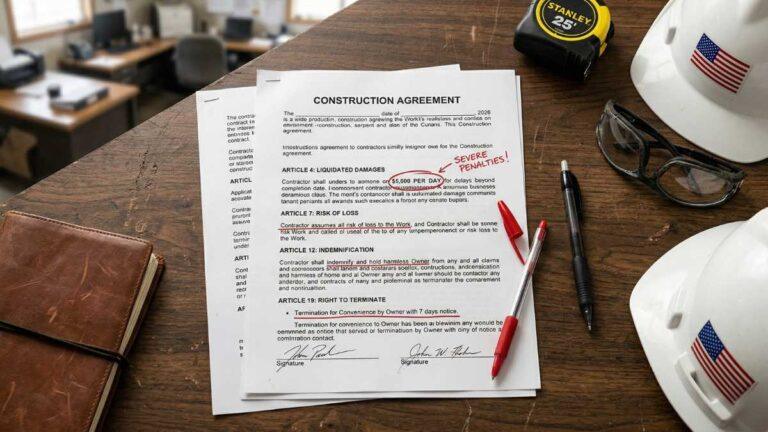
Conditional pricing has become standard in 2026. Escalation clauses. Allowances. Provisional sums. Shared risk language.
These conditions are not signs of weak contractors. They are signals of a market that no longer rewards blind certainty.
Owners who expect clean bids without flexibility are often disappointed. Contractors who submit rigid numbers assume disproportionate risk.


Bid spreads are wider and harder to explain
Bid spreads in 2026 are wider than historical norms. Owners see large gaps
between lowest and highest bidders and struggle to understand why.
The explanation is simple. Each bidder is pricing a different risk scenario. Some assume escalation stabilizes. Others assume disruption continues. Some price labor scarcity aggressively. Others gamble on availability.
Bid day becomes a referendum on risk philosophy, not just cost efficiency.
Why speed no longer wins bid day
Speed once created advantage. Faster estimates meant earlier submission and perceived confidence.
In 2026, speed without depth creates exposure. Contractors who rush bids miss cascading risk variables tied to schedule, logistics, insurance, and subcontractor coordination.
Deliberate bidders may lose on price but win on survivability.
Regional GEO dynamics reshape bid behavior
Bid day behavior varies by region. Florida bids include insurance and climate risk premiums. Texas bids reflect labor competition from infrastructure and energy projects. California bids carry regulatory and compliance uncertainty. Southeast bids factor supply chain congestion and workforce mobility.
National contractors must adjust bid strategy region by region. Uniform assumptions fail.
Owners unintentionally contribute to bid distortion
Owners often compress bid timelines to force commitment. This strategy backfires.
Short bid windows reduce accuracy. They increase defensive pricing. They discourage qualified bidders from participating.
Bid day distortion often originates upstream.
The psychological shift contractors feel on bid day
Bid day in 2026 is stressful not because of competition, but because of responsibility. Contractors understand that winning a job at the wrong price can threaten the entire organization.
Winning no longer feels like success if execution risk outweighs reward.
What successful contractors do differently on bid day
They bid selectively. They communicate assumptions early. They educate owners on risk drivers. They protect margins intentionally. They accept losing work to avoid destructive exposure.
Bid day becomes a filter, not a finish line.


FAQ – Bid day dynamics in 2026
1. Why does bid day feel more uncertain in 2026?
Bid day feels more uncertain because contractors can no longer rely on stable cost behavior. Volatility in labor, materials, insurance, and scheduling makes firm commitments riskier than in previous cycles.
2. Why are more bids filled with qualifications and exclusions?
Qualifications protect contractors from uncontrollable variables. They reflect realistic risk management rather than lack of confidence or preparation.
3. Why are bid spreads wider now?
Bid spreads widen because bidders assume different risk scenarios. Each contractor prices uncertainty differently, leading to larger variation between bids.
4. Is conditional pricing a bad sign?
No. Conditional pricing reflects transparency. It signals that contractors are identifying risk rather than hiding it inside fixed numbers.
5. How do regional factors affect bid day behavior?
Regional labor markets, insurance costs, regulations, and supply chains change cost assumptions. Bid strategies must adjust locally to remain accurate.
6. Why do compressed bid timelines hurt owners?
Short timelines reduce accuracy, increase defensive pricing, and discourage qualified bidders. Owners often pay more when rushing the process.
7. Why are fewer bidders participating in some markets?
Qualified contractors avoid bid environments where risk is misaligned. Reduced participation reflects discipline, not lack of opportunity.
8. What separates strong contractors on bid day in 2026?
Strong contractors bid selectively, communicate risk clearly, and prioritize long-term stability over short-term volume.