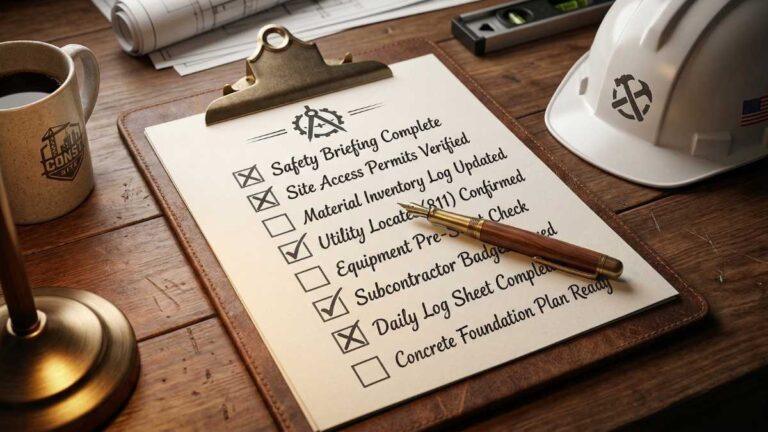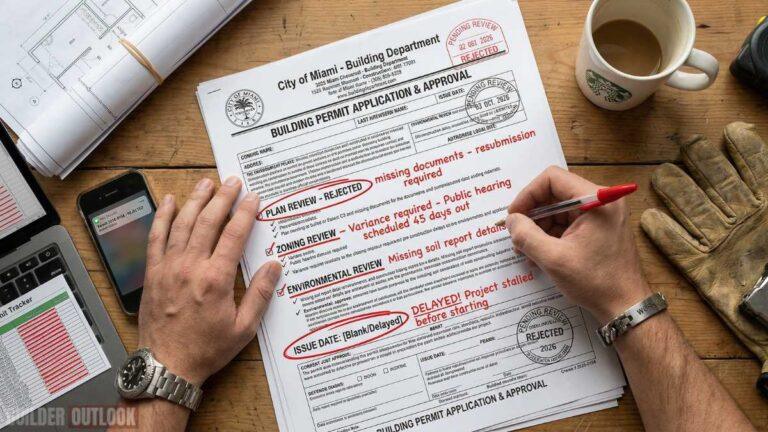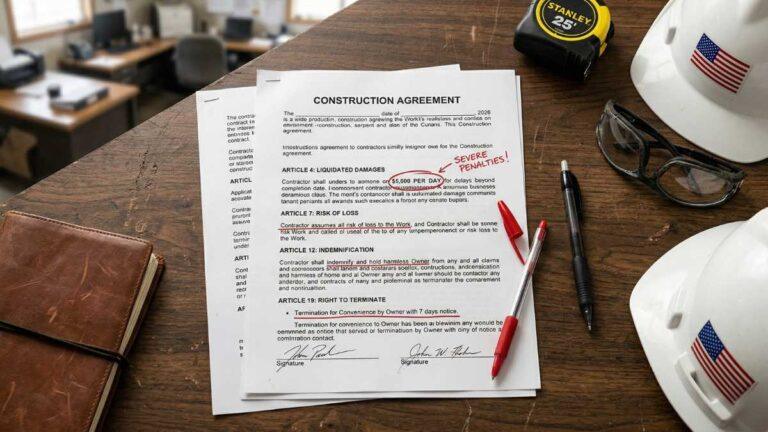
In construction, survival does not depend on strength. It depends on structure. In 2026, builders operate in an environment shaped by regulatory scrutiny, insurance pressure, labor volatility, cost fluctuation, and increasingly sophisticated owners. Informal operations no longer sustain long-term profitability.
Most construction companies believe their biggest risks come from the field — weather, labor shortages, supply chain delays. In reality, the greatest financial threats often originate from documentation gaps. An unsigned change order. An uninsured subcontractor. A misclassified worker. A vague proposal. An undocumented safety protocol. These are not minor administrative errors. They are structural vulnerabilities.
The Builder Protection System was created to eliminate preventable risk. It is not a theoretical framework. It is a practical operational architecture built around the exact documentation tools contractors need to protect margins, reduce disputes, and stabilize growth.
Below you will find the core documents that form this system. Each template is accompanied by strategic context. These are not generic downloads. They are operational safeguards.

1. Subcontractor agreement template
Construction subcontractor agreement template: structure, risk protection, and proper usage.
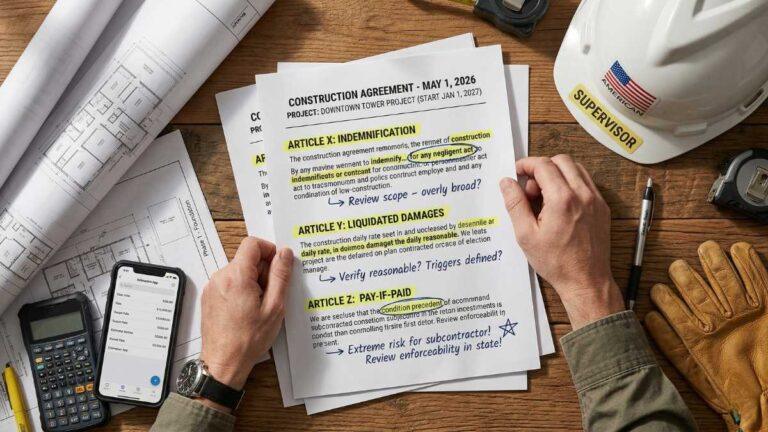
Few documents are more critical to a construction company’s operational stability than a properly structured subcontractor agreement. In 2026, with labor volatility, insurance scrutiny, and increasing litigation exposure, informal handshake arrangements are no longer defensible. Builders who operate without written subcontract agreements expose themselves to financial risk, payment disputes, liability confusion, and regulatory complications.
A subcontractor agreement defines scope, payment structure, insurance obligations, indemnification responsibilities, schedule expectations, and dispute resolution procedures. Without it, general contractors often assume liability for actions beyond their control. Courts routinely look to written agreements to determine responsibility allocation when disputes arise.
This educational template is designed to illustrate the structural components commonly found in professionally drafted construction subcontract agreements in the United States. It is not state-specific and must not be used without legal review. However, it provides builders with a strong structural framework to understand how subcontractor risk should be allocated.
In modern construction environments, structured subcontract agreements are not optional. They are foundational risk management tools.
How to use this template properly
This template should be used as:
* A structural checklist before engaging a subcontractor
* A comparison tool against existing subcontract agreements
* A preparation document before consulting a construction attorney
* A baseline internal risk management reference
Builders should never rely on a generic template as a final enforceable contract. Each state has lien laws, indemnification limitations, and insurance requirements that vary significantly. This template provides a framework — not legal validation.
Legal disclaimer
This subcontractor agreement template is provided for educational and informational purposes only. It is intended as a structural example of common clauses found in U.S. construction subcontract agreements.
This sample does not constitute legal advice, does not create an attorney-client relationship, and may not comply with the specific laws of your state.
Construction contract law varies significantly by jurisdiction, including lien rights, indemnification limits, insurance requirements, and pay-if-paid provisions. Builders must consult a licensed construction attorney in their state before using any subcontract agreement in a legally binding capacity.
Builder Outlook makes no representations or warranties regarding enforceability, compliance, or legal sufficiency of this template.
Use of this document is at your own risk.
2 – Change order form template
Construction change order form template: how builders protect margin and prevent scope disputes
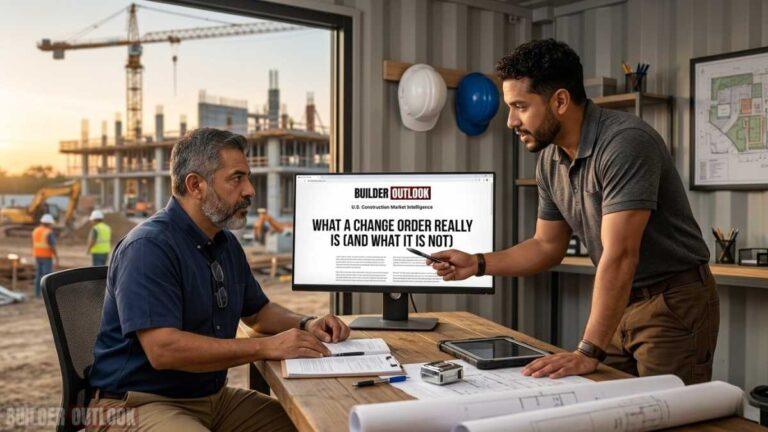
Few documents in construction carry as much financial impact as a properly structured change order. In volatile cost environments, unclear change documentation can silently erode profitability. Builders frequently perform additional work based on verbal agreements, informal emails, or assumed approvals, only to encounter payment resistance later. In 2026, that operational behavior is financially dangerous.
A change order formalizes adjustments to scope, pricing, and schedule. It converts ambiguity into documentation. Without written change authorization, contractors assume disproportionate risk. Courts and project owners rely heavily on written documentation to determine entitlement to payment.
The most common source of margin loss in construction is not original bid error. It is undocumented scope expansion. When field teams proceed without formal written approval, revenue leakage begins immediately. Builders who systematize change order discipline strengthen cash flow stability and reduce dispute frequency.
This educational template provides a structured example of how change orders are typically formatted in U.S. construction projects. It does not replace legal drafting or project-specific contract requirements but serves as a practical operational framework.
How to use this template properly
This template should be used:
* Whenever project scope changes
* Before additional work begins
* Before materials are ordered for revised scope
* To document time extensions
* To document cost adjustments
Best practice:
Never perform additional work without signed written change authorization unless the prime contract explicitly defines emergency procedures.
Legal disclaimer
This change order template is provided for educational and informational purposes only. It is intended to illustrate the structural components commonly included in construction change documentation.
This document does not constitute legal advice, does not create an attorney-client relationship, and may not satisfy the contractual or statutory requirements applicable in your state or project.
Builders should review their prime contract and consult a licensed construction attorney before implementing change order procedures.
Builder Outlook makes no representations or warranties regarding enforceability, compliance, or sufficiency of this template.
Use of this sample is at your own risk.

3 – Independent contractor agreement template
Independent contractor agreement template: how builders reduce labor misclassification risk and regulatory exposure
Few legal risks in construction are as underestimated — and as financially dangerous — as worker misclassification. In 2026, federal and state agencies have intensified scrutiny over independent contractor relationships, particularly in industries like construction where subcontracted labor is common. Builders who improperly classify workers face IRS penalties, Department of Labor enforcement, unpaid payroll tax liabilities, workers’ compensation violations, and potential civil litigation.
The distinction between an employee and an independent contractor is not determined by what the parties call the relationship. It is determined by legal standards based on behavioral control, financial control, and the overall nature of the working relationship. Many contractors mistakenly believe that issuing a 1099 automatically creates independent contractor status. It does not.
A properly structured independent contractor agreement does not guarantee compliance, but it significantly strengthens documentation of intent, scope, autonomy, and payment structure. Without written agreements, builders are exposed to regulatory interpretation that may default toward employee classification.
This educational template illustrates common structural components found in independent contractor agreements used in the U.S. construction industry. It does not override federal or state classification tests and must be reviewed by qualified legal counsel before use.
How to use this template properly
This template should be used:
* When engaging 1099 subcontract labor;
* When hiring specialty trades on a project basis;
* When engaging consultants or temporary construction services;
* When formalizing project-based labor relationships.
Important operational warning:
If the contractor controls schedule, provides tools, directs daily activity, and integrates the worker into core operations, legal classification may shift toward employee regardless of contract language.
Builders must evaluate classification standards under:
* IRS common law test;
* U.S. Department of Labor economic reality test;
* State-specific labor laws.
Legal disclaimer
This Independent contractor agreement template is provided for educational and informational purposes only. It is intended to illustrate the structural components commonly included in construction change documentation.
This document does not constitute legal advice, does not create an attorney-client relationship, and may not satisfy the contractual or statutory requirements applicable in your state or project.
Builders should review their prime contract and consult a licensed construction attorney before implementing change order procedures.
Builder Outlook makes no representations or warranties regarding enforceability, compliance, or sufficiency of this template.
Use of this sample is at your own risk.
4 – Client pre-qualification intake form
Client pre-qualification intake form: how smart builders filter risk before signing contracts.
Most construction disputes do not begin with technical failure. They begin with poor client selection. In 2026, margin compression, litigation risk, and financing volatility make pre-qualification more important than ever. Builders who fail to screen clients properly often face payment delays, unrealistic expectations, financing collapses, and scope instability long before project completion.
Many contractors focus heavily on qualifying subcontractors but neglect qualifying owners. This is a structural mistake. A disciplined client intake process reduces financial exposure, clarifies expectations, and filters high-risk projects before resources are committed. In volatile housing and commercial markets, saying no early is often more profitable than fixing problems later.
A client pre-qualification form does not eliminate risk, but it creates structured visibility into financing readiness, timeline realism, decision-making authority, and prior construction experience. Builders who operate without this process are often reacting rather than selecting.
This educational template illustrates how a structured client intake form can be organized to protect builders operationally and financially.
How to use this template properly
This form should be used:
* Before drafting formal proposals;
* Before investing in detailed estimating;
* Before committing scheduling slots;
* During first serious consultation.
Best practice:
Do not invest significant preconstruction time until the intake form is completed and reviewed.
Legal disclaimer
This Client pre-qualification intake form template is provided for educational and informational purposes only. It is intended to illustrate the structural components commonly included in construction change documentation.
This document does not constitute legal advice, does not create an attorney-client relationship, and may not satisfy the contractual or statutory requirements applicable in your state or project.
Builders should review their prime contract and consult a licensed construction attorney before implementing change order procedures.
Builder Outlook makes no representations or warranties regarding enforceability, compliance, or sufficiency of this template.
Use of this sample is at your own risk.
5 – Certificate of insurance request template
Certificate of insurance request template: how builders verify coverage and avoid catastrophic liability
Few operational failures in construction are as financially devastating as failing to verify insurance coverage before work begins. In 2026, with rising litigation exposure, higher claim severity, and stricter insurer underwriting, assuming coverage without verification is no longer a minor oversight — it is a structural risk.
Many contractors request insurance verbally or accept expired certificates without review. Others fail to confirm additional insured status, policy limits, or policy exclusions. When a claim arises — injury, property damage, or defective work — the absence of proper insurance documentation can shift liability directly to the general contractor.
A Certificate of Insurance (COI) request process creates documentation discipline. It verifies that subcontractors carry valid coverage, appropriate policy limits, and endorsements required by contract. Without this process, builders may unknowingly assume exposure for uninsured trades.
This educational template provides a structured example of how contractors can formally request and verify insurance certificates before allowing subcontractors to mobilize.
How to use this template properly
This template should be used:
* Before subcontractor mobilization;
* Before site access is granted;
* Before issuing first payment;
* At every policy renewal period;
* When project scope increases.
Best practice:
Never allow a subcontractor to begin work without a valid, reviewed, and approved Certificate of Insurance on file.
Legal disclaimer
This Certificate of insurance request template is provided for educational and informational purposes only. It is intended to illustrate the structural components commonly included in construction change documentation.
This document does not constitute legal advice, does not create an attorney-client relationship, and may not satisfy the contractual or statutory requirements applicable in your state or project.
Builders should review their prime contract and consult a licensed construction attorney before implementing change order procedures.
Builder Outlook makes no representations or warranties regarding enforceability, compliance, or sufficiency of this template.
Use of this sample is at your own risk.
6 – Construction safety policy template
Construction safety policy template: how builders reduce OSHA exposure and operational liability
Safety documentation is not just a regulatory requirement. In 2026, it is a financial shield. OSHA enforcement intensity, insurance underwriting scrutiny, and owner prequalification standards have all increased. Builders without a documented safety policy are immediately flagged as high-risk operators.
A written safety policy does three things simultaneously. First, it demonstrates leadership commitment to risk control. Second, it creates procedural clarity for crews and subcontractors. Third, it serves as defensive documentation in the event of investigation or litigation. Without a formal safety policy, builders rely on verbal instruction — which holds little weight in enforcement reviews.
Insurance carriers increasingly evaluate safety programs before issuing or renewing policies. A documented safety framework can influence premium rates, bonding capacity, and project eligibility. Many public and commercial projects require written safety programs during bidding.
This educational template outlines the structure of a basic construction safety policy commonly used in U.S. construction firms.
How to use this template properly
This document should be:
* Reviewed annually;
* Distributed to all field personnel;
* Included in onboarding;
* Integrated into toolbox talks;
* Signed by employees acknowledging receipt.
Legal disclaimer
This Certificate of insurance request template is provided for educational and informational purposes only. It is intended to illustrate the structural components commonly included in construction change documentation.
This document does not constitute legal advice, does not create an attorney-client relationship, and may not satisfy the contractual or statutory requirements applicable in your state or project.
Builders should review their prime contract and consult a licensed construction attorney before implementing change order procedures.
Builder Outlook makes no representations or warranties regarding enforceability, compliance, or sufficiency of this template.
Use of this sample is at your own risk.
7 – Lien waiver template
Lien waiver template: how builders protect payment flow and prevent double payment risk
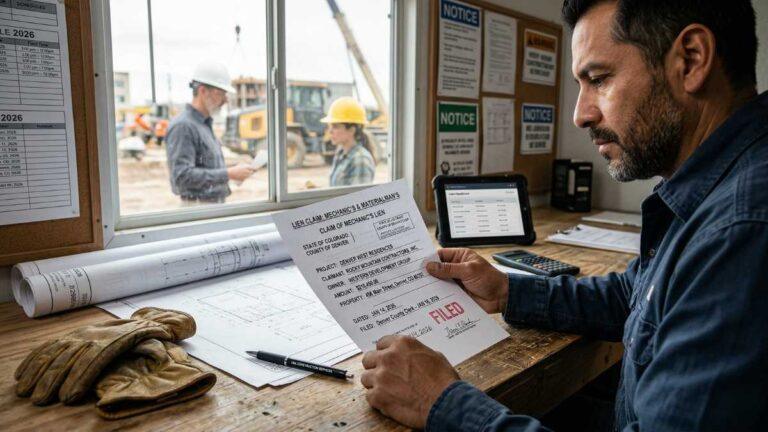
Few documents in construction impact cash flow security as directly as a properly structured lien waiver. In U.S. construction law, subcontractors and suppliers often have the right to file a mechanic’s lien if they are not paid. If builders fail to manage lien waivers correctly, they risk double payment, legal disputes, financing delays, and project encumbrances.
Lien waivers function as payment release documentation. They confirm that a party waives the right to file a lien for work performed through a specific date or payment amount. Without a signed waiver, a contractor may release payment and still face a lien claim later.
There are two primary categories of lien waivers:
* Conditional lien waiver (effective upon receipt of payment);
* Unconditional lien waiver (effective once payment has cleared).
Using the wrong version at the wrong time can create serious legal exposure. Builders must match the waiver type to the payment timing.
How to use this template properly
This template should be used:
* With every progress payment;
* At final payment;
* Before releasing retainage;
* During project closeout;
* When required by lender or owner.
Best practice:
Always confirm state-specific lien laws. Some states require statutory language and do not allow modification of waiver wording.
Legal disclaimer
This Lien waiver template is provided for educational and informational purposes only. It is intended to illustrate the structural components commonly included in construction change documentation.
This document does not constitute legal advice, does not create an attorney-client relationship, and may not satisfy the contractual or statutory requirements applicable in your state or project.
Builders should review their prime contract and consult a licensed construction attorney before implementing change order procedures.
Builder Outlook makes no representations or warranties regarding enforceability, compliance, or sufficiency of this template.
Use of this sample is at your own risk.
8 – Construction bid proposal template:
Construction bid proposal template – builder outlook edition: how builders clarify scope and protect margins before contract execution
A construction bid proposal is more than a price quote. It is the first formal risk allocation document between contractor and client. In 2026, vague proposals are one of the primary causes of scope disputes and profit erosion.
When scope is not clearly defined at the proposal stage, assumptions multiply. Owners interpret inclusions differently. Builders assume exclusions are understood. This gap becomes conflict during execution.
A structured proposal protects:
* Scope clarity
* Payment expectations
* Timeline assumptions
* Allowance transparency
* Change order leverage
Professional proposals increase trust and reduce negotiation friction.
How to use this template properly
This template should be used:
* For residential projects;
* For commercial bids;
* As a standardized estimating output;
* Before drafting final contracts.
Best practice:
Always define inclusions, exclusions, assumptions, and validity period clearly.
Legal disclaimer
This Construction bid proposal template is provided for educational and informational purposes only. It is intended to illustrate the structural components commonly included in construction change documentation.
This document does not constitute legal advice, does not create an attorney-client relationship, and may not satisfy the contractual or statutory requirements applicable in your state or project.
Builders should review their prime contract and consult a licensed construction attorney before implementing change order procedures.
Builder Outlook makes no representations or warranties regarding enforceability, compliance, or sufficiency of this template.
Use of this sample is at your own risk.

9 – Employee handbook template for construction companies
Employee handbook sample for construction companies: how builders create workforce structure, reduce liability, and stabilize operations
In construction, culture is not built through slogans. It is built through structure. In 2026, labor volatility, regulatory scrutiny, wage inflation, and workforce mobility have made internal policy clarity a strategic necessity. Builders who operate without a documented employee handbook expose themselves to inconsistent discipline, discrimination claims, wage disputes, and operational instability.
An employee handbook does not eliminate risk, but it creates documented expectations. It clarifies standards of conduct, compensation policies, safety requirements, and compliance obligations. When disputes arise, courts and regulators frequently examine whether policies were documented, distributed, and consistently enforced.
Construction companies face unique workforce dynamics: field crews, varying job sites, safety hazards, equipment use, subcontractor interaction, and schedule variability. A generic handbook is often insufficient. Builders require industry-specific clarity that addresses real operational conditions.
This educational template illustrates the structural foundation of an employee handbook tailored for construction businesses in the United States.
How to use this template properly
This template should be:
* Reviewed by employment counsel before implementation;
* Updated annually;
* Distributed during onboarding;
* Signed by employees acknowledging receipt;
* Applied consistently across the workforce.
Best practice:
Maintain signed acknowledgment forms in employee files.
Legal disclaimer
This Employee handbook template for construction companies template is provided for educational and informational purposes only. It is intended to illustrate the structural components commonly included in construction change documentation.
This document does not constitute legal advice, does not create an attorney-client relationship, and may not satisfy the contractual or statutory requirements applicable in your state or project.
Builders should review their prime contract and consult a licensed construction attorney before implementing change order procedures.
Builder Outlook makes no representations or warranties regarding enforceability, compliance, or sufficiency of this template.
Use of this sample is at your own risk.
Builder Inteligence

FAQ – The Builder Protection System
1. What is the Builder Protection System in construction?
The Builder Protection System is an integrated documentation framework designed to reduce legal exposure, prevent margin erosion, and stabilize operational risk in construction companies. It combines structured templates such as subcontractor agreements, change orders, insurance verification checklists, lien waivers, bid proposals, and internal workforce policies into a unified compliance and risk management system.
2. Why isn’t licensing and insurance enough to protect a construction company?
Licensing and insurance establish legal authorization to operate, but they do not control daily operational risk. Most disputes arise from undocumented scope changes, uninsured subcontractors, unclear proposals, misclassified workers, or inconsistent internal policies. The Builder Protection System addresses those gaps before they turn into financial losses.
3. How does the system protect construction profit margins?
It protects margins by enforcing documentation discipline. Change orders prevent unpaid scope expansion. Structured bid proposals reduce ambiguity. Lien waivers protect payment flow. Insurance verification reduces liability exposure. Together, these controls prevent silent profit leakage that accumulates across projects.
4. Are the downloadable templates legally binding in every state?
No. The templates are educational structural examples. Construction law varies by state, especially regarding lien waivers, licensing requirements, and employment classification. Builders must consult licensed legal professionals before using any document as a binding agreement.
5. Can small contractors implement the Builder Protection System effectively?
Yes. Smaller builders often benefit more because they have less margin for error. A structured documentation system improves credibility, protects cash flow, and reduces dispute risk without requiring a large administrative team.
6. How does this system reduce subcontractor-related risk?
It requires formal subcontractor agreements, insurance verification through certificates of insurance, and clear scope allocation. These controls reduce liability transfer issues, uninsured claims, and role confusion that often lead to litigation.
7. Why is a change order form critical in 2026?
Construction volatility, fluctuating material costs, and evolving client expectations increase the likelihood of scope adjustments. Without a written change order process, contractors often perform additional work without secured compensation, directly impacting profit margins.
8. What is the biggest compliance mistake builders make today?
The most common mistake is assuming verbal agreements are sufficient. Informal scope approvals, undocumented insurance checks, and unverified worker classification create legal and financial vulnerabilities that only surface during disputes or audits.
9. How does insurance verification protect general contractors?
By requiring certificates of insurance and confirming proper endorsements, builders ensure that liability remains where it belongs. Without insurance verification, claims involving injury or property damage may shift back to the general contractor.
10. Does the system help with OSHA and safety compliance?
Yes. The inclusion of a structured safety policy template helps demonstrate regulatory awareness and operational discipline. While it does not replace OSHA consultation, documented safety procedures reduce enforcement severity and strengthen defense positioning.
11. How do lien waivers improve cash flow stability?
Lien waivers confirm that subcontractors and suppliers waive claim rights after payment. Without them, contractors risk paying twice for the same work or facing legal encumbrances that delay project financing and closeout.
12. What role does the employee handbook play in construction protection?
An employee handbook formalizes workforce expectations, compensation structure, conduct standards, and safety obligations. In employment disputes, written policies often determine the strength of legal defense.
13. Is this system only for large commercial contractors?
No. Residential builders, remodelers, specialty contractors, and small trade operators can all implement the framework. The size of the company does not reduce exposure to risk. In fact, smaller companies often face higher relative vulnerability.
14. How quickly can builders implement the Builder
Protection System?
Implementation can be phased. Many contractors begin with change order discipline and subcontractor agreements, then integrate insurance verification, lien control, and workforce documentation. A structured rollout prevents operational overload.
15. Does the system replace the need for an attorney?
No. The system provides structure, not legal counsel. It strengthens documentation discipline and reduces preventable risk, but legal review is necessary to ensure state compliance and enforceability.
16. How does this framework improve credibility with owners and lenders?
Structured documentation signals operational maturity. Owners and lenders interpret disciplined processes as lower risk. This can influence negotiation leverage, bonding capacity, and overall reputation in competitive markets.
17. What is the financial impact of not having a protection system?
Without structured documentation, contractors face increased unpaid work, regulatory penalties, litigation exposure, double payment risks, insurance claim complications, and workforce disputes. These issues accumulate and weaken long-term profitability.
18. Can this system support business growth and expansion into new states?
Yes. Because it standardizes documentation and compliance procedures, the framework makes it easier to scale operations across multiple jurisdictions while maintaining internal control.
19. Why is documentation discipline considered strategic rather than administrative?
Documentation is strategic because it protects margin, controls risk, accelerates payment approvals, strengthens negotiation positions, and reduces litigation exposure. Builders who treat documentation as infrastructure outperform those who treat it as paperwork.
20. What is the ultimate goal of the Builder Protection System?
The goal is operational control. Construction will always carry risk, but preventable exposure should never be left unmanaged. The system transforms reactive problem-solving into proactive protection, strengthening long-term stability and growth.