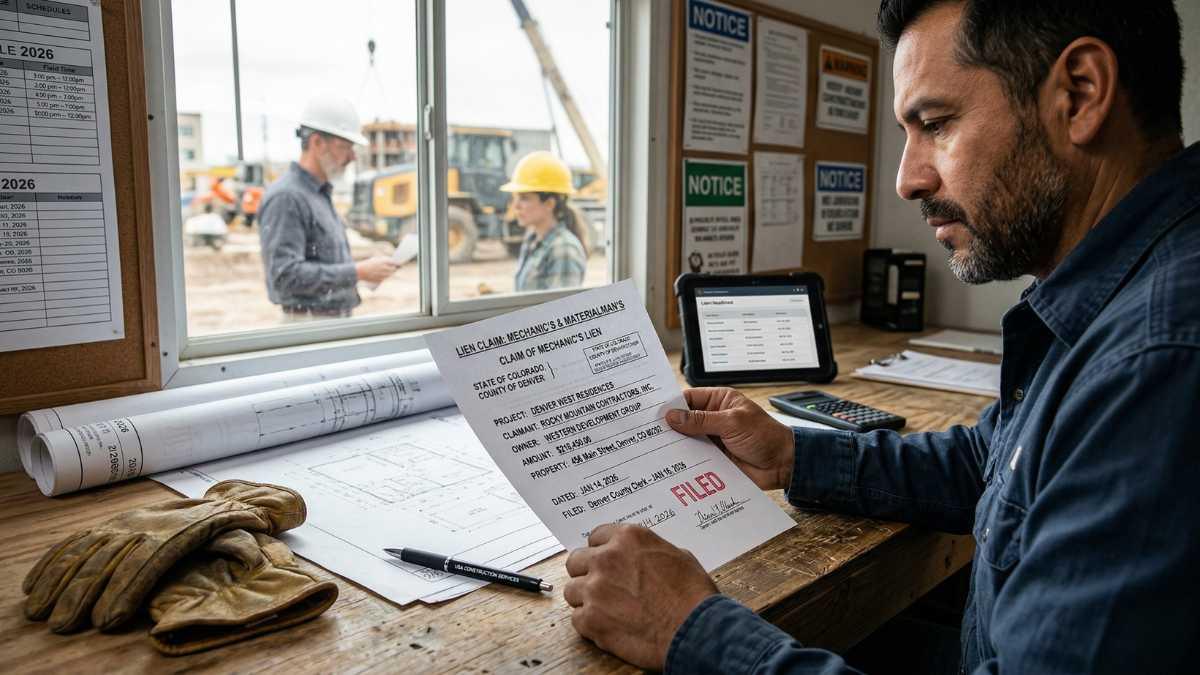
In the United States construction industry, one of the biggest misconceptions among contractors is believing that completing the work guarantees payment.
It does not.
In 2026, payment risk remains one of the most critical and underestimated threats to contractors, subcontractors, and suppliers. Projects can be completed on time, within scope, and at the expected quality level — and still result in delayed payment, partial payment, or no payment at all.
This is where lien rights become essential.
A mechanic’s lien is not just a legal tool. It is one of the most powerful financial protection mechanisms available in construction. It allows contractors and suppliers to secure a claim against the property itself, creating leverage that can be used to enforce payment.
However, the effectiveness of lien rights depends entirely on how they are used.
Deadlines are strict.
Procedures are precise.
Documentation must be accurate.
Missing a single requirement can invalidate the entire claim.
At the same time, lien laws vary by state. What works in Florida may not apply in Texas. What is required in California may differ significantly from New York.
Federal guidance and general legal frameworks can be explored through platforms such as USA.gov, but lien rights are governed primarily at the state level, making local knowledge critical.
In 2026, contractors who understand lien rights operate with financial control.
Those who ignore them operate at risk.
This article explains how lien rights actually work in the United States, how contractors use them strategically, and how to avoid the mistakes that eliminate your right to get paid.
What a mechanic’s lien realy does
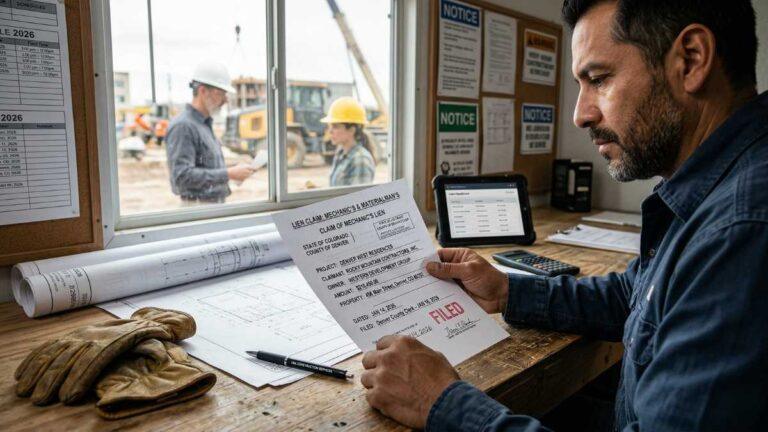
A mechanic’s lien is a legal claim filed against a property by a contractor, subcontractor, or supplier who has not been paid for work performed or materials provided.
It attaches to the property, not just the contract.
This is what makes it powerful.
Instead of pursuing payment only through contractual claims, the lien creates a direct connection between the unpaid work and the value of the property itself. In extreme cases, it can lead to foreclosure proceedings.
This shifts leverage.
Owners who might delay payment under normal circumstances are forced to address the claim because the lien affects their ability to sell, refinance, or transfer the property.
However, a lien is not automatic.
It must be properly secured through a sequence of steps that begin before the project even starts.
Why lien rights are more important in 2026
The current construction environment increases the importance of lien protection.
Payment chains are more complex. Projects often involve multiple layers of contractors, subcontractors, and suppliers. Delays at one level can affect everyone downstream.
Financing structures are more sensitive. Interest rates and funding conditions can affect cash flow, increasing the likelihood of delayed payments.
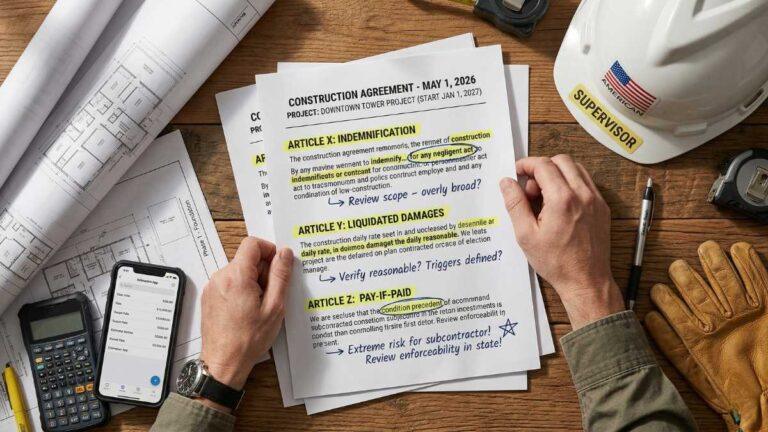
Contracts are more restrictive. Payment clauses such as pay-if-paid shift risk to lower tiers, making it harder for subcontractors to secure payment.
At the same time, project margins are tighter. Contractors have less room to absorb payment delays without affecting operations.
In this context, lien rights are not optional.
Builder Inteligence

The critical steps to secure lien rights
Lien rights are not preserved by default.
They must be actively secured through specific steps, and these steps vary by state.
The first step in many states is the preliminary notice.
This notice informs the property owner and other parties that the contractor or supplier is involved in the project and intends to preserve lien rights. It must be sent within a specific timeframe, often early in the project.
Failure to send this notice can eliminate lien rights entirely.
The second step is proper documentation.
Contracts, invoices, delivery records, and communication must be maintained accurately. This documentation supports the validity of the claim.
The third step is filing the lien.
If payment is not received, the lien must be filed within a strict deadline. This deadline varies by state and can range from a few weeks to several months after work completion.
The final step is enforcement.
Filing the lien is not the end of the process. If payment is still not made, the lien must be enforced through legal action within a specified period.
Each step is time-sensitive.
Each step is mandatory.
The biggest mistakes that destroy lien rights
The most common mistake is missing deadlines.
Lien laws are unforgiving. Even a one-day delay in sending a notice or filing a lien can invalidate the claim.
Another major mistake is incorrect documentation.
Errors in names, property descriptions, or amounts can create legal challenges that weaken or invalidate the lien.
Contractors also fail to understand state-specific requirements. Assuming that lien procedures are the same across states leads to costly errors.
There is also a tendency to delay action. Contractors may wait too long to send notices or file liens, hoping that payment will arrive.
By the time they act, it is often too late.
Finally, many contractors view liens as a last resort rather than a strategic tool.
This limits their effectiveness.
How high-performance contractors use lien rights strategically
Contractors operating at a high level do not wait until there is a problem.
They integrate lien protection into their standard process.
Preliminary notices are sent automatically at the beginning of projects. This preserves rights without signaling conflict.
Documentation is structured and consistent. Every project follows the same system, reducing the risk of errors.
Payment tracking is proactive. Contractors monitor payment status and act early when delays occur.
Communication is controlled. Instead of escalating immediately, contractors use lien rights as leverage to encourage resolution.
This approach transforms liens from reactive measures into strategic tools.
The relationship between liens and contracts
Contracts and lien rights are interconnected.
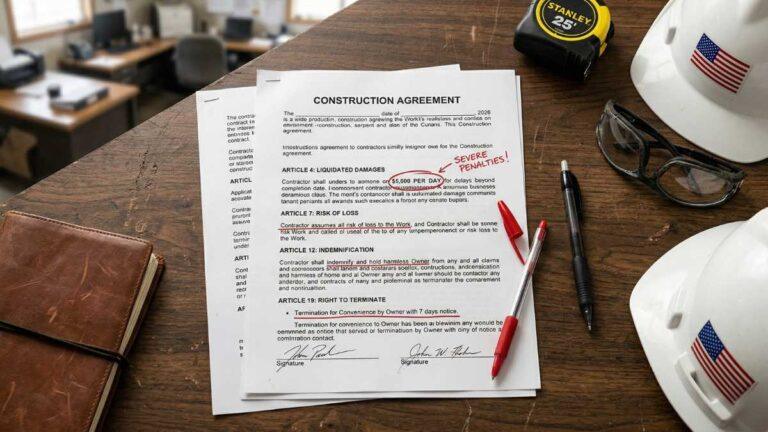
Certain contract clauses can affect how lien rights are used. For example, waiver clauses may require contractors to relinquish lien rights in exchange for payment.
Conditional waivers are common, meaning that lien rights are waived only after payment is received. However, unconditional waivers can eliminate rights regardless of payment status.
Understanding these distinctions is critical.
Contractors must ensure that contract terms do not conflict with lien protection strategies.
This requires alignment between legal review and operational processes.
The role of state law and local variation
Lien rights are governed at the state level.
This creates significant variation across the United States.
Some states require preliminary notices. Others do not.
Some states have shorter filing deadlines. Others allow more time.
Some states impose strict formatting requirements. Others are more flexible.
Contractors working across multiple states must adapt their processes accordingly.
There is no universal system.
Understanding local law is essential.
In 2026, completing the work is no longer enough.
Getting paid requires structure, discipline, and strategic use of legal tools.
Lien rights are one of the most powerful protections available to contractors in the United States — but only if they are used correctly.
Contractors who ignore lien procedures expose themselves to financial risk.
Those who integrate lien strategy into their operations protect every dollar they earn.
The difference is not in the work performed.
It is in how payment is secured.
More from Builder Inteligence

FAQ – Lien rights in the United States: how contractors secure payment, avoid legal exposure, and protect every dollar in 2026
1. What is a mechanic’s lien?
It is a legal claim against a property to secure payment for construction work or materials.
2. Do lien laws vary by state?
Yes, each state has its own rules, deadlines, and requirements.
3. What is a preliminary notice?
It is a notice sent at the beginning of a project to preserve lien rights.
4. Can missing a deadline invalidate a lien?
Yes, deadlines are strict and must be followed precisely.
5. Are lien waivers dangerous?
They can be if not properly understood, especially unconditional waivers.
6. When should a lien be filed?
When payment is delayed beyond agreed terms and within the legal deadline.
7. Can a lien lead to foreclosure?
In extreme cases, yes, if the claim is not resolved.
8. How can contractors protect lien rights?
By following procedures, meeting deadlines, and maintaining accurate documentation.