Permits have always been part of construction in the United States.
But in 2026, they are no longer just a bureaucratic step.
They are one of the biggest bottlenecks in the entire project lifecycle.
Across multiple U.S. markets, projects are no longer delayed because contractors cannot build. They are delayed because contractors cannot start. Permitting timelines have become increasingly unpredictable, review cycles are longer, requirements are more complex, and local jurisdictions are operating under pressure due to volume, staffing limitations, and regulatory expansion.
The result is a shift that many contractors are still underestimating:
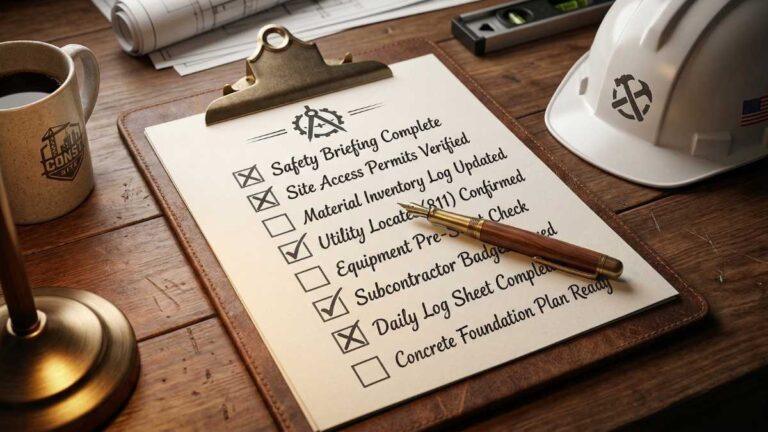
Permitting is now a critical path item.
Not a preliminary step.
Contractors who fail to understand how permitting actually works — beyond the basic submission process — are exposing their projects to delays that cannot be recovered later. Schedule compression strategies, additional labor, and operational adjustments cannot compensate for approvals that were never obtained.
At the same time, owners continue to demand aggressive timelines, often assuming that permits will follow predictable patterns.
They do not.
This creates a dangerous misalignment between expectation and reality.
In 2026, serious contractors are no longer treating permits as administrative tasks handled by third parties. They are integrating permitting strategy into preconstruction, estimating, and contract negotiation.
Because the truth is simple:
If you don’t control permitting, you don’t control the project.
HOW THE PERMIT PROCESS ACTUALLY WORKS IN THE UNITED STATES
The permitting process in the United States is decentralized.
There is no single national system.
Permits are issued at the local level — city, county, or municipality — each with its own requirements, timelines, and review processes. This means that two identical projects in different locations can have completely different permitting experiences.
At a high level, the process follows a sequence:
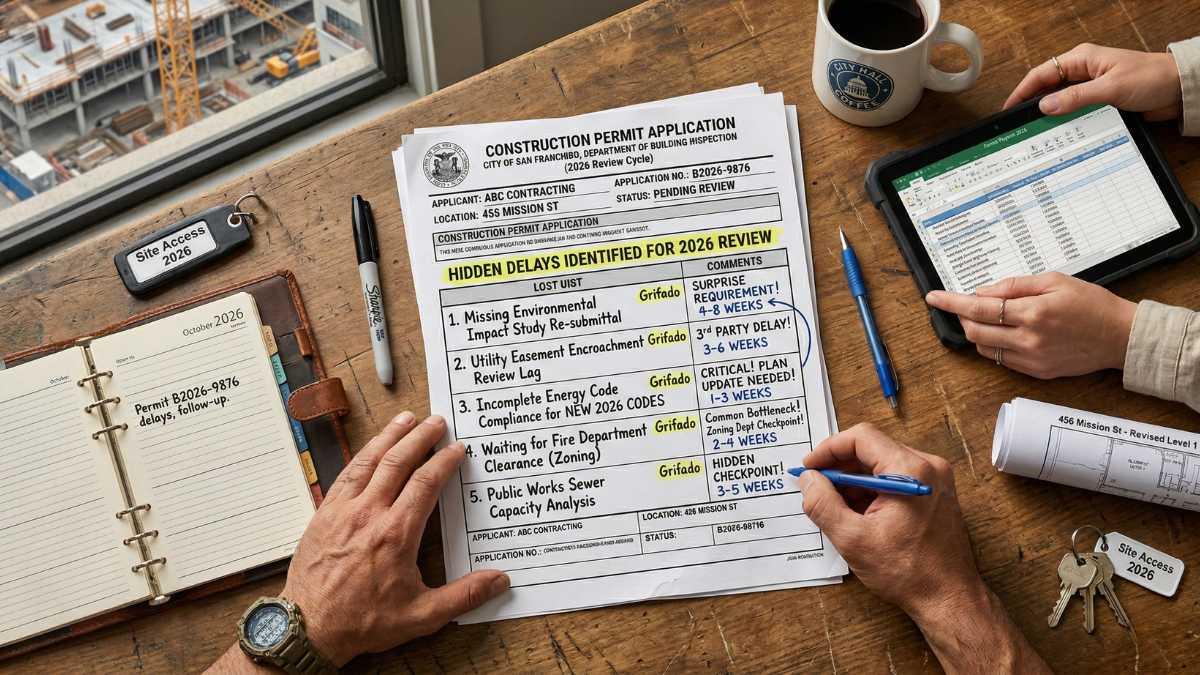
Application submission with drawings and documentation.
Plan review by multiple departments (structural, electrical, plumbing, zoning).
Corrections and resubmissions.
Final approval and permit issuance.
In reality, this process is far more complex.
Each department may operate independently, with different timelines and requirements. Reviews are often sequential rather than parallel, increasing total duration. Corrections may trigger additional reviews, extending the process further.
Official guidance and regulatory frameworks can be referenced through platforms such as USA.gov, which provides access to federal and local permitting information, and agencies like the U.S. Small Business Administration, which outline compliance requirements for construction businesses.
However, these resources provide structure — not speed.
Speed is determined locally.
WHY PERMITTING DELAYS ARE INCREASING IN 2026
Permitting delays are not random.
They are the result of structural pressure on local systems.
The first factor is volume. Many regions in the United States, especially Florida, Texas, and Arizona, are experiencing sustained construction activity. Local permitting departments are handling more applications than their systems were originally designed for.
The second factor is staffing. Municipalities often struggle to maintain sufficient staffing levels to handle demand. This leads to longer review times and limited availability for communication.
The third factor is regulatory expansion. Building codes, environmental requirements, and safety standards continue to evolve, increasing the complexity of reviews.
Agencies such as the International Code Council (ICC) regularly update model codes that are adopted at the local level, adding new layers of compliance.
The fourth factor is coordination. Projects now involve more systems — mechanical, electrical, structural, sustainability — requiring multiple layers of review.
These factors combine to create a permitting environment that is slower, more complex, and less predictable than in previous years.
Builder Inteligence
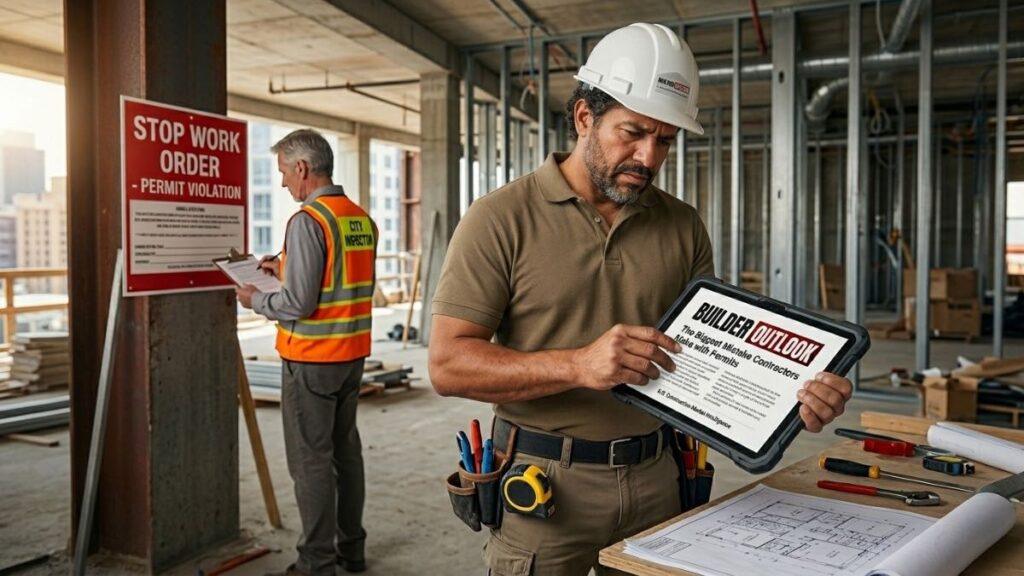
THE BIGGEST MISTAKE CONTRACTORS MAKE WITH PERMITS
The most common mistake is treating permits as a post-bid task.
Contractors win the project, finalize contracts, mobilize teams — and only then begin the permitting process with full attention.
At that point, it is already too late.
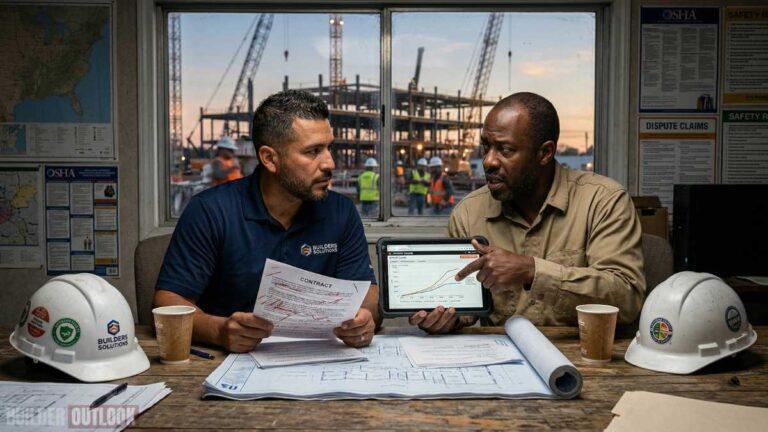
Permitting delays discovered after contract execution create immediate pressure on schedule. Contractors are forced to adjust timelines, renegotiate expectations, or absorb costs.
Another major mistake is assuming that permit timelines provided by owners or designers are accurate. In many cases, these timelines are optimistic and not based on current conditions.
Contractors also underestimate the impact of incomplete documentation. Missing details, inconsistencies, or unclear drawings can trigger multiple rounds of corrections, significantly extending approval time.
Finally, there is a lack of communication with permitting authorities. Contractors often submit applications and wait, rather than actively managing the process.
Permitting is not passive.
It requires active control.
HOW PERMIT DELAYS IMPACT COST, SCHEDULE, AND CONTRACTS
Permitting delays do not exist in isolation.
They affect every aspect of the project.
From a schedule perspective, delays in permit approval push back project start dates. This creates cascading effects on sequencing, subcontractor availability, and overall timeline.
From a cost perspective, delays increase indirect costs. Supervision, project management, and administrative expenses continue even when construction has not started.
From a contractual perspective, delays create conflict.
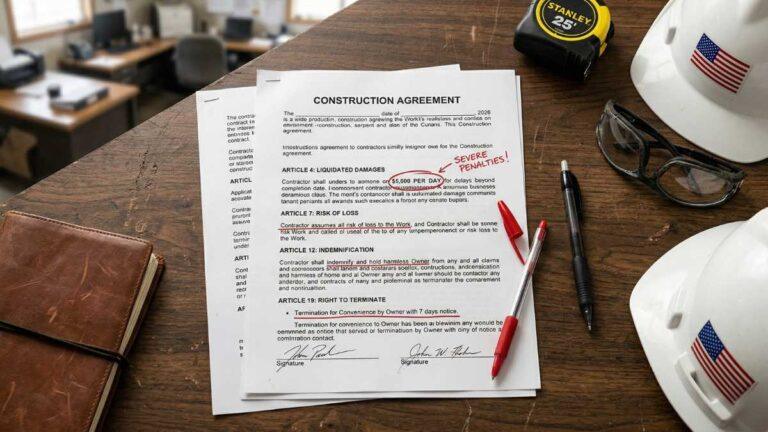
If contracts do not clearly define responsibility for permitting delays, disputes may arise between contractors and owners. Questions of liability, compensation, and schedule adjustments become central issues.
This is why contract clauses related to permitting are becoming increasingly important.
Without clear language, delays become arguments.
WHAT HIGH-PERFORMANCE CONTRACTORS DO DIFFERENTLY
Contractors operating at a high level treat permitting as a strategic function.
They begin by integrating permit analysis into the pre-bid phase. Before submitting a bid, they assess permitting requirements, potential challenges, and realistic timelines.
They engage with local authorities early. Instead of waiting for formal submission, they seek clarification on requirements and expectations.
They ensure that documentation is complete and coordinated. This reduces the likelihood of corrections and resubmissions.
They track the process actively. Follow-ups, status checks, and direct communication help maintain momentum.
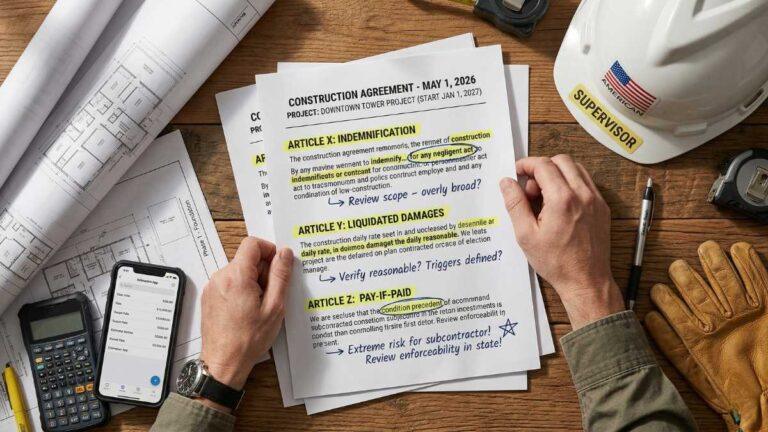
They also align contracts with permitting reality. Schedule clauses, start dates, and responsibilities are structured to reflect actual approval timelines.
This approach does not eliminate delays.
But it reduces uncertainty.
THE ROLE OF DIGITAL SYSTEMS AND LOCAL VARIABILITY
Some jurisdictions are adopting digital permitting systems, allowing online submissions, tracking, and communication. These systems improve transparency but do not always reduce processing time.
Other jurisdictions still rely on manual processes, which can be slower and less predictable.
This creates variability across regions.
Contractors must adapt their approach based on location.
There is no universal solution.
Understanding local systems is essential.
Permitting is no longer a secondary step in construction.
It is a defining factor in project success.
Contractors who treat permits as administrative tasks will continue to face delays, cost overruns, and disputes.
Those who integrate permitting into strategy, estimating, and contracts will gain control over one of the most unpredictable elements of construction in 2026.
The project does not start when construction begins.
It starts when the permit is approved.
More from Builder Inteligence

FAQ – Construction permits in the United States: the real approval process, hidden delays, and how contractors avoid permit bottlenecks in 2026
1. Who issues construction permits in the United States?
Local governments such as cities and counties are responsible for issuing permits.
2. Why are permits taking longer in 2026?
Due to increased demand, staffing shortages, and more complex regulations.
3. Can contractors control permitting timelines?
Not fully, but they can reduce delays through preparation and active management.
4. What is the biggest cause of permit delays?
Incomplete or inconsistent documentation leading to multiple review cycles.
5. Should permitting be considered during bidding?
Yes, it is a critical factor that affects schedule and cost.
6. How do permits affect contracts?
They influence start dates, timelines, and responsibility for delays.
7. Are digital permitting systems faster?
They improve transparency but do not always reduce approval time.
8. What is the best way to avoid permit delays?
Early planning, complete documentation, and active communication with authorities.