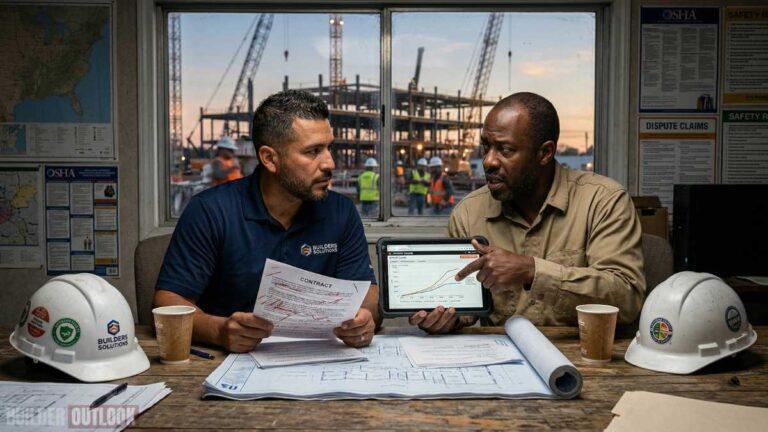
One of the most underestimated sources of financial loss in construction projects is not necessarily poor workmanship, labor inefficiency, or unexpected site conditions. In many cases, the real source of conflict and financial damage originates from something far less visible at the beginning of the project: an incomplete or poorly defined scope of work. The scope of work, often abbreviated as SOW, is the section of a construction contract that defines exactly what the contractor is responsible for building, installing, coordinating, and delivering. When this scope is vague or incomplete, the project becomes vulnerable to disputes, cost overruns, and unexpected responsibilities.
In the construction industry across the United States, many disputes between owners, general contractors, and subcontractors originate from misunderstandings regarding scope. The contract drawings may show certain elements while specifications describe others. Architectural documents may conflict with engineering plans, or project requirements may be implied rather than explicitly stated. When these inconsistencies exist, contractors are often forced to perform additional work that was never clearly included in their contract price.
A poorly defined scope of work creates what professionals in the industry often call scope gaps. These gaps occur when responsibilities fall between contractual definitions and no party clearly accepts responsibility. When this happens, contractors may find themselves performing work that was not priced during bidding, which can severely damage project profitability.
Because of these risks, experienced contractors treat scope definition as one of the most critical elements of contract negotiation and project planning. Understanding how scope is defined—and how gaps can occur—allows contractors to protect themselves from unexpected obligations that may arise during construction.
What the scope of work defines in construction contracts
The scope of work establishes the boundaries of the contractor’s responsibilities within a construction project. It describes what work must be completed, how that work will be performed, and what deliverables must be provided to satisfy the contract.
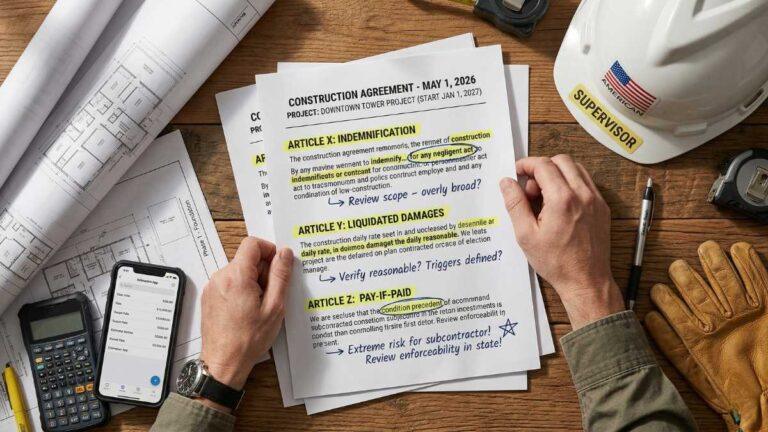
A complete scope of work typically includes detailed descriptions of construction activities, reference drawings and specifications, material requirements, coordination responsibilities, quality standards, and project deliverables. It may also define exclusions—specific tasks or materials that are not included in the contractor’s responsibilities.
In well-prepared construction contracts, the scope of work integrates several key project documents. These may include architectural drawings, structural plans, engineering specifications, equipment schedules, and technical performance requirements. Together, these documents establish the technical framework within which the contractor must operate.
However, construction projects often involve hundreds of drawings and specification sections. When these documents are not perfectly aligned, contradictions can arise. For example, a drawing might show a component that is not mentioned in the written specifications, or the specifications may require materials that are not visible in the drawings. When inconsistencies like this occur, contractors must determine whether the item falls within their scope or represents additional work.
Clear scope definitions help prevent these ambiguities by explicitly identifying contractor responsibilities and ensuring that project documents are interpreted consistently.
How scope gaps appear during construction
Scope gaps occur when project responsibilities are not clearly assigned to any party in the contract. These gaps often become visible only after construction begins, when field conditions require coordination between different trades or systems.
For example, mechanical contractors may install equipment that requires structural supports. If the contract documents do not clearly assign responsibility for those supports, both the mechanical contractor and the structural contractor may argue that the work falls outside their scope. Resolving these issues often requires change orders or additional negotiations.
Another common example involves coordination between electrical systems and architectural finishes. If electrical components require modifications to walls or ceilings, the contract must specify which contractor is responsible for performing those adjustments. Without clear scope language, these responsibilities may remain undefined.
Scope gaps also appear frequently in renovation and retrofit projects. Existing building conditions may differ from design assumptions, requiring additional demolition, structural modifications, or system upgrades. If the contract scope does not address these possibilities, disputes may arise regarding who should bear the cost of the additional work.
Because these situations are common in construction projects, contractors must evaluate scope language carefully before submitting bids or signing contracts.
Why scope gaps create financial risk
When scope gaps exist, contractors may face pressure to perform additional work without receiving compensation. Owners and project managers often argue that certain tasks are “implied” within the contractor’s responsibilities even if the contract does not explicitly state them.
This creates a difficult situation for contractors. Refusing to perform the work may delay the project and damage professional relationships, while performing the work without compensation may reduce or eliminate project profit margins.
Scope gaps can also lead to disputes among subcontractors working under the same general contractor. If responsibilities are unclear, subcontractors may attempt to shift obligations to one another, causing coordination delays and administrative conflicts.
These financial risks highlight why experienced contractors conduct thorough scope reviews during the bidding phase. Identifying potential scope gaps early allows contractors to clarify responsibilities through requests for information or contract revisions before construction begins.


Strategies for defining scope clearly
Contractors can reduce scope-related risks by implementing several key strategies during contract review and negotiation. One of the most effective approaches is performing a comprehensive scope analysis during the bidding process. This analysis involves reviewing all project documents to identify inconsistencies, omissions, and potential coordination issues.
Contractors may also submit formal questions to the project owner or design team during the bidding phase. These questions, often called pre-bid requests for clarification, help ensure that project expectations are clearly defined before contracts are finalized.
Another important strategy involves including detailed scope exclusions in contract proposals. By explicitly listing tasks that are not included in the contract price, contractors reduce the likelihood that those responsibilities will be assigned to them later.
Finally, contractors should maintain thorough documentation throughout the construction process. If additional work becomes necessary due to scope gaps, proper documentation supports change order requests and helps ensure fair compensation for the additional effort.
The role of scope management in project profitability
Effective scope management is a critical component of successful construction project management. Contractors who clearly understand their contractual responsibilities can allocate resources more efficiently and avoid unexpected costs during construction.
In contrast, projects with poorly defined scope often experience frequent change orders, coordination conflicts, and schedule disruptions. These problems increase administrative workload and create tension among project stakeholders.
For contractors, protecting project profitability requires constant awareness of scope boundaries. Project managers must monitor changes carefully and ensure that additional work is documented and approved before it is performed.
By maintaining clear scope definitions and addressing ambiguities early, contractors can reduce financial risk and maintain stronger control over project outcomes.
Why scope clarity protects contractors and owners
A clearly defined scope of work benefits all participants in a construction project. Contractors gain confidence that they will not be asked to perform work beyond their contractual obligations without compensation. Owners benefit from improved cost predictability and reduced risk of disputes during construction.
When scope definitions are precise and well documented, project teams can focus on executing the work rather than arguing about responsibilities. This clarity improves project efficiency and helps maintain positive relationships among stakeholders.
In an industry where margins can be narrow and project complexity continues to increase, strong scope management has become an essential skill for contractors. Understanding how scope gaps occur and how they can be prevented allows contractors to protect their financial interests while delivering successful construction projects.
Ultimately, the scope of work serves as the foundation upon which the entire construction contract is built. Contractors who master the process of defining and managing scope are far better equipped to navigate the challenges of modern construction projects.
More from Builder Inteligence


FAQ – Scope of work in construction contracts: why poorly defined scope destroys project profitability
1. What is the scope of work in a construction contract?
The scope of work defines the tasks, responsibilities, and deliverables that the contractor must complete to fulfill the construction contract. It describes the work required, references project drawings and specifications, and establishes the boundaries of the contractor’s obligations.
2. Why are scope gaps common in construction projects?
Scope gaps occur when responsibilities are not clearly assigned within the contract documents. In complex construction projects involving multiple trades and systems, coordination issues and incomplete documentation can easily create areas where responsibilities overlap or remain undefined.
3. How can contractors identify scope gaps before construction begins?
Contractors can identify scope gaps by performing detailed reviews of drawings, specifications, and contract documents during the bidding phase. Requests for clarification submitted to the project design team can help resolve ambiguities before contracts are signed.
4. What happens when a scope gap is discovered during construction?
When scope gaps appear during construction, contractors may request change orders to clarify responsibilities and obtain compensation for additional work. Proper documentation is essential when addressing these issues.
5. Why are scope exclusions important in contractor proposals?
Scope exclusions explicitly identify tasks or materials that are not included in the contractor’s price. These exclusions help prevent misunderstandings and protect contractors from being assigned unexpected responsibilities later.
6. Can scope gaps lead to construction disputes?
Yes. Many construction disputes originate from disagreements about whether specific tasks were included in the contract scope. Clear documentation and contract language help reduce these conflicts.
7. How does scope clarity affect project profitability?
When the scope of work is clearly defined, contractors can estimate project costs accurately and avoid performing unpaid work. Poorly defined scope increases the likelihood of unexpected expenses and disputes.
8. Why should contractors review scope carefully before signing contracts?
Careful scope review ensures that contractors fully understand their responsibilities and can negotiate contract terms that reflect the true cost of the work required.