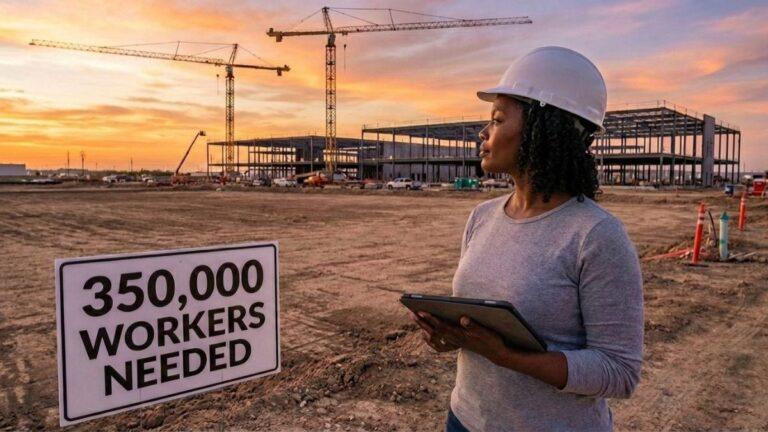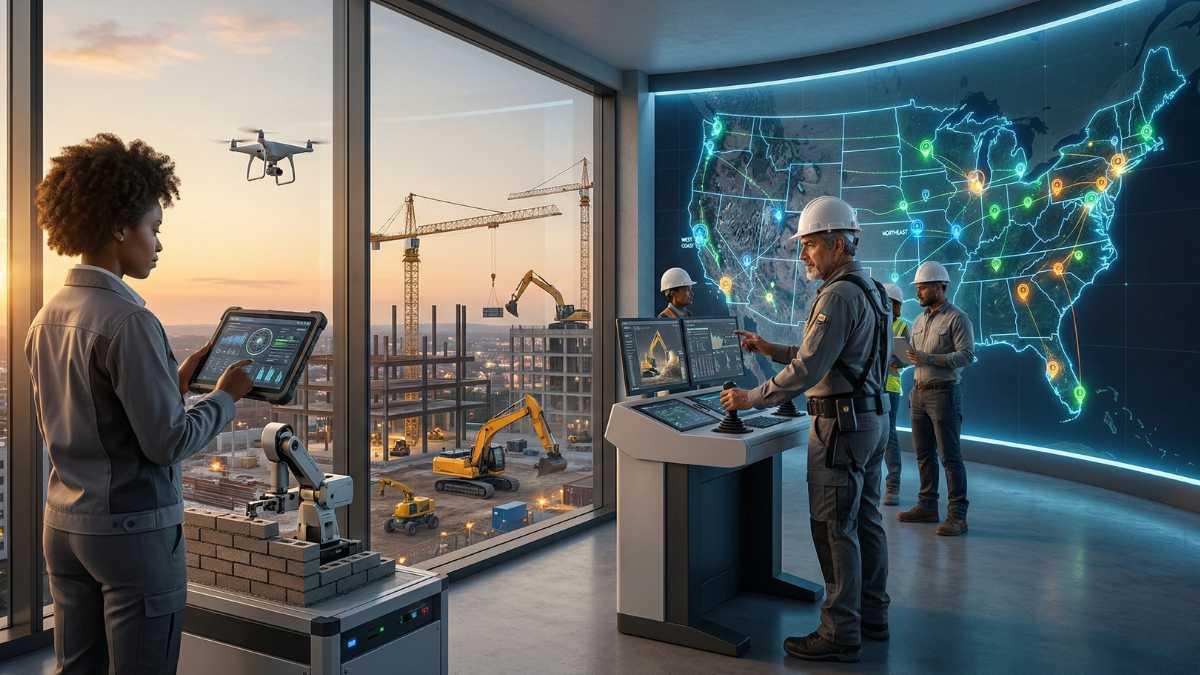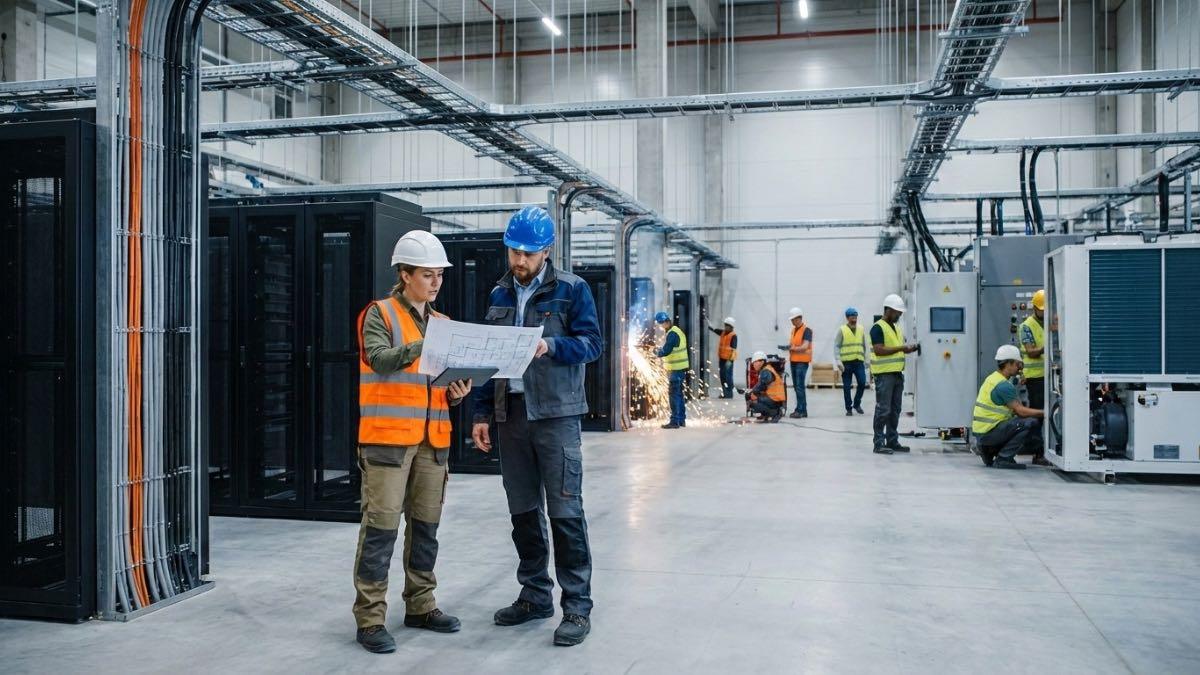
Warehouse construction continues to expand in 2026 not because of short-term economic optimism, but because the structural logic of logistics has permanently changed. Distribution is no longer centralized, inventory strategies are no longer lean, and speed to customer is now a competitive necessity rather than a marketing advantage. These shifts have locked warehouse demand into the core of industrial construction pipelines across the United States.
Unlike other nonresidential sectors that fluctuate with consumer sentiment or financing cycles, warehouse construction responds to operational pressure inside supply chains. Retailers, manufacturers, healthcare systems, food distributors, and e-commerce platforms are redesigning how goods move, where they pause, and how quickly they must be delivered. Construction follows these decisions, not the other way around.
For contractors, warehouses are not just another active sector. They represent a predictable source of work that behaves differently from office, retail, or mixed-use development, and understanding why demand keeps accelerating is critical to pipeline planning.

Why logistics strategy is forcing continuous warehouse expansion
The first driver behind the warehouse surge is the abandonment of centralized inventory models. Companies learned during recent disruptions that relying on a small number of massive distribution hubs increases exposure to risk. Delays, labor shortages, weather events, and transportation bottlenecks all compound when inventory is concentrated. As a result, firms are spreading inventory across regional and micro-fulfillment facilities.
This decentralization directly translates into construction demand. Instead of one massive warehouse every decade, companies now build multiple mid-sized and smaller facilities on rolling schedules. These projects move faster, repeat frequently, and are often standardized, creating sustained demand rather than cyclical spikes. For contractors, this means pipelines that refill continuously rather than intermittently.
Importantly, this shift is not reversing even as some supply chains stabilize. The cost of redundancy is now viewed as insurance, not inefficiency. That mindset anchors warehouse construction firmly into long-term capital planning.
How e-commerce expectations lock demand in place
Consumer expectations around delivery speed have become operational mandates. Same-day and next-day delivery are no longer premium services. They are baseline expectations in major metro areas. Meeting these expectations requires inventory to sit closer to population centers, increasing the number of required facilities even when total volume remains flat.
This creates warehouse demand that is geographically dispersed and highly localized. Developers seek sites near highways, ports, rail corridors, and urban edges, often competing aggressively for entitled land. Construction pipelines grow not only because of volume, but because projects must be delivered quickly to meet contractual service levels.
For contractors, this means schedule reliability becomes as important as price. Owners prioritize firms that can deliver predictable timelines, coordinate trades efficiently, and manage repeat builds with minimal friction. Warehouses reward operational discipline over novelty.
Why capital continues to favor warehouse projects
Warehouses attract capital because they generate stable, contract-backed revenue streams. Long-term leases with logistics operators, retailers, and third-party fulfillment companies reduce volatility and improve financing terms. Even when interest rates remain elevated, lenders view warehouse projects as lower risk relative to speculative commercial development.
This capital preference sustains construction pipelines even during broader market uncertainty. Developers may pause office or mixed-use plans, but warehouse projects continue moving through entitlement, design, and construction. For contractors, this means warehouse demand often increases precisely when other sectors soften.
The result is an uneven market where firms aligned with warehouse construction experience backlog strength while others face volatility. This divergence explains why some contractors report strong pipelines despite cautious headlines.
Lorem ipsum dolor sit amet, consectetur adipiscing elit. Ut elit tellus, luctus nec ullamcorper mattis, pulvinar dapibus leo.
Regional patterns intensifying warehouse activity
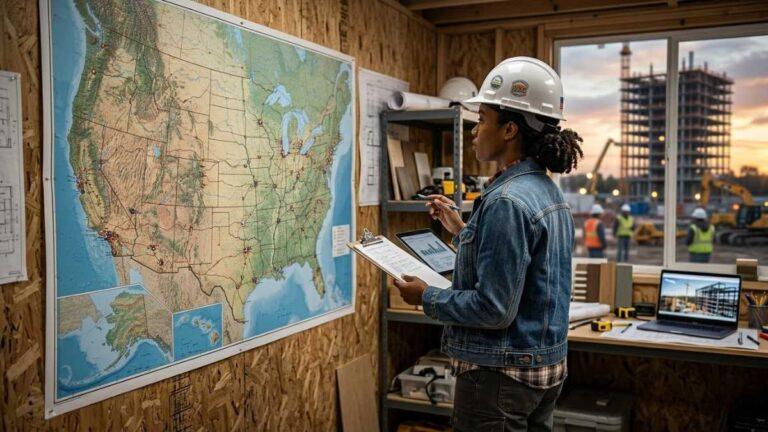
Warehouse construction is not evenly distributed. Demand concentrates along major logistics corridors such as Texas, Georgia, Florida, Ohio, Tennessee, Arizona, and the Carolinas. These regions combine population growth, transportation infrastructure, and favorable zoning environments that support rapid development.
Contractors operating in these regions face both opportunity and competition. Pipeline volume increases, but so does pressure on labor, subcontractors, and scheduling. Firms without strong regional presence or repeat relationships struggle to access this work even as activity expands.
Understanding regional warehouse dynamics is now essential for forecasting. National statistics obscure the localized intensity contractors actually compete within.
Labor and subcontractor pressure created by warehouse volume
Warehouse projects consume significant labor resources across concrete, steel, electrical, mechanical, and finishing trades. High project repetition compresses subcontractor availability and raises pricing across adjacent sectors. Even contractors not building warehouses feel the effects through tighter labor pools and extended lead times.
This pressure reshapes how bids are priced. Contractors increasingly embed labor risk into schedules and contingencies, shifting focus from lowest price to execution certainty. Owners respond by favoring contractors with reliable trade networks rather than those offering aggressive numbers.
Warehouse demand therefore reshapes the entire competitive environment, not just one sector.
What this means for contractors planning growth
Contractors who want to benefit from warehouse demand must treat it as an operational system, not opportunistic work. Success depends on repeatability, process clarity, scheduling discipline, and strong subcontractor relationships. Firms that approach warehouses as simple industrial builds often underestimate the operational intensity required.
In 2026, warehouses are not slowing down because the forces driving them are structural. Contractors aligned with those forces build stable pipelines. Those who ignore them experience increasing volatility elsewhere.
More from Builder Inteligence


FAQ – Warehouses are not slowing down: what’s driving the next wave
1. Why is warehouse construction still growing in 2026?
Warehouse construction continues because companies are decentralizing inventory, prioritizing delivery speed, and building redundancy into supply chains, creating sustained demand regardless of short-term economic cycles.
2. How does e-commerce affect warehouse demand?
Same-day and next-day delivery expectations force inventory closer to consumers, increasing the number of facilities required even without volume growth.
3. Why do lenders favor warehouse projects?
Warehouses often secure long-term leases with logistics operators, reducing revenue volatility and improving financing confidence compared to speculative developments.
4. Which regions are seeing the most warehouse construction?
Texas, Georgia, Florida, Ohio, Tennessee, Arizona, and the Carolinas lead due to logistics infrastructure and population growth.
5. How do warehouses impact labor markets?
High repetition and volume consume skilled labor, increasing wage pressure and reducing subcontractor availability across multiple trades.
6. Why is schedule certainty more important than price on warehouse projects?
Operational timelines directly affect logistics contracts, making predictable delivery more valuable than marginal cost savings.
7. Do warehouses crowd out other construction sectors?
They redirect labor and capital, indirectly increasing pressure and volatility in adjacent nonresidential markets.
8. What mistake do contractors make when entering warehouse construction?
Underestimating the operational discipline required and treating warehouses as simple industrial builds rather than repeatable systems.