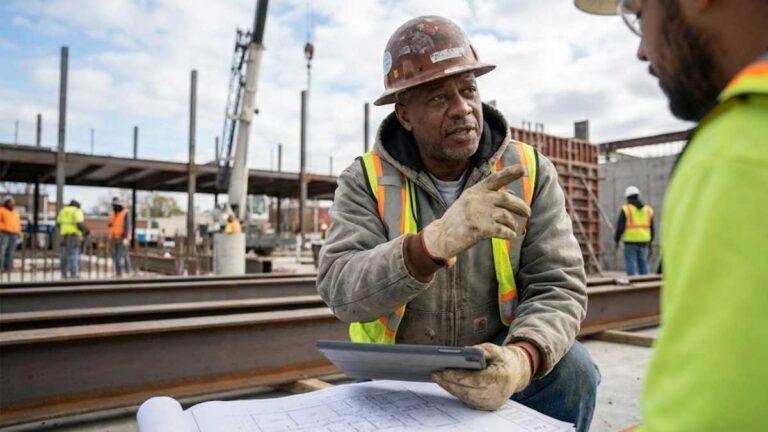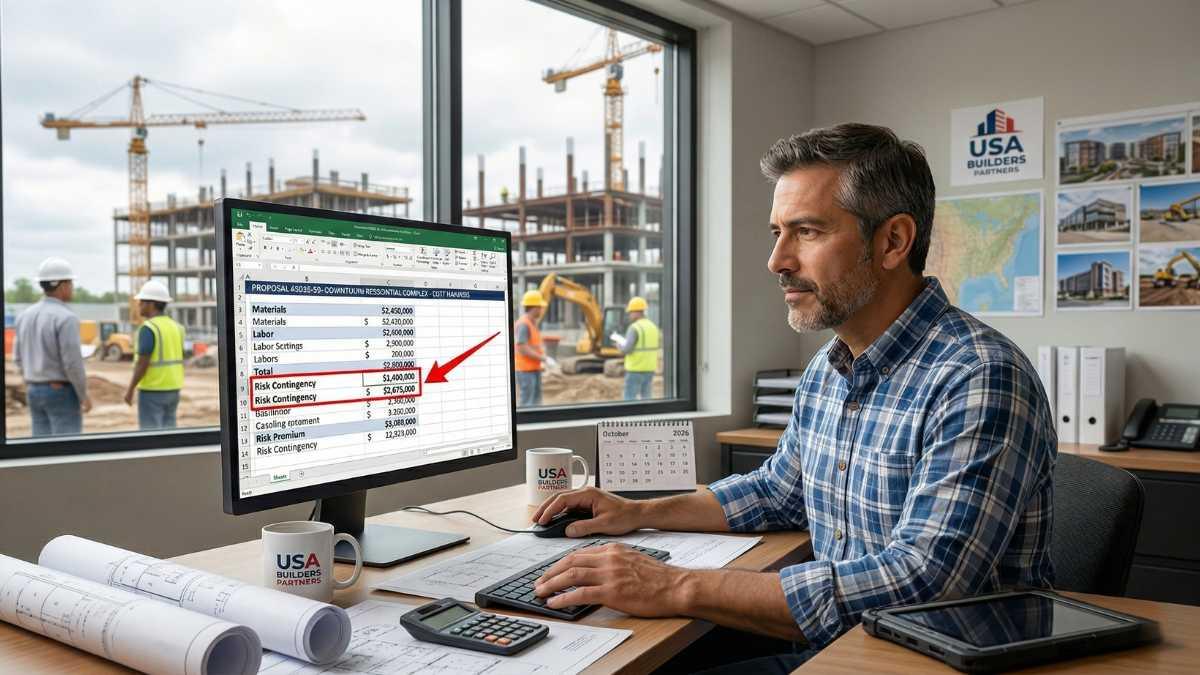
Across the United States construction market, a subtle but powerful shift is happening inside project pricing — one that many owners, developers, and even some contractors do not fully recognize.
It is not labeled in proposals.
It is not clearly explained in bid breakdowns.
It is rarely discussed openly during negotiations.
But it is there.
The risk premium.
In 2026, contractors are no longer pricing projects based solely on direct costs, overhead, and profit margins. They are embedding an additional layer of pricing designed to absorb uncertainty — uncertainty related to labor, materials, subcontractors, permitting, financing, and execution conditions.
This risk premium is not arbitrary.
It is a response to a construction environment where predictability has decreased, but contractual expectations remain rigid.
Contractors are expected to deliver on fixed schedules with controlled budgets, even when variables outside their control continue to fluctuate. The result is a pricing strategy that quietly incorporates buffers against these uncertainties.
The challenge is that this premium is often misunderstood.
Owners may interpret higher bids as inefficiency or lack of competitiveness. Contractors may struggle to justify pricing increases without exposing underlying vulnerabilities. Negotiations become more complex, and project alignment becomes harder to achieve.
At the same time, contractors who fail to incorporate a realistic risk premium expose themselves to financial instability, disputes, and operational breakdowns.
This article examines what the risk premium actually is, why it has become a structural component of construction pricing in the United States, how it is calculated in practice, and how it is reshaping bidding strategies and contract negotiations in 2026.
WHAT THE RISK PREMIUM REALLY IS — AND WHAT IT IS NOT
The term “risk premium” is often misunderstood as simply an increase in profit margin. That interpretation is incorrect.
The risk premium is not profit.
It is protection.
It represents the cost of uncertainty — the financial buffer required to absorb variables that cannot be fully controlled or predicted at the time of bidding.
These variables include:
Uncertain labor productivity due to workforce variability.
Material price fluctuations between bid and procurement.
Subcontractor performance inconsistency.
Permitting delays and regulatory changes.
Design incompleteness or late-stage modifications.
The risk premium is calculated not as a fixed percentage, but as a layered adjustment applied across different components of the estimate.
It is embedded in labor rates, contingency allowances, subcontractor pricing adjustments, and sometimes in schedule-related costs.
What it is not is arbitrary markup.
Contractors who apply risk premiums without structure risk becoming uncompetitive. Those who apply them strategically are protecting their operations.
WHY THE RISK PREMIUM HAS BECOME ESSENTIAL IN 2026
The construction environment in the United States has evolved in a way that makes traditional pricing models insufficient.
Labor remains one of the most unstable variables. Availability of skilled workers varies significantly by region, and productivity can fluctuate depending on project conditions. This makes it difficult to rely on historical productivity rates without adjustment.
Material costs, while more stable than in previous years, still present uncertainty. Supply chain disruptions, transportation costs, and regional availability can affect pricing after bids are submitted.
Subcontractor markets are under pressure. Many subcontractors are operating at or near capacity, which affects both pricing and performance reliability.
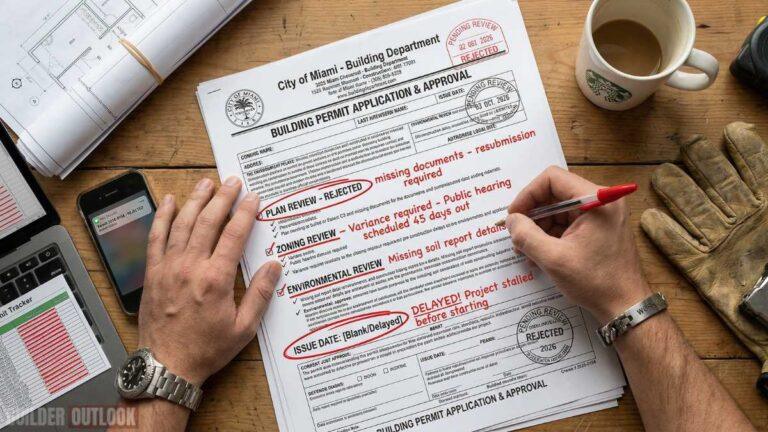
Permitting processes are less predictable in many jurisdictions. Delays can impact project timelines and increase indirect costs.
Federal and public-sector projects must also align with guidelines and procurement standards defined by institutions such as the U.S. General Services Administration and resources available via USA.gov, which further influence how risk is structured within contracts.
In this environment, pricing without a risk premium is not competitive.
It is dangerous.
Builder Inteligence
Advertising

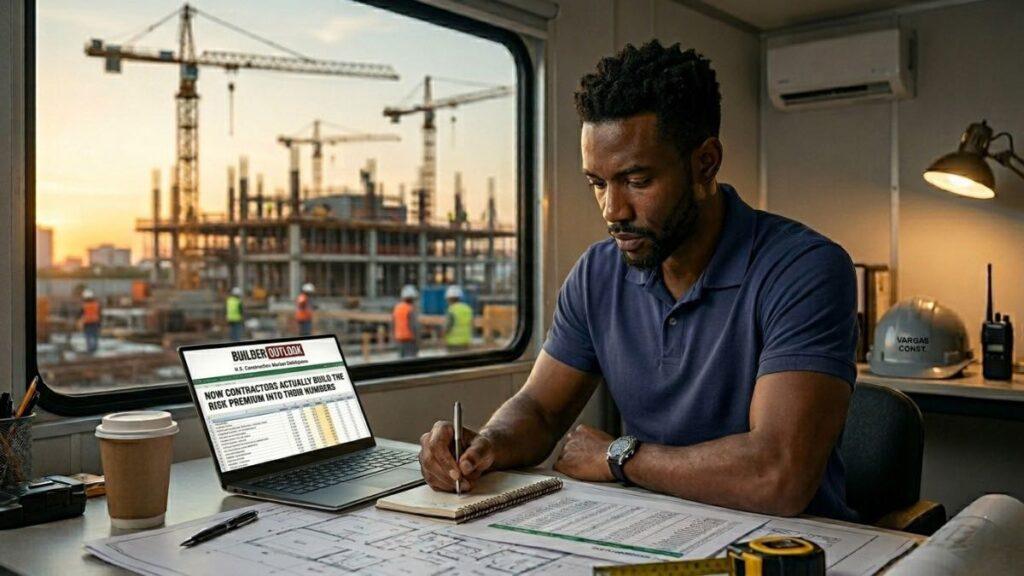
HOW CONTRACTORS ACTUALLY BUILD THE RISK PREMIUM INTO THEIR NUMBERS
The risk premium is not added as a single line item. It is distributed across multiple components of the estimate.
Labor adjustments are one of the primary areas. Contractors may increase labor costs to account for potential productivity losses, overtime requirements, or workforce instability.
Material contingencies are another layer. Even when prices are locked at bid stage, contractors may include buffers to account for potential changes in specifications or procurement challenges.
Subcontractor pricing is often adjusted based on perceived reliability. Contractors may avoid the lowest bid if it introduces execution risk, selecting instead a more stable subcontractor with slightly higher pricing.
Schedule-related costs are also affected. Contractors may include additional allowances for extended durations, coordination challenges, or delays.
Indirect costs such as supervision, logistics, and project management are adjusted to reflect the complexity and uncertainty of the project.
Each of these adjustments contributes to the overall risk premium.
It is not visible as a single number.
But it is present throughout the estimate.
WHY OWNERS AND DEVELOPERS MISREAD THE RISK PREMIUM
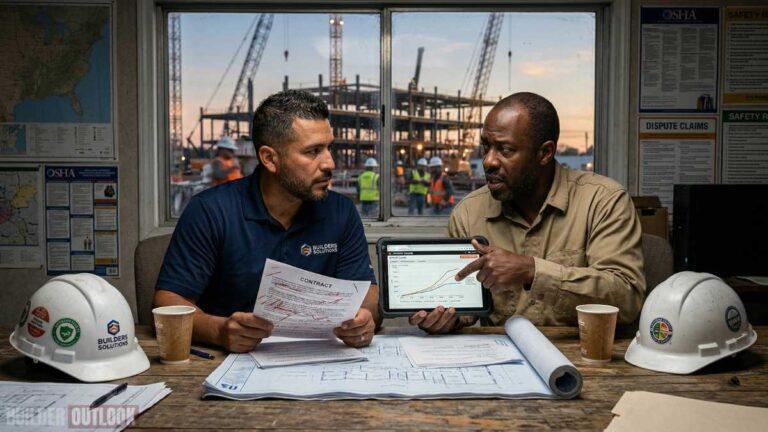
From the owner’s perspective, higher bids are often interpreted as lack of competitiveness or inefficiency. This creates tension during the bidding process.
Owners may compare bids without understanding the underlying assumptions. A lower bid may appear more attractive, even if it carries higher execution risk.
Contractors who attempt to explain risk premiums often face resistance. Discussions around uncertainty can be perceived as lack of confidence rather than realistic assessment.
This misalignment leads to a common outcome:
Projects are awarded based on price rather than risk alignment.
The consequences appear later.
Budget overruns, change orders, delays, and disputes often originate from this initial misinterpretation.
The issue is not the presence of the risk premium.
It is the lack of transparency and alignment around it.
THE RELATIONSHIP BETWEEN RISK PREMIUM AND CONTRACT STRUCTURE
The way risk is priced is directly influenced by how it is allocated in the contract.
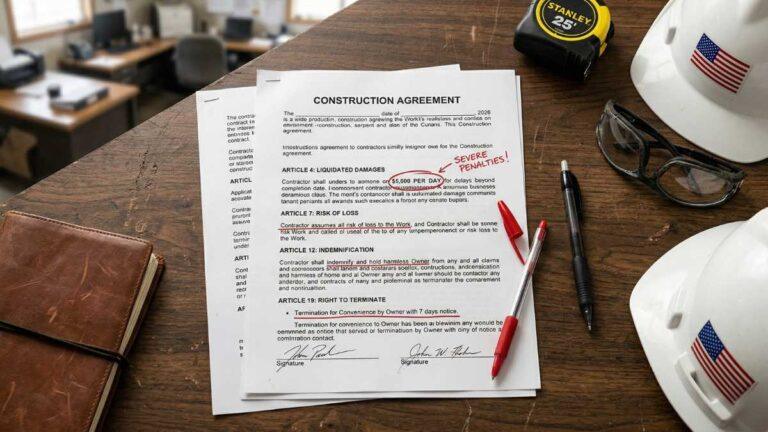
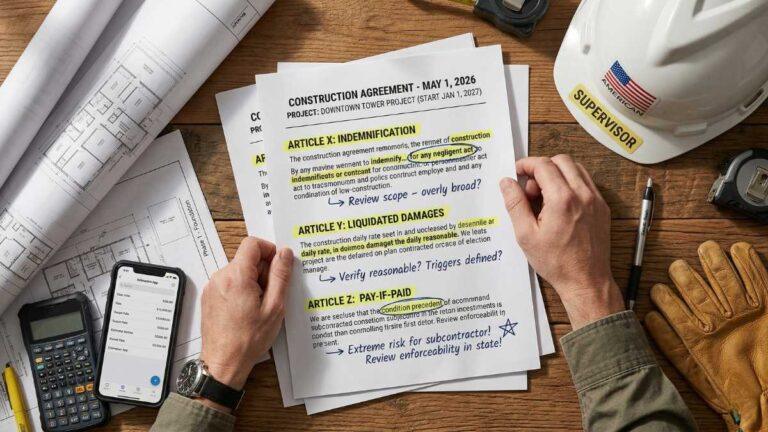
Contracts that transfer significant risk to the contractor — such as strict schedule requirements, limited change order flexibility, or unfavorable payment terms — require higher risk premiums.
Conversely, contracts that distribute risk more evenly allow for more competitive pricing.
This creates a feedback loop.
More risk in the contract → higher risk premium in pricing.
Better risk allocation → more balanced pricing.
Contractors who understand this relationship use it strategically during negotiations. They may accept lower margins if contract terms reduce exposure, or increase pricing if risk is concentrated.
The contract and the estimate are not separate.
They are interconnected systems.
HOW HIGH-PERFORMANCE CONTRACTORS USE RISK PREMIUM AS A STRATEGIC TOOL
Contractors operating at a high level do not treat the risk premium as a defensive mechanism. They use it as a strategic tool.
They quantify risk based on data, not intuition. Historical project performance, market conditions, and subcontractor reliability are used to inform adjustments.
They communicate risk clearly during negotiations. Instead of hiding the premium, they explain how certain factors influence pricing and how adjustments can be made through contract alignment.
They differentiate themselves by showing control. Owners are more likely to trust contractors who demonstrate structured thinking rather than arbitrary pricing.
They also use risk premiums to filter projects. Opportunities that require excessive risk adjustments may be rejected, allowing the contractor to focus on more viable work.
This approach transforms the risk premium from a hidden cost into a competitive advantage.
The risk premium is not a temporary trend.
It is a structural response to a construction environment that has become more complex, less predictable, and more demanding.
Contractors who ignore it expose themselves to instability.
Owners who misunderstand it expose their projects to failure.
In 2026, successful construction projects are not defined by the lowest price.
They are defined by the most realistic one.
More from Builder Inteligence
Advertising


FAQ – The new risk premium in U.S. construction proposals: why contractors are silently increasing prices and how it impacts bids, contracts, and project outcomes in 2026
1. What is a risk premium in construction?
It is a financial buffer included in project pricing to account for uncertainty and potential risks.
2. Is the risk premium the same as profit?
No. It is designed to protect against uncertainty, not to increase profit.
3. Why is the risk premium increasing in 2026?
Due to market volatility, labor shortages, material uncertainty, and regulatory complexity.
4. How do contractors calculate risk premiums?
By adjusting labor, materials, subcontractor pricing, and indirect costs based on risk factors.
5. Why do owners resist higher bids?
Because they often do not understand the underlying risk adjustments included in pricing.
6. Can risk premiums be reduced?
Yes, through better contract alignment and risk-sharing between parties.
7. What happens if contractors ignore risk premiums?
They may face financial losses, delays, and disputes during project execution.
8. Is the risk premium visible in proposals?
Not always. It is often embedded across different components of the estimate.