Construction contracts form the legal backbone of every building project in the United States. Whether the project involves residential housing, commercial buildings, infrastructure development, or industrial facilities, a properly structured contract defines the responsibilities, risks, timelines, and financial obligations of all parties involved.
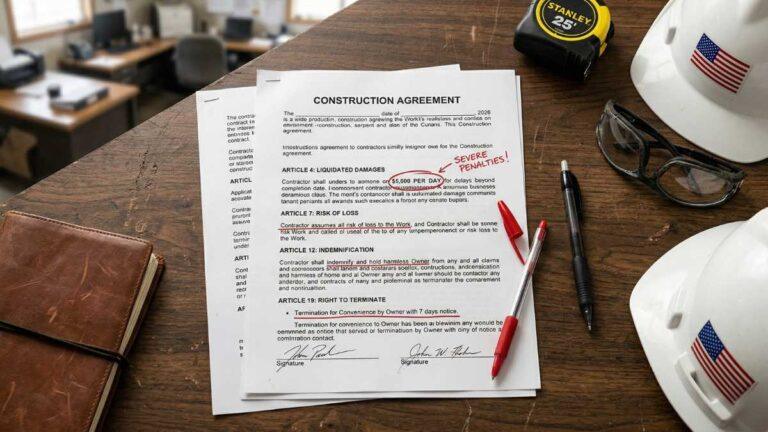
For contractors and developers, construction contracts are not simply administrative documents. They are risk management tools that determine how disputes are resolved, how payments are structured, and how unexpected changes are handled during the course of a project. Poorly written contracts can expose builders to serious financial risk, while well-structured agreements create clarity and stability throughout the construction process.
In the United States, construction contracts are governed by a combination of state laws, federal regulations, and private agreements negotiated between project participants. Because construction projects involve multiple stakeholders—including property owners, general contractors, subcontractors, architects, engineers, lenders, and suppliers—the contractual framework must clearly define the rights and obligations of each party.
Understanding how construction contracts work is essential for anyone involved in the building industry. Builders who understand contract structures are better equipped to negotiate favorable terms, manage risk, and ensure that projects proceed according to agreed schedules and budgets.
For contractors seeking long-term business success, mastering construction contract fundamentals is just as important as technical construction expertise.
The role of contracts in construction project management
Every construction project involves a complex network of relationships between multiple participants. Contracts provide the legal structure that coordinates these relationships and defines how work will be performed.
At the most basic level, a construction contract establishes the agreement between a property owner and a contractor to perform construction work in exchange for payment. However, most projects involve multiple layers of contractual relationships. General contractors may enter agreements with subcontractors who perform specialized work such as electrical installation, plumbing systems, concrete foundations, or roofing construction.
Contracts also define how project risks are allocated between parties. Construction projects often encounter unforeseen conditions such as design changes, material shortages, weather disruptions, or regulatory issues. Well-drafted contracts specify how these situations will be addressed, who bears responsibility for additional costs, and how disputes will be resolved.
Another important function of construction contracts involves establishing project timelines and milestones. Payment schedules are frequently tied to specific stages of construction progress, ensuring that contractors receive compensation as work is completed.
Professional organizations provide standardized contract templates widely used across the construction industry.
American Institute Of Architects contract resources
https://www.aia.org
These documents help ensure that contracts address the most important legal and operational issues involved in construction projects.
The most common types of construction contracts
Construction contracts can be structured in several different ways depending on the nature of the project, the relationship between parties, and the level of financial risk each participant is willing to accept.
Lump sum contracts are among the most common contract types used in construction projects. Under this structure, the contractor agrees to complete the entire project for a fixed price. This arrangement provides cost certainty for the project owner but places significant financial risk on the contractor if unexpected costs arise.
Cost-plus contracts operate differently. Under this arrangement, the contractor is reimbursed for actual project costs and receives an additional fee or percentage as compensation. Cost-plus contracts provide greater financial flexibility when project costs are uncertain but may reduce cost certainty for the owner.
Time and materials contracts are commonly used for smaller projects or projects where the scope of work may evolve during construction. In this structure, contractors are paid based on hourly labor rates and the cost of materials used during the project.
Unit price contracts are frequently used for infrastructure projects such as road construction or utility installation. Payment is based on specific quantities of work completed, such as cubic yards of concrete or miles of pipeline installed.
Each contract type distributes financial risk differently between the owner and the contractor.
Advertising

Key clauses found in construction contracts
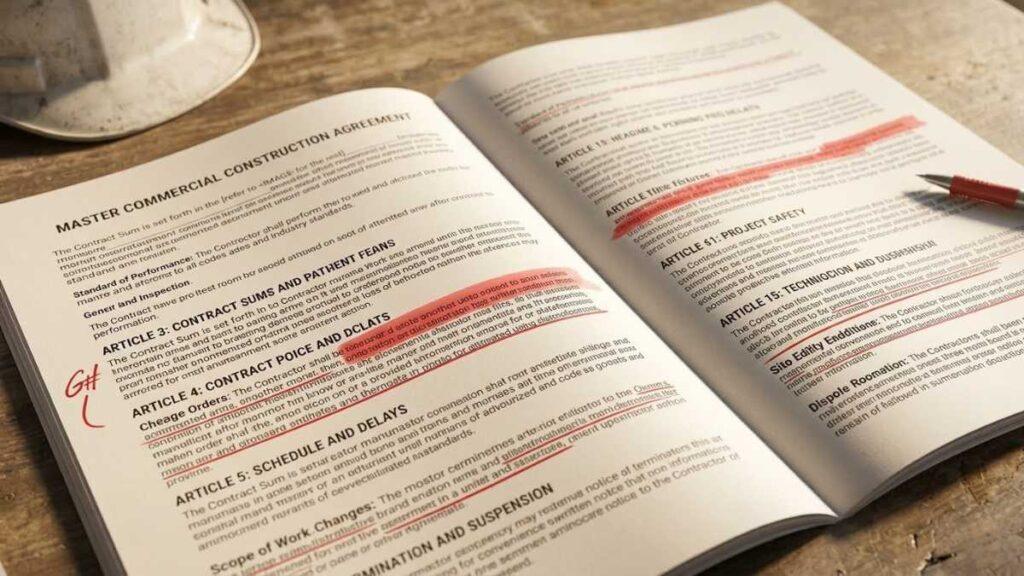
Construction contracts typically contain several key clauses designed to address the most common risks and operational challenges associated with building projects.
Scope of work clauses describe the specific tasks the contractor is responsible for completing. Clearly defining the project scope helps prevent misunderstandings about what work is included in the contract.
Payment terms establish the schedule and conditions under which contractors will receive compensation. Many contracts include milestone payments tied to project completion stages.
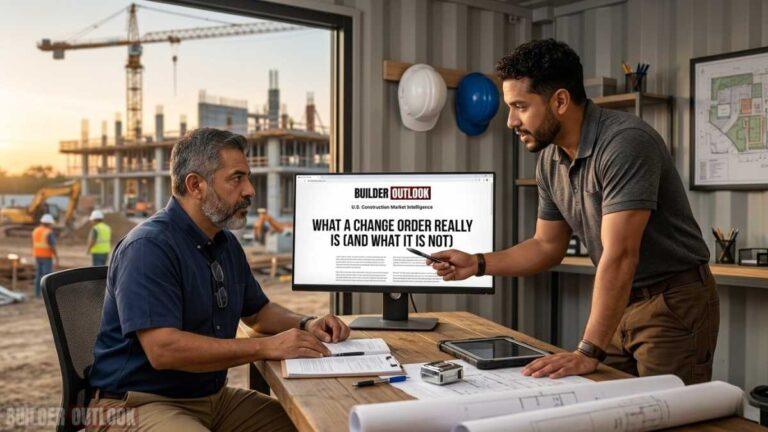
Change order provisions define how modifications to the project scope will be handled. Because design changes are common during construction, these clauses establish procedures for approving additional work and adjusting project costs.
Delay clauses address circumstances that may extend project timelines, such as weather events, labor shortages, or material supply disruptions.
Dispute resolution clauses determine how conflicts between parties will be handled. Some contracts require mediation or arbitration before legal action can be pursued.
These provisions help create predictable procedures for addressing issues that commonly arise during construction projects.
Why contractors must review contracts carefully
Many contractors focus primarily on the technical aspects of construction projects while paying less attention to contract language. However, contract terms can significantly influence project outcomes.
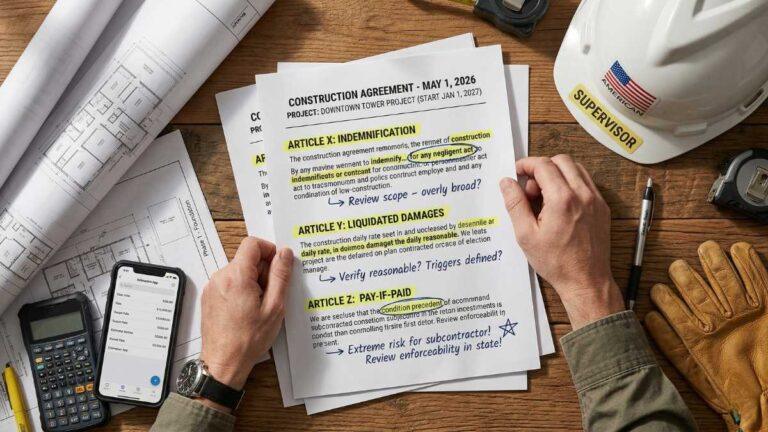
Unfavorable payment terms may delay compensation for completed work. Poorly written scope definitions may create disputes about whether certain tasks are included in the project. Ambiguous change order provisions may make it difficult for contractors to recover additional costs associated with design modifications.
Because construction contracts often involve large financial commitments, contractors should review contract documents carefully before signing. Many builders consult construction attorneys to review complex agreements and ensure that contract language protects their interests.
Legal organizations provide guidance on construction contract law.
American Bar Association – construction law resources
https://www.americanbar.org
Builders who understand contract language and legal responsibilities are better positioned to avoid disputes and protect their businesses.
Contracts and risk management in construction
Risk management is one of the most important functions of construction contracts. Every construction project involves uncertainties that may affect cost, schedule, or performance. Contracts allocate responsibility for these risks between project participants.
Insurance requirements are often specified within construction contracts to protect parties from financial losses associated with accidents or property damage. Contractors may be required to carry general liability insurance, workers’ compensation coverage, and builder’s risk insurance policies.
Indemnification clauses define how liability will be distributed if legal claims arise during construction. These provisions often require contractors or subcontractors to assume responsibility for damages caused by their work.
Performance bonds and payment bonds are also common in construction contracts, particularly for public projects. These financial guarantees protect project owners and subcontractors if the contractor fails to complete the project or pay suppliers.
Through these mechanisms, contracts help ensure that construction projects remain financially and legally secure.
More from Builder Inteligence
Advertising

FAQ – Construction contracts in the united states: the complete guide for builders and contractors
1. What is a construction contract?
A construction contract is a legally binding agreement between parties involved in a building project that defines the scope of work, payment terms, timelines, and responsibilities.
2. Why are construction contracts important for contractors?
Contracts establish legal protections, define project responsibilities, and reduce financial risks by clarifying how disputes, delays, and payment schedules will be handled.
3. What are the most common construction contract types?
Common types include lump sum contracts, cost-plus contracts, time and materials contracts, and unit price contracts.
4. What is a change order in construction contracts?
A change order is a formal modification to the original contract that adjusts project scope, cost, or schedule due to new requirements or design changes.
5. Who prepares construction contracts?
Construction contracts are typically prepared by project owners, attorneys, architects, or project managers depending on the project structure.
6. Can contractors negotiate construction contracts?
Yes. Contractors often negotiate payment schedules, risk allocation clauses, and scope definitions before agreeing to contract terms.
7. What happens if a construction contract is violated?
Contract violations may result in legal disputes, financial penalties, project termination, or litigation depending on the severity of the breach.
8. Where can contractors find standard construction contract templates?
Professional organizations such as the American Institute of Architects publish widely used contract templates for construction projects.