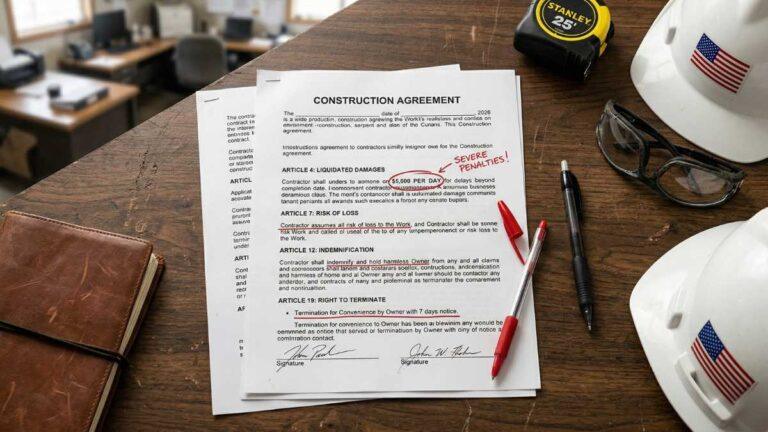
Construction projects rarely proceed exactly as originally planned. Even the most carefully designed construction schedules and project specifications must often adapt to evolving conditions once work begins on site. These adjustments may result from design revisions, unforeseen site conditions, material substitutions, or requests from the project owner to modify the original scope of work. In the construction industry, these adjustments are formally managed through a process known as a change order.
A change order is a written amendment to the original construction contract that modifies the scope, cost, or schedule of a project. Because construction contracts define precise obligations for contractors and project owners, any change to those obligations must be documented through an official contractual modification. Without this documentation, contractors may face disputes regarding payment, responsibility, and project deadlines.
Understanding how change orders work is essential for contractors operating in the United States construction industry. Improperly handled scope changes are one of the most common sources of disputes between contractors and project owners. When contractors perform additional work without proper authorization, they risk not being compensated for that work. Conversely, project owners rely on change order procedures to ensure that project costs remain transparent and controlled.
For these reasons, change order management has become a fundamental skill for successful construction companies. Contractors who understand the legal and administrative structure of change orders can protect their financial interests while maintaining professional relationships with project owners and project managers.
Why change orders occur in construction projects
Construction projects involve a large number of variables that cannot always be fully predicted during the design and bidding phase. Once construction begins, previously unknown conditions may emerge that require adjustments to the original plan.
One common cause of change orders involves unforeseen site conditions. For example, contractors may discover underground utilities, soil instability, or structural issues in existing buildings that were not identified during the design phase. These conditions often require additional engineering work, alternative construction methods, or specialized materials.
Another frequent cause of change orders involves design revisions. Architects and engineers may modify plans during construction to improve functionality, comply with regulatory requirements, or accommodate changes requested by the project owner. When these revisions alter the work originally specified in the contract, a change order must be issued to update the contractor’s responsibilities.
Change orders may also result from owner-requested upgrades. A project owner might decide to upgrade materials, modify interior layouts, or add additional features after construction has begun. These changes typically increase project costs and require adjustments to the project schedule.
Because these situations are common in construction, well-drafted contracts always include clear procedures for managing change orders.
The legal structure of a change order
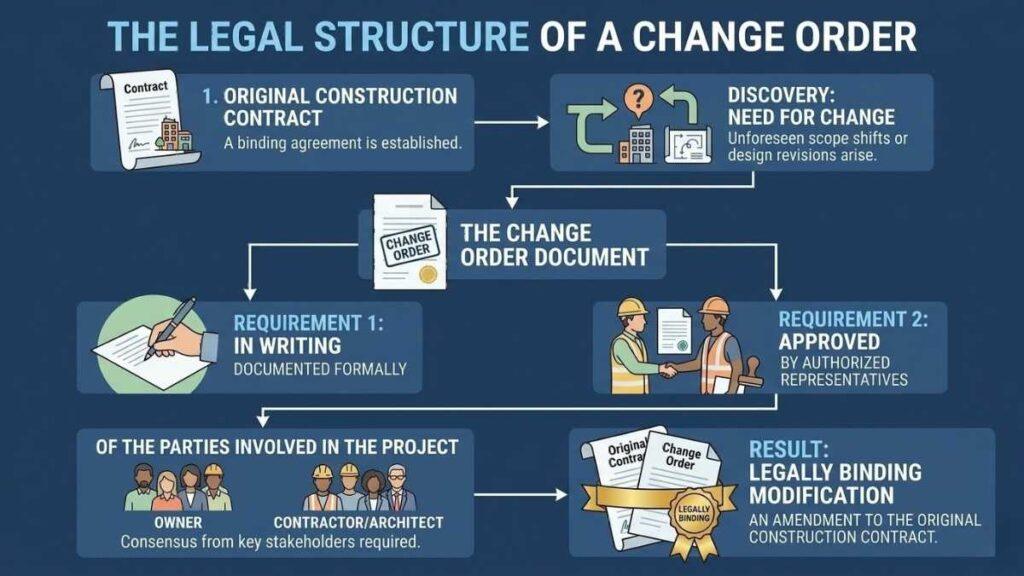
A change order functions as a legally binding modification to the original construction contract. It must be documented in writing and approved by the authorized representatives of the parties involved in the project.
The change order document typically includes several essential elements. First, it must clearly describe the change in scope of work, identifying exactly what additional tasks, materials, or modifications are required. This description must be detailed enough to prevent misunderstandings about the nature of the work being added or removed from the contract.
Second, the change order must specify the financial impact of the change. This may involve an increase or decrease in the contract price depending on the nature of the modification. Contractors typically provide cost estimates that include labor, materials, equipment, and overhead associated with the change.
Third, the change order must address any adjustments to the project schedule. Additional work may extend the project timeline, while scope reductions could shorten the construction schedule. Documenting these changes helps prevent disputes related to project delays or completion deadlines.
Once approved, the change order becomes part of the official contract documentation governing the project.
Why contractors must never perform unauthorized work
One of the most common mistakes contractors make involves performing additional work before receiving formal approval for a change order. Contractors may feel pressure to keep the project moving forward and may begin work based on verbal instructions from project managers or owners.
However, performing work without a signed change order can create significant financial risk. If a dispute later arises regarding the scope or cost of the additional work, the contractor may have difficulty proving that the work was authorized.
Many construction contracts explicitly state that verbal instructions do not constitute authorization for additional work. Without written documentation, contractors may be forced to absorb the costs associated with the extra work.
For this reason, experienced contractors follow strict internal procedures that require written approval before implementing any change that affects project scope, cost, or schedule.
Builder Inteligence
Documentation practices that protect contractors
Effective documentation is the foundation of successful change order management. Contractors must maintain detailed records that support the need for scope modifications and demonstrate the financial impact of those changes.
Project documentation may include site photographs, engineering reports, field inspection notes, and correspondence with project managers or architects. These records provide evidence that supports the contractor’s request for a change order.
Contractors should also maintain detailed cost estimates for all change order requests. These estimates typically include labor calculations, equipment usage, material costs, subcontractor expenses, and overhead adjustments. Transparent cost documentation helps project owners understand the financial implications of proposed changes.
Clear documentation also facilitates communication between contractors, project owners, and design professionals. When all parties understand the reasons behind a change order request, the approval process becomes more efficient and less contentious.
Industry resources for change order procedures
Several industry organizations publish guidance and standardized forms that contractors can use to manage change orders effectively. These resources help ensure that change order documentation meets accepted industry standards.
The American Institute of Architects provides widely used contract documents that include structured procedures for change orders.
American Institute of Architects Contract Documents
https://www.aiacontracts.com
Another valuable resource is ConsensusDocs, which publishes standardized construction contracts and documentation templates used across the industry.
ConsensusDocs Contract Documents
https://www.consensusdocs.org
These organizations provide guidance that helps contractors implement clear and consistent change order procedures within their projects.
Why change order management improves project success
Proper change order management benefits both contractors and project owners by maintaining transparency and accountability throughout the construction process. When scope changes are documented clearly, all parties understand how those changes affect project costs and timelines.
Contractors who manage change orders effectively protect their financial stability and avoid disputes regarding payment for additional work. Project owners benefit from clear cost documentation that allows them to evaluate the financial impact of design changes before approving them.
Ultimately, change orders are not simply administrative paperwork. They are essential tools that allow construction projects to adapt to evolving conditions while preserving the integrity of the contractual relationship between contractors and project owners.
For contractors operating in complex construction environments, mastering change order management is a key component of professional project management.
More from Builder Inteligence
Advertising

FAQ – Construction change orders explained: how contractors manage scope changes legally
1. What is a change order in construction?
A change order is a written modification to the original construction contract that adjusts the project scope, cost, or schedule after the contract has already been signed. It formally documents changes requested by the project owner, architect, engineer, or contractor and becomes part of the legally binding agreement governing the project.
2. Why are change orders necessary in construction projects?
Change orders allow construction projects to adapt to unexpected conditions, design revisions, or owner-requested modifications while maintaining clear contractual documentation. Without change orders, contractors and owners may disagree about who is responsible for additional work or project delays, which can lead to costly disputes.
3. Can contractors perform additional work without a change order?
Contractors should avoid performing additional work without written change order approval. Verbal instructions from project managers or owners may not provide sufficient legal protection if disputes arise regarding payment or project responsibilities. Written approval ensures that the contractor will be compensated for the additional work performed.
4. What information should a change order include?
A change order should clearly describe the scope modification, the financial impact on the contract price, and any adjustments to the project schedule. It may also include detailed cost breakdowns, revised drawings, and supporting documentation explaining the reason for the change.
5. Who approves change orders in construction projects?
Change orders are typically approved by authorized representatives of the project owner, contractor, and sometimes the architect or project manager. The approval process ensures that all parties agree to the proposed modifications before the contractor performs the additional work.
6. How do change orders affect construction schedules?
Some change orders extend project timelines because they involve additional work or require adjustments to existing construction sequences. Other change orders may reduce the scope of work and shorten project schedules. Proper documentation ensures that schedule impacts are clearly defined.
7. Are change order disputes common in construction?
Yes. Change order disputes frequently occur when additional work is performed without proper documentation or when the parties disagree about the cost or necessity of the modification. Clear documentation and communication significantly reduce the likelihood of disputes.
8. What organizations provide standardized change order documents?
Organizations such as the American Institute of Architects and ConsensusDocs publish standardized construction contract templates and change order documentation that help contractors manage scope changes according to widely accepted industry standards.