In 2026, construction scheduling in the United States is being reshaped by a force that rarely appears in headlines but consistently dictates outcomes on real projects. Material lead times are no longer a procurement detail. They have become a primary driver of sequencing, staffing decisions, cash flow exposure, and contractual risk.
For years, contractors treated lead times as a variable to be monitored. Today, lead times define the schedule itself. The shift is subtle, but the consequences are structural. Projects that fail in 2026 often do not fail because of bad crews or poor management. They fail because schedules were built on assumptions that no longer match supply chain behavior.
Why lead times are no longer predictable inputs
Manufacturers, distributors, and suppliers operate under persistent uncertainty. Raw material volatility, energy costs, labor constraints, transportation congestion, and geopolitical disruption affect production cycles unevenly. Even when pricing stabilizes temporarily, delivery reliability does not.
In practical terms, this means that a material quoted at twelve weeks today may arrive in eighteen weeks tomorrow, or suddenly require partial shipments that disrupt installation sequencing. Schedules built on optimistic lead time assumptions become fragile by default.
Builder Inteligence


Scheduling is now backward from procurement, not forward from mobilization
Traditional scheduling logic starts with mobilization and pushes activities forward. In 2026, successful contractors reverse this logic. They start with confirmed procurement windows and build schedules backward around material availability.
This shift affects everything. Crew stacking changes. Temporary work extends. Supervision costs rise. Critical path activities move earlier or later based on supply realities rather than ideal sequencing.
Scheduling has become a procurement-driven discipline.
Long lead items quietly dictate labor exposure
When materials arrive late, labor is rarely idle in a clean, controllable way. Crews are reassigned inefficiently. Overtime increases to recover lost time. Subcontractors juggle overlapping commitments. Productivity drops as trades work around missing components.
These labor effects rarely show up clearly in early schedules. They emerge during execution, when recovery efforts inflate costs and generate disputes over responsibility.
Owners underestimate how lead times affect total project risk
Many owners focus on delivery dates for specific materials without understanding how those delays cascade across the entire schedule. A delayed switchgear delivery affects commissioning. A delayed curtain wall affects interior finishes. A delayed mechanical component affects testing and turnover.
Each delay compounds exposure. Insurance duration extends. Financing carry increases. Liquidated damages risk grows. What appears as a supplier issue becomes a project-wide liability.
Regional GEO conditions amplify lead time disruption
Lead time behavior is not uniform across the United States. Port congestion affects coastal markets differently. Regional manufacturing capacity varies. Infrastructure demand in Texas and the Southeast strains logistics. Weather volatility in the Midwest and Northeast disrupts transportation windows.
Contractors who rely on national averages underestimate regional exposure. GEO-specific scheduling strategies are now mandatory, not optional.
Why “float” no longer protects schedules
Float used to absorb uncertainty. In 2026, float disappears early. Lead time shifts consume buffer before construction even begins. When execution starts, schedules are already compressed.
This creates a false sense of performance early on, followed by sudden collapse later in the project. Recovery schedules become aggressive. Claims emerge around acceleration and disruption.

The rise of procurement-driven milestone planning
Leading contractors now align milestones with procurement certainty. They restructure contracts, submittal schedules, and coordination milestones around material realities.
This approach requires uncomfortable conversations early, but it prevents catastrophic failure later. Transparency replaces optimism.
How lead times are changing contract risk allocation
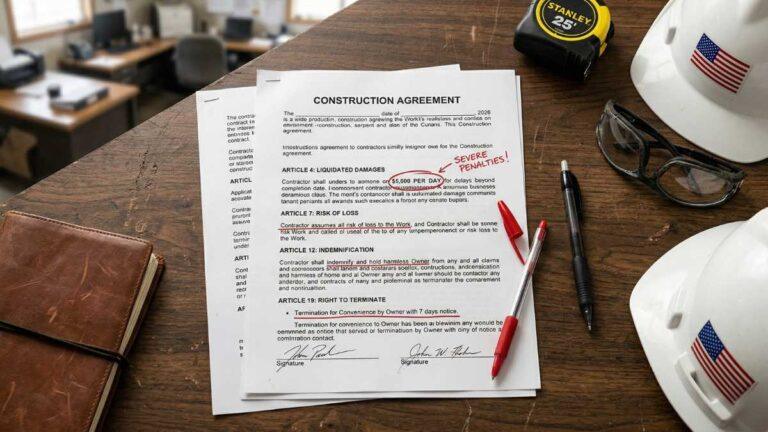
As lead times drive schedules, contracts increasingly reflect procurement risk. Force majeure language expands. Escalation clauses reference delivery windows. Owners push risk downstream. Contractors push back with conditional milestones.
Scheduling is no longer a neutral planning exercise. It is a negotiated risk position.
What contractors must change in scheduling strategy
Contractors who survive 2026 treat scheduling as a dynamic system. They validate lead times continuously. They integrate procurement data into CPM updates. They communicate impacts early. They stop pretending that optimism is a strategy.
In this environment, realistic scheduling is a competitive advantage.
More from Builder Inteligence


FAQ – Material Lead Times And Scheduling In 2026
1. Why are material lead times reshaping construction schedules in 2026?
Material lead times are unpredictable and volatile, forcing schedules to adapt around procurement realities. When delivery windows shift, sequencing, labor planning, and milestones must change, making lead times a primary scheduling driver rather than a secondary variable.
2. How do lead time delays increase labor costs?
Delayed materials cause inefficient crew deployment, overtime, rework sequencing, and productivity loss. Even when crews remain active, labor exposure increases through extended supervision, acceleration efforts, and disrupted trade coordination.
3. Why does backward scheduling from procurement work better now?
Backward scheduling aligns activities with confirmed delivery windows instead of idealized timelines. This reduces false float, improves realism, and limits downstream disruption caused by late-arriving materials.
4. How do lead times affect project risk beyond schedule delays?
Extended lead times increase insurance duration, financing carry, supervision costs, and exposure to liquidated damages. What begins as a supplier delay becomes a project-wide financial and contractual risk.
5. Do lead time risks vary by region in the United States?
Yes. Port access, manufacturing capacity, infrastructure demand, climate conditions, and logistics congestion vary regionally. GEO-specific scheduling assumptions are essential to manage real exposure accurately.
6. Why doesn’t schedule float protect projects anymore?
Float is often consumed early by procurement delays before construction begins. When execution starts, schedules are already compressed, leaving little room to absorb additional disruption.
7. How are contracts adapting to lead time-driven scheduling risk?
Contracts increasingly include procurement-based milestones, expanded force majeure language, conditional completion dates, and escalation clauses tied to delivery uncertainty.
8. What is the biggest scheduling mistake contractors make in 2026?
The biggest mistake is building schedules on optimistic lead time assumptions without continuous validation. When procurement reality diverges, the schedule collapses under cumulative pressure.