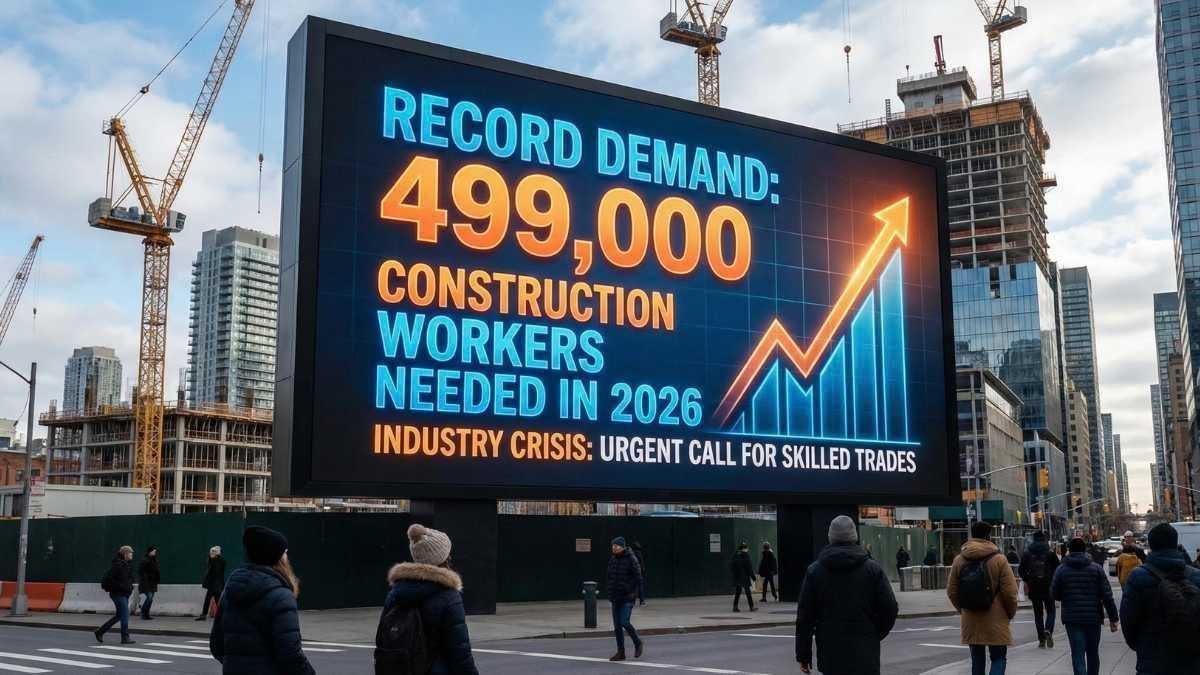
Why the U.S. construction labor shortage is the biggest issue of the decade
2026 dawns with a stark reality for the U.S. construction industry:
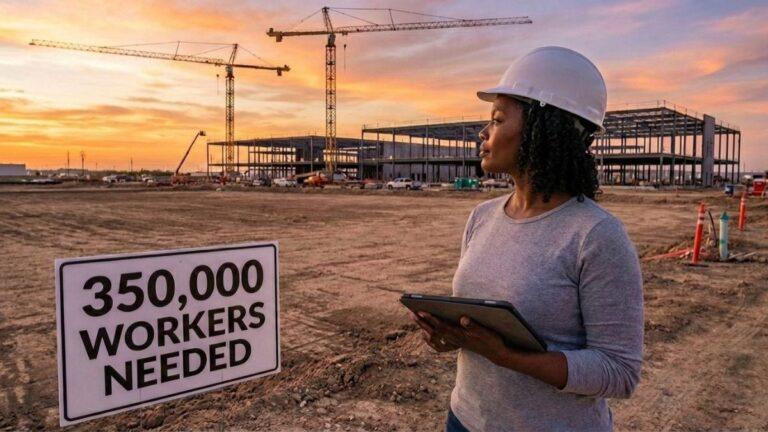
We need almost half a million new workers — and fast.
Industry observers, trade groups, and labor projections all point to the same figure:
Record Demand for 499.000 Construction Workers in 2026
This isn’t a subtle shift.
It’s a demand shock that will reshape how contractors hire, train, and operate. And if your company hasn’t faced this challenge head-on, you’re already behind.
In this article, we break down:
• What’s driving this shortage
• Which regions of the U.S. are most affected
• How technology is stepping in
• What construction leaders must do now
• How marketing and positioning matter for workforce attraction
This is not theory — this is strategy for survival and growth in 2026.
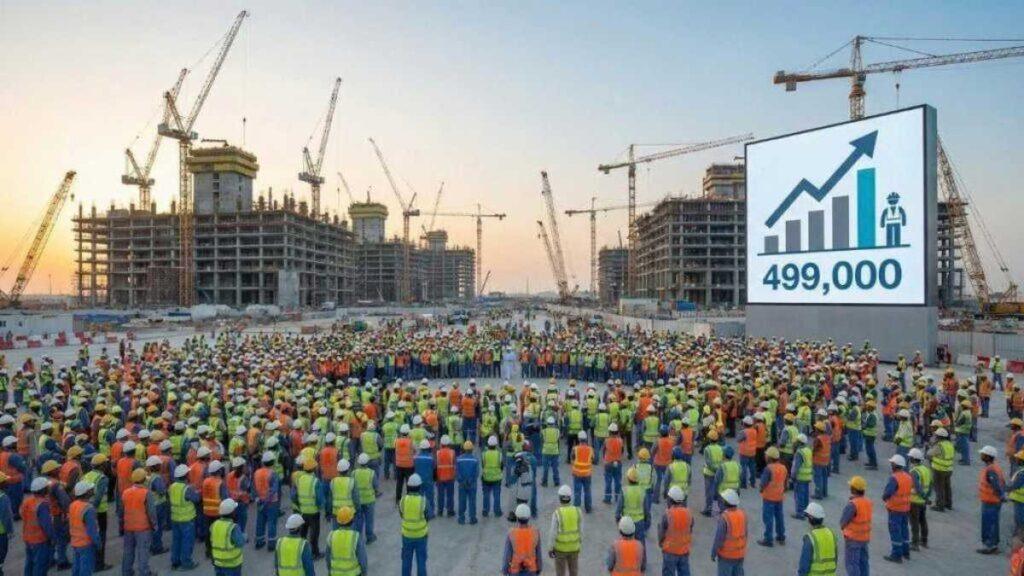
The numbers don’t lie: why 499,000 workers are needed
Construction workforce demand is driven by several converging forces:
Booming construction activity
Regional labor pressures: where the shortage is worst (and Why)
These regions share:
Contractors operating here are feeling the shortage faster and harder than national averages.
Builder Inteligence
Advertising
What happens when the workforce shrinks and demand grows?
When demand outpaces labor supply, the entire industry structure shifts:
A. Wage Inflation
Pay rates rise because contractors compete for the same pool of workers.
B. Project Delays and Backlogs
Clients feel the impact: slower timelines, rescheduling, and friction.
C. Subcontractor Scarcity
Finding reliable subcontractors for steel, concrete, framing, roofing, and electrical becomes harder.
D. Increased Turnover
Workers jump from project to project chasing higher pay and better conditions.
Each of these affects your bottom line, but the bigger impact is reputation.
In construction, reputation is everything.
Delays and staffing issues aren’t “internal” — clients talk. Clients compare. Clients choose the companies that look confident, prepared, and reliable.
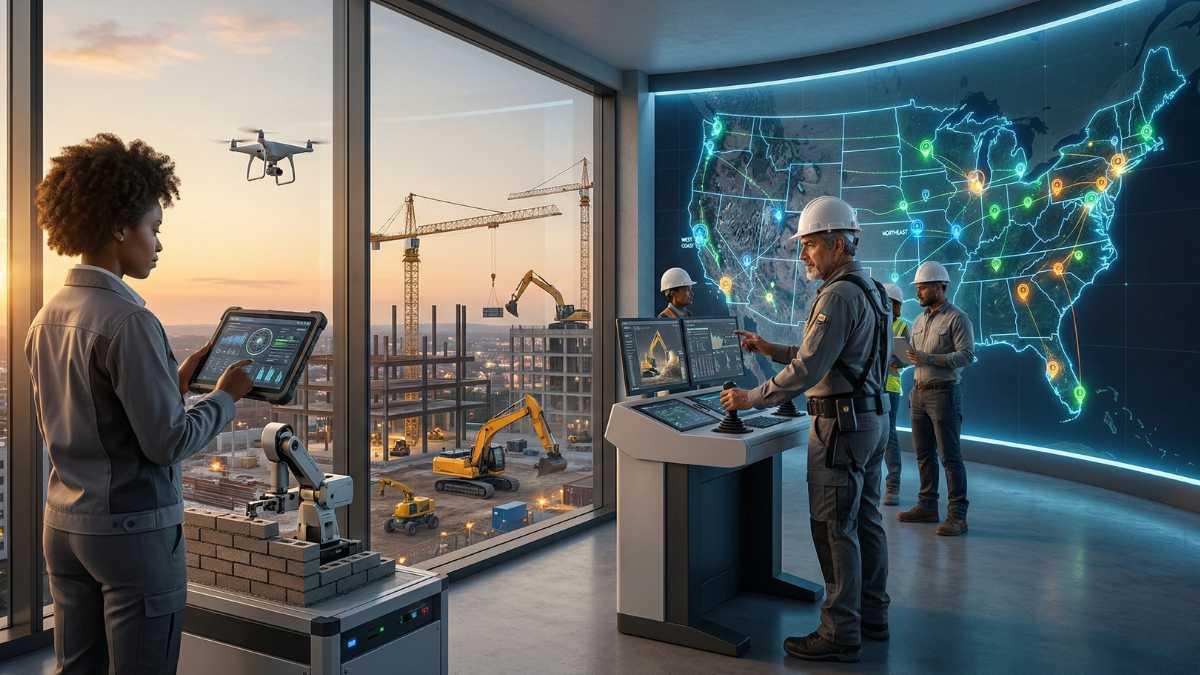
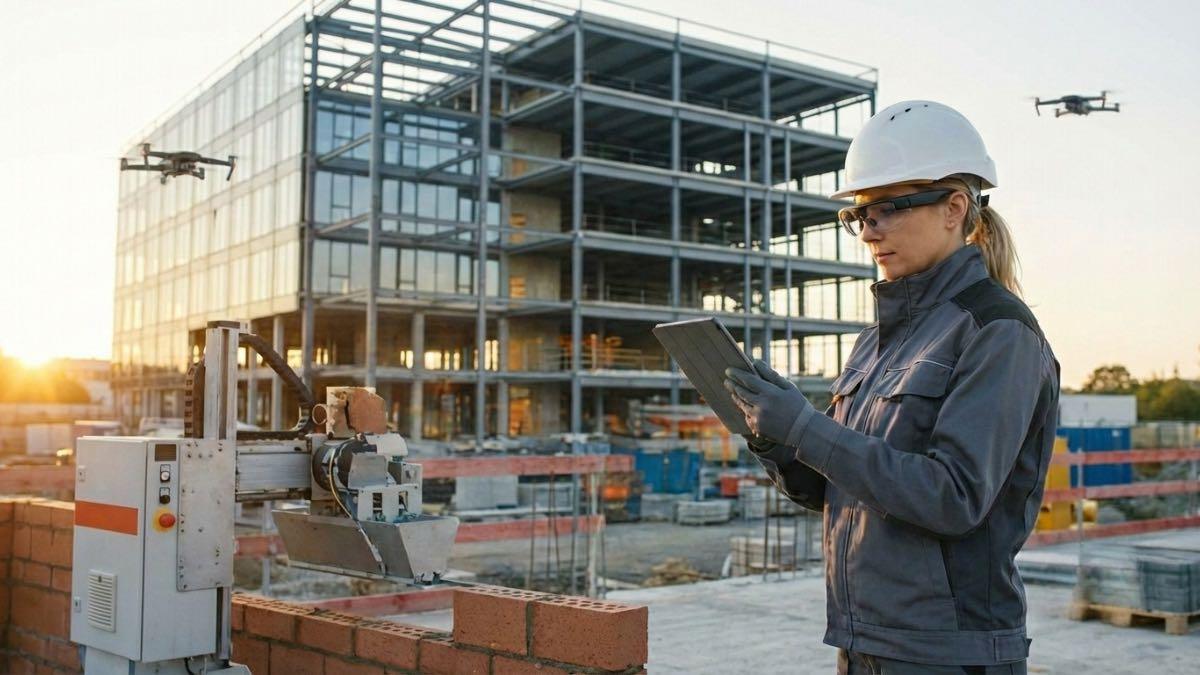
Technology is not a substitute but a force multiplier
The labor shortage doesn’t mean builders stop building.
It means they use technology to build smarter.
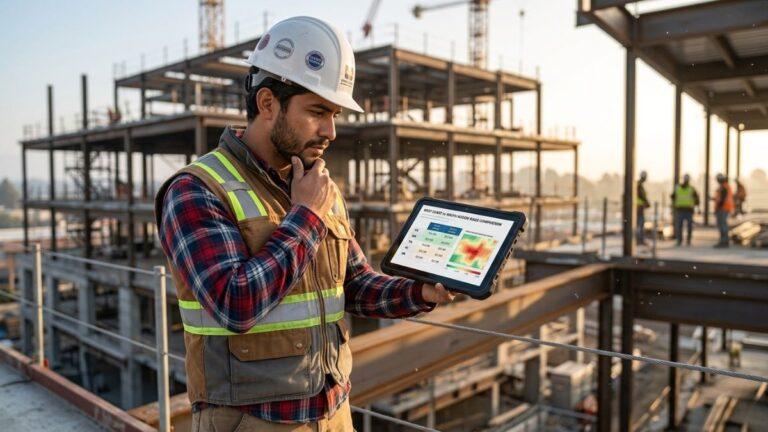
Technology now plays a role in:
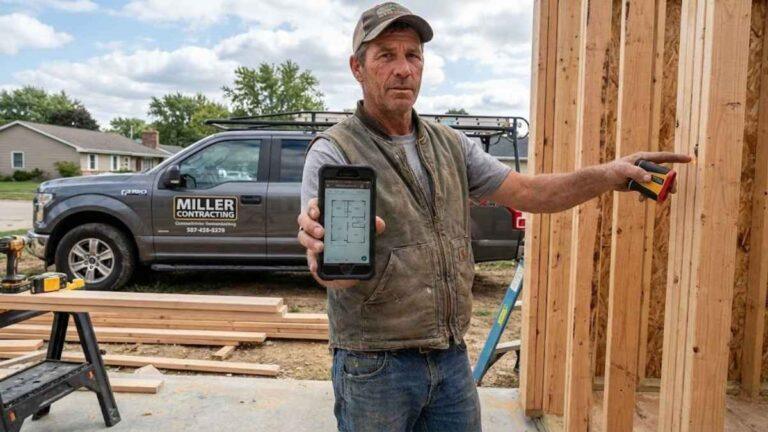
• Workforce scheduling and logistics
• On-site communication and safety
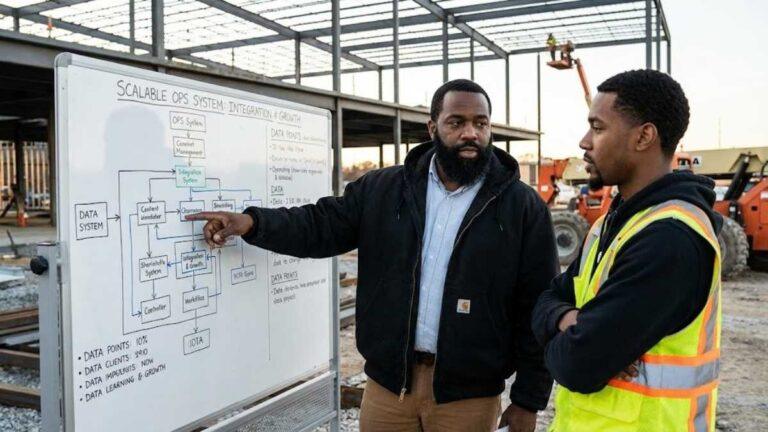
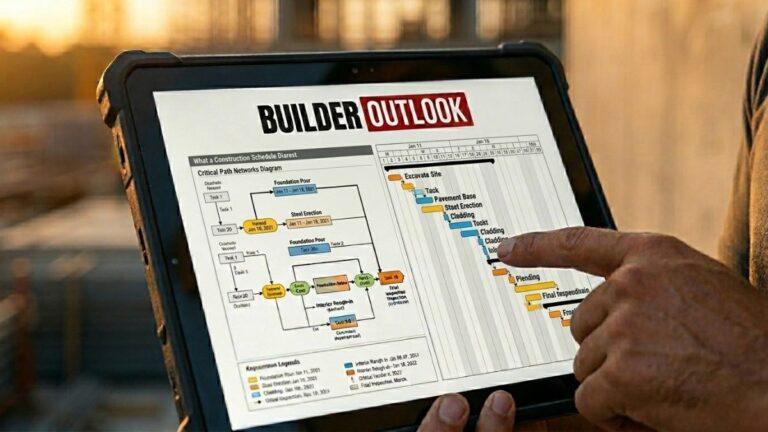
• AI-assisted project planning
• Prefabrication and modular builds
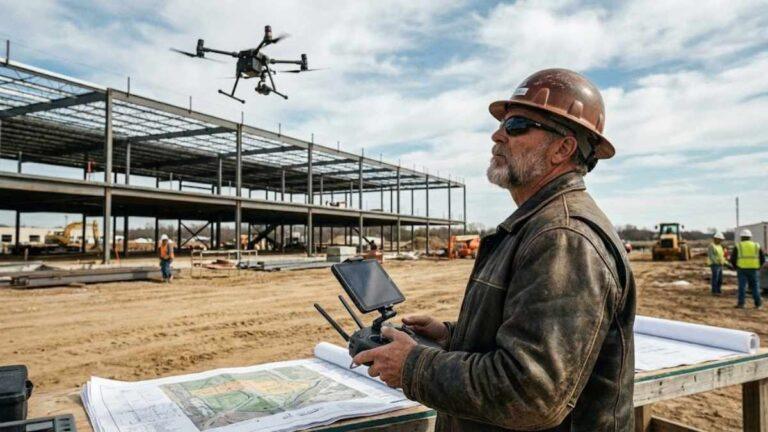
• Drone surveying
• Automated design and estimation tools
Workforce shortages reveal one truth:
Teams with better technology outperform bigger teams without it.
But technology adoption isn’t optional anymore —
It’s competitive survival.
This shift is redefining how contractors operate in states with the fiercest labor gaps.
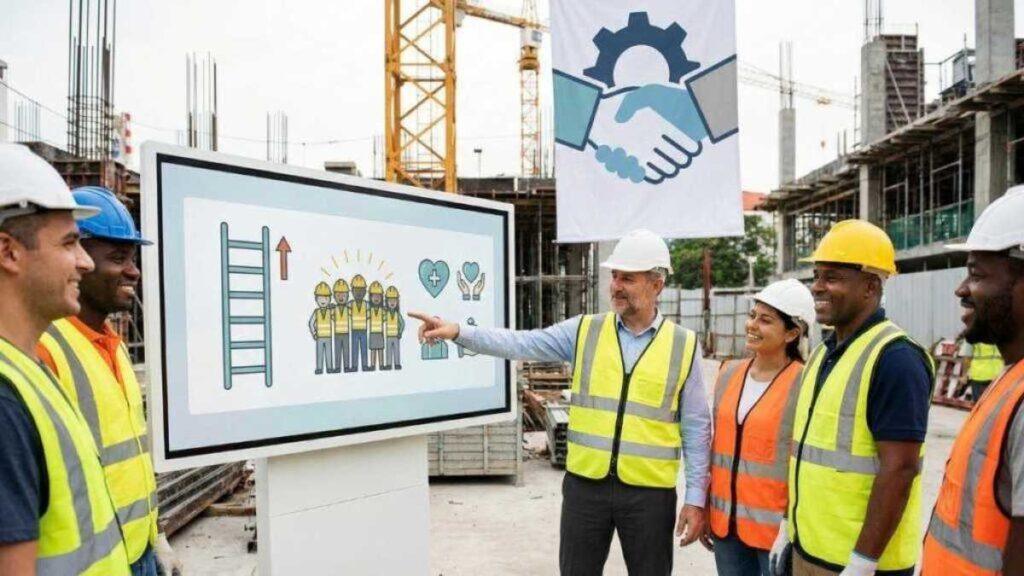
Why contractors must think like talent marketers
Here’s an uncomfortable truth:
Contractors don’t just compete for projects anymore.
They compete for workers.
Marketing isn’t just about clients.
It’s about people.
Great construction companies now attract:
✔ Clients
✔ Subcontractors
✔ Skilled labor
✔ Project partners
✔ Even investors and suppliers
And what do all these groups look at first?
👉 Your online presence.
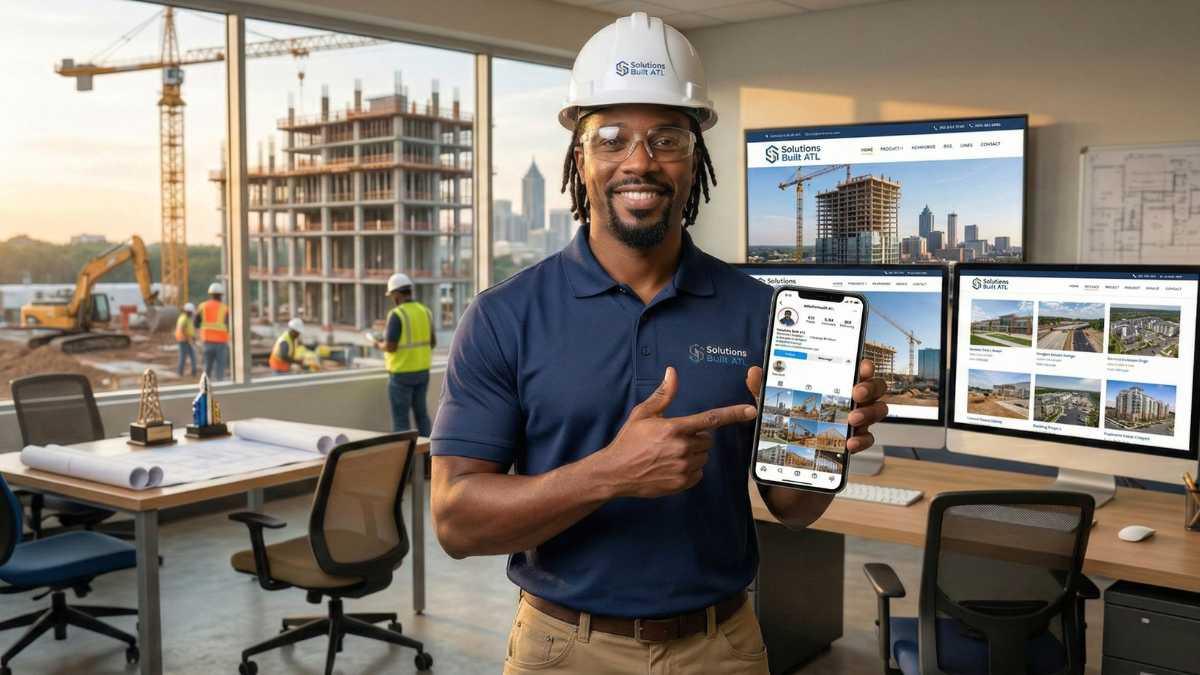
👉 Your professional branding.
👉 Your structured communication.
In 2026, a recruitment flyer is no longer enough.
Recruitment demands:
• A strong brand
• Clear positioning
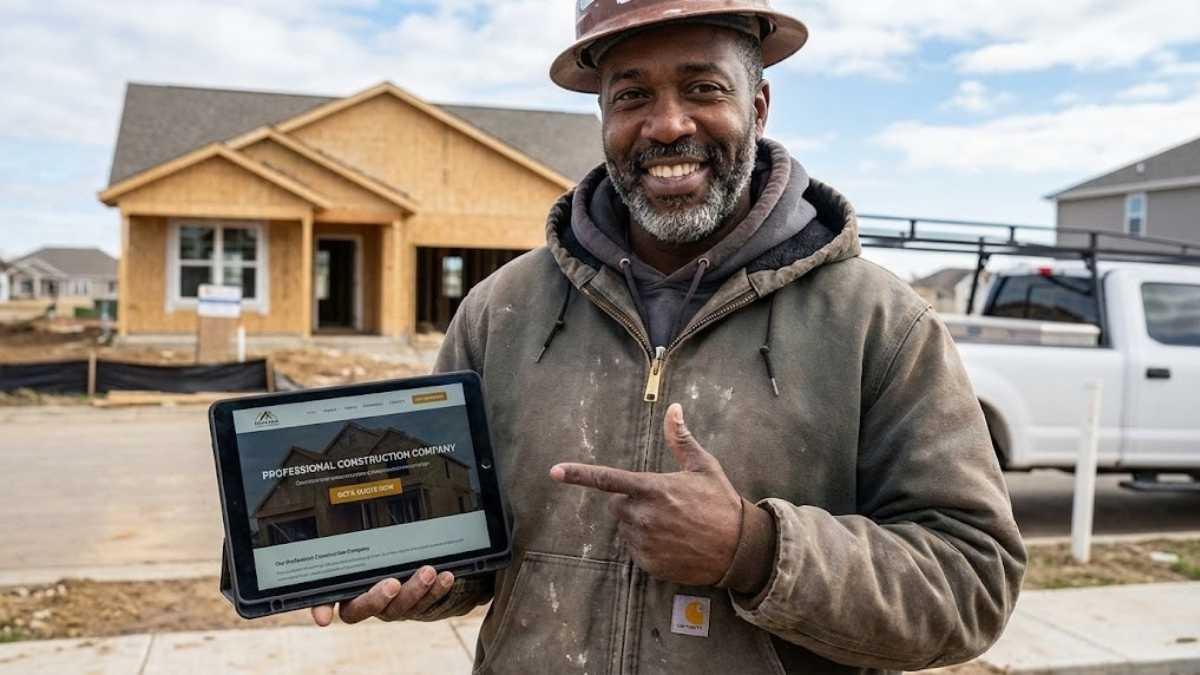
• A professional website
• Active social media presence
• Videos that show culture and trust
If you don’t look like a stable, organized company online, top talent goes elsewhere.
And in a year where 499,000 workers are needed, you cannot afford to look small or outdated.
Content and SEO for workforce attraction
Your website and content can no longer be static brochures.
They must:
⭐ Rank for local search terms
⭐ Communicate credibility
⭐ Highlight projects
⭐ Showcase team culture
⭐ Feature training programs
Local SEO is vital:
Examples of search intent contractors must own:
• “Construction jobs near me”
• “Contractor hiring in [City, State]”
• “Roofing jobs in Tampa”
• “Skilled labor opportunities Georgia”
• “Apprentice construction jobs Arizona”
You want to show up when:
🔎 Talent searches
🔎 Clients research your credibility
🔎 Suppliers vet your stability
🔎 Insurance partners investigate your compliance
Your digital footprint influences perception more than your pricing ever will.
The cost of ignoring the labor crisis
Ignoring this workforce shortage comes with expensive consequences:
❌ Longer timelines
Clients get frustrated and reconsider contractors.
❌ Higher payroll costs
Labor shortages force up wages overnight.
❌ Lower margins
You lose profitability because you must bid higher or overstaff.
❌ Brand damage
Clients equate staffing chaos with operational chaos.
Notice this:
Nothing above is about talent alone —
It’s about how your company is positioned, known, and trusted.
This is where construction marketing intersects with operations.
Contractors winning in 2026 are doing this
The companies that navigate this labor storm are those who:
🔹 Adopt technology early
🔹 Invest in employer branding
🔹 Optimize local search visibility
🔹 Structure websites with strong messaging
🔹 Use video to attract talent and clients
🔹 Share real project stories online
🔹 Reinforce credibility with case studies
This is not a “nice to have” strategy.
This is the difference between growth and stagnation.
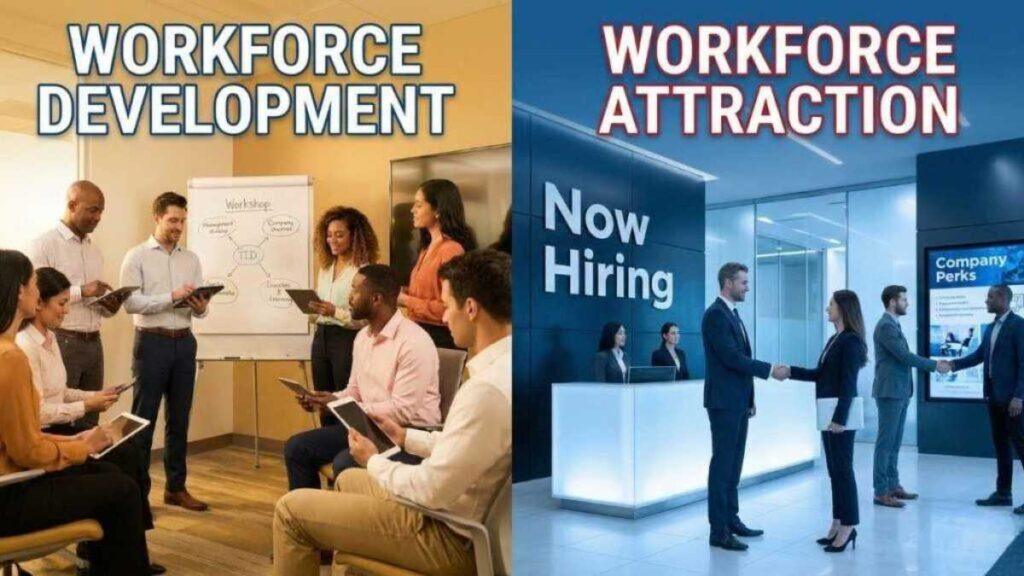
Workforce development vs. workforce attraction
There’s a difference!
Attraction:
Getting skilled workers to notice you.
Development:
Training them so they stay and thrive.
Good companies attract.
Great companies train and retain.
Your digital presence plays a role in both:
• People research before applying
• Job posts must reflect identity
• Video and culture content improves perception
• SEO makes you discoverable to job seekers
In 2026, labor demand isn’t just about numbers.
It’s about positioning your company as a destination employer.
What this means for small & mid-size contractors
Small and mid-size contractors often feel squeezed:
* Bigger firms have brand power
* Larger crews can absorb shortages
* Projects move faster with more resources
But small firms have an advantage:
📍 They can adapt faster
📍 They can pivot strategy faster
📍 They can communicate culture faster
Small teams with strong digital presence win against bigger teams with weak online identity.
This turns the labor shortage into a strategic advantage, not just a challenge.

Why you need a structured marketing operation — not random posting
This is where most contractors fail.
They treat marketing like an afterthought:
That mindset loses jobs and fails workforce attraction.
Case example: contractors dominating local search
Imagine two contractors in Tampa, Florida:
Contractor B:
That difference is hundreds of applicants over time.
This isn’t hypothetical.
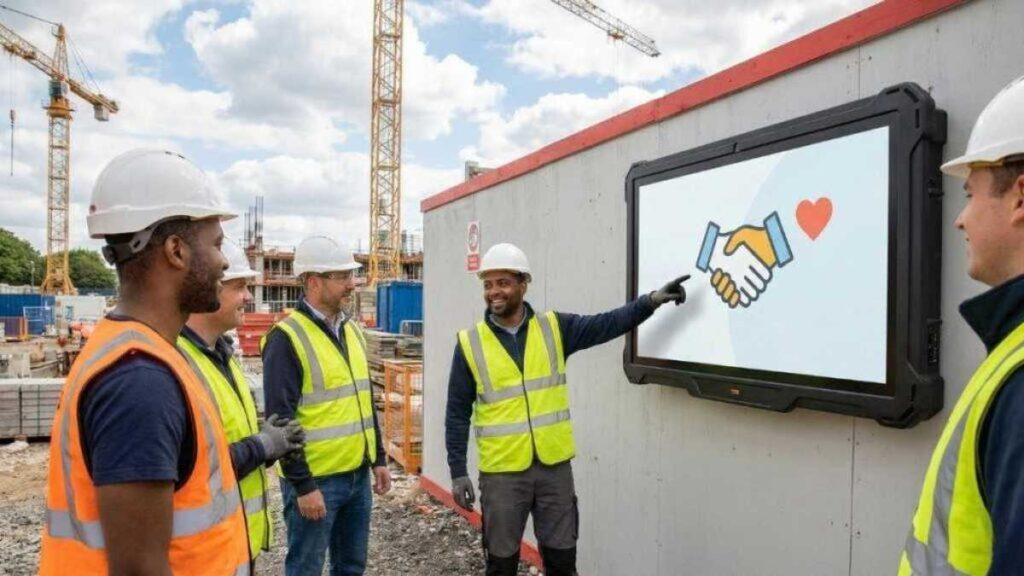
Your marketing must speak to workers too
Marketing in construction now has two audiences:
1. Clients
2. Workforce
Most strategies only focus on clients.
In 2026, ignoring workers in your marketing strategy is like building with no foundation.
Your brand must communicate:
✔ Opportunity
✔ Stability
✔ Culture
✔ Growth
✔ Identity
And this all must appear online first.
What contractors should do right now
If you want to adapt and grow:
✅ 1. Optimize your website for job search SEO
Use local keywords (city + job type)
✅ 2. Create talent attraction landing pages
Highlight benefits, culture, crew, training
✅ 3. Use video to show real work + real teams
Short clips increase trust
✅ 4. Publish consistently
Not randomly
✅ 5. Track results
Leads, clicks, job inquiries
This is how marketing becomes linked with labor outcomes.

Why marketing + operations cannot be separate in 2026
There was a time when marketing served only sales.
That time is over.
Now marketing:
✔ Supports growth
✔ Drives workforce attraction
✔ Improves brand credibility
✔ Reinforces trust before contact
✔ Influences hiring decisions
In a year where 499,000 workers are needed, your marketing is part of your operational strategy.
The labor crisis is real — and so are the solutions
The 2026 construction labor demand isn’t a distant warning.
It’s happening right now.
But it’s also an opportunity for companies that:
✔ Think strategically
✔ Communicate professionally
✔ Adapt with technology
✔ Integrate marketing + operations
✔ Lead with clarity
This year won’t wait.
And your competitors are already acting.
More from Builder Inteligence
Frequently Asked Questions
1 – Why is the U.S. construction industry facing a record labor shortage in 2026?
The U.S. construction industry is facing a record labor shortage in 2026 due to a combination of increased construction activity, retiring skilled workers, population growth, and major infrastructure investments across multiple states, creating unprecedented workforce demand.
2 – How many new construction workers are needed in the United States in 2026?
Industry estimates indicate that approximately 499,000 new construction workers will be required in 2026 to meet project demand across residential, commercial, industrial, and infrastructure construction throughout the United States.
3 – Which U.S. states are most affected by the construction labor shortage?
States experiencing the highest construction labor shortages include Texas, Florida, Georgia, North Carolina, Arizona, California, Virginia, and Colorado, driven by population growth, infrastructure expansion, and large-scale development projects.
4 – What types of construction jobs are most in demand in 2026?
High-demand roles include electricians, HVAC technicians, concrete workers, framers, roofers, heavy equipment operators, project managers, and skilled subcontractors with experience in large-scale and specialized construction projects.
5 – How does the construction labor shortage impact project timelines and costs?
Labor shortages increase project timelines, raise wage costs, reduce scheduling flexibility, and place pressure on contractors to deliver projects on time, often impacting margins and client satisfaction across U.S. construction markets.
6 – Why is local SEO important for construction companies hiring workers in 2026?
Local SEO helps construction companies appear in searches such as “construction jobs near me” or “contractor hiring in [city],” increasing visibility among skilled workers actively searching for opportunities in specific geographic areas.
7 – How are construction companies using technology to address workforce shortages?
Many U.S. construction companies are adopting technology such as workforce management platforms, scheduling software, automation tools, prefabrication, and AI-assisted planning to increase efficiency and reduce reliance on larger labor teams.
8 – What role does employer branding play in attracting construction workers?
Employer branding influences whether skilled workers choose to apply. Construction companies with professional websites, strong online presence, clear messaging, and visible project portfolios are perceived as more stable and attractive employers.
9 – Can marketing help construction companies compete for labor in high-demand markets?
Yes. Strategic marketing supports workforce attraction by reinforcing credibility, improving online discoverability, and communicating company culture, stability, and growth opportunities to job seekers in competitive regional markets.
10 – How does GEO optimization support workforce recruitment for contractors?
GEO optimization ensures construction companies rank for location-specific searches related to hiring, such as “construction careers Texas” or “roofing jobs Florida,” connecting employers with qualified local talent.
11 – What should contractors do now to prepare for the 2026 labor market?
Contractors should invest in workforce planning, strengthen digital presence, optimize their websites for job-related searches, adopt productivity technology, and position their brand as a reliable and organized employer.
12 – Is the construction labor shortage a short-term issue or a long-term challenge?
Most indicators suggest the labor shortage is a long-term challenge driven by demographic shifts and sustained infrastructure demand, requiring strategic adaptation rather than temporary solutions.