In the United States construction industry, few things destroy profit faster than poorly managed change orders. In 2026, change orders are no longer occasional adjustments — they are a constant part of almost every project. Scope changes, unforeseen conditions, design modifications, client requests, and regulatory requirements make it nearly impossible to execute a project exactly as originally planned. The problem is not the existence of change orders. The problem is how contractors handle them.
Most contractors treat change orders as reactive paperwork. They document changes after the work has already been performed, negotiate pricing under pressure, and attempt to justify costs without a structured system. This approach creates a dangerous pattern where additional work is executed without guaranteed compensation, timelines are impacted without formal adjustments, and client expectations become misaligned with reality. Over time, this erodes both profit margins and professional credibility.
The financial impact is often underestimated. Change orders affect not only direct costs but also scheduling, labor efficiency, subcontractor coordination, and cash flow. A poorly managed change can ripple across the entire project, creating delays, increasing overhead, and generating disputes that consume time and resources. In many cases, contractors complete additional work believing it will be approved later — only to face resistance or partial payment.
The reality is simple:
Change orders are not administrative.
They are financial control mechanisms.
And without structure, they become silent profit killers.
WHAT A CHANGE ORDER REALLY REPRESENTS IN A PROJECT
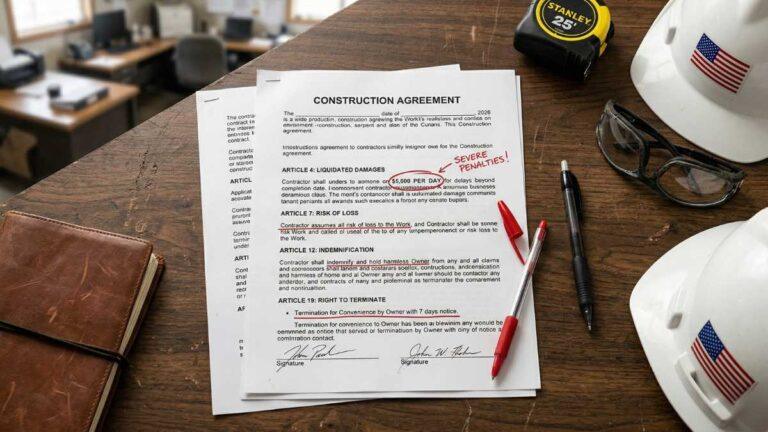
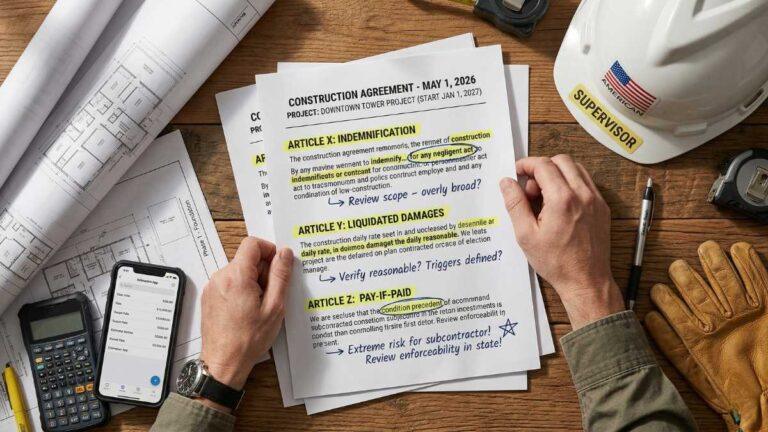
A change order is not just a document that records a modification. It is a formal adjustment to the project’s scope, cost, and timeline. It legally redefines the agreement between contractor and client, ensuring that additional work is properly authorized, priced, and scheduled. When structured correctly, it protects both parties. When handled poorly, it creates ambiguity that leads to conflict.
In the U.S., change orders are typically governed by the original construction contract, which defines how changes must be documented, approved, and compensated. Organizations such as the American Institute of Architects provide standardized contract frameworks that include detailed provisions for change management. However, many contractors fail to follow these structures consistently in practice.
A properly executed change order includes a clear description of the work, detailed cost breakdowns, schedule impact analysis, and formal approval before execution. This transforms the change from a risk into a controlled adjustment. Without these elements, the contractor assumes unnecessary exposure, both financially and legally.
A change order is not about documenting what happened.
It is about controlling what will happen next.
WHY CHANGE ORDERS ARE FAILING MORE IN 2026
The construction environment in 2026 has increased the frequency and complexity of change orders. Projects are more dynamic, design processes are often incomplete at the start of construction, and clients expect flexibility without fully understanding the operational impact of changes. This creates a constant flow of modifications that require fast, structured decision-making.
One of the main reasons change orders fail is timing. Contractors often execute additional work before securing formal approval, especially when under pressure to maintain progress. This creates a scenario where negotiation happens after the value has already been delivered, significantly weakening the contractor’s position.
Another critical issue is lack of documentation. Verbal agreements, informal messages, and unclear scope descriptions lead to disputes when it is time to bill for the work. Without precise records, contractors struggle to prove the validity and cost of changes.
Additionally, many contractors fail to connect change orders to scheduling. A change in scope almost always affects the timeline, but this impact is rarely quantified or communicated effectively. As a result, contractors absorb delays that should have been formally recognized and compensated.
The system breaks not because of complexity.
But because of lack of structure.
WHERE CONTRACTORS ACTUALLY LOSE MONEY ON CHANGE ORDERS
Financial losses related to change orders rarely come from a single mistake. They accumulate through patterns of poor control. One of the most common scenarios is performing additional work without approved pricing. Contractors move forward to avoid delays, assuming the cost will be accepted later, only to face negotiations where the client questions the value or necessity of the work.
Another major loss occurs through underpricing. Without a structured estimation process, contractors often fail to account for indirect costs such as supervision, equipment usage, administrative overhead, and productivity loss caused by disruption to the original workflow. The change may be billed, but the margin is significantly reduced or eliminated.
Scheduling impact is another hidden cost. Changes disrupt planned sequences, forcing crews to adjust, wait, or return later. This reduces efficiency and increases labor costs. If the schedule impact is not formally included in the change order, the contractor absorbs the delay without compensation.
There is also the issue of cash flow. Delayed approval of change orders often leads to delayed payment, creating financial pressure that affects the entire operation. In extreme cases, disputes over changes can escalate into legal conflicts, further increasing costs.
Change orders do not just affect the project.
They affect the entire business.
Builder Inteligence


HOW HIGH-LEVEL CONTRACTORS CONTROL CHANGE ORDERS
Contractors who consistently protect their margins treat change orders as a structured system, not a reactive process. This begins with clear contractual frameworks that define how changes must be handled, including approval procedures, pricing methods, and documentation requirements.
The first principle is simple but critical: no work starts without approval. High-level contractors enforce this rule strictly, ensuring that every change is documented and authorized before execution. This protects both financial and legal interests.
The second principle is detailed pricing. Change orders include comprehensive cost breakdowns, covering labor, materials, equipment, overhead, and profit. This level of transparency reduces disputes and strengthens negotiation positions.
The third principle is schedule integration. Every change is analyzed in terms of its impact on the timeline. If the change affects the schedule, this is formally documented and included in the agreement.
The fourth principle is documentation. All communications, approvals, and supporting information are recorded and organized. This creates a clear audit trail that protects the contractor in case of disputes.
The fifth principle is communication. Clients are educated about the impact of changes, ensuring alignment and reducing unrealistic expectations.
This approach transforms change orders from a source of risk into a system of control.
REAL EXAMPLE: WHEN “SMALL CHANGES” DESTROYED PROJECT PROFIT
A contractor in Florida was executing a residential remodeling project where the client frequently requested small adjustments — moving outlets, modifying finishes, adding minor features. Each individual change seemed insignificant, and the contractor chose to proceed without formal change orders to maintain a smooth client relationship.
Over time, these small changes accumulated. Labor hours increased, material costs rose, and the project timeline extended beyond the original plan. When the contractor attempted to bill for the additional work, the client resisted, arguing that many of the changes had not been formally approved.
By the end of the project, the contractor had completed a significant amount of extra work with minimal compensation. The profit margin was severely reduced, and the relationship with the client deteriorated.
The issue was not the changes.
It was the absence of a structured change order system.
HOW TO BUILD A CHANGE ORDER SYSTEM THAT ACTUALLY PROTECTS YOUR BUSINESS
Building an effective change order system requires more than templates. It requires discipline, process, and integration with the overall project management structure. Contractors must establish clear internal procedures that define how changes are identified, evaluated, priced, approved, and documented.
The first step is standardization. Every change follows the same process, regardless of size. This eliminates ambiguity and ensures consistency across projects.
The second step is speed. Change orders must be processed quickly to avoid delaying the project. This requires efficient communication and decision-making systems.
The third step is integration with scheduling and cost control. Changes are not isolated events — they impact multiple aspects of the project. A strong system connects these elements, ensuring that all impacts are captured.
The fourth step is client alignment. Clients must understand that changes have consequences. Educating them early reduces resistance and improves collaboration.
The fifth step is training. Teams must know how to identify changes, document them, and follow the correct procedures. Without this, even the best system fails in practice.
Technology can support this process, but it is not the solution. The real value lies in how the system is implemented and enforced.
YOU DIDN’T LOSE PROFIT ON THE PROJECT — YOU LOST CONTROL OF THE CHANGES
In 2026, projects do not lose profitability because of a single mistake.
They lose profitability through repeated, unmanaged changes.
Contractors who control change orders control scope, cost, and timeline. They protect their margins, maintain client trust, and operate with clarity. Those who treat change orders as paperwork continue to lose money on work they already completed.
The difference is not in the project.
It is in how change is managed.
More from Builder Inteligence
Advertising

Frequently asked questions
4. Do change orders affect the schedule?
6. Should change orders include detailed pricing?
7. Are verbal approvals enough?