In the United States construction industry, there is a silent operational truth that separates stable contractors from struggling ones: projects do not fail because of lack of work — they fail because of lack of cash flow. And in 2026, this reality is even more critical because payment cycles have become more complex, documentation requirements more rigid, and financial pressure across projects more intense.
At the center of this entire system is something that many contractors still underestimate: the pay application.
The pay application is not just an invoice. It is a structured financial document that controls how and when money flows from the owner to the contractor and down the entire payment chain. It determines whether the contractor will be paid on time, whether payments will be delayed, and whether disputes will arise over quantities, scope, or completion percentages.
The problem is that most contractors treat pay applications as administrative tasks handled at the end of the month. They compile numbers, attach basic documentation, and submit. When payment is delayed or reduced, they react instead of understanding that the issue started long before submission.
In reality, pay applications are not accounting tools.
They are operational control systems.
Contractors who understand this treat pay apps as part of project execution. Those who don’t end up financing projects with their own money — often without realizing it until it is too late.
This article breaks down how pay applications actually work in the United States, where contractors lose control, and how to build a system that ensures consistent, predictable payment.
WHAT A PAY APPLICATION REALLY IS (AND WHY MOST CONTRACTORS MISUNDERSTAND IT)
A pay application, commonly referred to as a “pay app,” is a formal request for payment based on the percentage of work completed during a specific billing period. In the U.S., it is typically structured using standardized forms such as the G702 and G703 from the American Institute of Architects, which define how progress billing is calculated and presented.
However, the structure of the form is only the surface.
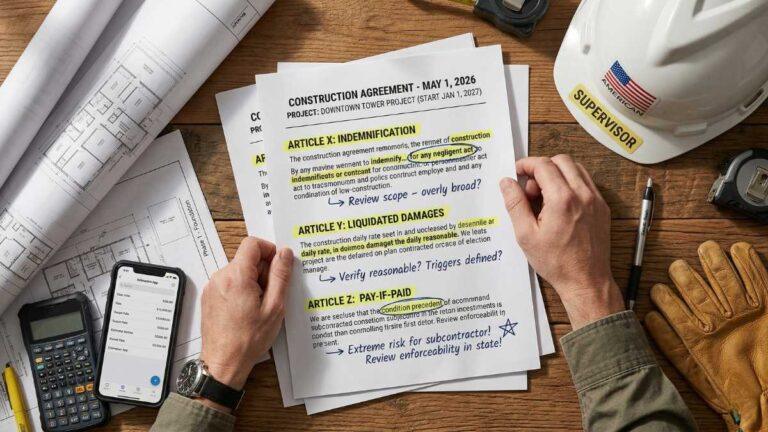
The real function of a pay application is to create a defensible financial position. It must demonstrate, with clarity and evidence, that the contractor has performed the work being billed. This includes alignment with the schedule of values, documentation of progress, and compliance with contractual requirements.
Most contractors misunderstand this because they focus on the number — the amount they want to receive — instead of the validation — the proof required to justify that amount. When the validation is weak, incomplete, or inconsistent, the pay application becomes negotiable. And when it becomes negotiable, payment becomes uncertain.
In practice, a pay application is not approved because it was submitted.
It is approved because it is defensible.
WHY PAY APPLICATIONS ARE FAILING MORE OFTEN IN 2026
The failure of pay applications in 2026 is not random. It is driven by structural changes in how projects are managed and financed across the United States. Owners and developers are applying stricter controls over payments, requiring more documentation, more precision, and more alignment with project progress.
At the same time, projects are becoming more complex. Multiple trades are working simultaneously, schedules are compressed, and documentation requirements are increasing. This creates a scenario where tracking progress accurately becomes more difficult, especially without structured systems.
Another critical factor is financing pressure. Owners may delay payments due to internal cash flow constraints, lender requirements, or milestone conditions. In these cases, any weakness in the pay application becomes a reason to delay or reduce payment.
Government-related projects add another layer of complexity. Contractors working under federal or public contracts must comply with strict billing procedures and documentation standards outlined by agencies such as the U.S. General Services Administration, where payment approval is directly tied to compliance.
The result is a payment environment where precision is not optional.
It is required.
Builder Inteligence


WHERE CONTRACTORS ACTUALLY LOSE MONEY IN THE PAY APP PROCESS
The loss does not happen at submission.
It happens throughout the project.
One of the most common issues is inaccurate tracking of progress. Contractors may estimate completion percentages based on perception rather than measured data. This leads to discrepancies when the owner or architect evaluates the application.
Another critical issue is lack of documentation. Photos, inspection reports, delivery receipts, and field logs are often incomplete or disorganized. Without this evidence, the pay application becomes difficult to defend.
There is also a timing problem. Contractors may delay submission, miss billing cycles, or fail to align with contractual deadlines. This directly affects cash flow.
Retention is another hidden factor. A portion of each payment is withheld until project completion. If not properly accounted for, this can create significant financial pressure.
Finally, there is communication. Contractors often submit pay applications without prior alignment with the owner or architect. This leads to surprises, questions, and delays.
The issue is not complexity.
It is lack of control.
HOW HIGH-PERFORMANCE CONTRACTORS CONTROL PAY APPLICATIONS
Contractors who maintain strong cash flow do not treat pay applications as monthly tasks. They build systems that operate continuously throughout the project.
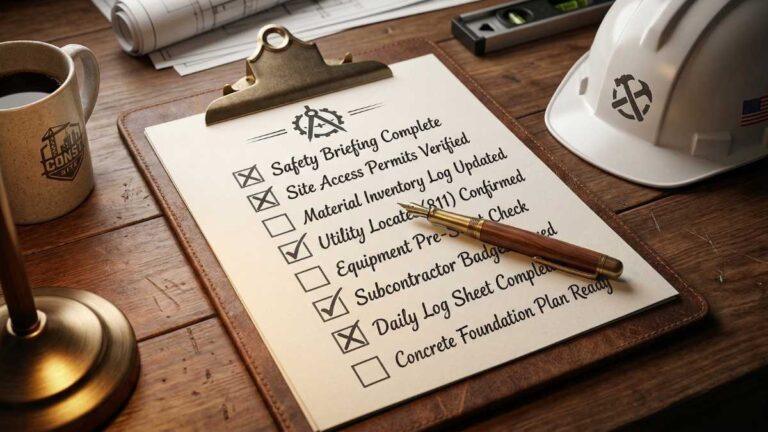
The first element is real-time tracking. Progress is documented daily, not monthly. Field teams record completed work, quantities, and conditions, creating a continuous record that supports billing.
The second element is structured documentation. Every pay application is backed by organized evidence, including photos, reports, and logs. This eliminates ambiguity during review.
The third element is alignment before submission. Contractors communicate with the owner or architect in advance, ensuring that expectations are aligned before the formal request is submitted.
The fourth element is schedule integration. Pay applications are aligned with project milestones, ensuring that billing reflects actual progress.
The fifth element is follow-up. Submission is not the end of the process. Contractors actively track approval status, respond to questions, and push for resolution.
This system transforms pay applications from reactive requests into controlled financial processes.
REAL-WORLD EXAMPLE: HOW A CONTRACTOR LOSES CASH FLOW WITHOUT REALIZING
Consider a contractor working on a mid-size commercial project in Texas. The project is progressing well, and the contractor submits a pay application for $120,000 based on estimated completion percentages.
The owner reviews the application and questions $30,000 of the amount due to lack of supporting documentation. The contractor cannot immediately provide detailed evidence, leading to partial approval of $90,000.
The remaining $30,000 is delayed for the next cycle.
Meanwhile, the contractor must continue paying labor, materials, and subcontractors.
This creates a cash flow gap that was not anticipated.
The work was performed.
The money was earned.
But the system failed.
HOW TO BUILD A PAY APPLICATION SYSTEM THAT ACTUALLY WORKS
Building an effective system requires shifting the mindset from billing to control. Contractors must establish processes that operate continuously, not just at the end of the month.
Field teams must be trained to document work consistently. Project managers must ensure that documentation is organized and accessible. Accounting teams must align with project data, not just financial records.
Technology can support this process. Project management tools allow integration of field data, documentation, and billing. However, the system must be enforced.
Consistency is critical.
Every project must follow the same structure.
Every pay application must meet the same standard.
This creates predictability.
And predictability creates cash flow stability.
THE PROJECT DOESN’T PAY YOU — YOUR SYSTEM DOES
In 2026, getting paid in construction is not about completing the work.
It is about controlling the process that validates the work.
Contractors who rely on informal systems, incomplete documentation, and reactive submission will continue to face delays, reductions, and financial pressure.
Those who build structured pay application systems will control their cash flow, reduce disputes, and operate with stability even in complex environments.
The difference is not in the project.
It is in how payment is managed.
More from Builder Inteligence
Advertising
Frequently Asked Questions
1. What is a pay application in construction?
It is a formal request for payment based on work completed during a billing period.
2. Why are pay applications delayed?
Due to lack of documentation, misalignment, or incomplete information.
3. What is retainage?
A portion of payment withheld until project completion.
4. How can contractors improve payment speed?
By documenting work in real time and aligning expectations before submission.
5. Are AIA forms required?
Not always, but they are widely used and accepted.
6. What is the biggest mistake in pay apps?
Submitting without proper supporting evidence.
7. How do contracts affect pay applications?
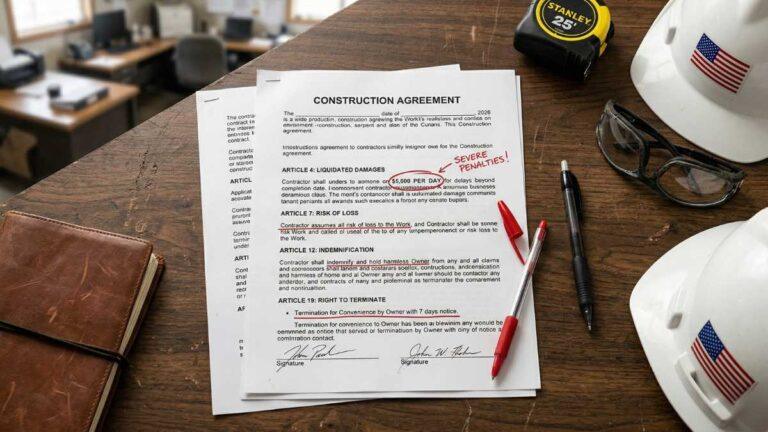
They define requirements, deadlines, and approval conditions.
8. Can poor pay apps affect profitability?
Yes, they can create cash flow gaps and financial pressure.