Change orders are one of the most misunderstood and financially dangerous elements in construction projects across the United States. While many contractors treat them as routine administrative adjustments, the reality in 2026 is that change orders have become one of the primary drivers of profit loss, disputes, and project instability. The issue is not that change orders exist — they are inevitable in any real construction environment. The issue is how they are managed, documented, approved, and enforced.
Across markets like Florida, Texas, and California, contractors are increasingly facing projects where the original scope is incomplete, evolving, or subject to late-stage design decisions. Owners expect flexibility, designers refine details during execution, and field conditions introduce variables that cannot be predicted during estimating. All of this generates change orders. However, while the work changes in real time, the contract often remains rigid, creating a gap between what is performed and what is formally approved.
This gap is where contractors lose money.
Not because they don’t perform the work correctly, but because they fail to control the process that validates and monetizes that work. In 2026, high-performance contractors are no longer reacting to change orders — they are controlling them as part of a structured financial system. This article explains how that system works in practice, how change orders actually fail in real projects, and how contractors can build operational control that protects revenue and prevents disputes.
WHY CHANGE ORDERS ARE THE BIGGEST HIDDEN FINANCIAL LEAK IN CONSTRUCTION
The financial impact of poorly managed change orders is rarely visible in a single line item. It accumulates over time, often unnoticed until the project is near completion and margins have already been compromised. The core problem is timing. Contractors frequently perform additional work before formal approval is obtained, assuming that the change will be recognized and compensated later. In many cases, it is — but not always fully, and often not without resistance.
This creates a dangerous dynamic. The contractor is financing the change with their own resources, taking on labor costs, material expenses, and coordination effort without guaranteed reimbursement. If the owner disputes the scope, delays approval, or negotiates pricing aggressively, the contractor absorbs part of the cost. Multiply this across multiple changes and the impact becomes significant.
In real projects, this often happens in small increments. A minor adjustment to layout. A coordination fix between trades. A field condition that requires additional work. Each individual change may seem manageable, but collectively they create a financial drain that is difficult to recover.
The issue is not the existence of change orders.
It is the lack of control over them.
HOW CHANGE ORDERS ACTUALLY BREAK DOWN IN REAL PROJECTS
To understand how to fix the problem, it is necessary to understand how it develops. In most U.S. construction projects, the breakdown begins with informal communication. A superintendent, project manager, or owner representative requests a change in the field. The contractor acknowledges the request and proceeds with the work to avoid delays. At this point, the change is real in execution but not formalized contractually.
The next phase is documentation. The contractor prepares a change order request, detailing scope, cost, and schedule impact. However, this documentation is often created after the work has already started or even been completed. This weakens the contractor’s position because the negotiation is no longer about whether the work will happen — it already has.
The third phase is approval. Owners may review the request, question pricing, request additional justification, or delay decision-making. During this time, the contractor continues to carry the cost.
Finally, there is resolution. In some cases, the change is approved as submitted. In others, it is reduced, delayed, or partially denied. The outcome depends heavily on documentation, timing, and contractual alignment.
The key takeaway is that change orders fail not at the end of the process, but at the beginning — when control is lost.
THE STRUCTURED CHANGE ORDER SYSTEM USED BY HIGH-PERFORMANCE CONTRACTORS
Contractors who consistently protect their margins do not rely on reactive processes. They implement structured systems that control change orders from the moment they are identified.
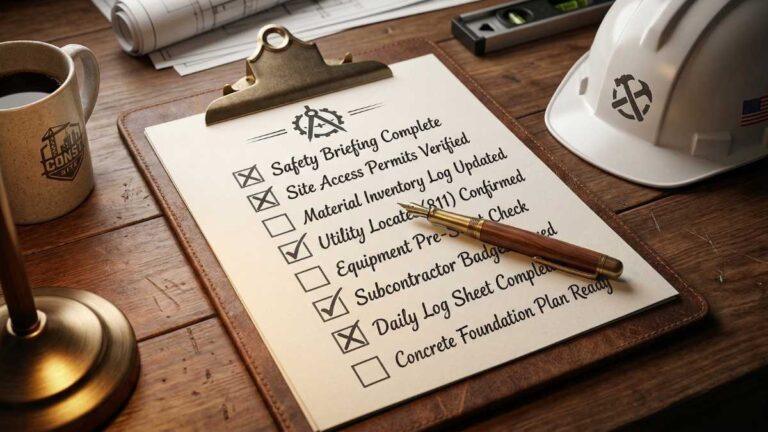
The first element is immediate recognition. Any deviation from original scope is identified and flagged in real time. Field teams are trained to recognize changes as financial events, not just operational adjustments.
The second element is pre-work authorization. High-performance contractors establish a rule: no change work begins without documented authorization. This may take the form of a signed change order, a written directive, or a formal notice depending on the contract structure.
The third element is standardized documentation. Every change order follows the same format, including detailed scope description, cost breakdown, schedule impact, and supporting evidence such as photos, drawings, and correspondence.
The fourth element is timeline control. Change orders are submitted within contractual deadlines, ensuring that rights are preserved. Many contracts include strict notice requirements, and missing these deadlines can invalidate claims.
The fifth element is tracking and follow-up. Change orders are not submitted and forgotten. They are actively tracked, with regular follow-ups to ensure progress toward approval.
This system transforms change orders from reactive tasks into controlled processes.
Builder Inteligence

THE ROLE OF CONTRACT CLAUSES IN CHANGE ORDER CONTROL
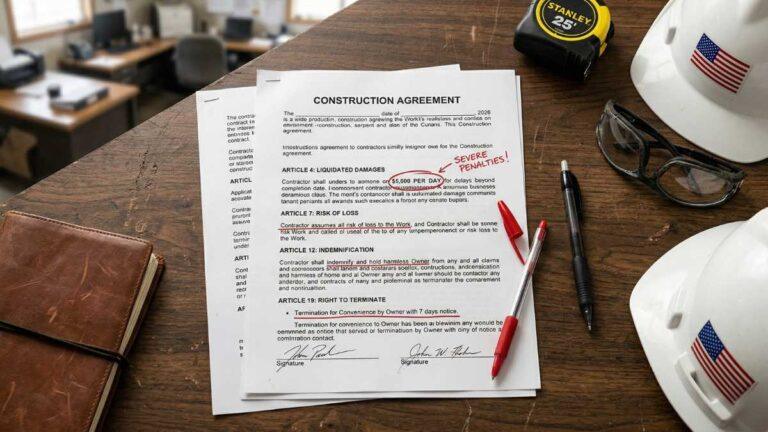
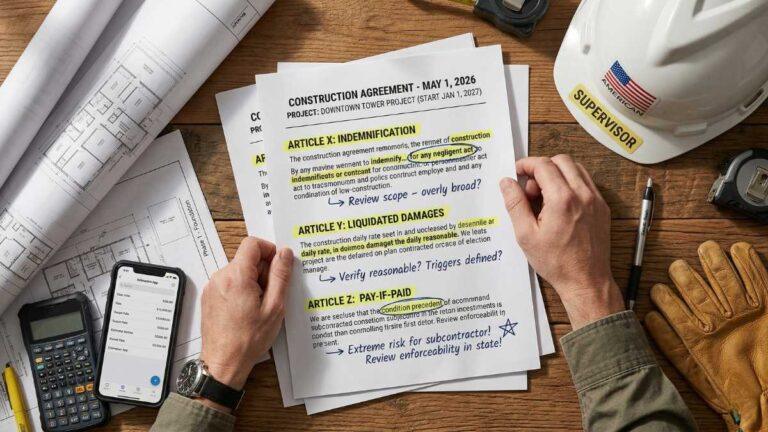
The effectiveness of any change order system is directly influenced by the contract. Clauses related to changes, notice requirements, and approval processes define how changes must be handled.
Standard frameworks from organizations like the American Institute of Architects provide structured approaches to change management, but most contracts are modified to include project-specific conditions. These modifications often introduce stricter requirements, such as mandatory written approval before work begins or limited timeframes for submitting claims.
Federal and public-sector projects may follow additional guidelines outlined by the U.S. General Services Administration, where change management processes are more formalized and documentation requirements are more rigorous.
Contractors must understand these clauses before execution begins. Waiting until a change occurs is too late.
The contract defines the rules.
Execution must follow them.
REAL-WORLD EXAMPLE: HOW A SIMPLE CHANGE BECOMES A LOSS
Consider a commercial remodeling project in South Florida where a contractor is installing flooring. During installation, the client requests a change in material layout to improve aesthetics. The contractor agrees and proceeds with the work to maintain schedule.
The change requires additional labor and material adjustments, increasing cost by $8,000. However, no formal approval is obtained before execution. The contractor submits a change order after completion.
The client reviews the request and questions the cost, arguing that the change was minor. Negotiation reduces the approved amount to $4,500.
The contractor absorbs the remaining $3,500.
This scenario is not unusual.
It happens daily.
The issue is not the client.
It is the process.
HOW TO BUILD A CHANGE ORDER SYSTEM THAT ACTUALLY WORKS
Building an effective system requires discipline and consistency. Contractors must establish internal protocols that apply to every project, regardless of size.
Field teams must be trained to identify and escalate changes immediately. Project managers must enforce documentation standards and approval requirements. Estimating and operations must align to ensure that pricing reflects real costs.
Technology can support this process. Project management platforms allow tracking of change orders, documentation storage, and communication logs. However, tools alone are not enough.
The system must be embedded in the company’s culture.
Change orders are not interruptions.
They are financial events.
In 2026, change orders are no longer optional administrative tasks.
They are critical financial mechanisms that determine whether a project is profitable or not.
Contractors who treat them casually will continue to lose money in small increments that accumulate over time.
Those who implement structured systems will gain control over scope, cost, and execution.
The difference is not in the number of change orders.
It is in how they are managed.
More from Builder Inteligence
Frequently Asked Questions
1. What is a change order in construction?
It is a formal modification to the original scope of work, including adjustments to cost and schedule.
2. Why do contractors lose money on change orders?
Because work is often performed before formal approval is obtained.
3. Can a contractor refuse to perform a change without approval?
Yes, depending on contract terms, but this must be handled carefully to avoid delays.
4. What is the most important rule for change orders?
Never perform additional work without documented authorization.
5. How do contracts affect change orders?
They define procedures, deadlines, and requirements for approval and compensation.
6. Are verbal approvals valid?
Usually not. Written documentation is essential.
7. How can contractors improve change order management?
By implementing structured systems and training teams.
8. Do change orders affect project profitability?
Yes, they can significantly impact margins if not properly managed.