The complete compliance checklist every contractor should follow before starting construction work in the United States
Starting or expanding a construction business in the United States requires far more than technical skill or field experience. Contractors must also navigate a structured legal framework that regulates who can perform construction work, how companies must be registered, and what documentation is required before projects can legally begin. Many contractors focus heavily on operational readiness — equipment, subcontractors, materials, and scheduling — but overlook the compliance steps that allow them to legally operate in the first place.
The reality is that contractor licensing in the United States is not a single step. It is a multi-layer process that often includes business registration, tax identification, contractor licensing, insurance documentation, and permit approvals depending on the jurisdiction. Because licensing requirements vary widely from state to state and sometimes even from city to city, contractors must approach compliance using a systematic checklist rather than relying on assumptions or informal advice.
A contractor licensing checklist provides a structured way to ensure that each regulatory requirement has been addressed before construction work begins. Without this preparation, contractors risk facing licensing violations, project shutdowns, rejected permit applications, or legal disputes that could have been avoided with proper preparation.
This guide presents a comprehensive contractor licensing checklist designed specifically for builders and construction companies operating in the United States. It outlines the essential compliance steps contractors should complete before starting projects and explains how each step fits into the broader regulatory system governing the construction industry.
Step 1 — Confirm whether your state requires a contractor license
The first step in any contractor licensing process is determining whether the state where you plan to operate requires a contractor license. While many states maintain statewide licensing systems, others rely heavily on local contractor registration programs or only require licensing for certain trades.
States such as California, Florida, Nevada, and Arizona maintain comprehensive contractor licensing boards that regulate the construction industry at the state level. In these states, most contractors must obtain a license before performing construction work above a certain project value threshold.
Other states operate under different regulatory frameworks. Texas, for example, does not require a universal statewide general contractor license, although specific trades such as electrical and plumbing work are regulated by state agencies. Colorado also illustrates a decentralized system where contractor licensing is often managed by local municipalities rather than the state government.
Because of this diversity of regulatory structures, contractors should always verify licensing requirements through official government agencies before beginning work in any jurisdiction.
Example national licensing guidance resource:
URL:
https://www.sba.gov/business-guide/launch-your-business/apply-licenses-permits
Step 2 — Register your construction business entity
Before applying for most contractor licenses, construction professionals must establish a legally recognized business entity. Licensing boards typically require contractors to submit applications under a registered business structure rather than as informal operators.
Common business structures used by contractors include:
• Limited Liability Company (LLC);
• Corporation;
• Partnership;
• Sole proprietorship.
The choice of business structure can affect taxation, liability protection, and licensing requirements. Many contractors choose the LLC structure because it offers liability protection while maintaining relatively simple administrative requirements.
Business entities are generally registered through the Secretary of State office in the state where the company will operate. Once the entity is registered, the company will receive official documentation confirming its legal formation.
Contractors should ensure that the business name used in licensing applications exactly matches the registered entity name to avoid processing delays.
Step 3 — Obtain a federal Employer Identification Number (EIN)
Most contractor licensing applications require a federal tax identification number for the business. This number, known as an Employer Identification Number (EIN), is issued by the Internal Revenue Service.
An EIN functions as the federal tax identification number for a business entity and is required for several operational activities including:
• opening business bank accounts;
• hiring employees;
• filing business taxes;
• submitting contractor license applications.
Obtaining an EIN is free when completed through the official IRS website. Contractors should avoid third-party services that charge unnecessary fees for EIN registration.
Official EIN application resource:
URL:
https://www.irs.gov/businesses/small-businesses-self-employed/get-an-employer-identification-number
Step 4 — Verify contractor experience requirements
Most contractor licensing boards require applicants to demonstrate a minimum level of construction experience before they can qualify for a license. These experience requirements are designed to ensure that contractors possess sufficient practical knowledge to manage construction projects safely and effectively.
Experience requirements vary widely between states. Some states require four years of documented construction experience under a licensed contractor, while others may allow a combination of formal education and work experience to satisfy qualification criteria.
Applicants may be required to provide documentation such as:
• employment history;
• project portfolios;
• notarized verification forms from previous employers;
• proof of supervisory or project management experience.
Because experience documentation requirements can differ significantly between states, contractors should carefully review the guidelines provided by the relevant licensing board before submitting an application.
Builder Inteligence


Step 5 — Prepare financial responsibility documentation
Many contractor licensing boards require applicants to demonstrate financial responsibility before granting a license. This requirement helps ensure that contractors have the financial capacity to complete projects and manage business obligations responsibly.
Financial responsibility documentation may include:
• contractor license bonds;
• proof of business capitalization;
• financial statements;
• credit reports.
In states with strict financial requirements, contractors may need to submit detailed financial statements prepared by a certified public accountant. Other states may simply require proof of a contractor license bond.
The specific financial thresholds and documentation requirements vary widely between jurisdictions, making it essential to consult the official licensing board instructions before applying.
Step 6 — Obtain required insurance coverage
Insurance is a critical component of contractor compliance and is often required before a license can be issued. Insurance protects both contractors and their clients by providing financial coverage for accidents, property damage, and workplace injuries.
Common insurance requirements for contractors include:
• general liability insurance;
• workers’ compensation insurance;
• commercial auto insurance;
• contractor license bonds.
Some states require proof of insurance during the licensing application process, while others require it before issuing permits for construction projects. Contractors should ensure that their insurance policies meet the minimum coverage levels required by their jurisdiction.
Insurance requirements may also vary depending on whether the contractor performs residential, commercial, or specialty construction work.
Step 7 — Pass contractor licensing examinations
Many states require contractors to pass licensing examinations before obtaining a contractor license. These exams are designed to test knowledge of construction practices, building codes, project management, and business law.
Contractor licensing exams typically fall into two categories:
• trade examinations;
• business and law examinations.
Trade exams test technical knowledge related to specific construction disciplines such as general building, electrical work, plumbing, or roofing. Business and law exams focus on contract law, project management, financial responsibility, and regulatory compliance.
In some states, contractors may choose to take the NASCLA Commercial General Building Contractor exam, which is accepted by several participating state licensing boards.
NASCLA exam resource:
URL:
https://www.nascla.org
Step 8 — Submit your contractor license application
Once all prerequisite requirements have been completed, contractors can submit their licensing application to the appropriate regulatory authority. Application packages typically include:
• completed application forms;
• proof of business registration;
• EIN documentation;
• experience verification forms;
• financial responsibility documents;
• insurance certificates;
• exam results.
Application review times vary by state and may range from several weeks to several months depending on the complexity of the licensing system and the completeness of the submitted documentation.
Contractors should carefully review all application instructions before submission to avoid delays caused by incomplete forms or missing documents.
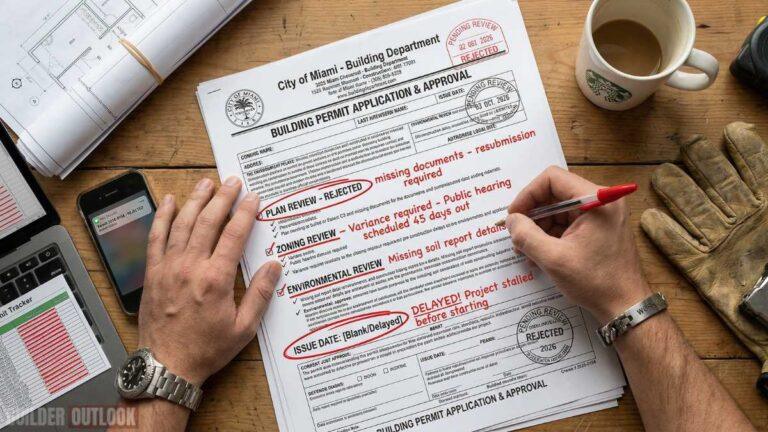
Step 9 — Register for local permits and municipal requirements
Even in states with statewide contractor licensing systems, local jurisdictions may impose additional registration or permit requirements before construction work can begin.
Cities and counties often regulate:
• building permits;
• contractor registrations;
• zoning compliance;
• inspection scheduling.
Contractors should contact local building departments in the project jurisdiction to confirm whether additional local registrations are required.
Ignoring local requirements is a common compliance mistake that can delay projects or lead to fines.
Step 10 — Maintain license compliance and renewals
Obtaining a contractor license is not a one-time process. Most contractor licenses must be renewed periodically, and contractors may be required to maintain continuing education, insurance coverage, and regulatory compliance.
Common license maintenance requirements include:
• periodic license renewal;
• continuing education courses;
• updated insurance certificates;
• bond renewals;
• compliance with new building codes.
Contractors should track license renewal deadlines carefully to avoid lapses that could affect their ability to legally perform construction work.
Final checklist summary for contractors
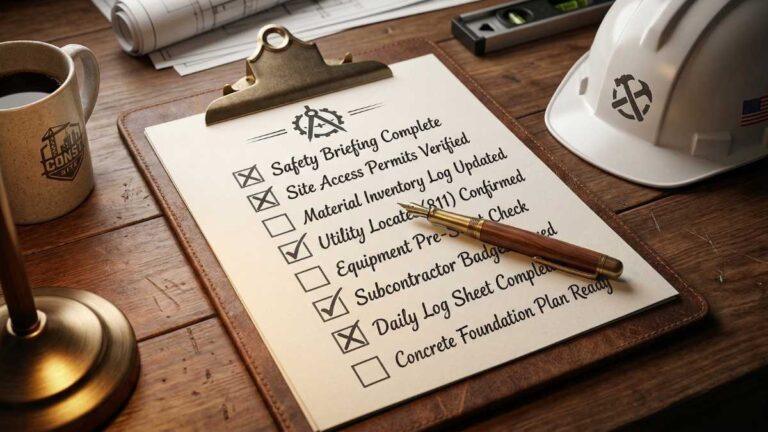
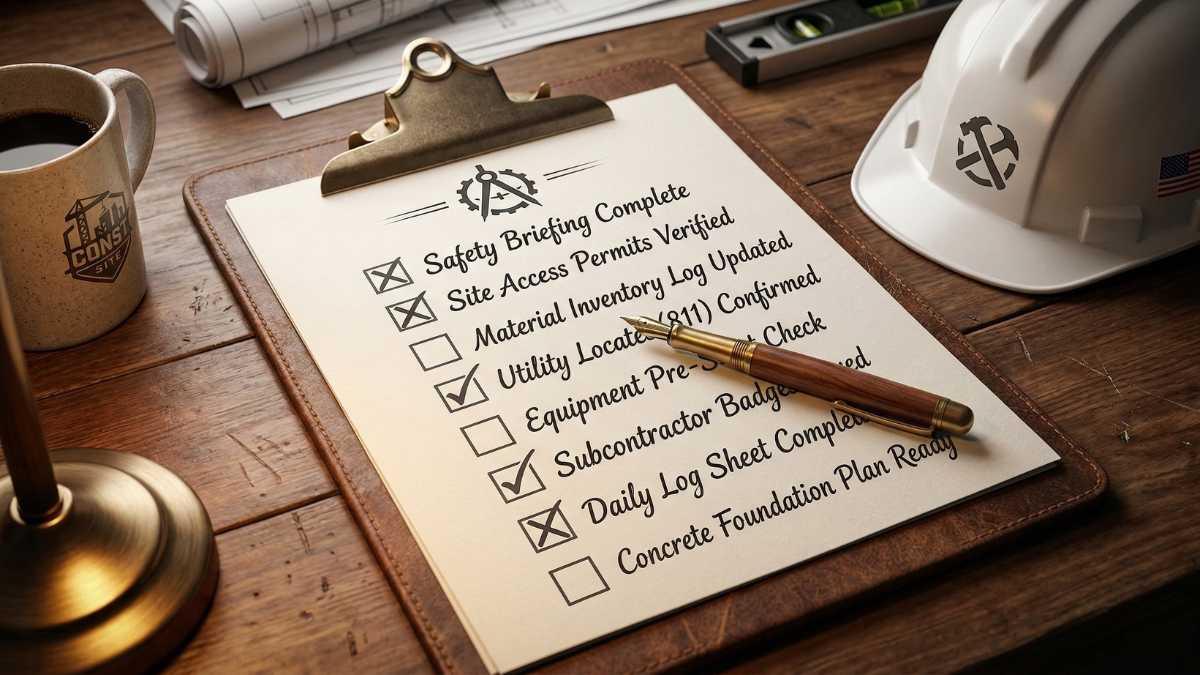
Before beginning construction work in the United States, contractors should confirm that they have completed the following steps:
✔ verified state licensing requirements;
✔ registered a legal business entity;
✔ obtained a federal EIN;
✔ documented construction experience;
✔ prepared financial responsibility documentation;
✔ secured required insurance coverage;
✔ passed licensing examinations if required;
✔ submitted the contractor license application;
✔ verified local permit and registration requirements;
✔ established a system for license renewal and compliance.
Following this checklist ensures that contractors begin their projects on a legally compliant foundation and reduces the risk of regulatory complications that could disrupt operations.
Builder Inteligence


FAQ — Contractor licensing checklist
1. What is a contractor licensing checklist in the United States?
A contractor licensing checklist is a structured compliance guide that helps builders confirm every major legal requirement before starting construction work. It typically includes business registration, EIN setup, license verification, insurance documentation, exam preparation, local permit review, and renewal planning so the contractor does not miss critical regulatory steps.
Contractors should use a licensing checklist because construction compliance in the United States is fragmented across federal, state, and local layers. A checklist reduces the risk of missing mandatory steps such as state licensing, city registration, insurance proof, or permit approvals, all of which can delay projects or expose the company to penalties.
No. A contractor licensing checklist does not replace legal advice or official board guidance. It works as an operational tool to organize the process and reduce mistakes, but contractors must still confirm all licensing rules, classifications, and documentation requirements directly with the relevant state board or local building authority before performing regulated work.
The first item should be verifying whether the state or local jurisdiction actually requires a contractor license for the type of work being performed. This step is critical because licensing systems differ widely across the United States, and the entire compliance path depends on the jurisdiction, trade classification, and project scope involved.
In many cases, yes. Contractors are often expected to apply under a legally registered business entity such as an LLC or corporation. Completing business registration first helps ensure consistency across tax records, insurance policies, licensing forms, and permit applications, which reduces administrative errors during the licensing process.
Insurance is included because many states require proof of coverage before issuing a contractor license, and many cities or project owners also require certificates of insurance before allowing work to begin. General liability and workers’ compensation are especially important because they protect both the contractor and the client from financial risk.
Yes. A professional contractor licensing checklist should always include local registration and permit review because many states that issue licenses still require city or county approvals before work begins. Ignoring local compliance is one of the most common reasons projects face delays, rejected permits, or stop-work notices.
Contractors should review and update their licensing checklist every time they enter a new market, change license classifications, hire employees, or renew their license. It should also be reviewed annually because insurance requirements, local registration processes, and state licensing rules can change, especially in active construction markets.
A contractor can use the same core structure, but the checklist must be customized for each state and, in many cases, each city or county. The sequence may remain similar, but the exact requirements for licensing, exams, insurance, bonds, and local permits will vary depending on the jurisdiction.