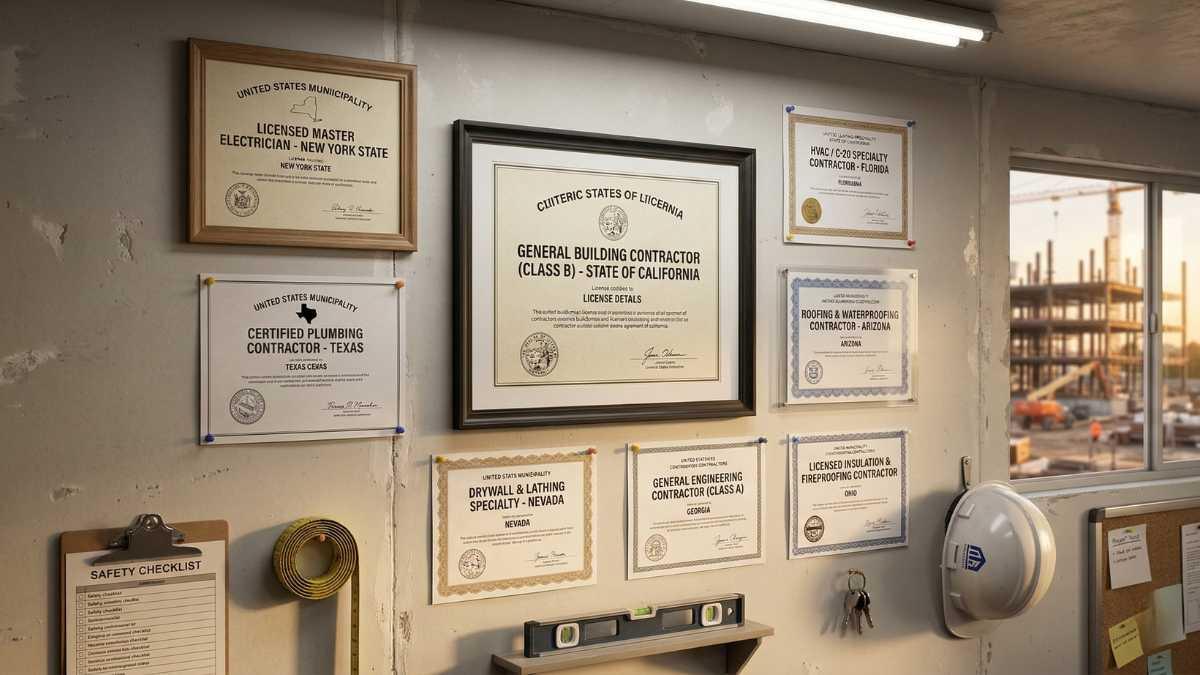
The construction industry in the United States operates through a wide range of contractor license classifications that define the type of work a builder is legally authorized to perform. While licensing requirements vary by state, most regulatory systems categorize contractor licenses into several primary groups that reflect different levels of responsibility, specialization, and project scope.
Understanding these license classifications is essential for contractors who want to expand their businesses, pursue larger projects, or work across multiple construction sectors. Each license type establishes the legal boundaries of a contractor’s work authority and determines the types of projects the contractor may perform.
In many states, performing construction work outside the scope of a contractor’s license classification can lead to fines, project shutdowns, or regulatory penalties. For this reason, builders must carefully evaluate which license categories align with their experience, expertise, and long-term business strategy.
The following sections explain the most common contractor license types used throughout the United States and how these classifications shape the structure of the construction industry.
General contractor licenses
The general contractor license represents the highest level of construction licensing authority in many states. Contractors holding this license classification are typically authorized to manage and oversee complete construction projects, including residential developments, commercial buildings, and large-scale infrastructure projects.
General contractors are responsible for coordinating all aspects of a construction project. This includes hiring subcontractors, managing construction schedules, ensuring compliance with building codes, and maintaining communication with property owners and project stakeholders. Because of the broad scope of responsibility involved, general contractor licenses often require applicants to demonstrate extensive construction experience and pass comprehensive licensing examinations.
In many states, general contractor licenses also require proof of financial responsibility. Contractors may need to provide documentation such as financial statements, contractor bonds, or insurance coverage before receiving approval from licensing authorities. These requirements help ensure that contractors have the financial capacity to complete projects and address potential liabilities.
General contractor licenses are particularly important for builders who plan to manage multi-trade construction projects or operate large construction firms. This license classification allows contractors to oversee entire projects rather than performing a single specialized trade.
Residential contractor licenses
Residential contractor licenses are designed specifically for builders who focus on residential construction projects such as single-family homes, duplexes, townhouses, and small residential renovations. These licenses allow contractors to build, remodel, and repair residential properties but typically restrict work on larger commercial structures.
Many states create separate residential contractor licenses to regulate home construction more effectively. Residential projects often involve different building codes, safety requirements, and project management considerations compared to large commercial construction projects.
Builders who hold residential contractor licenses typically work with homeowners, residential developers, and small construction firms. These contractors may specialize in new home construction, kitchen remodeling, bathroom renovations, roofing, or residential additions.
While residential contractor licenses generally involve fewer regulatory requirements than general contractor licenses, many states still require applicants to demonstrate construction experience and pass licensing examinations. In addition, contractors must often provide proof of liability insurance before receiving approval to perform residential construction work.
Residential contractor licensing systems help ensure that homeowners hire qualified professionals capable of completing projects safely and according to local building codes.

Specialty contractor licenses
Specialty contractor licenses apply to contractors who perform specific construction trades rather than managing entire projects. These licenses allow builders to focus on specialized services such as electrical installation, plumbing, HVAC systems, roofing, or masonry work.
Specialty contractors typically work as subcontractors on larger construction projects managed by general contractors. For example, an electrical contractor may be responsible for installing wiring and electrical systems within a building, while a plumbing contractor handles water supply and drainage systems.
Because specialty contractors perform highly technical work, licensing authorities often require applicants to demonstrate extensive trade-specific experience. Many states also require specialty contractors to pass technical examinations that evaluate their understanding of safety procedures, building codes, and professional standards.
Specialty contractor licenses help maintain quality and safety within the construction industry by ensuring that complex systems such as electrical infrastructure, plumbing networks, and mechanical equipment are installed by qualified professionals.
Trade-specific contractor licenses
In addition to general and specialty licenses, many states issue trade-specific contractor licenses that regulate particular construction professions. These licenses focus on specific trades that require specialized technical training and safety knowledge.
Common trade-specific contractor licenses include:
Electrical contractor licenses;
Plumbing contractor licenses;
HVAC contractor licenses;
Roofing contractor licenses;
Mechanical contractor licenses;
Elevator contractor licenses.
Electrical contractor licenses are among the most strictly regulated trade licenses because electrical systems present significant safety risks if installed improperly. Many states require electricians to complete apprenticeship programs and pass rigorous licensing examinations before performing electrical work independently.
Plumbing contractor licenses similarly regulate the installation and maintenance of water supply systems, sewage systems, and drainage infrastructure. Plumbing work must comply with strict building codes to protect public health and ensure safe water management.
HVAC contractor licenses regulate the installation and maintenance of heating, ventilation, and air conditioning systems. These licenses often require contractors to understand energy efficiency standards, refrigerant regulations, and mechanical system safety requirements.
Trade-specific licenses ensure that specialized construction systems are installed by professionals who possess the technical knowledge necessary to perform the work safely and effectively.
Subcontractor licensing requirements
Subcontractors represent a significant portion of the construction workforce in the United States. These professionals typically work under general contractors and perform specialized services within a larger construction project. Depending on the state, subcontractors may be required to obtain their own contractor licenses before performing certain types of work.
In many jurisdictions, subcontractors performing specialized trades such as electrical work, plumbing installation, or HVAC services must hold valid trade licenses before participating in construction projects. Licensing requirements help ensure that subcontractors meet professional standards and maintain compliance with safety regulations.
However, some states allow subcontractors to work under the license of a general contractor without obtaining a separate license, provided that the subcontractor’s work falls within the scope of the general contractor’s authorization. Builders must carefully verify these rules within their state to ensure compliance with licensing regulations.
Subcontractor licensing systems are designed to protect construction quality and ensure that each specialized aspect of a project is performed by qualified professionals.
How license classifications affect construction businesses
Contractor license classifications play a critical role in shaping how construction companies operate. Builders must choose license types that align with their professional experience, technical expertise, and long-term business goals.
For example, contractors who plan to manage large commercial developments may pursue general contractor licenses that allow them to oversee entire construction projects. Builders specializing in residential construction may instead obtain residential contractor licenses that focus on home construction and remodeling.
Specialty contractors often build successful businesses by focusing on a single trade such as electrical work or roofing installation. These contractors may work on numerous projects simultaneously while partnering with multiple general contractors across different construction sites.
Choosing the correct license classification allows contractors to operate legally while maximizing their opportunities within the construction market.
Understanding license types also helps builders avoid regulatory violations. Performing work outside the scope of a contractor’s license classification can lead to serious legal consequences, including fines, license suspension, and project shutdown orders.
For this reason, contractors should carefully review licensing regulations before expanding their services or entering new construction sectors.
Builder Inteligence

FAQ – Types of contractor licenses in the united states
6. Can contractors hold multiple license types?
7. Are license types the same in every state?
8. Why do specialty trades require licenses?