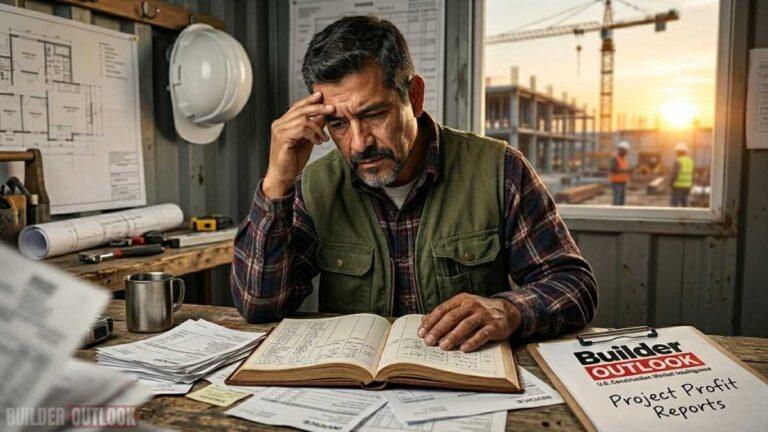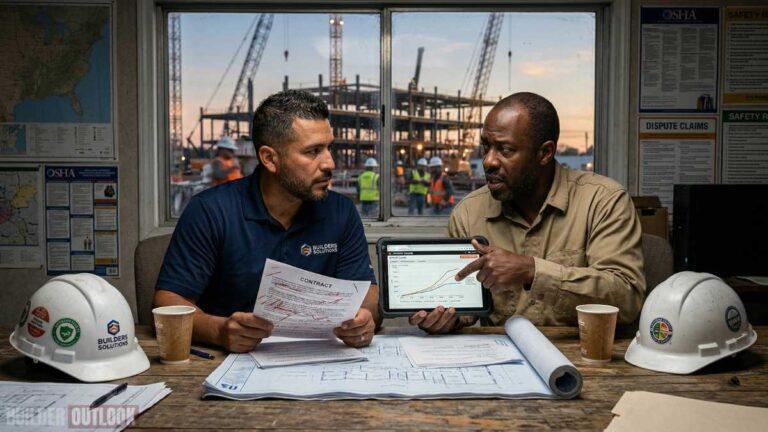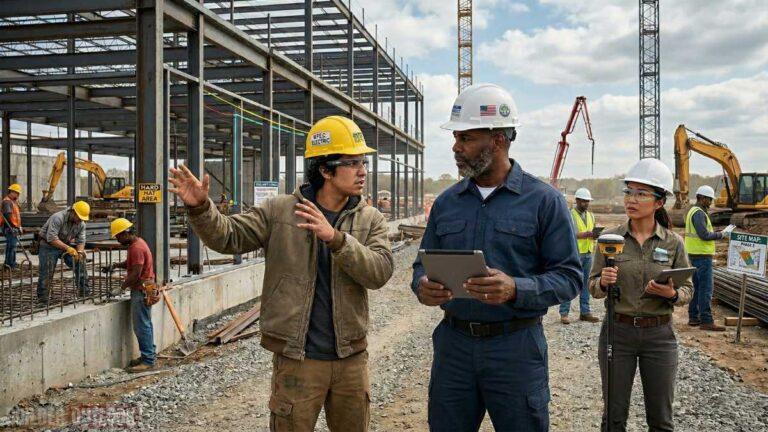
Construction scheduling in the United States, one of the most dangerous — and most common — mistakes is treating the schedule as a simple organizational tool. In 2026, the schedule is not a technical document created to satisfy a client or fulfill a contractual requirement. It is, in practice, the primary control system of the entire project. When the schedule fails, the project does not just fall behind — it starts losing money, generating conflict, and destabilizing the contractor’s operation.
Most contractors work with schedules that look structured on paper but fail to reflect real field conditions. Dates are defined without accounting for actual constraints, work sequences are built in a generic way, and critical activities are not identified or managed with the level of precision they require. The result is a common and dangerous scenario: the project appears to be progressing, but in reality, it is accumulating invisible delays that only become evident when recovery is no longer possible.
The impact of scheduling extends far beyond the final deadline. It directly affects cash flow, labor productivity, resource allocation efficiency, subcontractor coordination, and even client relationships. A poorly controlled delay triggers indirect costs, increases pressure on crews, and often leads to contractual disputes that could have been avoided with proper planning and monitoring.
The core idea is simple:
A schedule is not planning.
It is control.
And without control, the project becomes reactive.
WHAT A CONSTRUCTION SCHEDULE REALLY REPRESENTS
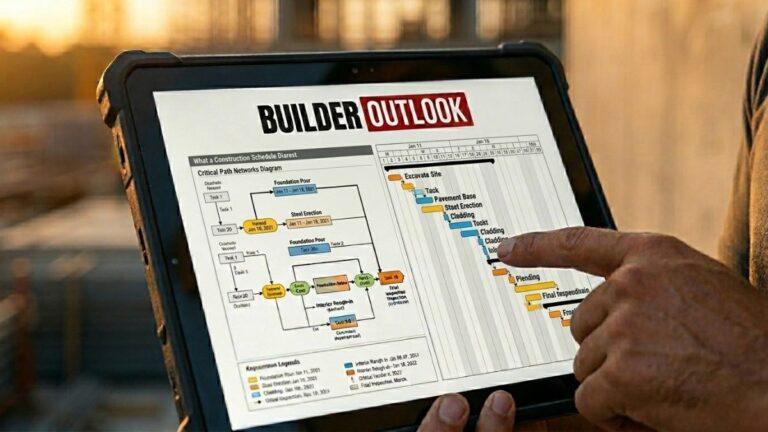
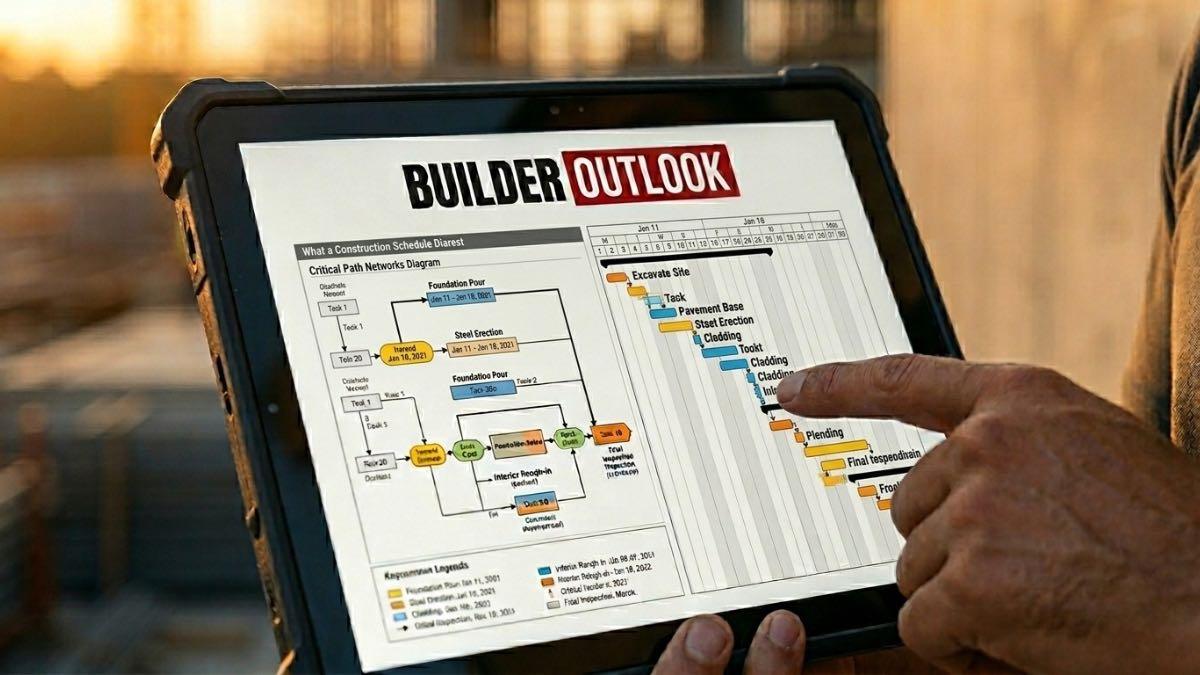
A construction schedule is not just a sequence of dates. It is a structured representation of how the project will be executed over time, including task dependencies, resource allocation, and the critical points that determine overall progress. Every activity exists within a network — it depends on previous tasks and directly impacts what comes next.
Methodologies such as the Critical Path Method (CPM), widely used in the U.S. and supported by organizations like the Project Management Institute, are designed to identify which activities truly control the project duration. However, many contractors use these tools superficially, focusing on creating the schedule rather than analyzing it as a decision-making system.
A well-structured schedule allows contractors to anticipate the impact of delays before they happen. If a critical activity slips, the system immediately shows how it affects the entire project, enabling early corrective action. On the other hand, a generic or poorly maintained schedule simply records delays after they have already caused damage.
A schedule is not meant to display progress.
It is meant to predict risk.
WHY SCHEDULING FAILURES ARE INCREASING IN 2026
The construction environment in 2026 has made scheduling more fragile than ever. Projects are faster, more complex, and operate with tighter margins for error. At the same time, external factors such as permitting delays, labor shortages, inspection failures, and supply chain disruptions introduce constant instability into project timelines.
One of the main issues is overly optimistic planning. Initial schedules are often built based on ideal scenarios, ignoring common disruptions such as failed inspections, scope changes, or trade conflicts. This creates schedules that are disconnected from reality from day one.
Another critical problem is the lack of continuous updates. Many contractors develop a schedule at the beginning of the project and fail to adjust it as conditions change. This turns the schedule into a static document that no longer reflects what is actually happening in the field.
Communication breakdowns also play a major role. Field teams often do not actively use the schedule as a decision-making tool, relying instead on daily instructions or reactive adjustments that are not aligned with the overall plan.
The result is a project that loses control without realizing it.
WHERE CONTRACTORS ACTUALLY LOSE MONEY THROUGH SCHEDULING
Financial losses related to scheduling rarely appear as a single, obvious cost. Instead, they manifest through inefficiencies that accumulate over time. Crews become idle waiting for preceding tasks to be completed, materials arrive too early and require storage, and subcontractors are forced to demobilize and remobilize, increasing costs without adding value.
One of the most significant impacts is the cascading effect of delays. A small delay in a critical activity can trigger a chain reaction that affects the entire project. This increases overhead costs, extends project duration, and directly reduces profit margins.
Scheduling issues also have a direct impact on cash flow. Delays in progress often translate into delays in payment, creating financial pressure that affects the contractor’s ability to operate effectively.
Additionally, contractual risks such as liquidated damages can convert schedule delays into immediate financial penalties.
A schedule is not just about time.
It is about money.
Builder Inteligence


HOW HIGH-LEVEL CONTRACTORS ACTUALLY CONTROL SCHEDULING
Contractors who truly control their projects treat the schedule as a living system. It is continuously updated, reflecting real progress and enabling strategic adjustments as conditions change. This approach requires discipline, structure, and a clear understanding of how scheduling connects to every other aspect of the project.
The first step is building a realistic schedule. This means incorporating actual working conditions, including site constraints, labor availability, weather considerations, and potential trade interference. A realistic schedule is not optimistic — it is accurate.
The second step is clearly identifying the critical path. Critical activities receive focused attention because any delay in these tasks directly affects the project completion date.
The third step is integrating the schedule into daily operations. Field teams use the schedule as a reference for decision-making, ensuring alignment between planning and execution.
The fourth step is continuous monitoring and adjustment. The schedule is reviewed regularly, and corrective actions are implemented before small issues become major delays.
The fifth step is structured communication. Every stakeholder understands the plan, their role, and how their work impacts the overall timeline.
This level of control transforms the schedule into a strategic asset.
REAL EXAMPLE: A PROJECT THAT LOOKED ON TRACK — BUT WASN’T
A contractor in Texas was managing a commercial project with what appeared to be a well-structured schedule. Activities were being completed within their planned durations, and overall progress seemed positive.
However, the schedule failed to correctly identify the true critical path. Non-critical activities were prioritized, while a key activity experienced small, cumulative delays that went unnoticed.
By the time the impact became visible, there was no opportunity for recovery. The project was delayed by several weeks, resulting in additional costs and contractual penalties.
The issue was not execution.
It was the lack of strategic interpretation of the schedule.
HOW TO BUILD A SCHEDULING SYSTEM THAT ACTUALLY WORKS
To turn scheduling into a real control tool, contractors must build structured processes around it. This begins with creating schedules based on real data and operational experience, rather than relying on generic templates or assumptions.
Continuous updates are essential. The schedule must reflect actual progress, allowing dynamic adjustments as the project evolves. This requires discipline and strong integration between field and office teams.
Technology can support scheduling, but it does not replace understanding. Scheduling software is a tool — the real value lies in how the data is analyzed and used for decision-making.
Contractors must also invest in training, ensuring that all team members understand the importance of the schedule and know how to use it effectively in daily operations.
Finally, the schedule must be treated as a central component of project management, not a secondary document.
THE PROJECT DID NOT FALL BEHIND — YOU LOST CONTROL WITHOUT REALIZING IT
In 2026, projects do not suddenly go off track.
They lose control gradually, through small deviations that are not corrected in time.
Contractors who treat scheduling as a strategic tool are able to anticipate problems, adjust course, and maintain control even in complex environments. Those who treat it as a formality continue reacting to delays that have already caused financial damage.
The difference is not in the project.
It is in how time is controlled within it.
More from Builder Inteligence

Frequently asked questions
It is the time-based planning of project activities.
2. What is the critical path?
The sequence of activities that determines the project duration.
4. Does scheduling affect profit?