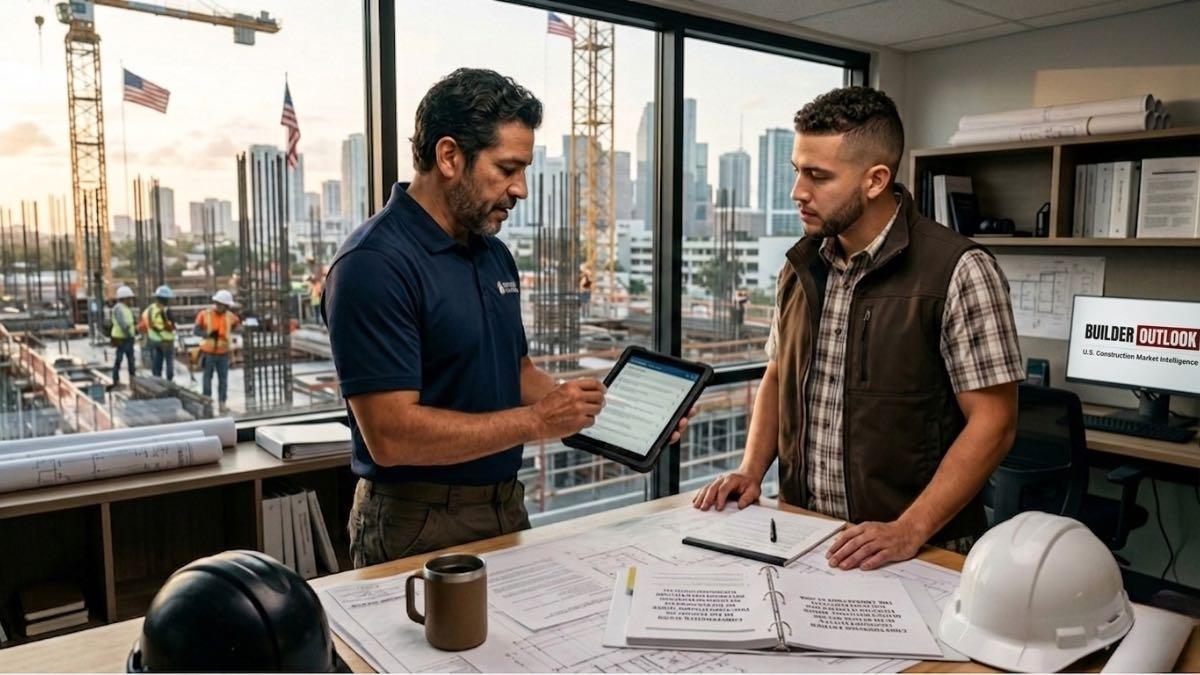
The construction bidding process in the United States has evolved far beyond a simple competition based on price. In 2026, bidding is no longer a transactional event — it is a strategic system that determines not only whether a contractor wins a project, but whether that project will be profitable, executable, and aligned with long-term business stability.
Many contractors still operate under an outdated assumption: that winning more bids leads to growth.
The reality is the opposite.
Winning the wrong bids leads to operational overload, financial pressure, and increased exposure to disputes. The contractors who are consistently growing in the U.S. market are not those submitting the highest number of bids — they are the ones controlling their pipeline with precision.
The bidding process today is shaped by multiple layers of complexity. Owners are more demanding, timelines are tighter, project documentation is often incomplete, and market conditions introduce uncertainty into every stage of pricing and execution. At the same time, competition remains strong across most regions, forcing contractors to differentiate beyond price.
This has transformed bidding into a discipline that requires alignment between estimating, operations, contracts, and strategy.
Contractors who treat bidding as a structured system gain control.
Those who treat it as a reactive activity lose it.
This article breaks down how the construction bidding process actually works in the United States in 2026, what separates high-performance contractors from average ones, and how bidding decisions directly impact risk, profitability, and long-term positioning.
HOW THE U.S. CONSTRUCTION BIDDING PROCESS IS STRUCTURED
At a high level, the construction bidding process follows a sequence that appears consistent across projects, but the way each stage is executed determines the outcome.
The process begins with project identification. Contractors evaluate opportunities through networks, invitations, public listings, and procurement platforms. Public projects often follow structured procurement rules available through official channels such as USA.gov and federal procurement systems managed by the U.S. General Services Administration.
Once a project is identified, the pre-bid phase begins. This is where contractors assess whether the project is worth pursuing, using criteria such as feasibility, scope clarity, and alignment with internal capabilities.
The estimating phase follows, where detailed cost analysis is performed. This includes quantity takeoffs, labor calculations, material pricing, and subcontractor coordination.
After estimating, the bid submission is prepared. This includes pricing, qualifications, assumptions, and any required documentation.
The final stage is evaluation and award. Owners review bids based on price, experience, and perceived reliability before selecting a contractor.
While this structure appears straightforward, the difference between success and failure lies in how each stage is executed.
WHY MOST CONTRACTORS LOSE CONTROL OF THE BIDDING PROCESS
The majority of contractors lose control of the bidding process before they even submit a number.
The first point of failure is project selection. Contractors often pursue opportunities without proper filtering, driven by the need to maintain backlog. This leads to wasted estimating effort and increased exposure to high-risk projects.
The second issue is lack of integration between departments. Estimating teams may work in isolation, without sufficient input from operations or contract specialists. This creates gaps between what is priced and what can actually be delivered.
Another common problem is reliance on incomplete information. Contractors are forced to make assumptions due to missing details, but these assumptions are not always documented or aligned with contract terms.
There is also a tendency to compete primarily on price. While price remains important, it is no longer the only factor. Contractors who focus solely on being the lowest bidder often sacrifice margin and increase risk.
Finally, many contractors fail to analyze outcomes. Without tracking which bids were successful and why, it becomes difficult to improve performance over time.
WHAT HIGH-PERFORMANCE CONTRACTORS DO DIFFERENTLY
Contractors who consistently win and execute profitable projects treat bidding as a controlled system.
They start with disciplined project selection. Instead of pursuing every opportunity, they apply strict criteria to determine which projects align with their capabilities and strategic goals.
They integrate estimating with operations. This ensures that pricing reflects real execution conditions, not just theoretical assumptions.
They invest time in understanding the project beyond the drawings. This includes engaging with owners, clarifying scope, and identifying potential risks before submitting a bid.
They also focus on value, not just price. High-performance contractors differentiate themselves through reliability, communication, and ability to manage complex projects.
Another key factor is data. They track performance across bids and projects, using this information to refine their approach.
This creates a feedback loop that continuously improves bidding accuracy and decision-making.
Builder Inteligence

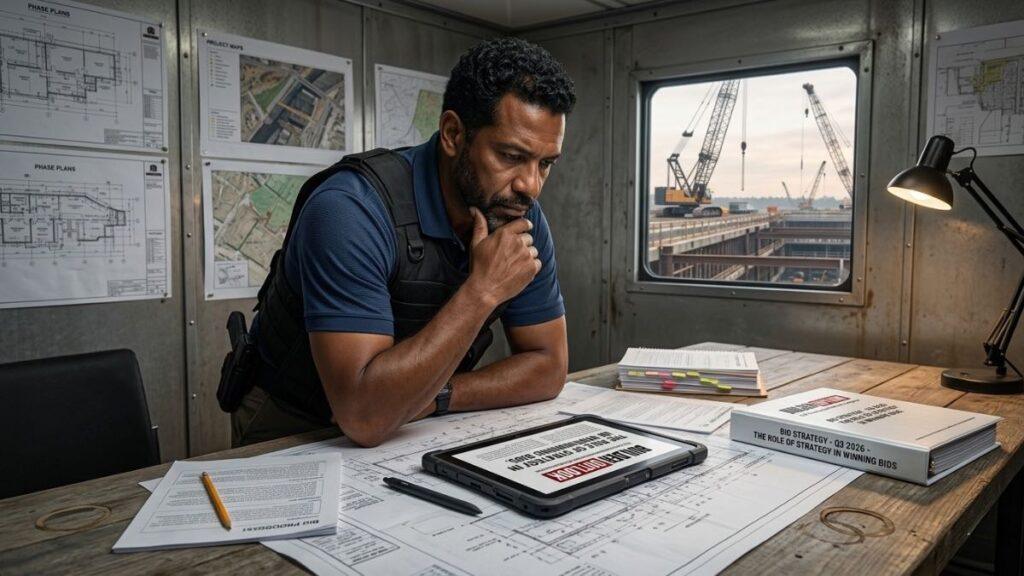
THE ROLE OF STRATEGY IN WINNING BIDS
Winning bids in 2026 is not about being the cheapest.
It is about being the most aligned.
Owners are looking for contractors who can deliver projects with minimal disruption, predictable timelines, and controlled costs. This requires more than competitive pricing — it requires confidence.
Contractors who demonstrate understanding of project risks, clear communication, and structured execution plans are more likely to be selected, even if their bids are not the lowest.
Strategy also involves positioning. Contractors who specialize in certain types of projects or markets can build reputations that increase their chances of winning.
This is particularly important in regions with high competition, such as Florida, Texas, and California, where differentiation is critical.
HOW BIDDING DECISIONS IMPACT LONG-TERM PIPELINE HEALTH
Every bid decision affects the contractor’s pipeline.
Winning too many projects without proper capacity leads to operational overload.
Winning the wrong projects leads to financial instability.
Losing the right projects limits growth opportunities.
Pipeline management is not about volume.
It is about balance.
Contractors must align their bidding strategy with available resources, market conditions, and long-term objectives.
This requires discipline.
Saying no to the wrong project is as important as winning the right one.
THE CONNECTION BETWEEN BIDDING, CONTRACTS, AND RISK
Bidding does not exist in isolation.
It is directly connected to contract structure and risk allocation.
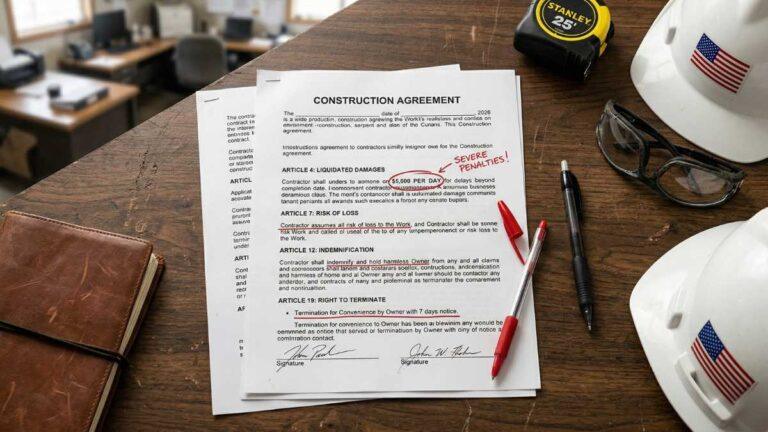
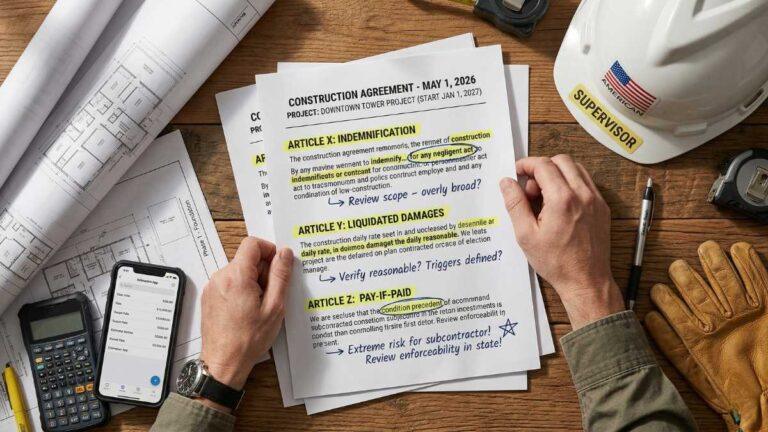
The way a project is priced must align with the terms of the contract. If risks identified during estimating are not reflected in contract language, the contractor is exposed.
For example, strict schedule clauses, unfavorable payment terms, or unclear scope definitions can significantly impact project outcomes.
Contractors who understand this connection use bidding as an opportunity to identify and address risks before contract execution.
This creates alignment between pricing and contractual obligations.
The construction bidding process in the United States has become a strategic function that defines success long before construction begins.
Contractors who continue to approach bidding as a numbers game will face increasing challenges in an environment that demands precision, alignment, and control.
Those who treat bidding as a system — integrating selection, estimating, strategy, and contract alignment — will build stronger pipelines, reduce risk, and achieve more consistent profitability.
In 2026, winning bids is not about competing harder.
It is about competing smarter.
More from Builder Inteligence
Advertising


FAQ – Construction bidding process in the United States: how serious contractors win projects, control risk, and build profitable pipelines in 2026
1. What is the construction bidding process?
It is the structured process through which contractors evaluate, price, and submit proposals for construction projects.
2. Why is bidding more complex in 2026?
Due to market volatility, incomplete project information, and increased competition.
3. How can contractors improve bidding success?
By focusing on project selection, integrating teams, and aligning pricing with execution capabilities.
4. Is the lowest bid always the best option?
No. Owners often consider reliability, experience, and risk management.
5. How does bidding affect profitability?
Poor bidding decisions can lead to low margins, delays, and disputes.
6. What role do contracts play in bidding?
Contracts define risk allocation, which must align with pricing decisions.
7. Should contractors bid every project?
No. Selective bidding improves efficiency and reduces risk.
8. How do high-performance contractors win more projects?
By combining strategic selection, accurate estimating, and strong positioning.