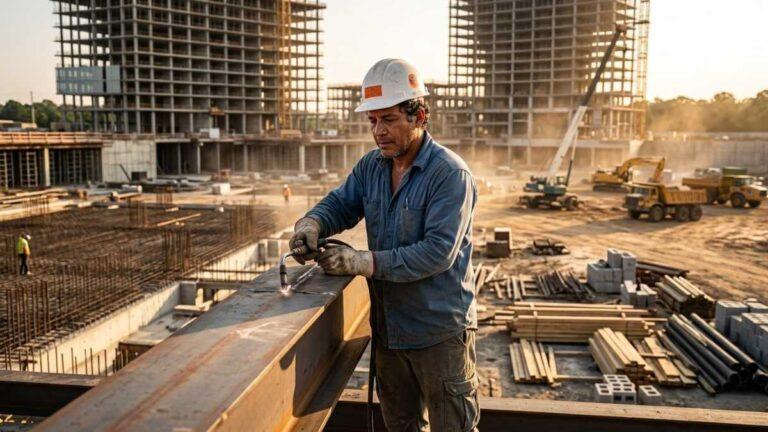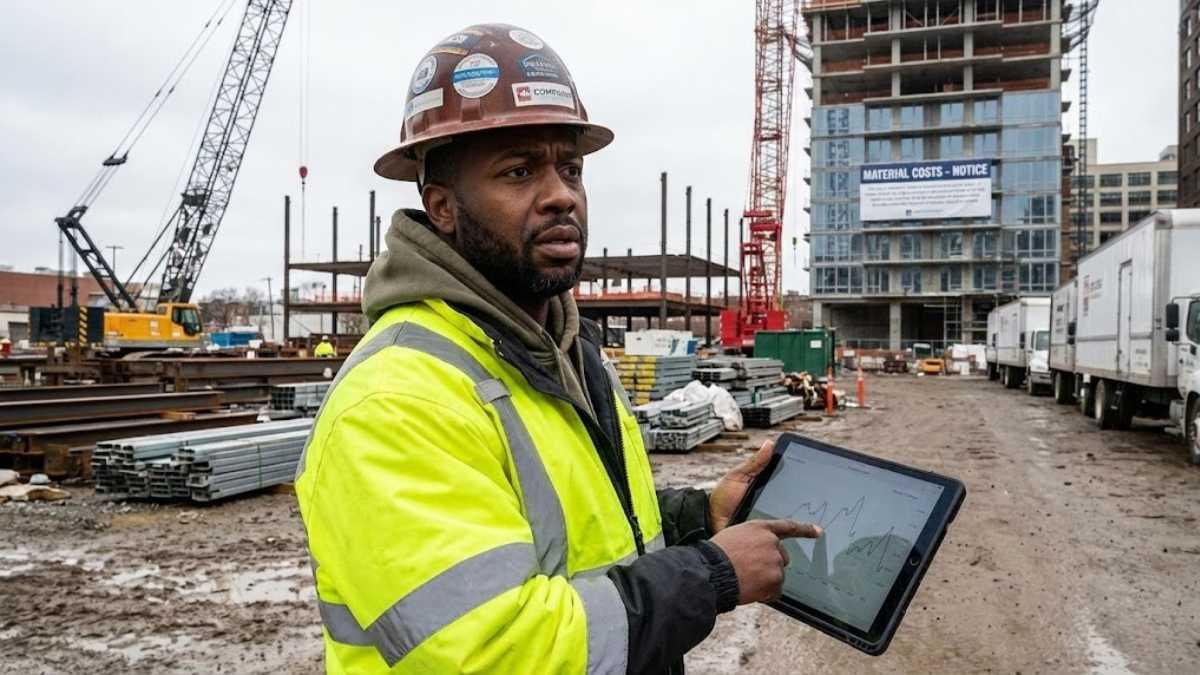
Cost volatility in construction is no longer a temporary disruption caused by isolated shocks. In 2026, volatility has become a permanent structural condition that shapes how projects are planned, priced, financed, and executed across the United States. Contractors who still treat price swings as short-term anomalies are consistently misreading the market and underestimating long-term risk.
The construction industry now operates inside an environment where materials, labor, insurance, logistics, and financing interact in ways that continuously introduce uncertainty. Even when individual inputs stabilize, the system as a whole remains volatile. This creates cascading effects that extend far beyond estimating and into scheduling, contract structure, and risk allocation.
Understanding why volatility is structural, not cyclical, is critical for contractors who want to survive and grow in 2026.
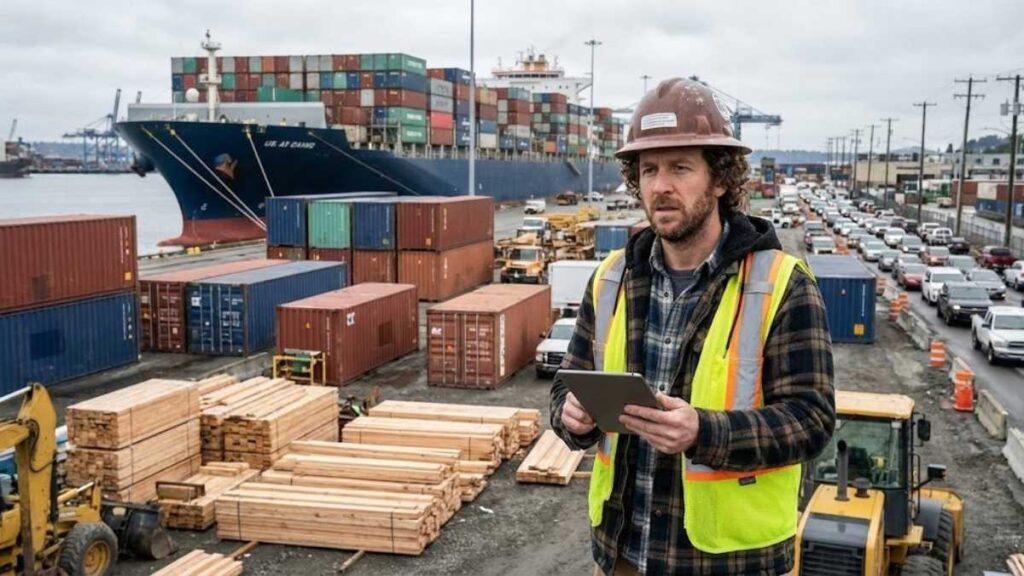
Why supply chains no longer revert to “normal”
Global supply chains that once stabilized quickly after disruptions now reset at higher cost and lower predictability. Manufacturing capacity has shifted geographically, geopolitical risk affects sourcing decisions, and transportation remains exposed to fuel price swings and labor shortages. These forces interact continuously, preventing a return to pre-volatility pricing patterns.
Even when specific materials stabilize, lead times fluctuate. Availability becomes uneven across regions. Contractors face inconsistent pricing windows, forcing estimates to age faster and increasing exposure between bid submission and procurement. This erodes margin predictability and raises the cost of risk.
Supply chains are no longer elastic buffers. They are rigid systems operating closer to capacity, making volatility persistent rather than episodic.
Labor markets amplify volatility instead of absorbing it
Labor was once a stabilizing force that offset material swings. In 2026, labor markets amplify volatility. Wage pressure varies by trade, region, and project type, making labor forecasting increasingly complex. Competition from infrastructure, industrial, and energy projects pulls skilled workers away from residential and light commercial sectors.
This dynamic introduces unpredictable cost escalation mid-project. Contractors may secure pricing at bid time but face wage increases before execution ramps up. The inability to lock labor costs long-term forces contractors to embed additional contingency, which owners increasingly resist.
Labor volatility compounds material volatility, making total project cost less predictable even when scopes are unchanged.
Why financing and insurance lock volatility into projects
Financing structures now assume volatility rather than discount it. Lenders price uncertainty into interest rates, reserve requirements, and approval timelines. Insurance carriers adjust premiums based on exposure assumptions that reflect volatile labor availability, supply risk, and dispute frequency.
These financial layers embed volatility directly into project economics. Even if material prices soften temporarily, financing and insurance costs remain elevated. This prevents total project costs from reverting to prior baselines and reinforces structural instability.
Once volatility is priced into capital, it becomes self-reinforcing across the construction ecosystem.
Contract structures reflect permanent uncertainty
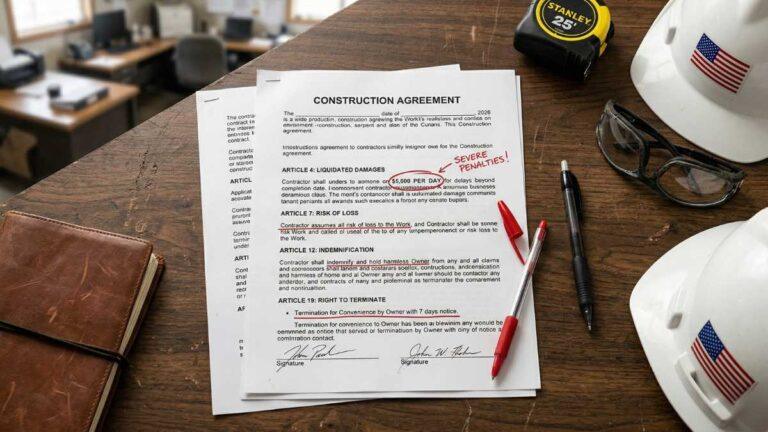
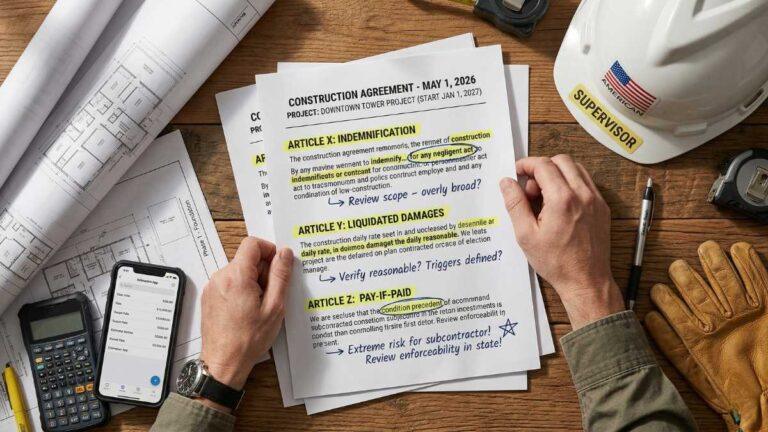
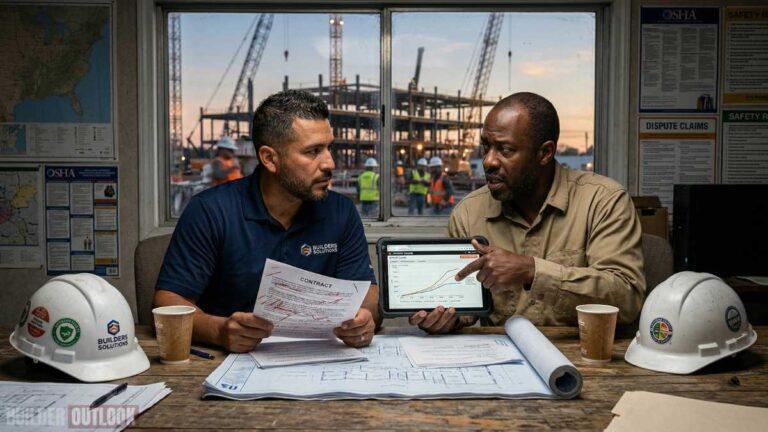
Contracts in 2026 increasingly shift risk downstream. Escalation clauses, allowances, contingencies, and shared risk mechanisms are now standard rather than exceptional. Owners seek flexibility while contractors seek protection, leading to more complex agreements.
This complexity slows negotiations and increases legal and administrative cost. Projects take longer to reach contract execution, and misunderstandings increase dispute risk. Volatility thus affects not only pricing but the entire preconstruction timeline.
Temporary volatility would simplify over time. Structural volatility institutionalizes complexity.
What contractors must change to survive structural volatility
Contractors must abandon static pricing assumptions. Successful firms build systems that continuously reassess cost exposure, update forecasts, and communicate risk transparently. Estimating, procurement, and project management must operate as integrated functions, not silos.
Companies that rely on outdated benchmarks or annual pricing assumptions expose themselves to margin erosion and disputes. Structural volatility rewards contractors who manage uncertainty proactively rather than reactively.
In 2026, volatility is not an exception to plan around. It is the environment itself.

FAQ – Interest rates and financing: what slows projects even when demand exists
1. Why is construction cost volatility considered structural in 2026?
Because multiple interconnected factors like supply chains, labor shortages, financing conditions, and insurance pricing continuously introduce uncertainty, preventing costs from stabilizing over time.
2. How do supply chains contribute to permanent volatility?
Supply chains now operate closer to capacity with geopolitical risk, transportation constraints, and uneven regional availability, making pricing and lead times unpredictable long-term.
3. Why can’t labor markets stabilize construction costs anymore?
Labor shortages, wage competition across sectors, and regional imbalances amplify cost swings instead of absorbing them, increasing overall project uncertainty.
4. How does financing reinforce volatility?
Lenders and insurers price uncertainty into interest rates, reserves, and premiums, locking higher costs into projects regardless of short-term material price movements.
5. What role do contracts play in structural volatility?
Contracts now include escalation clauses, contingencies, and shared risk mechanisms that institutionalize volatility rather than eliminate it.
6. Why do owners resist higher contingencies?
Owners seek cost certainty and often underestimate systemic volatility, leading to tension during negotiations and increased dispute risk.
7. How should contractors adapt their estimating process?
By using dynamic pricing models, shorter validity windows, and continuous cost reassessment instead of static annual benchmarks.
8. What is the biggest risk of treating volatility as temporary?
Contractors underestimate long-term exposure, leading to margin erosion, disputes, and financial instability across multiple projects.