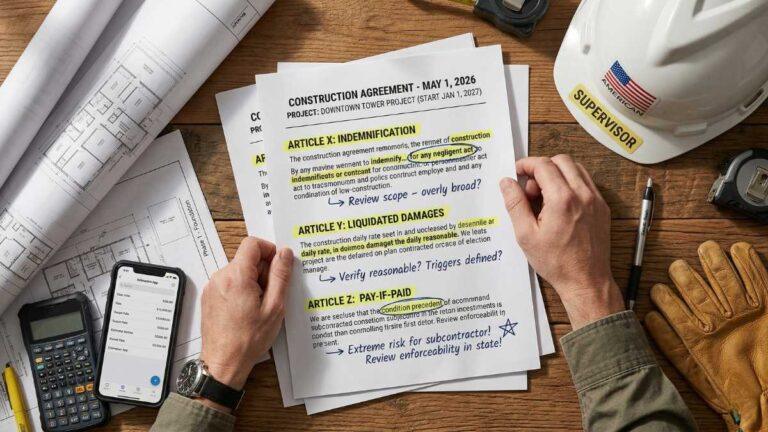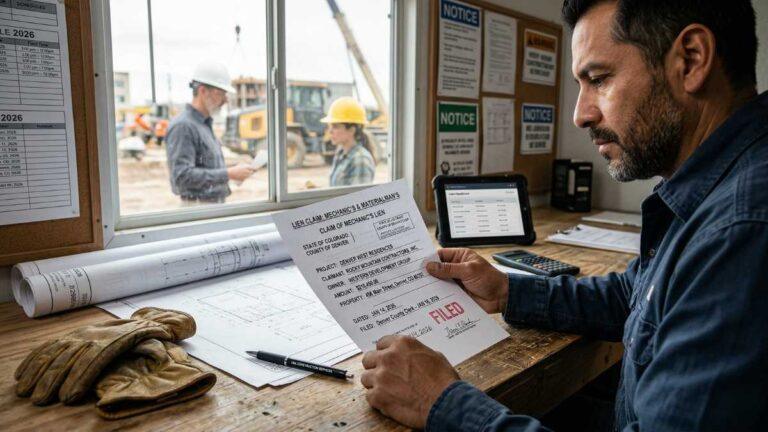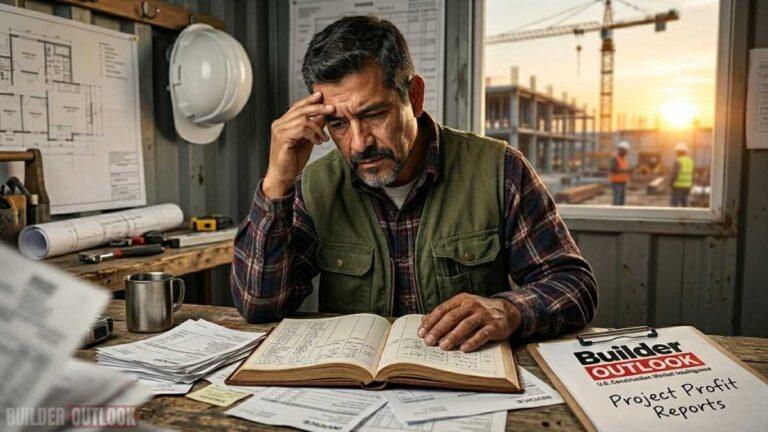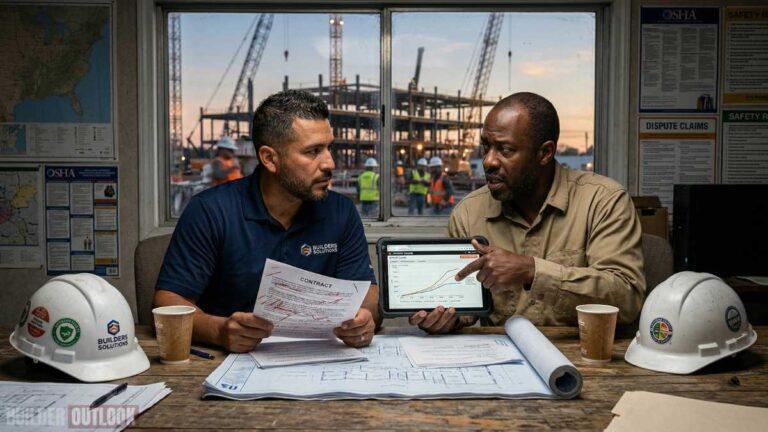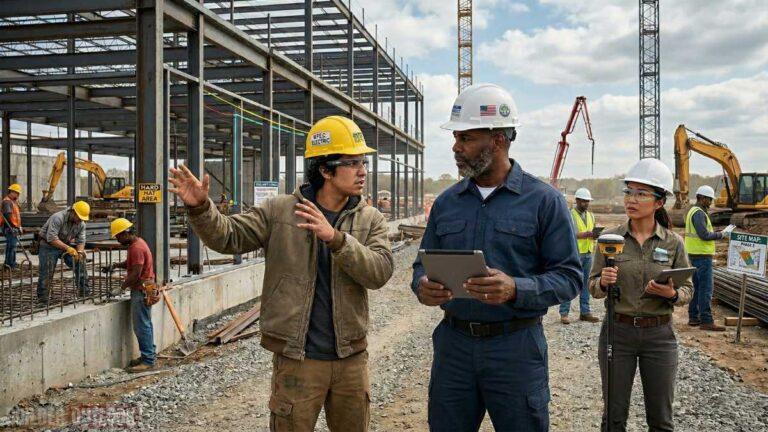
Construction disputes are not increasing in the United States because contractors suddenly became less competent or owners became unreasonable. They are rising because projects are being executed inside a system that no longer tolerates ambiguity, optimism, or misalignment. In 2026, disputes are not random events. They are predictable outcomes of early warning signs that appear long before lawyers are involved, long before claims are filed, and long before a project is labeled as “troubled.”
What has changed is the speed at which pressure accumulates. Volatile costs, fragile schedules, labor instability, insurance scrutiny, and tighter financing conditions compress tolerance across all parties. When pressure rises, small fractures turn into structural failures. Disputes do not start on the jobsite. They start when early signals are ignored.
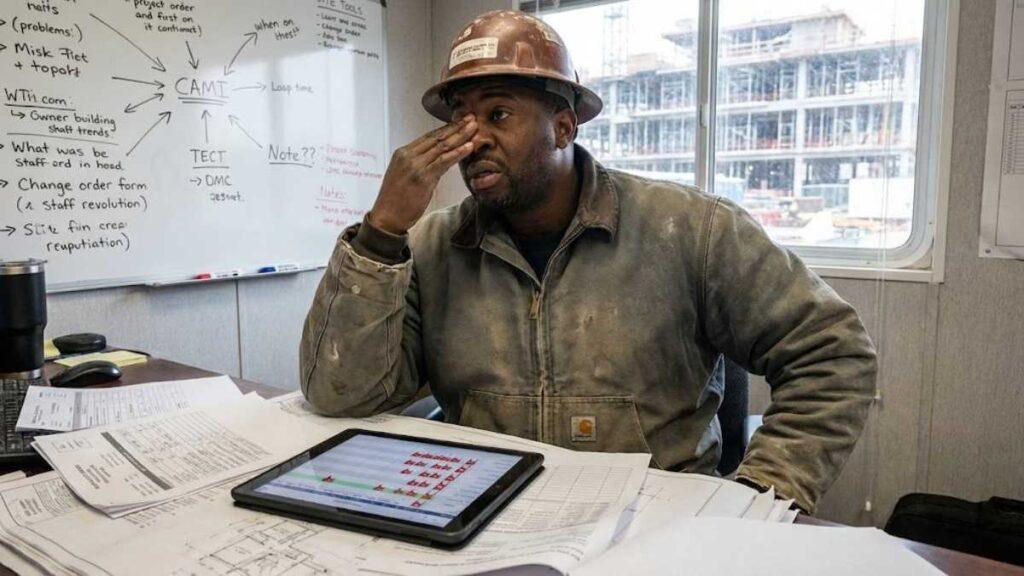
Subcontractor scarcity changes how prices are formed
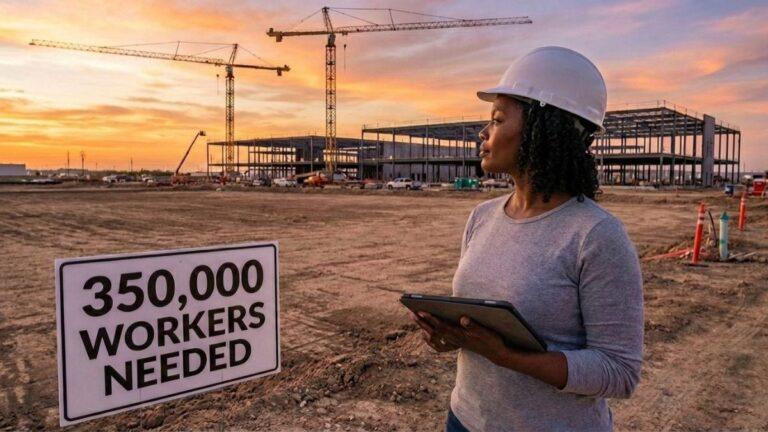
When labor supply tightens, pricing stops being a simple math exercise. Subcontractors who are booked solid months in advance are no longer forced to compete aggressively on price. Instead, they can prioritize projects that offer better terms, clearer scopes, faster payments, or lower risk exposure. This dynamic pushes pricing upward even before material costs are considered.
General contractors feel this pressure first. A bid that looks competitive on paper can collapse if key trades cannot commit availability. Electrical, mechanical, concrete, framing, roofing, and specialty trades are increasingly selective. When availability is limited, subcontractors price risk directly into their numbers, adding buffers that reflect schedule uncertainty, workforce strain, and opportunity cost.
This is why availability itself now carries monetary value. A subcontractor who can guarantee manpower at the right phase of the project can command higher pricing than one who cannot, even if their historical rates were similar.
Owners are learning to pay for certainty, not just cost
Owners used to assume that subcontractor labor would materialize once contracts were signed. That assumption no longer holds. In 2026, owners are discovering that labor certainty has a price, and they are increasingly willing to pay it to protect schedules and financing timelines.
Projects delayed by subcontractor shortages face cascading consequences. Financing extensions become expensive. Insurance exposure increases. Carry costs rise. Lost revenue pushes ROI projections out of alignment. As a result, owners now see subcontractor availability as a form of schedule insurance. Paying more upfront for committed crews often costs less than absorbing delays later.
This shift is subtle but decisive. Availability transforms from a back-office scheduling concern into a visible value driver that directly influences owner decisions during procurement and negotiation.

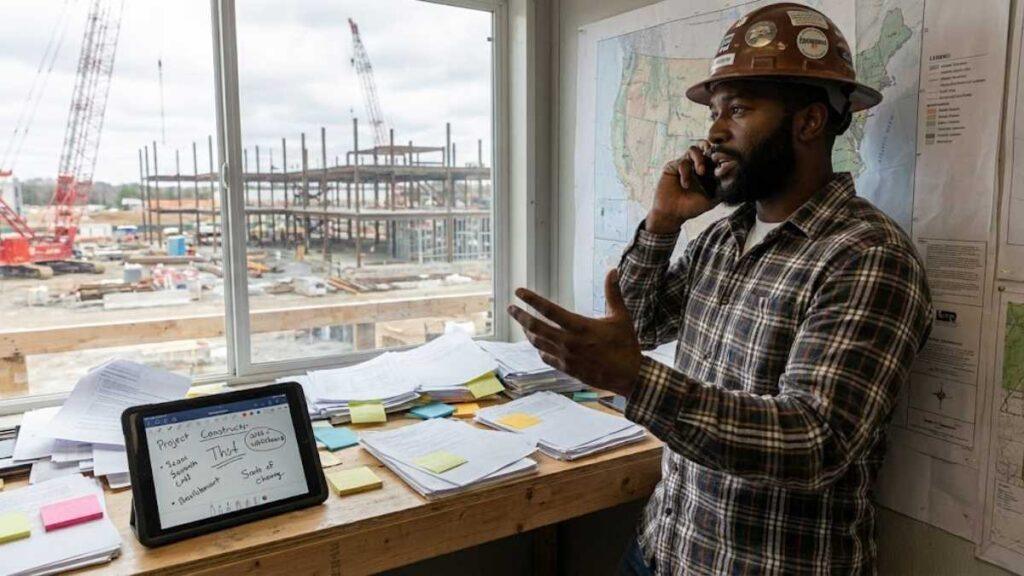
Availability reshapes negotiation power between trades and GCs
The balance of power between general contractors and subcontractors is shifting. When subcontractors are scarce, they gain leverage not only on price, but on contract terms. Payment schedules, retainage, scope clarity, and risk transfer clauses are all influenced by availability dynamics.
General contractors who rely on transactional relationships struggle in this environment. Those who have invested in long-term partnerships, predictable workflows, and fair risk allocation are better positioned to secure availability without excessive price escalation. In contrast, contractors who chase the lowest bid without regard for relationship stability often pay more in the long run through delays, rework, and renegotiation.
Availability rewards predictability. Subcontractors favor builders who plan realistically, communicate clearly, and respect capacity constraints. These builders convert operational discipline into pricing advantage.
Regional GEO pressures amplify the availability weapon
Subcontractor availability is not evenly distributed across the United States. GEO factors amplify its impact. In Florida, hurricane recovery, insurance pressures, and residential demand strain trades. In Texas, infrastructure and industrial projects pull labor away from private development. In California, regulatory complexity and compliance requirements limit workforce flexibility. In the Northeast, aging labor pools and union constraints tighten supply.
These regional dynamics mean pricing power varies sharply by market. Contractors who ignore local labor conditions underestimate real costs. Those who understand regional availability trends can price strategically, choose projects selectively, and protect margins more effectively.
Why availability will matter even more going forward
The labor pipeline is not refilling fast enough to relieve pressure. Training takes time. Demographic shifts are slow. Competing sectors continue to attract skilled workers. As a result, subcontractor availability will remain a strategic variable, not a temporary imbalance.
In 2026 and beyond, pricing strategies that ignore availability will fail. Contractors who treat labor access as a strategic asset rather than a logistical detail will outperform those who do not.


FAQ – Subcontractor availability and pricing in construction
1. Why is subcontractor availability affecting construction pricing in 2026?
Because limited labor supply allows subcontractors to prioritize projects, price risk into bids, and negotiate stronger terms. Availability itself has become a scarce resource that directly influences project cost and feasibility.
2. Which trades are most affected by availability shortages?
Electrical, mechanical, concrete, framing, roofing, and specialty trades are among the most constrained. These trades are critical path drivers, making their availability especially valuable.
3. How does subcontractor availability impact project schedules?
Limited availability increases the risk of delayed mobilization, phase overlap, and resequencing. These disruptions raise costs and create downstream conflicts if not managed proactively.
4. Why are owners willing to pay more for available subcontractors?
Because schedule certainty protects financing, insurance, and revenue timelines. Paying more upfront for committed crews often costs less than absorbing delays later.
5. Can general contractors reduce pricing pressure from subcontractors?
Yes, through long-term relationships, realistic scheduling, clear scopes, fair contracts, and predictable payment practices. Stability attracts availability.
6. How do regional markets influence availability pricing?
Local demand, infrastructure spending, regulation, climate risk, and workforce demographics all affect availability. GEO awareness is essential for accurate pricing.
7. Is subcontractor availability a temporary issue?
No. Labor constraints are structural and long-term. Availability will remain a competitive factor shaping pricing strategies for years.
8. How should contractors adapt their bidding strategy?
By factoring labor access into pricing models, selecting projects strategically, and prioritizing partnerships that secure manpower rather than chasing lowest cost alone.