GTmetrix measures what actually matters, including:
• Page loading speed
• Website structure and technical health
• Core Web Vitals (Google’s performance metrics)
• Real loading time under real conditions
• User experience impact on desktop and mobile
In simple terms, GTmetrix answers one critical question:
Is your website helping your business grow — or quietly hurting it?
For construction companies, that question is more important than ever.
Testing a Real Construction Website: Veiga Construction
Instead of talking in theory, let’s look at a real example.
We ran a full GTmetrix performance test on the website of Veiga Construction, one of our main clients based in West Palm Beach, Florida.
This is not a demo website.
This is not a template.
This is a real construction business competing in a real U.S. market.
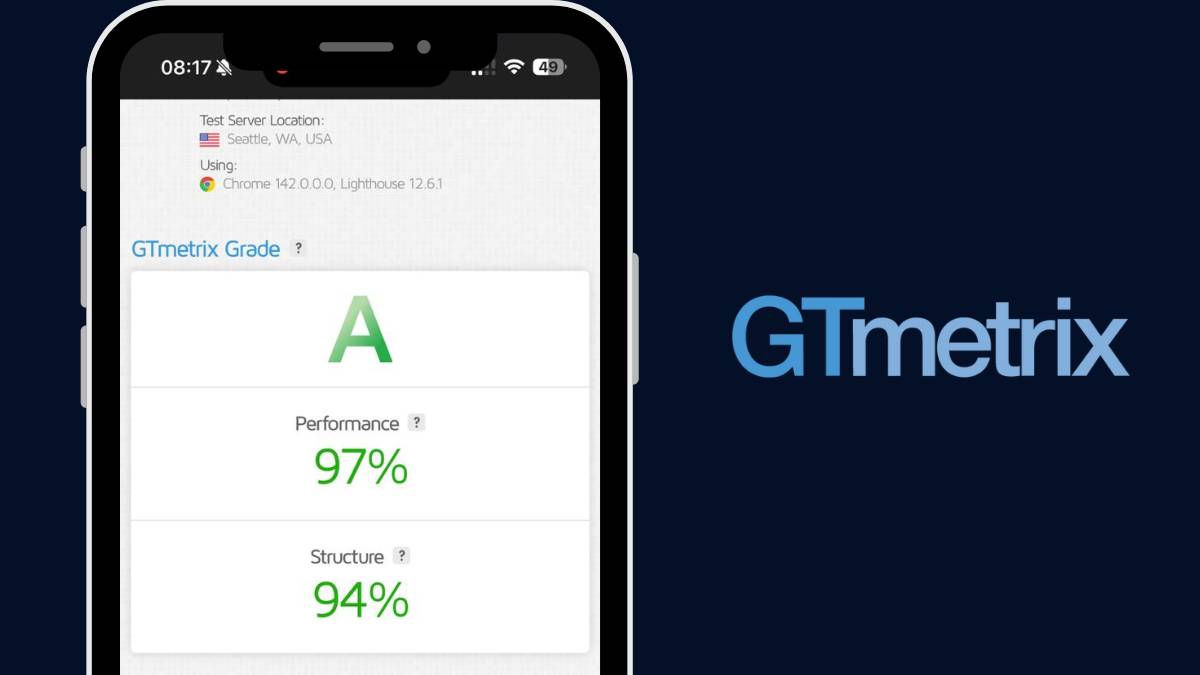
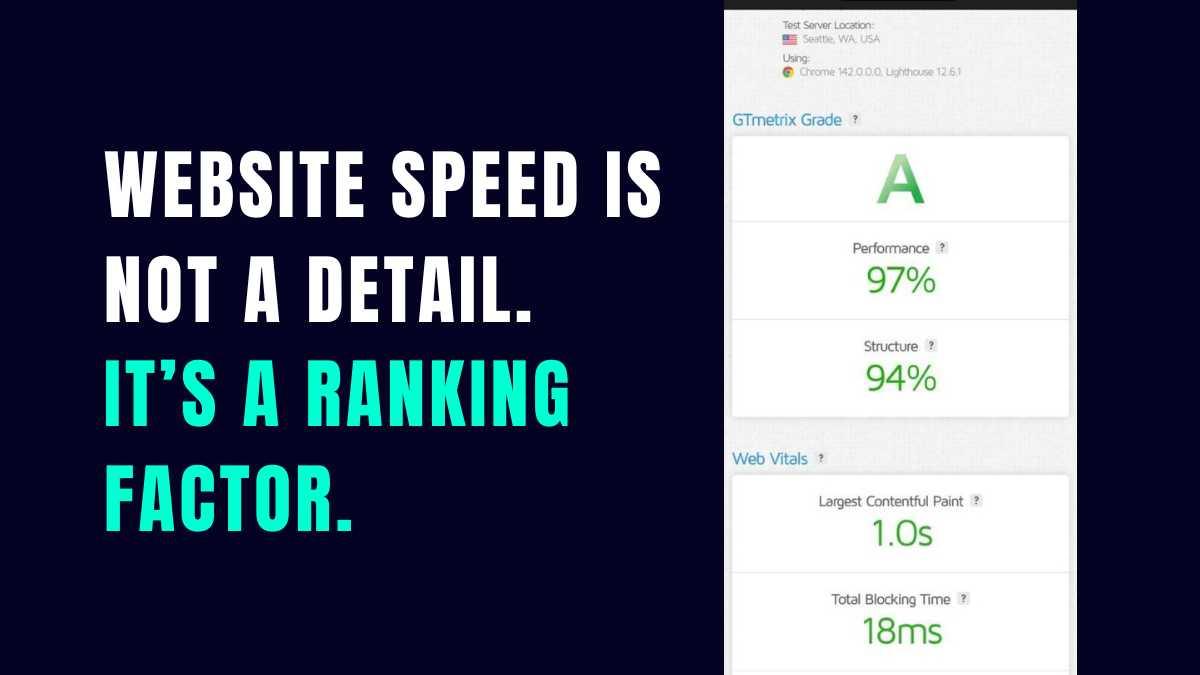
Here are the results:
• GTmetrix Grade: A
• Performance Score: 97%
• Structure Score: 94%
• Largest Contentful Paint (LCP): 1.0 second
• Total Blocking Time: 18 milliseconds
Yes — the website loads in about one second.
Not one minute.
Not “eventually.”
One second.
That level of performance is not common in the construction industry — and that’s exactly why it creates a competitive advantage.
Why website speed matters for construction companies
Many construction business owners still underestimate the impact of website speed.
They focus on the logo.
They focus on photos.
They focus on how “nice” the site looks.
But speed is what determines whether visitors stay or leave.
• Takes too long to load
• Feels heavy or slow on mobile
• Frustrates users with delays
• Looks outdated or poorly structured
Google notices.
Users notice.
And leads disappear.
Slow websites get pushed down in search results. Visitors leave before contacting you. Potential clients move on to competitors who feel faster, more professional, and more trustworthy.
Fast websites, on the other hand:
• Rank better on Google
• Build instant trust
• Convert more visitors into calls and quotes
• Feel professional and reliable
And in construction, trust is everything.
Website Performance Is Part of Your Brand
Website performance is not just a technical metric.
It is a branding signal.
When a potential client opens your website and it loads instantly, they subconsciously think:
• “This company is professional.”
• “They are organized.”
• “They take their business seriously.”
That perception happens before they read a single line of text, before they see your portfolio, and before they call you.
The opposite is also true.
If your website is slow, clunky, or confusing, the message is clear — even if unintentionally:
“This company may not be reliable.”
“This feels outdated.”
“I’m not sure I trust them with a large project.”
In competitive construction markets like Florida, Texas, California, and New York, that split-second perception can be the difference between winning or losing a job.
This Is Not Luck. It’s Strategy.
The Veiga Construction website did not receive an A grade on GTmetrix by accident.
High performance is not something you “hope for” after launching a website. It is something you design and build intentionally.
That website was built with:
• Performance-first architecture
• Clean, optimized code
• Compressed and properly loaded assets
• Strategic design (not heavy, not bloated)
• SEO and Core Web Vitals in mind
Every technical decision was made with one goal:
speed, clarity, and conversion.
This is how modern construction websites should be built.
Why Most Construction Websites Fail to Perform
Most construction websites fail GTmetrix tests for the same reasons:
• Heavy templates not built for performance
• Unoptimized images and videos
• Bloated page builders and plugins
• No understanding of Core Web Vitals
• Design prioritized over usability
• SEO added as an afterthought
The result is a website that may look acceptable but performs poorly — and performance is what Google and users care about.
A website that looks good but loads slowly is not a marketing asset.
It’s a liability.
Built for Builders: How Caldas Marketing Approaches Websites
At Caldas Marketing, we don’t just design websites.
We build digital foundations for construction companies that want to grow.
Our approach is different because we specialize in one market: builders, contractors, and construction businesses.
We understand how your clients search, how they evaluate trust, and how Google ranks construction websites.
• High-performance construction websites
• SEO-optimized site structures
• Fast-loading experiences on desktop and mobile
• Clear service presentation and conversion paths
• Websites ready for 2026, not stuck in 2018
Performance is never optional. It is built into everything we do.
SEO, Speed, and Conversions Work Together
SEO is not just about keywords.
Google now heavily factors in Core Web Vitals, page speed, and user experience when ranking websites.
• A fast website helps you rank higher
• A clean structure helps Google understand your services
• A smooth experience keeps users engaged
• Engaged users convert more often
When speed, SEO, and design work together, your website becomes a sales tool — not just an online brochure.
Why this matters more than ever in 2026?
The construction industry is becoming more competitive every year.
More companies are investing in marketing.
More contractors are improving their online presence.
More clients are comparing businesses online before calling.
In 2026, having a slow, outdated website will be a major disadvantage.
The companies that win will be the ones that:
• Look professional online
• Load instantly
• Rank well on Google
• Feel trustworthy before the first call
Website performance is no longer a “nice to have.”
It is a baseline requirement.
Final Thought: Performance Comes First
If your construction company wants:
• More visibility
• Better Google rankings
• Higher-quality leads
• Stronger brand perception
It starts with performance.
And performance starts with how your website is built.
If your site is slow, it doesn’t matter how good it looks.
Built for Builders
At Caldas Marketing, everything we do is built for builders.
We help construction companies with:
• High-performance websites
• SEO for contractors and builders
• Branding and rebranding for construction companies
• Full marketing plans designed for growth
If you want to know how your website is really performing, we can show you.
📩 DM us to test your website performance
🌐 caldasmarketingdesign.com
Everything built for builders.