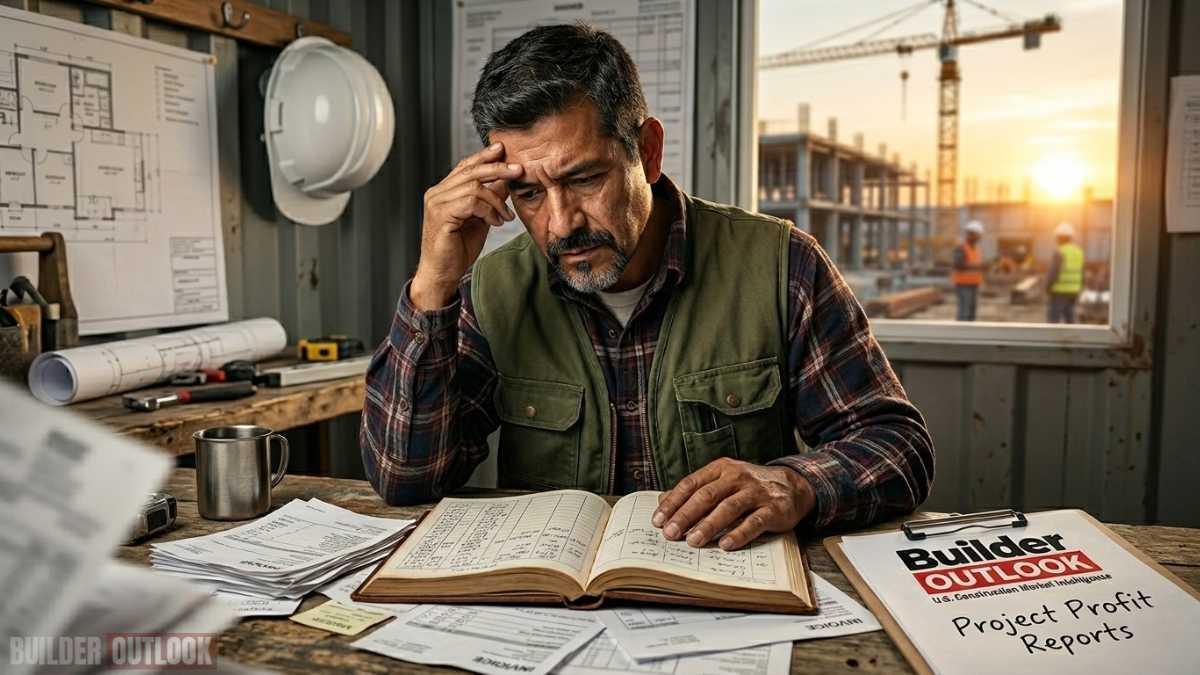
How to run a profitable construction company in the United States is often misunderstood as a result of winning projects, completing work, and receiving payment. In 2026, this belief is one of the most dangerous misconceptions a contractor can hold. Many construction companies generate high revenue, maintain full project pipelines, and still struggle to produce consistent profit. The issue is not lack of work. It is lack of control.
Profit in construction is not created at the end of the project. It is either protected or lost at every stage — from estimating and bidding to execution and final billing. Contractors who rely on experience alone often fail to see how small inefficiencies accumulate into significant financial impact. Slight underpricing, minor productivity loss, and untracked costs compound silently, eroding margins without immediate visibility.
The modern construction environment intensifies this challenge. Material costs fluctuate, labor availability is inconsistent, and client expectations continue to rise. Contractors who operate without structured financial systems are exposed to volatility they cannot control.
The truth is direct:
Profit is not something you “make” in construction.
It is something you either control — or lose.
Why most contractors don’t know their real profit
One of the most critical problems in the industry is the lack of visibility into actual profitability. Contractors often believe they are making money because the project value exceeds the estimated cost. However, this assumption ignores how costs evolve during execution.
The first issue is inaccurate estimating. Many contractors base their pricing on historical experience rather than structured data. While experience is valuable, it is not precise. Without detailed cost breakdowns, estimates fail to capture real-world complexity, leading to underpricing.
The second issue is lack of real-time cost tracking. Expenses are often reviewed after the project is completed, making it impossible to correct deviations during execution. By the time the numbers are analyzed, the opportunity to protect profit has already passed.
The third issue is indirect cost leakage. Overhead, inefficiencies, rework, and delays are rarely accounted for in detail. These costs accumulate gradually, reducing margin without clear visibility.
Finally, many contractors do not separate project profit from business profit. A project may appear profitable, but when overhead and operational costs are included, the business may still be underperforming.
The result is a dangerous illusion:
Revenue looks strong.
Profit is unclear.
The three layers of profit in construction
To control profit effectively, contractors must understand that profitability operates on three interconnected layers: estimating profit, operational profit, and real profit.
Estimating profit is the margin defined during the bidding process. It is based on projected costs and desired markup. This is where expectations are set, but it is also where many errors originate.
Operational profit is what happens during execution. It reflects how well the project aligns with the estimate. Productivity, cost control, and change management all influence this layer.
Real profit is the final result after all costs — including overhead, delays, and unforeseen expenses — are accounted for. This is the only number that truly matters.
The gap between these layers is where money is lost.
Contractors who do not control all three are operating without visibility.
The cost system: where money disappears
Cost control is the foundation of profitability. Without it, even well-priced projects can become unprofitable. The cost system must track every expense in real time, comparing actual performance with the original estimate.
Labor is the most significant variable. Small deviations in productivity — such as tasks taking slightly longer than expected — can dramatically increase costs. Without measurement, these deviations go unnoticed.
Material costs are another major factor. Price fluctuations, waste, and incorrect ordering all impact the budget. Contractors must monitor material usage and adjust accordingly.
Subcontractor performance also affects cost. Delays, rework, and coordination issues increase expenses that are often difficult to recover.
Overhead is frequently underestimated. Indirect costs such as supervision, equipment, and administrative expenses must be included in the cost system.
Cost control is not about reducing expenses blindly.
It is about understanding where money is going.
Builder Inteligence

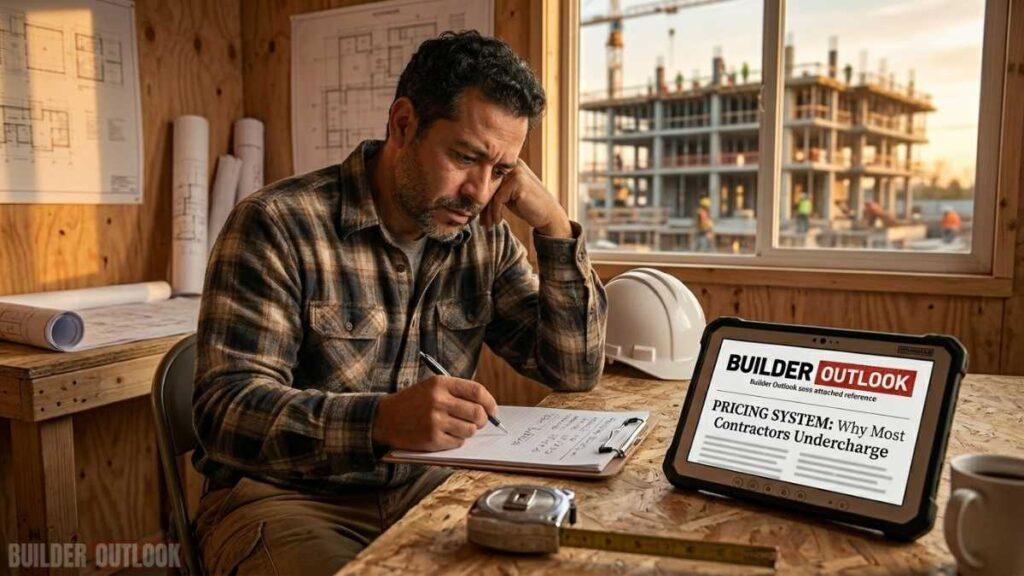
Pricing system: why most contractors undercharge in construction projects
Pricing is where profit is initially defined, yet it is one of the weakest areas for many contractors. The pressure to win bids often leads to aggressive pricing strategies that prioritize volume over margin.
Many contractors rely on simple markup models, adding a percentage to estimated costs. While this approach is straightforward, it fails to account for risk, complexity, and market conditions.
A structured pricing system must consider multiple factors: project difficulty, timeline constraints, client reliability, and potential risks. Each of these elements affects the true cost of the project.
Contractors must also understand their break-even point — the minimum revenue required to cover all costs. Without this knowledge, pricing decisions are made blindly.
Winning a project at the wrong price is not success.
It is a delayed loss.
How cost overruns destroy margin
Cost overruns are one of the most visible symptoms of weak profit control systems. They occur when actual expenses exceed the estimated budget, often due to a combination of factors.
In many cases, cost overruns begin with small deviations. Slight increases in labor hours, minor material waste, and small scheduling delays accumulate over time. Each deviation may seem insignificant, but together they create substantial impact.
Change orders also contribute. When additional work is performed without proper pricing and approval, costs increase without corresponding revenue.
Scheduling inefficiencies extend project duration, increasing overhead costs. Delays in one phase often cascade into others, amplifying the financial impact.
The critical point is this:
Cost overruns are not isolated events.
They are systemic failures.
Real example: the project that looked profitable
A contractor in Florida secured a mid-sized commercial project with what appeared to be a strong margin. The estimate was competitive, and the client approved quickly.
During execution, minor inefficiencies began to appear. Labor productivity was slightly lower than expected, material waste increased, and several small changes were executed without formal pricing.
Individually, none of these issues seemed critical. However, over time, they accumulated. By the end of the project, the margin had been significantly reduced.
The contractor did not make a major mistake.
The system failed to control small ones.
How high-level contractors build profit systems
Contractors who consistently achieve strong margins operate with structured profit systems. These systems integrate estimating, cost tracking, pricing, and decision-making into a unified framework.
The first principle is data-driven estimating. Historical data is used to refine estimates, improving accuracy and reducing uncertainty.
The second principle is real-time cost tracking. Expenses are monitored continuously, allowing for immediate adjustments.
The third principle is dynamic pricing. Contractors adjust pricing based on risk and market conditions, rather than relying on fixed markup.
The fourth principle is margin protection. Every decision during execution is evaluated based on its impact on profit.
The fifth principle is accountability. Teams are responsible for managing costs within their scope, creating ownership.
These systems transform profit from a guess into a controlled outcome.
How to build a profit system that actually works
Building a profit system requires discipline and structure.
The first step is creating a detailed estimating process that captures all costs accurately.
The second step is implementing real-time cost tracking, ensuring visibility throughout the project.
The third step is developing pricing strategies that reflect risk and complexity.
The fourth step is aligning operations with financial goals, ensuring that execution supports profitability.
The fifth step is continuous improvement, using data from completed projects to refine systems.
Technology can support these processes, but it cannot replace structure.
Profit systems are built through consistency.
You’re not losing money on projects — you’re losing control of your margins
In 2026, contractors are not struggling because the market is difficult.
They are struggling because their systems do not control profit.
Those who build structured profit systems operate with clarity, confidence, and stability. Those who rely on experience and instinct continue to face inconsistent results.
Profit is not a result of luck.
It is a result of control.
More from Builder Inteligence

Frequently Asked Questions
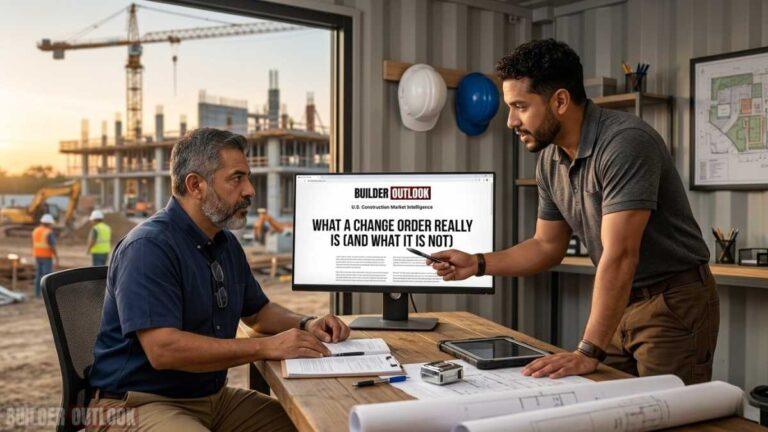
1. What is a change order?
A change order is a formal modification to the original construction contract that adjusts scope, cost, or schedule due to new requirements, design changes, or unforeseen conditions discovered during project execution.
2. Why do contractors lose money on change orders?
Contractors lose money on change orders due to poor documentation, lack of approval control, and failure to properly evaluate cost and schedule impacts before executing additional work outside the original contract scope.
3. Should work begin before approval?
No, starting work without formal change order approval increases financial risk, weakens contractual protection, and often leads to payment disputes, rejected claims, or unrecoverable costs for the contractor.
4. What should a change order include?
A proper change order must include clearly defined scope changes, detailed cost breakdown, labor and material impacts, schedule adjustments, supporting documentation, and formal written approval from all responsible parties.
5. Do change orders affect productivity?
Yes, change orders can disrupt workflow, sequencing, and coordination, often forcing crews to stop, adjust tasks, or redo work, which reduces efficiency and impacts overall project productivity.
6. Can small changes impact profit?
Yes, small changes may seem insignificant individually, but when accumulated without proper control, they can significantly reduce profit margins and create hidden financial losses across the entire project.
7. How can change orders be controlled?
Change orders can be controlled through structured processes, standardized documentation, real-time tracking systems, and strict approval protocols that ensure no additional work begins without clear cost and schedule validation.
8. Are change orders necessary?
Yes, change orders are a normal part of most construction projects, but without proper management, they quickly become a major source of disputes, delays, and financial loss.