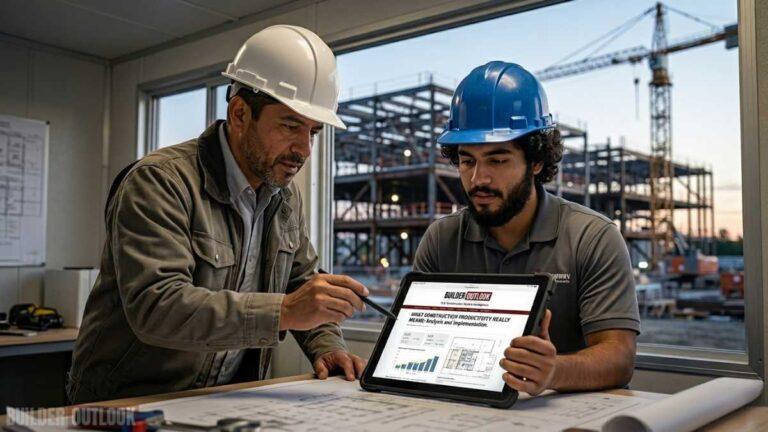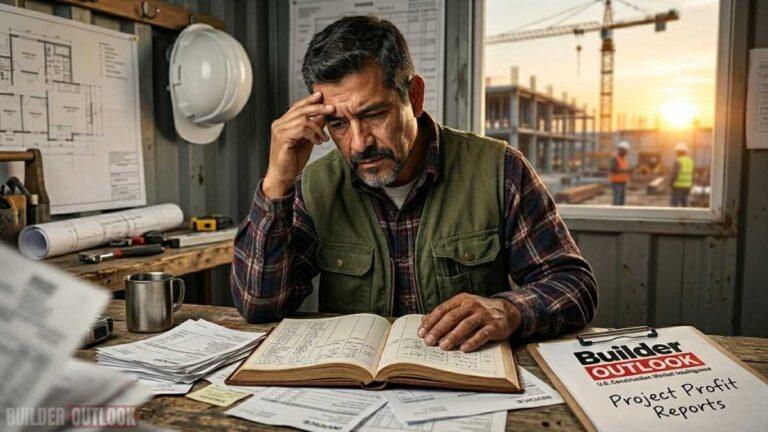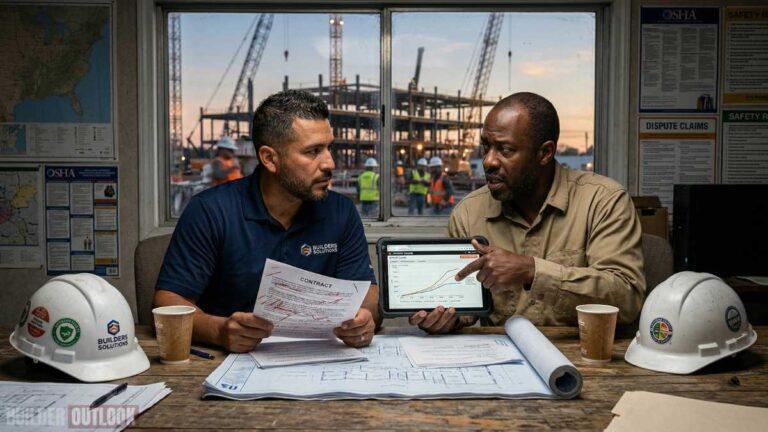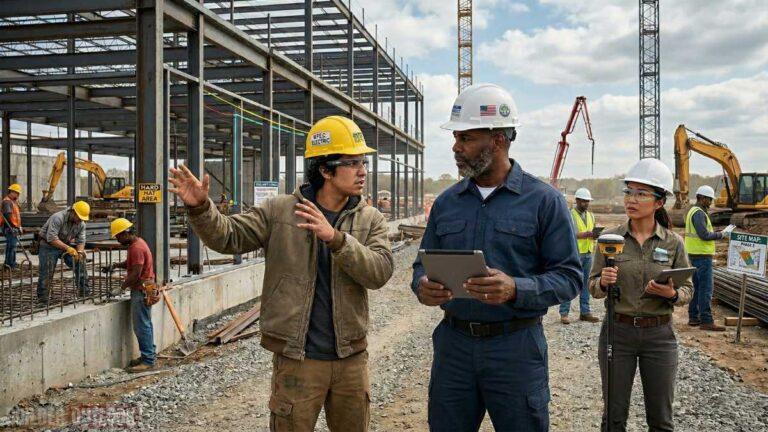
Construction cost overruns in the United States: Overruns are often treated as unfortunate but unavoidable outcomes. In 2026, this belief is not only inaccurate — it is one of the main reasons contractors continue to lose profit even on well-structured projects. The reality is that most cost overruns are not caused by unpredictable events. They are the result of systems that fail to control cost as the project evolves.
Many contractors believe that cost control ends after the bid is submitted. Once the estimate is complete and the project begins, the focus shifts entirely to execution. This creates a dangerous gap between what was planned financially and what is actually happening in the field. Costs start to drift — slowly at first, then aggressively — until the final numbers no longer reflect the original assumptions.
The issue is rarely a single large mistake. It is the accumulation of small, untracked deviations: slightly higher labor hours, minor material waste, unapproved changes, inefficiencies in sequencing, and delays that extend overhead costs. Each one seems manageable. Together, they destroy margin.
The truth is this:
Projects don’t go over budget suddenly.
They drift out of control quietly.
What cost overruns really represent
A cost overrun is not just a situation where expenses exceed the initial estimate. It is a failure of alignment between planning, execution, and monitoring. It reflects the gap between what was expected and what was actually controlled throughout the project lifecycle.
In the U.S., cost management practices are often influenced by methodologies discussed in organizations such as the Project Management Institute, which emphasizes continuous monitoring and control. However, many contractors apply these concepts only at the planning stage, not during execution.
A cost overrun is not just a financial issue. It is an operational signal that something in the system — scheduling, productivity, subcontractor coordination, or change management — is not functioning as intended.
Cost overruns are not numbers.
They are symptoms.
Why cost overruns are more frequent in 2026
The construction environment in 2026 has increased the likelihood of cost overruns due to multiple overlapping factors. Projects are more complex, timelines are tighter, and external variables such as material price fluctuations and labor availability introduce constant uncertainty.
One of the main causes is the disconnect between estimate and execution. Estimates are often based on ideal conditions, while actual projects operate under real-world constraints. Without a system to reconcile these differences, costs begin to diverge immediately.
Another major factor is lack of real-time cost tracking. Contractors may only realize they are over budget weeks or months after the deviation begins. By that point, corrective action is limited or ineffective.
Change orders also contribute significantly. When additional work is performed without proper pricing and tracking, costs increase without corresponding revenue.
Additionally, inefficiencies in productivity and scheduling extend project duration, increasing indirect costs such as supervision and overhead.
Cost overruns are not increasing because projects are harder.
They are increasing because systems are not keeping up.
Where cost overruns actually start
Cost overruns typically originate in specific areas that are often overlooked. One of the most common is labor. Small deviations in productivity — such as tasks taking slightly longer than expected — accumulate over time, significantly increasing labor costs.
Material management is another critical area. Waste, incorrect ordering, or price fluctuations can quickly impact the budget.
Subcontractor performance also plays a role. Delays, rework, and coordination issues increase costs that are not always recoverable.
Scheduling inefficiencies are closely linked. When projects take longer than planned, overhead costs increase, affecting overall profitability.
Change orders, when not properly controlled, create additional costs that may not be fully compensated.
The key point is this:
Cost overruns do not begin at the end of the project.
They begin on day one.
Builder Inteligence

How high-level contractors control cost in real time
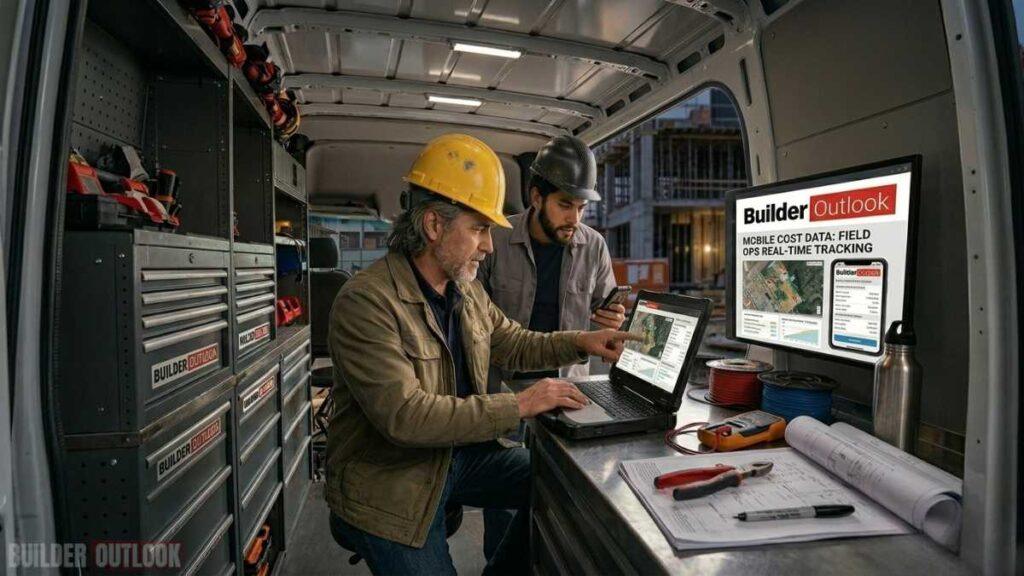
Contractors who consistently protect their margins treat cost control as an active, continuous process. They do not rely solely on the initial estimate — they build systems that track and adjust costs in real time.
The first principle is integration between estimate and execution. The budget is broken down into detailed components that can be tracked throughout the project.
The second principle is real-time monitoring. Costs are tracked as they occur, allowing for immediate identification of deviations.
The third principle is variance analysis. Differences between planned and actual costs are analyzed continuously, enabling corrective action.
The fourth principle is change control. Additional work is documented, priced, and approved before execution, ensuring that costs are aligned with revenue.
The fifth principle is accountability. Teams are responsible for managing costs within their scope, creating ownership and control.
This approach transforms cost management from reactive to proactive.
Real example: a project that slowly lost its margin
A contractor in Texas began a commercial project with a well-prepared estimate and a reasonable margin. The project progressed without major issues, and no single event caused concern.
However, labor productivity was slightly lower than expected, material waste was higher than planned, and several small changes were executed without formal approval. None of
these issues seemed critical individually.
Over time, these small deviations accumulated. By the end of the project, the margin had
been significantly reduced, despite the absence of major problems.
The project did not fail.
The system did not control it.
How to build a cost control system that actually works
To effectively control costs, contractors must build systems that integrate financial tracking with project execution. This begins with detailed budgeting, where costs are broken down into trackable components.
The next step is implementing real-time tracking systems that capture costs as they occur. This allows for immediate visibility and faster decision-making.
Variance analysis must be conducted regularly, identifying deviations and their causes.
Change management processes must be enforced, ensuring that additional costs are properly documented and recovered.
Communication between field teams and financial management must be structured, ensuring alignment.
Finally, continuous improvement processes should be implemented, using data from completed projects to refine future estimates and systems.
Technology can support these efforts, but it does not replace discipline.
Your project didn’t go over budget — your system stopped controlling it
In 2026, contractors are not losing money because projects are unpredictable.
They are losing money because costs are not controlled in real time.
Those who build structured cost control systems maintain margins, improve efficiency, and operate with confidence. Those who rely on estimates alone continue to face financial surprises.
The difference is not in the project.
It is in the control system behind it.
More from Builder Inteligence
Advertising

Frequently Asked Questions
1. What is a cost overrun?
A cost overrun occurs when the actual expenses of a construction project exceed the original estimated budget. In the United States construction industry, cost overruns are a critical indicator of weak financial control, often revealing deeper issues related to planning accuracy, execution discipline, and real-time cost visibility.
2. Why do cost overruns happen?
Cost overruns typically happen due to lack of control during project execution rather than initial estimation errors. Poor tracking, scope changes, inefficient resource allocation, and delayed decision-making all contribute. In U.S. construction projects, overruns are often the result of operational gaps, not just pricing mistakes at the bidding stage.
3. Can small deviations cause large losses?
Yes, small cost deviations can accumulate over time and result in significant financial losses. Minor inefficiencies, unnoticed waste, and incremental scope changes can compound throughout the project lifecycle. In the U.S. construction market, many projects fail financially not because of major errors, but due to unmanaged small deviations.
4. How can contractors prevent cost overruns?
Contractors can prevent cost overruns by implementing real-time tracking systems, maintaining strict budget controls, and aligning field operations with financial planning. High-level contractors in the United States rely on data-driven decision-making, continuous monitoring, and proactive adjustments to ensure costs remain within planned limits.
5. Do change orders affect costs?
Yes, change orders significantly impact project costs, especially when they are not properly controlled or documented. In many U.S. construction projects, unmanaged change orders are one of the main drivers of cost overruns. Their financial impact increases when pricing, approvals, and execution are not aligned.
6. Is monitoring important in cost control?
Yes, continuous monitoring is essential for effective cost control. Without real-time visibility, contractors cannot identify deviations early or take corrective action. In the United States construction industry, successful contractors treat monitoring as a core operational function, not as a financial afterthought.
7. Can cost overruns be predicted?
Yes, cost overruns can be predicted when contractors use proper tracking systems, performance indicators, and financial forecasting tools. Early warning signs such as productivity drops, delayed activities, and increased material usage help identify risks before they escalate into major financial problems.
8. Does cost control improve profitability?
Yes, strong cost control directly improves project profitability. Contractors who maintain accurate tracking, disciplined execution, and proactive financial management consistently protect their margins. In the U.S. construction market, profitability is less about winning bids and more about controlling costs throughout the project lifecycle.