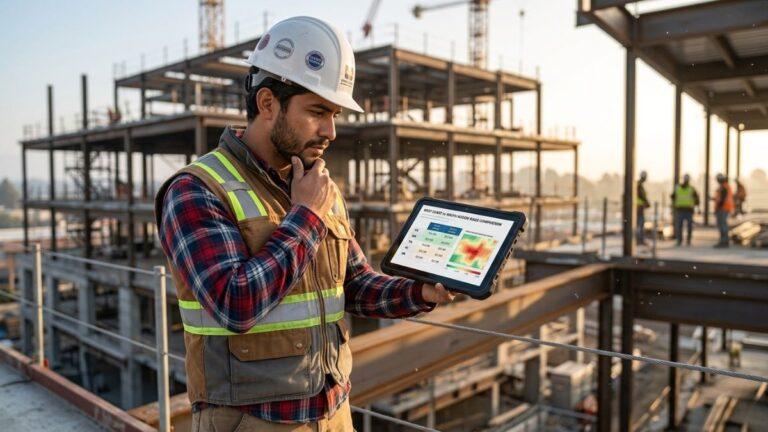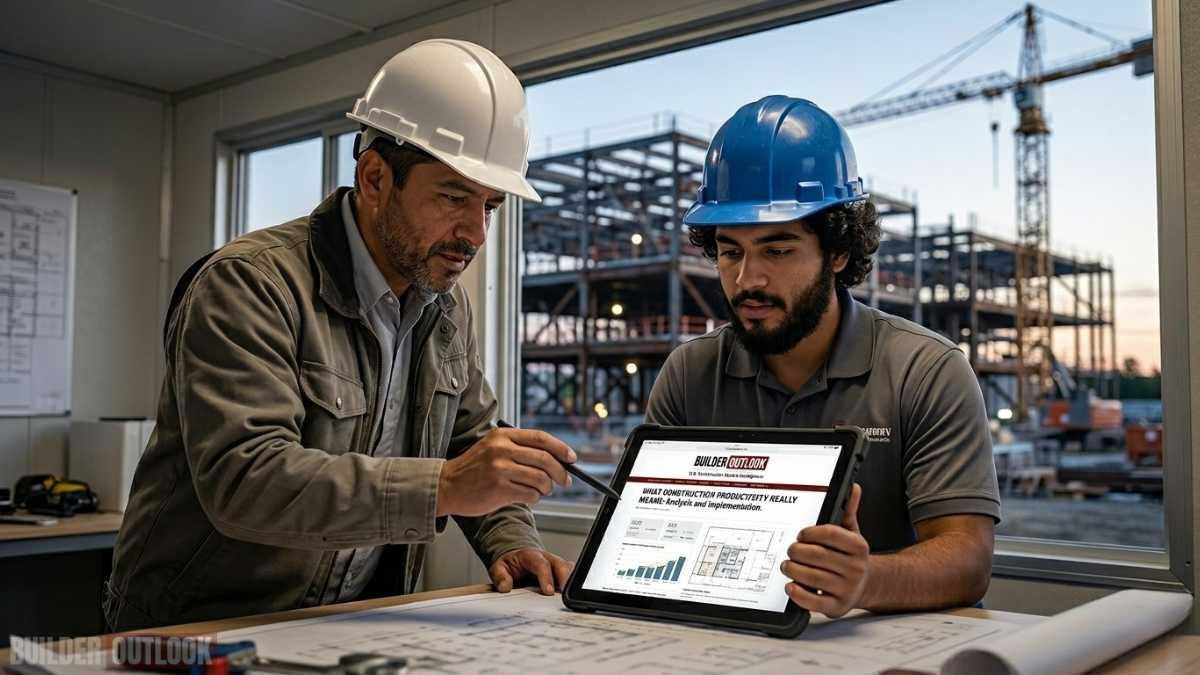
Construction productivity in the United States, one of the most deceptive signals of progress is activity. Crews are on-site, tools are running, materials are moving, and the project appears alive. In 2026, however, many contractors are facing a critical paradox: teams are working all day, yet the project continues to fall behind schedule and exceed budget. The issue is not effort. It is productivity — or more precisely, the lack of control over it.
Most contractors assume that productivity is a function of workforce quality. If the crew is skilled and experienced, output should follow. In reality, productivity is primarily a function of system design. Even the best crews underperform when they operate within disorganized workflows, unclear sequencing, or constant interruptions.
The financial impact is significant. Low productivity increases labor costs, extends project timelines, and reduces overall efficiency. These effects compound over time, turning small inefficiencies into major financial losses. Contractors often respond by adding more labor, believing that more people will accelerate progress. In many cases, this only increases complexity and reduces efficiency further.
The truth is simple:
Busy crews do not guarantee productive work.
Only controlled systems do.
What construction productivity really means
Construction productivity is not just the amount of work completed. It is the efficiency with which resources — primarily labor — are converted into measurable progress. It reflects how effectively time, materials, and coordination are aligned to produce results.
In the U.S., productivity is often analyzed using benchmarks and methodologies supported by organizations such as the Construction Industry Institute, which studies performance improvement across projects. These analyses consistently show that productivity losses are rarely caused by lack of skill. They are caused by inefficiencies in planning, coordination, and execution.
True productivity considers not only output but also the conditions under which that output is achieved. Interruptions, rework, waiting time, and inefficient sequencing all reduce effective productivity, even if crews appear busy.
Productivity is not about effort.
It is about flow.
Why productivity is declining in 2026
The construction environment in 2026 has introduced new challenges that directly impact productivity. Projects are more complex, timelines are tighter, and coordination between trades is more demanding. At the same time, labor shortages mean that crews are often stretched across multiple projects, reducing focus and consistency.
One of the main causes of productivity decline is fragmentation of work. Tasks are frequently interrupted due to scheduling conflicts, missing materials, or incomplete preceding work. This disrupts workflow and reduces efficiency.
Another critical factor is poor planning. Without detailed sequencing and clear task definitions, crews spend time figuring out what to do instead of executing efficiently.
Communication gaps also play a major role. Misalignment between field teams, project managers, and subcontractors leads to errors, rework, and delays.
Additionally, reactive management contributes to inefficiency. Contractors often address problems after they occur, rather than preventing them through structured planning.
Productivity does not decline because crews are weaker.
It declines because systems are weaker.
Where productivity is actually lost on projects
Productivity losses occur in specific, identifiable areas. One of the most common is waiting time. Crews often wait for materials, instructions, or completion of preceding tasks. This idle time is rarely tracked but has a significant impact on overall efficiency.
Rework is another major source of loss. Errors, miscommunication, or poor quality control require work to be redone, consuming additional time and resources.
Inefficient sequencing also reduces productivity. When tasks are not properly aligned, crews may perform work out of order, creating conflicts and additional effort.
Overcrowding is another issue. Adding more workers to accelerate progress can lead to congestion, reducing individual productivity and increasing coordination complexity.
Material handling inefficiencies also contribute. Time spent moving, locating, or organizing materials reduces time spent on actual work.
These losses are often hidden.
But they are measurable.
Builder Inteligence

How high-level contractors increase productivity
Contractors who achieve high productivity levels do not rely on effort alone. They design systems that optimize workflow and reduce inefficiencies. This begins with detailed planning, where tasks are clearly defined, sequenced, and aligned with project objectives.
The first principle is workflow optimization. Tasks are organized to ensure continuous progress, minimizing interruptions and waiting time.
The second principle is resource alignment. Labor, materials, and equipment are coordinated to support efficient execution.
The third principle is real-time monitoring. Progress is tracked continuously, allowing for immediate identification and correction of issues.
The fourth principle is communication. Clear and consistent communication ensures alignment between all stakeholders.
The fifth principle is continuous improvement. Data from completed projects is analyzed to identify inefficiencies and improve future performance.
This approach transforms productivity from a variable into a controllable outcome.
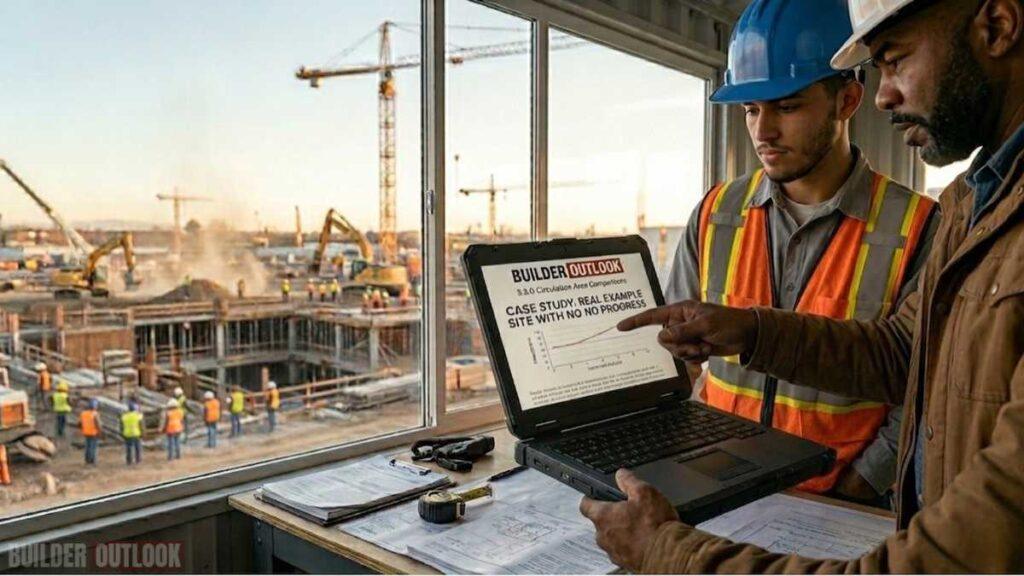
Real example: a busy site with no progress
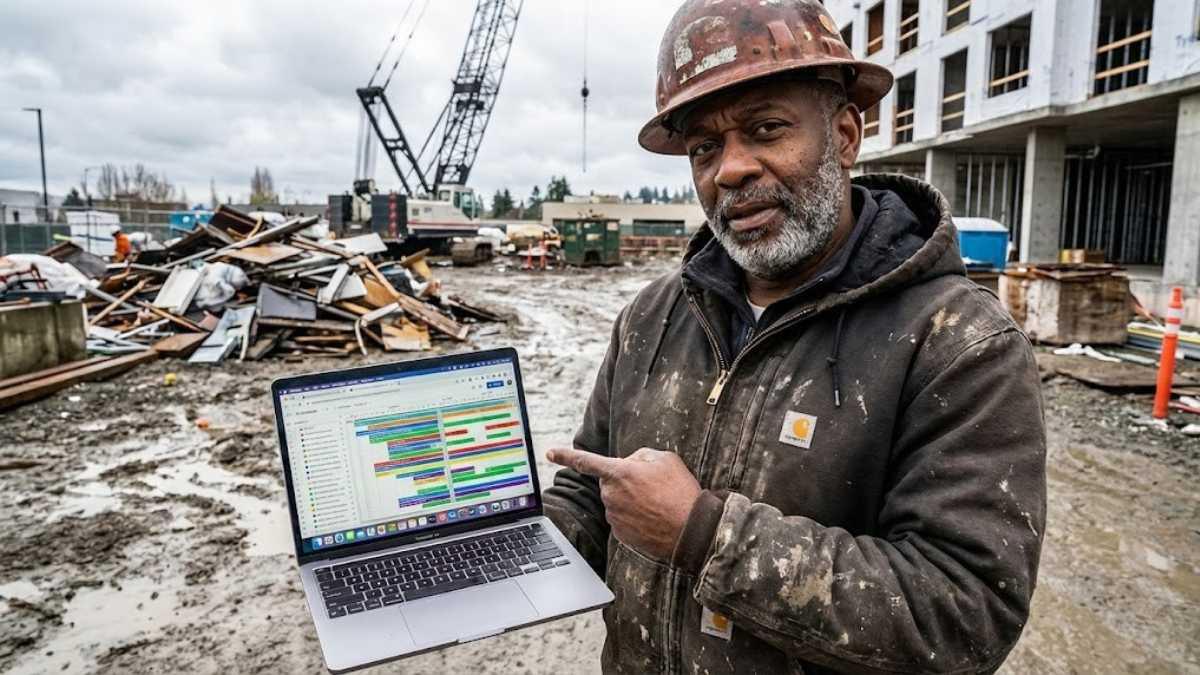
A contractor in California was managing a commercial construction project with multiple trades working simultaneously. The site was active, and crews were consistently engaged. However, progress was slower than expected, and deadlines were being missed.
Upon analysis, it was discovered that crews were frequently waiting for materials and instructions. Tasks were interrupted due to incomplete preceding work, and rework was required due to miscommunication.
Despite high levels of activity, effective productivity was low. The lack of structured workflow resulted in inefficiencies that impacted the entire project.
The problem was not effort.
It was flow.
How to build a productivity system that actually works
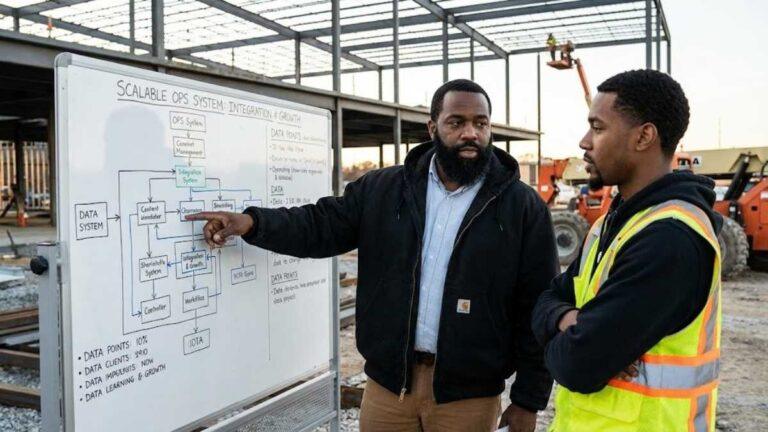
To improve productivity, contractors must move beyond reactive management and build structured systems that support efficient execution. This begins with detailed planning, where tasks are clearly defined and sequenced.
The next step is coordination. Resources must be aligned to ensure that crews have what they need when they need it.
Monitoring systems must be implemented to track progress and identify inefficiencies in real time.
Communication protocols should be established to ensure that information flows clearly and consistently.
Contractors should also invest in training, ensuring that teams understand processes and expectations.
Finally, continuous improvement processes must be implemented, using data to refine systems and improve performance over time.
Technology can support these efforts, but it does not replace structure.
Your crews are working — but your system is slowing them down
In 2026, contractors are not losing time because crews are unproductive.
They are losing time because systems are inefficient.
Those who design structured production systems increase output, reduce costs, and maintain control. Those who rely on effort alone continue to struggle, regardless of how hard their teams work.
The difference is not in the people.
It is in the system guiding them.
More from Builder Inteligence

Frequently Asked Questions
1. What is construction productivity?
Construction productivity refers to the efficiency with which labor, materials, and equipment are converted into measurable project progress. In the United States construction market, productivity is not just about working harder, but about eliminating waste, optimizing workflow, and ensuring that every activity contributes directly to project advancement and profitability.
2. Why do projects fall behind despite active crews?
Projects often fall behind even with active crews because activity does not equal productivity. Poor coordination, unclear sequencing, and lack of structured planning create inefficiencies where workers stay busy but progress stalls. In many U.S. construction projects, delays are caused by workflow breakdowns rather than labor shortages.
3. What affects productivity the most in construction projects?
The biggest drivers of productivity are planning quality, task sequencing, and communication clarity. When these elements are misaligned, crews experience downtime, rework, and interruptions. High-performing contractors in the United States treat productivity as a system outcome, not a field-level effort problem, focusing on structure rather than intensity.
4. Can adding more workers increase productivity?
Adding more workers does not automatically increase productivity and can often reduce efficiency. Overcrowded job sites create coordination challenges, trade conflicts, and communication breakdowns. In U.S. construction projects, productivity improves through better planning and workflow control, not simply by increasing headcount.
5. What is rework in construction?
Rework refers to the need to redo completed work due to errors, miscommunication, or incorrect execution. It is one of the biggest hidden costs in construction productivity. In the United States, rework significantly impacts schedules, increases labor costs, and reduces overall project efficiency when not properly controlled.
6. How can construction productivity be improved?
Construction productivity can be improved by implementing structured systems for planning, tracking, and communication. High-level contractors rely on detailed scheduling, clear scope definition, and real-time performance monitoring. In the U.S. market, productivity gains come from operational discipline rather than increased effort in the field.
7. Does scheduling affect productivity?
Yes, scheduling directly impacts productivity because it defines workflow, sequencing, and task dependencies. A poorly structured schedule creates bottlenecks, idle time, and trade conflicts. In U.S. construction projects, productivity is largely a reflection of how well the schedule aligns activities and resources across the jobsite.
8. Can construction productivity be measured?
Yes, construction productivity can be measured through performance tracking systems that compare planned progress versus actual output. Metrics such as labor productivity rates, earned value, and schedule adherence are widely used in the United States to evaluate efficiency and identify operational weaknesses before they impact profitability.