Construction disputes in the United States industry, disputes are often seen as rare, extreme events — something that happens only when a project goes seriously wrong. In 2026, this perception is not only outdated, it is dangerous. Disputes are not isolated incidents. They are the predictable outcome of systems that fail quietly during execution and only become visible when financial pressure, delays, or misalignment reach a breaking point.
Most contractors believe disputes begin when a client refuses to pay, rejects a claim, or challenges the quality of work. In reality, disputes begin much earlier. They start in unclear contracts, incomplete documentation, poorly structured change orders, misaligned expectations, and lack of communication. By the time the dispute becomes explicit, the contractor is already in a weakened position.
The financial impact of disputes goes far beyond legal costs. They consume time, disrupt operations, delay payments, and damage relationships that are critical for future work. In many cases, even when contractors “win” a dispute, the cost of getting there eliminates the benefit.
The key insight is this:
Disputes are not problems to resolve.
They are systems to prevent.
WHAT A CONSTRUCTION DISPUTE REALLY REPRESENTS
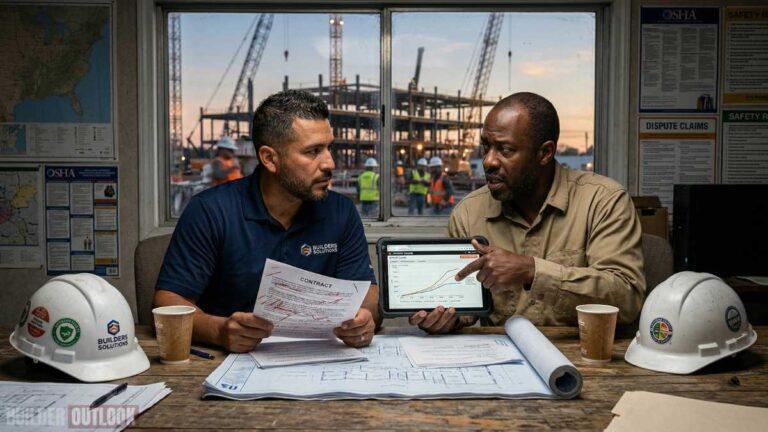
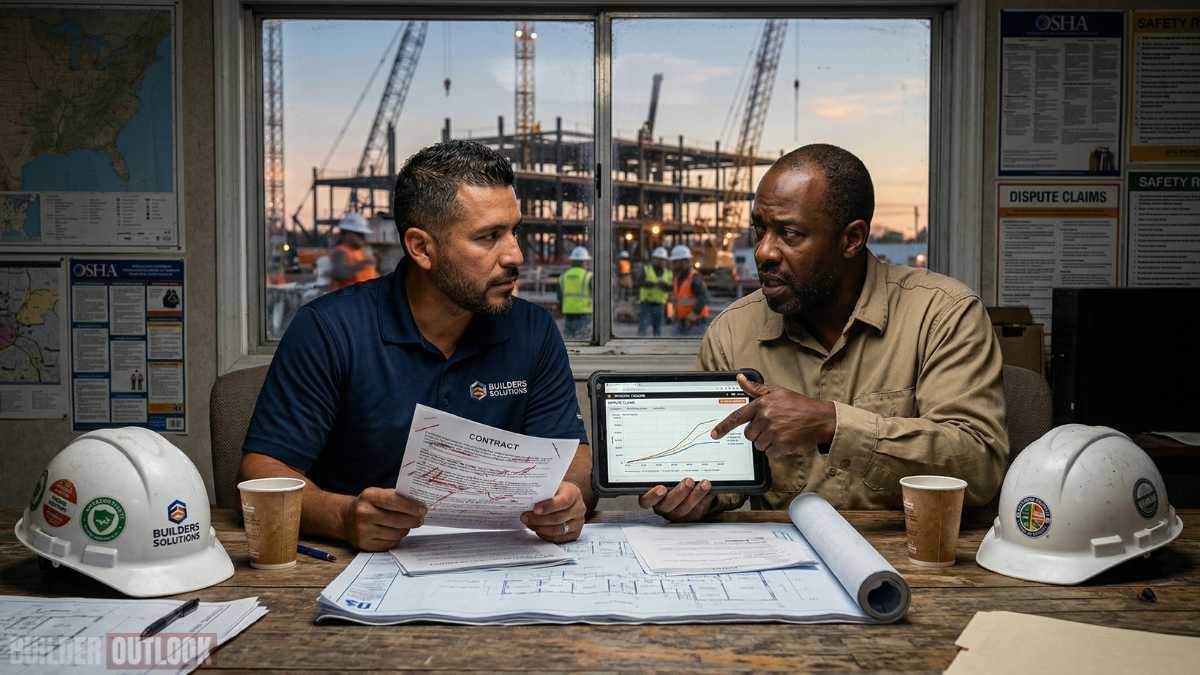
A construction dispute is not just a disagreement between parties. It is a breakdown in alignment between contractual terms, project execution, and expectations. It occurs when one party believes that obligations have not been met — whether related to scope, cost, schedule, or quality.
In the U.S., dispute resolution is often governed by contract terms and supported by frameworks from organizations such as the American Arbitration Association, which provides arbitration and mediation services. However, the formal resolution process is only the final stage of a much longer chain of events.
Disputes typically evolve through phases: first, a small issue or misalignment; then, a lack of resolution; followed by escalation; and finally, formal claims or legal action. Each stage represents an opportunity to resolve the issue before it becomes more complex and costly.
A dispute is not an event.
It is a process that was not controlled.
WHY DISPUTES ARE INCREASING IN 2026
The construction environment in 2026 has intensified the conditions that lead to disputes. Projects are more complex, timelines are tighter, and financial pressures are higher. At the same time, stakeholders are less tolerant of delays and cost overruns, creating a more reactive and adversarial environment.
One of the primary drivers is misalignment of expectations. Clients expect flexibility, speed, and cost control, while contractors face real-world constraints that make these expectations difficult to meet simultaneously. Without clear communication and documentation, this gap becomes a source of conflict.
Another major factor is poor documentation. When decisions, approvals, and changes are not properly recorded, contractors lose the ability to prove their position. This weakens their negotiating power and increases the likelihood of disputes.
Change orders are also a critical source of conflict. When additional work is performed without clear approval or pricing, disagreements over cost and responsibility are almost inevitable.
Additionally, delays — whether caused by external factors or internal inefficiencies — create tension that often leads to blame and dispute.
Disputes are not increasing because projects are failing.
They are increasing because systems are not evolving.
WHERE DISPUTES ACTUALLY START (AND WHY CONTRACTORS MISS IT)
Disputes rarely begin with major issues. They start with small, seemingly manageable problems that are not addressed properly. One of the most common starting points is unclear scope. If the scope of work is not precisely defined, contractors may perform additional work without realizing it falls outside the original agreement.
Another common trigger is lack of timely communication. Issues that are not communicated early become larger problems later. Contractors often delay difficult conversations, hoping problems will resolve themselves.
Documentation gaps are another critical factor. Without written records of decisions, approvals, and changes, contractors lose the ability to defend their position.
Scheduling misalignment also contributes. When expectations about timelines are not clearly communicated and documented, delays lead to disputes over responsibility.
The reason contractors miss these early signals is simple: they focus on execution, not control.
Builder Inteligence

THE REAL COST OF A CONSTRUCTION
DISPUTE
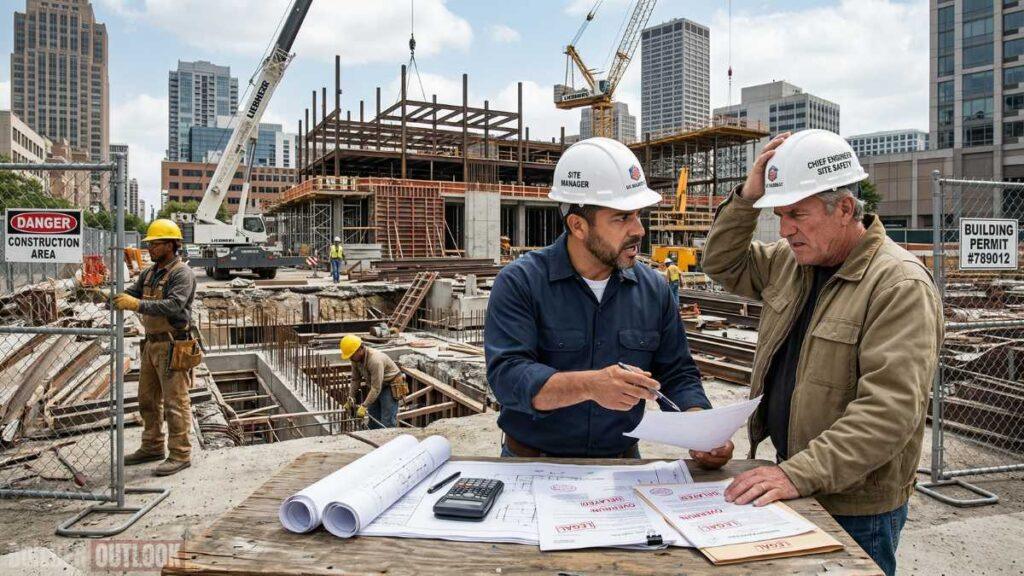
The cost of a dispute is rarely limited to legal fees. It affects multiple aspects of the contractor’s business. Financially, disputes delay payments, increase administrative costs, and may result in partial or complete loss of revenue for disputed work.
Operationally, disputes consume time and attention. Project managers and leadership must shift focus from execution to conflict resolution, reducing overall efficiency.
Reputation is also impacted. Even if the contractor is not at fault, disputes can affect relationships with clients, subcontractors, and industry partners.
In some cases, disputes escalate into litigation or arbitration, which can take months or years to resolve. During this time, resources are tied up, and uncertainty affects business stability.
The most significant cost, however, is opportunity. Time and energy spent on disputes cannot be invested in new projects or business growth.
Disputes do not just affect projects.
They affect trajectory.
HOW HIGH-LEVEL CONTRACTORS PREVENT DISPUTES BEFORE THEY START
Contractors who consistently avoid disputes do not rely on luck. They build structured systems that prevent misalignment and create clarity throughout the project lifecycle. This begins with strong contracts that clearly define scope, responsibilities, and processes for handling changes and delays.
The next critical element is documentation. Every decision, approval, and change is recorded in a clear and organized manner. This creates a transparent record that reduces ambiguity and strengthens the contractor’s position.
Communication is equally important. High-level contractors address issues early, before they escalate. They do not avoid difficult conversations — they manage them strategically.
Change order control is another key factor. Additional work is not performed without proper documentation and approval, reducing the risk of disputes over cost and scope.
Scheduling transparency also plays a role. Clear and realistic timelines, combined with regular updates, help align expectations and reduce conflict.
Finally, contractors invest in training, ensuring that teams understand the importance of documentation, communication, and compliance with contract terms.
This approach transforms disputes from inevitable problems into preventable risks.
REAL EXAMPLE: A DISPUTE THAT COULD HAVE BEEN PREVENTED
A contractor in California was working on a commercial renovation project where the client requested several modifications during execution. The contractor proceeded with the changes based on verbal agreements, without formal change orders.
As the project progressed, the contractor submitted additional costs related to these changes. The client disputed the charges, arguing that the work had not been formally approved.
Without documentation, the contractor struggled to justify the claim. The dispute escalated, delaying payment and creating tension between both parties.
The issue was not the work.
It was the absence of control.
HOW TO BUILD A DISPUTE PREVENTION SYSTEM THAT ACTUALLY WORKS
To effectively prevent disputes, contractors must integrate risk control into every stage of the project. This begins with contract review, ensuring that terms are clear, fair, and understood by all parties.
The next step is establishing documentation protocols. All project-related information must be recorded consistently, including communications, approvals, and changes.
Communication systems must be structured, ensuring that information flows clearly between all stakeholders. Regular meetings, updates, and reports help maintain alignment.
Change management processes must be enforced. No additional work should be performed without proper documentation and approval.
Scheduling and progress tracking must be transparent, allowing all parties to understand the current status of the project.
Finally, contractors should implement internal audits, reviewing processes regularly to identify potential issues before they escalate.
Dispute prevention is not reactive.
It is engineered.
THE DISPUTE DIDN’T START TODAY — IT STARTED WHEN YOU LOST CONTROL OF THE PROCESS
In 2026, disputes are not sudden events.
They are the result of small failures that were never corrected.
Contractors who build structured systems maintain control, protect their margins, and operate with confidence. Those who rely on reactive problem-solving continue to face conflicts that could have been avoided.
The difference is not in the project.
It is in the system behind the project.
More from Builder Inteligence

Frequently asked questions
1. What is a construction dispute?
A construction dispute is a formal or informal disagreement between parties involved in a project, typically related to scope, cost, schedule, or quality. These conflicts can escalate quickly if not managed properly, leading to delays, financial losses, legal exposure, and long-term damage to contractor relationships and business reputation.
2. When do disputes usually start?
Construction disputes often begin early in the project lifecycle, frequently during planning or execution phases when expectations are not clearly aligned. Miscommunication, unclear contract terms, and unrealistic timelines create friction that, if not addressed early, can evolve into more complex and costly conflicts later in the project.
3. What causes disputes?
The most common causes of construction disputes include poor documentation, unclear scope definitions, inconsistent communication, and unexpected project changes. When responsibilities, deliverables, and expectations are not properly defined, small issues compound over time, creating disputes that affect cost control, scheduling, and project outcomes.
4. Can disputes be prevented?
Yes, most construction disputes can be prevented through structured systems, clear contracts, and disciplined project management. Contractors who invest in documentation, communication processes, and proactive risk management reduce uncertainty, improve alignment between stakeholders, and significantly minimize the likelihood of disputes.
5. Do change orders affect disputes?
Yes, change orders are one of the primary drivers of construction disputes. When scope changes are not clearly documented, approved, or priced correctly, they create disagreements between contractors, clients, and subcontractors, often leading to delays, payment conflicts, and legal complications.
6. Is documentation important?
Documentation is critical in construction because it serves as the primary evidence in case of disputes. Detailed records of communications, approvals, changes, and progress protect contractors by providing clarity and proof, reducing legal risk and strengthening their position in negotiations or formal dispute resolution processes.
7. Are disputes expensive?
Construction disputes can be extremely expensive, not only in direct legal costs but also in lost time, delayed payments, and damaged relationships. Even minor disputes can disrupt project flow, reduce profit margins, and negatively impact a contractor’s reputation in a highly competitive market.
8. Should contractors plan for dispute prevention?
Yes, contractors should treat dispute prevention as a core business strategy rather than a reactive measure. By implementing structured processes, improving contract clarity, and maintaining strong communication, contractors can avoid costly conflicts and build more predictable, profitable, and scalable operations.