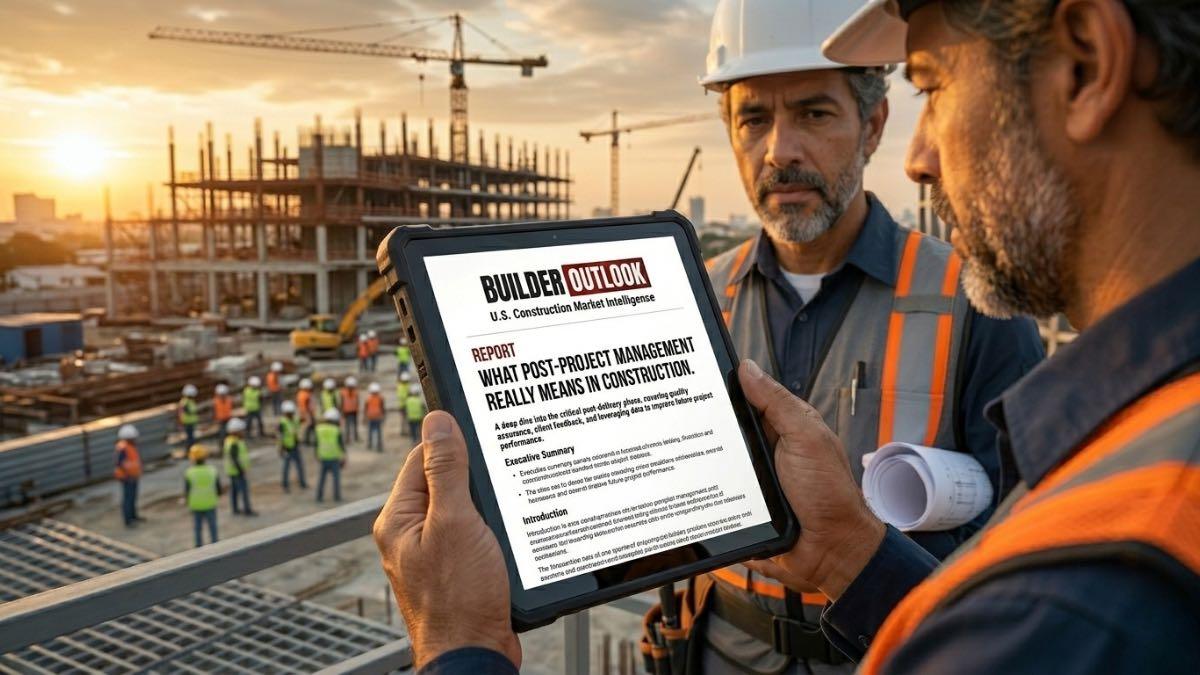
In the U.S. construction market, there is a clear and often brutal distinction between companies that simply “run jobs” and those that actually manage projects. In 2026, that difference is no longer just operational — it is financial, strategic, and in many cases, the defining factor between companies that scale and those that stall. Many contractors still operate in a reactive mode, making decisions as problems appear, adjusting schedules, costs, and teams on the fly. The issue is that this model does not scale, does not sustain growth, and most importantly, does not protect margin.
Project management is not about following a job from start to finish. It is about controlling variables before they become problems. A construction project involves dozens — sometimes hundreds — of interconnected decision points: sequencing, resource allocation, quality control, subcontractor coordination, inspections, and client communication. When these elements are not integrated into a structured system, the project is not being managed — it is being pushed forward under pressure and uncertainty.
In 2026, with tighter deadlines, increased productivity expectations, and thinner margins, improvisation is no longer viable. Contractors who continue operating this way live in constant urgency, solving issues as they arise, dealing with rework, and trying to recover lost time. On the other hand, contractors who implement structured management systems are able to anticipate problems, control execution, and maintain predictability throughout the project lifecycle.
The core idea is simple:
Project management is not a role.
It is the system that sustains the entire operation.
WHAT PROJECT MANAGEMENT REALLY MEANS IN CONSTRUCTION
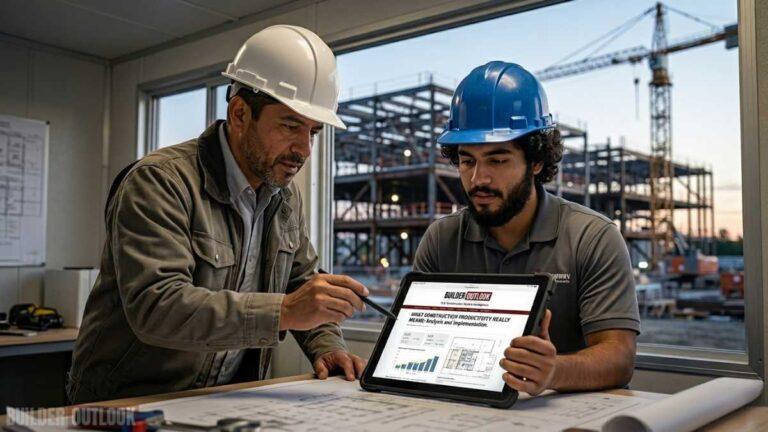
Project management in construction is not just about tracking tasks or ensuring the schedule is being followed. It represents the integration of time, cost, scope, quality, and communication into a unified control system. Every decision made during the project affects multiple areas simultaneously, and the role of management is to ensure those decisions are coordinated, not isolated.
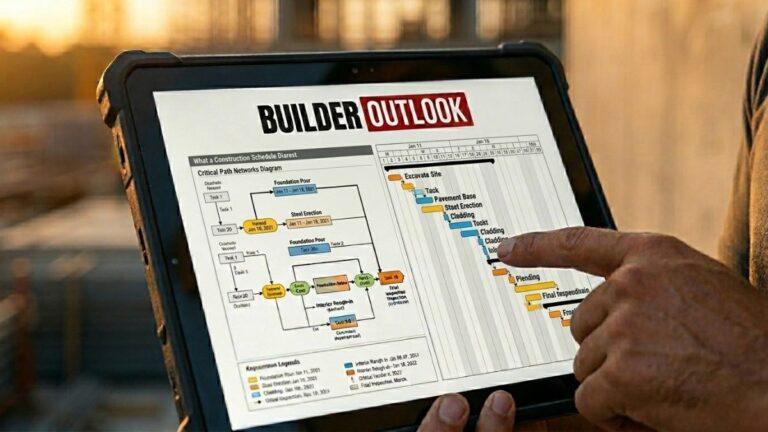
Many contractors operate with fragmented systems, where scheduling, cost control, and field execution exist independently. This creates a situation where each part of the project may appear functional on its own, but the overall system lacks cohesion. For example, a schedule may exist but not reflect real-time field conditions. Cost tracking may exist but fail to align with actual progress. Communication channels may exist but still allow critical misalignment between teams.
Frameworks developed by organizations such as the Project Management Institute emphasize that project management is a structured process involving planning, execution, monitoring, and control. However, the key issue is not knowing these concepts — it is applying them in a way that connects every part of the operation.
Project management is not about having tools.
It is about making those tools work together as a system.
WHY MOST PROJECTS STILL OPERATE IN “FIRE-FIGHTING MODE”
The reactive model remains dominant in construction because it works — up to a certain level of complexity. Smaller projects can often be handled through experience, quick decisions, and informal coordination. The problem arises when project complexity increases and that same model begins to break down.
One major factor is the lack of standardization. Each project is managed differently depending on the team, the manager, or the client. This prevents the development of consistent processes and makes it difficult to improve over time.
Another issue is information overload without structure. Critical data is scattered across messages, spreadsheets, and informal conversations, leading to communication gaps that directly affect execution. Teams may be working hard, but not necessarily aligned.
There is also a strong culture of urgency. Many contractors are highly skilled at solving problems quickly, but not at preventing them. This creates an environment where the team is constantly busy, but rarely operating efficiently.
The issue is not a lack of effort.
It is a lack of structure.
WHERE PROJECTS ACTUALLY LOSE CONTROL
Loss of control in a project does not happen in a single moment. It develops gradually through small deviations that are not corrected early. A minor delay in one activity, a decision made without alignment, a communication gap between trades — each of these may seem insignificant individually, but together they compound.
One of the most critical breakdown points is the disconnect between planning and execution. The original plan is not adjusted as the project evolves, creating a gap between what was intended and what is actually happening on-site.
Another key factor is the lack of structured quality control. Issues are often identified too late, leading to rework and increased costs that could have been avoided.
Subcontractor management also plays a major role. Without clear coordination, each team operates independently, creating conflicts, inefficiencies, and delays.
These problems do not appear randomly.
They emerge from the absence of a system designed to prevent them.
Builder Inteligence

HOW HIGH-LEVEL CONTRACTORS ACTUALLY CONTROL PROJECTS
Contractors who operate at a high level do not rely on individual experience alone. They build systems that function regardless of who is managing the project. The foundation of this approach is structured, repeatable processes.
The first element is integrated planning. Schedule, budget, and scope are developed together, ensuring alignment from the beginning. This reduces future conflicts and creates a solid operational base.
The second element is continuous monitoring. The project is tracked in real time using clear performance indicators, allowing early identification of deviations and proactive adjustments.
The third element is structured communication. Information flows consistently and clearly, ensuring that every stakeholder understands expectations, responsibilities, and timing.
The fourth element is quality control. Internal inspections and checkpoints ensure that execution meets defined standards, reducing rework and maintaining consistency.
The fifth element is data-driven decision-making. Decisions are based on real information, not assumptions or intuition.
This system transforms management into predictability.
REAL EXAMPLE: A STRONG TEAM WITHOUT A SYSTEM
A contractor in Florida operated with a highly experienced and technically capable team. However, the company lacked a structured project management system. Each project manager approached execution differently, relying on personal experience rather than standardized processes.
Initially, results were acceptable. But as project volume increased, problems began to surface. Delays became more frequent, rework increased, conflicts between teams intensified, and costs started to rise beyond expectations.
Despite having a strong team, the absence of structure led to operational strain and margin loss.
The issue was not the people.
It was the absence of a system.
HOW TO BUILD A PROJECT MANAGEMENT SYSTEM THAT ACTUALLY WORKS
To create an effective management system, contractors must move away from improvisation and establish clear processes. This begins with defining standards that apply to every project, ensuring consistency across operations.
Integration between planning, execution, and control is essential. Data must be connected, allowing for a complete and accurate view of the project at all times.
Training is also critical. Teams must understand not only what to do, but why it matters within the larger system.
Technology can support this process, but it does not replace structure. Poorly implemented software simply organizes existing chaos — it does not solve it.
Finally, company culture must prioritize control and predictability, not just speed and urgency.
IT WAS NOT A LACK OF EXPERIENCE — IT WAS A LACK OF SYSTEM
In 2026, construction no longer allows reliance on improvisation.
Projects are more complex, margins are tighter, and the market demands consistency.
Contractors who build structured management systems are able to scale, maintain quality, and protect profitability. Those who continue operating without structure remain trapped in cycles of urgency, rework, and operational stress.
The difference is not in the ability to build.
It is in the ability to control what is being built.
More from Builder Inteligence

Frequently Asked Questions
3. Can experience replace systems?
5. How can management be improved?