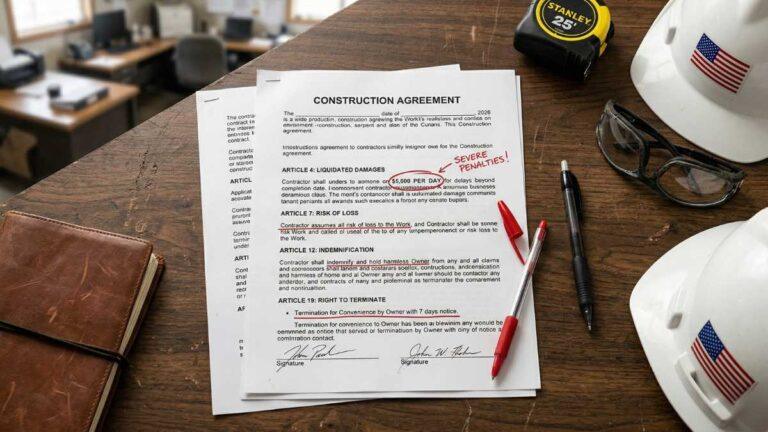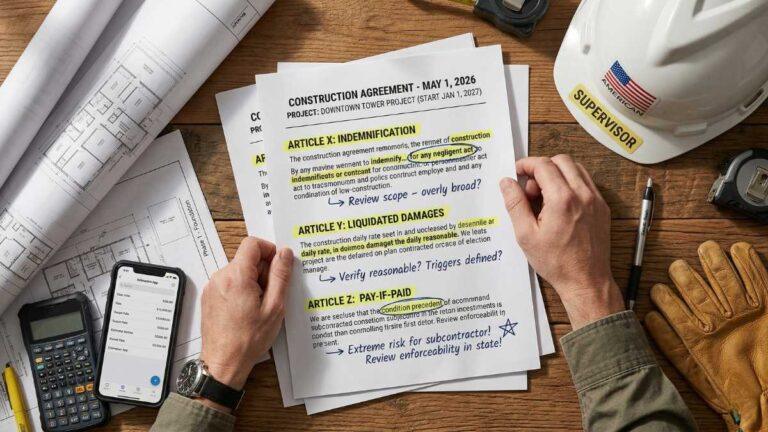
One of the most critical—and often misunderstood—clauses in construction contracts is the liquidated damages provision. This clause establishes a predetermined financial penalty that the contractor must pay if the project is not completed within the agreed contractual timeline. While these provisions are intended to protect project owners from financial losses caused by delays, they also represent one of the most significant financial risks contractors face when entering construction agreements.
In modern construction projects across the United States, timelines are closely tied to economic outcomes. A delayed commercial building may prevent a business from opening on time. A late infrastructure project can disrupt public services. A postponed residential development can affect real estate transactions and financing arrangements. Because delays can generate real financial consequences, many project owners require contractors to agree to liquidated damages clauses as part of the construction contract.
For contractors, however, these clauses require careful evaluation. Liquidated damages can create substantial financial exposure if project schedules are not properly managed or if the contract assigns excessive responsibility for delays that may be outside the contractor’s control. Understanding how these clauses operate—and how they should be negotiated—is essential for contractors seeking to manage project risk effectively.
Liquidated damages clauses are not designed to punish contractors arbitrarily. Instead, they attempt to estimate the financial impact that delays may have on the owner. By defining this amount in advance, the contract avoids lengthy legal disputes over the exact cost of delays if the project is completed late.
However, if contractors fail to understand the implications of these clauses before signing a contract, they may find themselves exposed to penalties that can significantly reduce or eliminate project profitability.
What liquidated damages mean in construction contracts
Liquidated damages are predetermined financial penalties established in the contract that apply if the contractor fails to complete the project within the agreed schedule. Unlike general damages, which must be calculated after a loss occurs, liquidated damages are defined in advance and specified directly within the contract language.
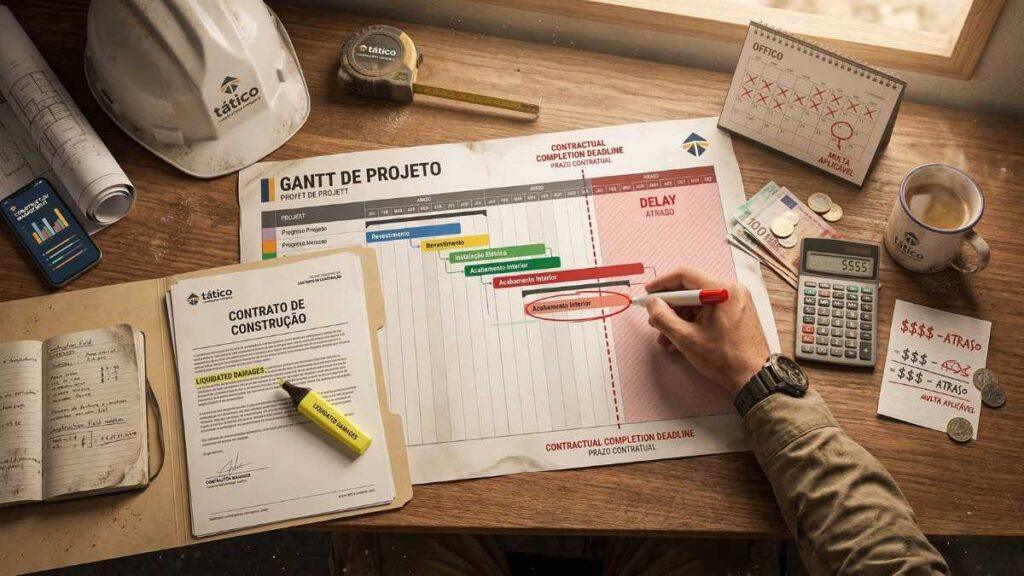
For example, a construction contract may state that the contractor must pay the owner $1,000 per day for each day the project is completed after the contractual completion date. If the contractor finishes the project ten days late, the total penalty would be $10,000.
These clauses simplify dispute resolution because the financial consequences of delays are clearly defined before the project begins. Without liquidated damages provisions, project owners would need to prove the exact financial losses caused by the delay, which can be difficult and time-consuming.
For contractors, however, the existence of a liquidated damages clause means that schedule management becomes a critical component of financial risk control. Even relatively small delays can accumulate into significant financial penalties if the daily liquidated damages rate is high.
Why project owners include liquidated damages clauses
Project owners include liquidated damages clauses because construction delays often produce financial consequences that are difficult to measure precisely. For example, if a commercial office building is not completed on schedule, tenants may not be able to occupy the building as planned. This delay could result in lost rental income, additional financing costs, and operational disruptions.
Similarly, delays in infrastructure projects—such as roads, bridges, or utilities—can disrupt public services and create economic impacts that extend beyond the project itself. Liquidated damages clauses help owners establish financial accountability for these delays.
By agreeing to liquidated damages provisions, contractors acknowledge the importance of completing the project according to the agreed schedule. The clause provides an incentive for contractors to prioritize schedule management and allocate sufficient resources to meet project deadlines.
However, the presence of a liquidated damages clause does not necessarily mean that the contractor will automatically be responsible for every delay. Many contracts include provisions that allow schedule extensions for circumstances beyond the contractor’s control.
When liquidated damages clauses are enforceable
Courts generally enforce liquidated damages clauses when the amount specified in the contract represents a reasonable estimate of the owner’s anticipated losses. If the amount is excessively high and appears designed to punish the contractor rather than compensate the owner for real losses, courts may consider the clause an unenforceable penalty.
For this reason, the daily liquidated damages amount should reflect a realistic estimate of the financial impact that delays may have on the project owner. Factors such as lost revenue, financing costs, and operational disruptions may influence the calculation.
Contractors should review the liquidated damages amount carefully during contract negotiations. If the proposed penalty is disproportionate to the potential financial impact of a delay, contractors may attempt to negotiate a lower amount.
Understanding how courts evaluate liquidated damages provisions helps contractors assess whether the clause is legally reasonable and financially manageable.

How schedule delays trigger liquidated damages
Liquidated damages are typically triggered when the contractor fails to achieve substantial completion by the contractually specified deadline. Substantial completion generally means that the project is sufficiently complete for the owner to begin using the facility for its intended purpose.
If the contractor fails to meet this milestone, liquidated damages may begin accumulating daily until substantial completion is achieved. In some contracts, penalties may also apply if final completion requirements—such as documentation or punch-list items—are delayed.
However, contractors may be entitled to schedule extensions when delays result from circumstances outside their control. These may include severe weather events, owner-requested design changes, regulatory delays, or unforeseen site conditions.
Contractors must document these events carefully to support requests for time extensions. Without proper documentation, owners may argue that the contractor remains responsible for the delay.
Strategies contractors use to manage liquidated damages risk
Managing liquidated damages risk requires careful planning and proactive project management. Contractors must analyze the project schedule carefully before committing to contractual deadlines. Unrealistic schedules create significant financial risk if the contractor cannot complete the project within the specified timeframe.
Contractors should also evaluate the project’s complexity, supply chain considerations, labor availability, and regulatory approval processes before accepting schedule commitments. Identifying potential risks early allows contractors to adjust project plans or negotiate more realistic deadlines.
Another effective strategy involves implementing strong project scheduling systems. Detailed scheduling tools allow contractors to track progress, identify potential delays early, and adjust resources to maintain project timelines.
Communication with project stakeholders also plays a critical role. When potential delays arise, contractors should notify the owner promptly and request schedule adjustments if necessary.
Why schedule control protects contractor profitability
In construction projects where liquidated damages clauses are present, schedule control becomes directly connected to financial performance. Delays that might otherwise appear manageable can quickly translate into significant financial penalties.
Contractors who maintain strong schedule management practices are better positioned to avoid these penalties. By monitoring project progress closely, coordinating subcontractor activities effectively, and resolving field issues quickly, contractors can maintain project timelines even when unexpected challenges arise.
Ultimately, liquidated damages clauses highlight the importance of disciplined project management within the construction industry. Contractors who understand the financial implications of these clauses—and who manage schedules carefully—can reduce risk while maintaining strong relationships with project owners.
In an industry where project timelines are increasingly compressed and financial stakes continue to rise, effective schedule management has become one of the most valuable skills contractors can develop.

FAQ – Liquidated damages in construction contracts: how delay penalties affect contractors and project schedules
1. What are liquidated damages in construction contracts?
Liquidated damages are predetermined financial penalties that contractors must pay if they fail to complete a project within the contractual schedule. These penalties are specified in the contract and apply for each day the project remains incomplete after the agreed completion date.
2. Why do construction contracts include liquidated damages clauses?
Project owners include liquidated damages clauses to protect themselves from financial losses caused by project delays. These clauses establish compensation for delays without requiring the owner to prove the exact financial impact.
3. Are liquidated damages always enforceable in court?
Courts generally enforce liquidated damages clauses if the amount represents a reasonable estimate of the owner’s potential losses. If the penalty appears excessive or punitive, courts may refuse to enforce it.
4. How are liquidated damages calculated in construction contracts?
Liquidated damages are typically calculated as a daily penalty applied after the contractual completion date. For example, a contract may require the contractor to pay a fixed amount for each day the project is delayed.
5. Can contractors request schedule extensions to avoid liquidated damages?
Yes. Contractors may request schedule extensions when delays result from circumstances beyond their control, such as severe weather, design changes, or regulatory approvals.
6. When do liquidated damages usually begin?
Liquidated damages typically begin accumulating after the contractor fails to achieve substantial completion by the contractual deadline.
7. How can contractors reduce liquidated damages risk?
Contractors can reduce risk by negotiating realistic project schedules, implementing strong scheduling systems, documenting delays carefully, and communicating proactively with project stakeholders.
8. Why are liquidated damages important for project owners?
Liquidated damages provide financial protection for project owners by compensating them for delays that may affect business operations, financing arrangements, or revenue generation.