Cash flow is the lifeblood of every construction company. Even highly profitable projects can become financially dangerous if payments are delayed, withheld, or disputed. For this reason, the payment terms section of a construction contract is one of the most important elements contractors must analyze before signing an agreement. Payment terms determine when contractors receive money, how invoices must be submitted, what documentation is required for payment approval, and what protections exist if the owner fails to pay on time.
In the United States construction industry, payment disputes are among the most common causes of litigation between contractors and project owners. Many of these conflicts do not arise because the work was defective or incomplete but because the contract did not clearly define the payment structure. Ambiguous language regarding payment schedules, retainage, milestone billing, and conditional payment clauses can create confusion that eventually turns into financial conflict.
Construction projects typically involve large upfront investments. Contractors must purchase materials, mobilize equipment, hire crews, and coordinate subcontractors before receiving full payment for their work. If payment terms are poorly structured, contractors may find themselves financing the project for the owner while absorbing significant financial risk.
For builders, understanding how payment terms operate—and how they should be negotiated—is essential for maintaining financial stability and avoiding costly disputes during the construction process.
How construction payment schedules work
Most construction contracts rely on progress payment schedules rather than a single payment at project completion. Under a progress payment system, contractors submit invoices periodically—often monthly—based on the percentage of work completed.
This approach allows contractors to recover project costs gradually while construction progresses. Payment applications typically include detailed breakdowns of completed work, often using a schedule of values, which assigns a monetary value to each component of the project. As each portion of the work is completed, contractors request payment for the corresponding value.
Payment applications usually require supporting documentation. Owners or construction managers may request inspection reports, lien waivers from subcontractors, or proof that materials have been delivered to the jobsite before approving payment.
While progress payments are standard across the construction industry, the timing of these payments varies depending on contract language. Some contracts require owners to pay within fifteen days of invoice approval, while others may allow longer review periods.
For contractors, the difference between a fifteen-day payment cycle and a forty-five-day payment cycle can have a major impact on project cash flow.
The role of retainage in construction contracts
Retainage is another key component of construction payment structures. In many projects, the owner withholds a percentage of each payment—typically between five and ten percent—until the project reaches substantial completion.
The purpose of retainage is to ensure that contractors complete all required work and address any deficiencies before receiving final payment. While this mechanism protects owners, it also creates financial pressure for contractors who must complete the project while a portion of their earned revenue remains withheld.
Retainage policies vary widely depending on the jurisdiction and the type of project. Some states regulate the maximum percentage of retainage that may be withheld, particularly on public construction projects.
Contractors should review retainage clauses carefully and ensure that the contract specifies clear procedures for releasing retained funds once project milestones are achieved.
Conditional payment clauses and contractor risk
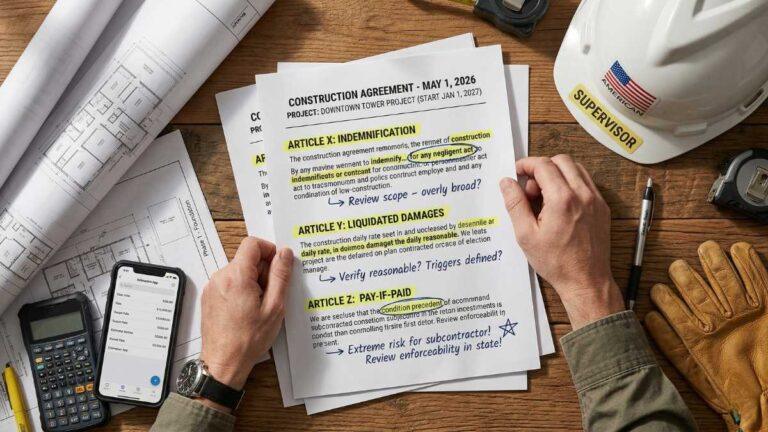
Some construction contracts include conditional payment clauses, commonly referred to as “pay-when-paid” or “pay-if-paid” provisions. These clauses link the contractor’s payment to whether the project owner has received funds from another party.
For example, a general contractor may include a clause stating that subcontractors will only be paid after the general contractor receives payment from the project owner. This structure shifts financial risk down the contractual chain.
Pay-when-paid clauses generally establish the timing of payment but do not eliminate the obligation to pay subcontractors eventually. Pay-if-paid clauses, however, may attempt to make payment entirely conditional upon the contractor receiving funds from the owner.
Because these clauses significantly affect financial risk, contractors must understand their legal implications. Courts in some states limit the enforceability of pay-if-paid clauses because they can unfairly transfer financial risk to subcontractors.
Understanding how these clauses operate in different jurisdictions helps contractors protect themselves from unexpected financial exposure.


Why payment documentation is critical
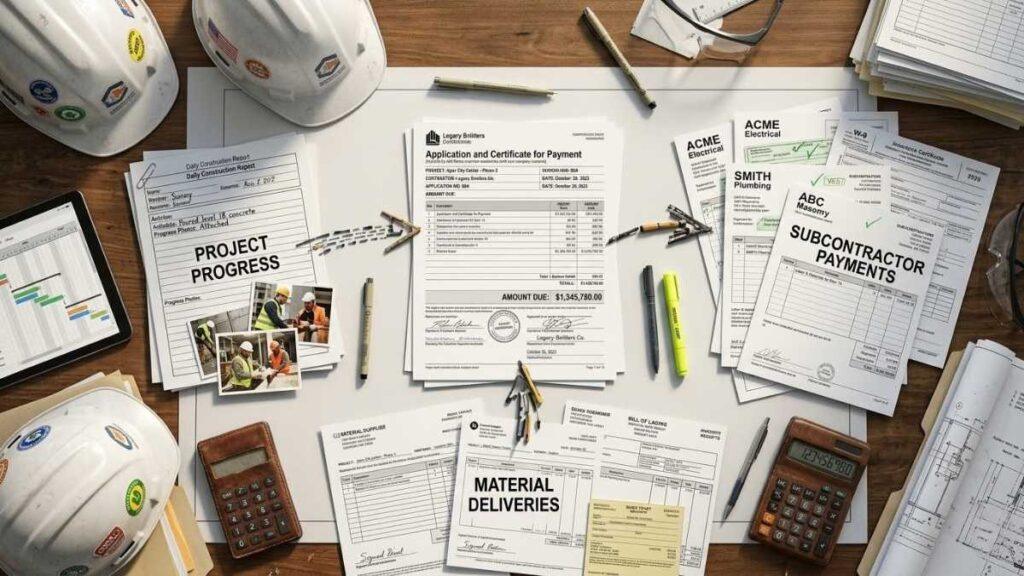
Construction payments require extensive documentation. Contractors must maintain detailed records of project progress, subcontractor payments, and material deliveries to support their payment applications.
Most payment applications include several key components. These may include a schedule of completed work, invoices for materials and labor, lien waivers confirming that subcontractors have been paid, and updated construction schedules demonstrating project progress.
Failure to provide proper documentation can delay payment approvals and disrupt project cash flow. For this reason, contractors must establish organized administrative processes for managing payment documentation.
Strong documentation practices also provide protection in the event of disputes. If an owner challenges the validity of a payment request, contractors must be able to demonstrate that the work was completed according to the contract requirements.
Managing payment disputes during construction
Despite careful planning, payment disputes sometimes arise during construction projects. Owners may question whether certain work has been completed, or disagreements may occur regarding the value of completed work.
When payment disputes occur, contractors should address them promptly and professionally. Open communication between contractors, owners, and project managers can often resolve misunderstandings before they escalate into legal conflicts.
Contractors should also review the dispute resolution provisions included in the contract. Many construction agreements specify procedures for resolving payment disputes through mediation, arbitration, or litigation.
Understanding these procedures helps contractors respond effectively when payment issues arise.
Protecting contractor cash flow through contract negotiation
Contract negotiation provides contractors with the opportunity to establish fair payment terms before the project begins. Contractors should evaluate payment schedules carefully and ensure that payment intervals align with project expenses.
Shorter payment cycles reduce financial pressure on contractors by allowing them to recover costs more quickly. Contractors may also negotiate limits on retainage percentages or request early release of retainage for completed project phases.
Another important negotiation point involves defining the documentation required for payment approval. Clear documentation requirements help prevent unnecessary delays during the billing process.
By negotiating balanced payment terms, contractors can reduce financial risk and maintain healthier project cash flow.
Why payment terms shape construction business stability
For many construction companies, financial stability depends more on cash flow than on total project revenue. Even large contracts can create financial strain if payments are delayed or structured unfairly.
Understanding payment terms allows contractors to evaluate project risk more accurately before committing to a contract. Builders who prioritize strong contract language and clear payment procedures are better positioned to maintain steady operations even during complex projects.
In the competitive construction industry, companies that manage payment structures effectively gain a major advantage. Reliable cash flow allows contractors to invest in equipment, hire skilled labor, and pursue larger projects with confidence.
Ultimately, payment terms represent far more than administrative details within construction contracts. They determine whether a project supports the long-term financial health of the contractor or becomes a source of unnecessary financial stress.
Advertising

FAQ – Payment terms in construction contracts: how contractors protect cash flow and avoid payment disputes
1. What are payment terms in construction contracts?
Payment terms define when and how contractors receive payment for completed work. They establish the payment schedule, required documentation, retainage percentages, and conditions under which payments must be approved by the project owner.
2. What is a progress payment in construction?
A progress payment is a partial payment made to the contractor based on the percentage of work completed during a specific billing period. Contractors typically submit monthly payment applications documenting completed work.
3. What is retainage in construction contracts?
Retainage is a portion of each payment withheld by the owner until the project reaches substantial completion. This mechanism encourages contractors to complete all work and resolve deficiencies before final payment.
4. What is the difference between pay-when-paid and pay-if-paid clauses?
Pay-when-paid clauses affect the timing of subcontractor payments, while pay-if-paid clauses attempt to make payment conditional upon the contractor receiving funds from the owner.
5. Why is payment documentation important in construction projects?
Payment documentation supports payment applications and demonstrates that work has been completed according to the contract requirements. Without proper documentation, payment approvals may be delayed.
6. How can contractors prevent payment disputes?
Contractors can prevent payment disputes by maintaining clear documentation, communicating regularly with project stakeholders, and ensuring that payment terms are clearly defined in the contract.
7. Can contractors negotiate payment terms before signing a contract?
Yes. Contractors often negotiate payment schedules, retainage percentages, and documentation requirements during contract negotiations to ensure fair payment conditions.
8. Why are payment terms critical for contractor cash flow?
Construction companies must pay labor, materials, and subcontractors before receiving full project payment. Clear and timely payment terms ensure that contractors maintain sufficient cash flow during construction.