Construction projects are complex business arrangements involving multiple parties, significant financial investments, and long project timelines. While most contracts are written with the expectation that the project will proceed smoothly from groundbreaking to final completion, the reality of construction is that not all projects reach that outcome. Financial disputes, schedule failures, funding problems, regulatory interruptions, or major disagreements between stakeholders can cause a project to stop unexpectedly. When this happens, termination clauses in construction contracts determine how the contractual relationship ends and what financial consequences follow.
Termination clauses are among the most important risk-management tools embedded in construction agreements. These provisions define the conditions under which the contract may be ended before completion and establish the rights and obligations of the parties when termination occurs. Without clearly defined termination language, the sudden shutdown of a project can create chaotic disputes regarding unpaid work, partially completed installations, equipment removal, subcontractor obligations, and financial compensation.
For contractors operating in the United States construction industry, understanding termination clauses is essential because these provisions directly affect financial exposure when projects fail. A contractor who has already mobilized crews, ordered materials, and invested months of labor into a project must know whether the contract allows recovery of those costs if the owner decides to stop the project. Similarly, project owners need mechanisms to terminate contracts when contractors fail to perform their obligations.
Termination clauses therefore function as a legal safety valve within construction agreements. They provide a structured method for ending a project relationship when continuing the contract is no longer feasible. Contractors who understand these clauses can better evaluate project risk, negotiate fair contract terms, and protect their companies from catastrophic financial loss if a project collapses before completion.
Why termination clauses exist in construction contracts
Construction projects operate in unpredictable environments where economic, operational, and legal circumstances can change rapidly. A project that appears viable during contract signing may encounter financial or logistical challenges that make continuation impossible. Because construction contracts often span months or years, the likelihood of encountering unexpected problems is significant.
Termination clauses exist to address these realities. Instead of forcing parties to remain bound to an unworkable agreement, the contract provides mechanisms for ending the relationship under defined circumstances. This approach reduces legal uncertainty and allows both parties to manage the consequences of termination more predictably.
Without termination provisions, ending a construction contract prematurely could expose both parties to breach-of-contract claims. If an owner stopped a project without contractual authority, the contractor could sue for damages resulting from lost work and financial investment. Conversely, if a contractor abandoned the project without justification, the owner could seek compensation for project delays and replacement contractor costs.
Termination clauses therefore create legal clarity. They establish when termination is permitted, what procedures must be followed, and how financial settlements will be calculated. This structure helps reduce litigation and provides a framework for resolving project failures in a controlled manner.
Termination for convenience
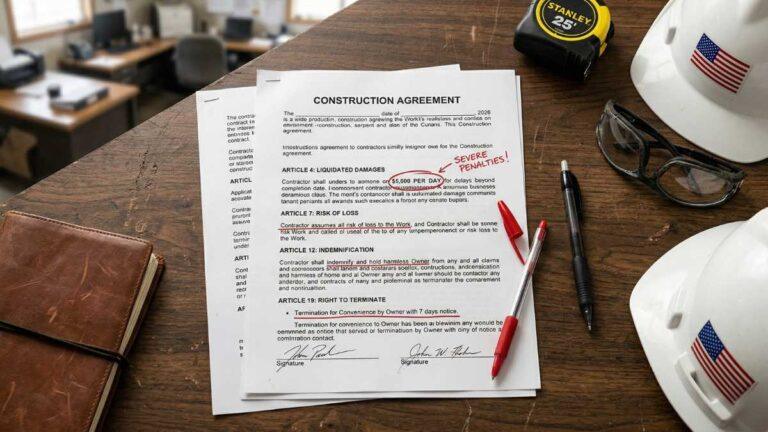
One of the most significant termination provisions in modern construction contracts is termination for convenience. This clause allows the project owner to terminate the contract even if the contractor has not breached any obligations. In other words, the owner may decide to stop the project simply because continuing the project is no longer desirable.
Termination for convenience clauses are common in both private construction agreements and government contracts. Owners may invoke these provisions for a variety of reasons, including financing problems, changes in development strategy, regulatory complications, or shifts in market conditions.
While termination for convenience gives owners flexibility, it can create significant financial risk for contractors. If the contract allows the owner to terminate the project at any time without proper compensation, the contractor may be left absorbing substantial costs associated with mobilization, materials procurement, and partially completed work.
For this reason, contractors should ensure that termination for convenience clauses include provisions requiring the owner to compensate the contractor for work performed, materials purchased, and reasonable demobilization expenses. Many contracts also include compensation for a portion of lost profit associated with the terminated work.
Without these protections, termination for convenience could leave contractors financially vulnerable despite performing their contractual obligations properly.
Termination for default
Termination for default occurs when one party fails to fulfill its contractual obligations. In construction contracts, this type of termination typically arises when the contractor fails to perform work according to the schedule, refuses to correct defective work, violates safety regulations, or otherwise breaches the contract.
When termination for default occurs, the owner may have the right to hire another contractor to complete the project. In some cases, the original contractor may be responsible for additional costs associated with completing the work.
Because termination for default carries serious financial consequences, most construction contracts include procedural requirements before termination can occur. These procedures often involve notice and cure provisions, which give the contractor an opportunity to correct the problem before termination becomes effective.
For example, if the owner believes the contractor has failed to meet schedule milestones, the contract may require the owner to provide written notice describing the issue and allowing a specified period—such as ten or fifteen days—for the contractor to resolve the problem.
These cure periods are important because they prevent owners from terminating contracts abruptly without giving contractors a chance to address performance concerns.
Advertising

Financial consequences of termination
When a construction contract is terminated before completion, the financial consequences depend heavily on the type of termination involved. If termination occurs for convenience, contractors are generally entitled to compensation for work performed up to the termination date, including materials purchased and reasonable demobilization costs.
In some contracts, contractors may also recover a portion of anticipated profit for the work that would have been performed if the project had continued. The exact formula for calculating these payments depends on the language of the contract.
Termination for default, however, can have far more severe consequences for contractors. If the contractor is terminated due to failure to perform contractual obligations, the owner may seek compensation for additional costs incurred when hiring a replacement contractor to complete the work.
These financial consequences highlight why contractors must carefully review termination provisions before signing construction agreements. The difference between termination for convenience and termination for default can determine whether the contractor receives compensation or faces financial liability.
Managing termination risk during contract negotiation
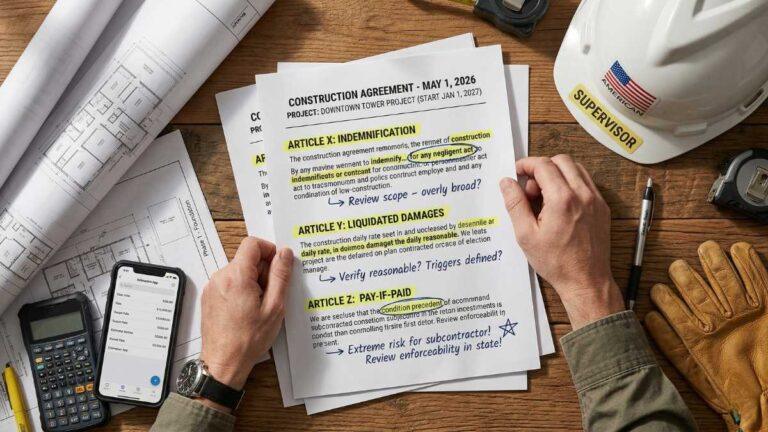
Experienced contractors treat termination clauses as negotiable provisions rather than fixed contract language. When reviewing proposed agreements, contractors should evaluate whether termination terms fairly allocate risk between the parties.
Key negotiation considerations include ensuring that termination for convenience clauses include compensation for work completed, verifying that cure periods exist before termination for default can occur, and clarifying how financial settlements will be calculated.
Contractors should also confirm that termination provisions address issues such as equipment removal, subcontractor payments, and ownership of materials already delivered to the project site. Clear language on these matters helps prevent disputes if the project ends prematurely.
Because termination clauses determine how project failures are resolved, careful negotiation of these provisions can significantly reduce financial uncertainty.
Why contractors must understand termination clauses
Termination clauses represent one of the most important contractual safeguards in construction agreements. While contractors hope never to rely on these provisions, the reality of the construction industry is that projects occasionally encounter financial, legal, or operational problems that make continuation impossible.
Contractors who understand termination provisions can better evaluate project risk before signing contracts. By analyzing termination language carefully, contractors can ensure that they are protected from unfair financial consequences if the project ends unexpectedly.
In an industry where projects involve millions of dollars and months of coordinated work, the ability to manage contract termination risk is a critical component of professional construction management.
Ultimately, termination clauses provide a structured way to address project breakdowns without descending into chaotic disputes. Contractors who treat these clauses seriously and negotiate them carefully are far better positioned to protect their businesses when unexpected challenges arise.
Advertising

FAQ – Termination clauses in construction contracts: how contractors protect themselves when projects collapse
1. What is a termination clause in a construction contract?
A termination clause is a provision that allows one or both parties to end the construction contract before the project is completed. The clause defines the conditions under which termination is allowed and describes the financial consequences for each party.
2. What is termination for convenience?
Termination for convenience allows the project owner to end the contract even when the contractor has not breached the agreement. This provision gives owners flexibility but typically requires compensation to the contractor for work performed and costs incurred.
3. What is termination for default?
Termination for default occurs when a contractor fails to meet contractual obligations, such as missing schedule deadlines, performing defective work, or violating safety requirements. The owner may terminate the contract and hire another contractor to complete the project.
4. Why are cure periods important in termination clauses?
Cure periods provide contractors with an opportunity to correct performance issues before termination occurs. These provisions help prevent abrupt contract termination and encourage resolution of problems before they escalate.
5. What compensation does a contractor receive after termination for convenience?
Contractors are usually entitled to payment for completed work, materials purchased for the project, and reasonable demobilization costs. Some contracts also allow partial recovery of anticipated profits.
6. Can termination clauses be negotiated?
Yes. Contractors can negotiate termination provisions during contract drafting to ensure fair compensation and clear procedures for ending the project relationship.
7. What happens to subcontractors if a contract is terminated?
Subcontractors are typically affected by the termination of the main construction contract. Payment obligations, work completion responsibilities, and demobilization procedures are often addressed through subcontract agreements.
8. Why should contractors review termination clauses carefully?
Termination clauses determine how financial risks are allocated when projects fail. Contractors who understand these provisions can avoid unexpected liabilities and protect their financial interests.