Liquidated damages are one of the most powerful—and often misunderstood—mechanisms in construction contracts. While contractors typically focus their attention on project scope, payment terms, and technical specifications, the clause governing liquidated damages can quietly determine the financial consequences of project delays. For builders operating in the United States construction industry, understanding how liquidated damages function is essential for protecting profitability and avoiding unexpected financial exposure.
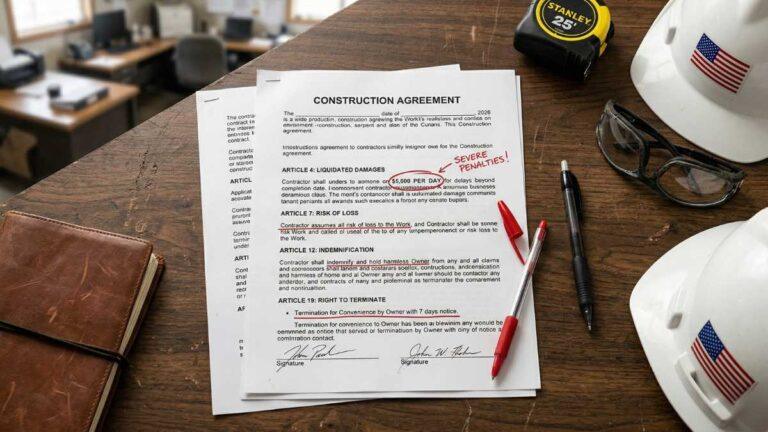
A liquidated damages clause establishes a predetermined financial penalty that the contractor must pay to the project owner if the project is not completed within the agreed contract schedule. Rather than requiring the owner to prove the exact financial losses caused by a delay, the contract specifies an agreed daily amount that represents the estimated damages associated with late completion. This structure allows both parties to quantify schedule risk in advance and reduces the complexity of calculating damages after delays occur.
While liquidated damages may appear straightforward, their impact on project profitability can be significant. Construction projects often involve complex schedules, coordination among multiple subcontractors, material procurement timelines, inspection requirements, and external variables such as weather conditions or regulatory approvals. Even a well-managed project can encounter delays beyond the contractor’s direct control. When a contract includes liquidated damages provisions, each day of delay can translate into direct financial loss for the contractor.
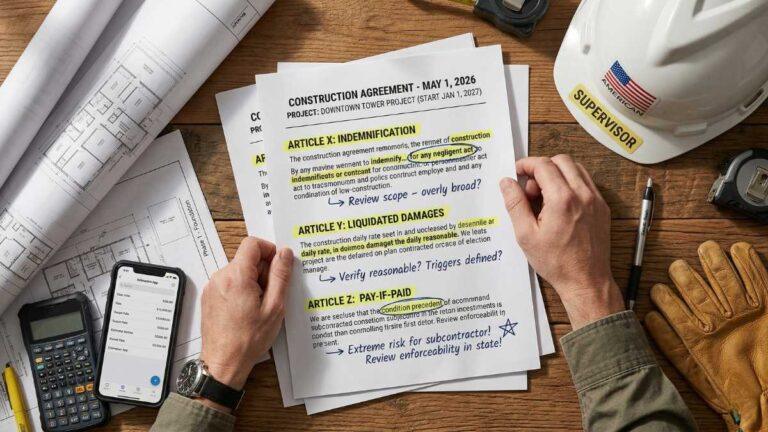
For contractors, the critical issue is not simply whether liquidated damages exist in the contract but whether the clause reflects a fair allocation of risk. If the daily penalty is disproportionate to the actual damages that the owner might reasonably experience, the clause may place an excessive burden on the contractor. Conversely, when liquidated damages are properly structured, they provide clarity and predictability for both parties by defining the cost of schedule overruns before the project begins.
Because of their potential financial impact, liquidated damages clauses should be reviewed carefully during contract negotiations. Contractors who understand how these provisions operate are better equipped to assess schedule risk, negotiate realistic timelines, and protect their businesses from avoidable penalties.
What liquidated damages mean in construction contracts
Liquidated damages are predetermined financial penalties written into a construction contract that apply when the contractor fails to complete the project within the agreed completion date. Instead of calculating actual losses after a delay occurs, the contract specifies a daily or weekly amount that the contractor must pay if the completion deadline is exceeded.
The purpose of liquidated damages is to provide a predictable method for compensating the owner for delays without requiring lengthy legal disputes over the exact financial impact of the delay. Construction delays can create significant consequences for owners, including lost rental income, delayed facility operations, additional financing costs, or contractual obligations to third parties. Rather than attempting to quantify these damages after the fact, the parties agree in advance on a reasonable estimate.
For example, a commercial development project may include a liquidated damages clause specifying that the contractor must pay the owner two thousand dollars per day for each day the project remains incomplete beyond the contract completion date. If the project is delayed by thirty days, the contractor would be responsible for sixty thousand dollars in liquidated damages.
It is important to understand that liquidated damages are not intended to function as punitive penalties. Courts generally require that the amount specified in the contract represents a reasonable estimate of anticipated losses at the time the contract was signed. If the amount is excessively high and clearly intended as punishment rather than compensation, courts may refuse to enforce the clause.
Why owners include liquidated damages clauses
Owners include liquidated damages provisions primarily to protect themselves from the economic consequences of project delays. In many types of construction projects, the completion date is directly tied to revenue generation, business operations, or contractual commitments with other parties.
For example, a hotel developer expects to begin generating revenue as soon as the facility opens to guests. If the construction project is delayed, the developer may lose significant income for each day the building remains unfinished. Similarly, infrastructure projects may involve government funding timelines or operational deadlines that create financial pressure for timely completion.
By including liquidated damages clauses, owners establish a clear financial incentive for contractors to meet project deadlines. The clause also simplifies dispute resolution because the amount of compensation for delays has already been defined. Instead of engaging in complex litigation to prove the value of lost revenue or additional expenses, the owner can rely on the predetermined figure.
However, this simplicity for the owner also creates financial exposure for the contractor. When delays occur, even if they are partially outside the contractor’s control, the liquidated damages clause may still apply unless the contract provides mechanisms for schedule extensions.


How contractors should evaluate liquidated damages provisions
Before accepting a liquidated damages clause, contractors must evaluate whether the proposed amount reflects a reasonable estimate of the owner’s potential losses. Contractors should ask several key questions during contract review.
First, contractors should examine the daily liquidated damages amount relative to the project value. If the penalty is excessively high compared to the overall contract price, it may create disproportionate risk. A small delay could result in financial losses that exceed the contractor’s profit margin.
Second, contractors should analyze the project schedule carefully. Aggressive or unrealistic completion timelines increase the likelihood of delay exposure. Contractors should ensure that the schedule allows sufficient time for material procurement, inspection approvals, weather disruptions, and coordination among subcontractors.
Third, contractors should confirm that the contract includes provisions allowing for schedule extensions when delays are caused by events beyond the contractor’s control. These events are often referred to as excusable delays and may include severe weather, owner-requested changes, labor strikes, or regulatory delays.
Without clear excusable delay provisions, contractors may be held responsible for delays that they did not cause.
The importance of schedule documentation
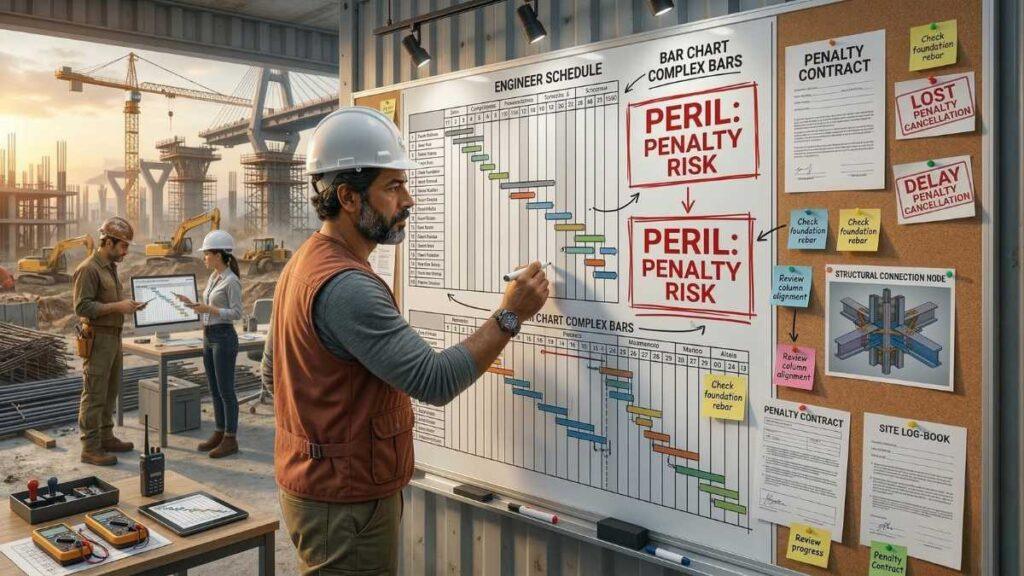
One of the most effective ways for contractors to protect themselves from liquidated damages is maintaining detailed project schedule documentation. Construction schedules should be updated regularly to reflect actual progress, identify emerging delays, and record the causes of schedule disruptions.
Modern project management software allows contractors to track activities, critical path schedules, and milestone completion dates in real time. This documentation becomes essential when disputes arise regarding the cause of delays.
If a contractor can demonstrate that delays resulted from owner-directed changes, design revisions, or external events beyond the contractor’s control, the contractor may be entitled to schedule extensions that eliminate liquidated damages exposure.
Without detailed schedule documentation, however, it becomes far more difficult to prove the cause of project delays. In such cases, the owner may argue that the contractor bears responsibility for failing to manage the schedule effectively.
Negotiating fair schedule risk allocation
Contractors should approach liquidated damages clauses as negotiable elements of the contract rather than fixed conditions. While many owners include standard liquidated damages provisions in their contract templates, these clauses can often be adjusted to create a more balanced allocation of risk.
One strategy is to negotiate a reasonable cap on total liquidated damages exposure. A cap limits the maximum amount that the contractor could be required to pay, preventing excessive financial loss if delays occur.
Another important strategy is ensuring that the contract clearly defines excusable delay events and the process for obtaining schedule extensions. Contractors should confirm that delays caused by owner changes, design revisions, or external conditions do not trigger liquidated damages penalties.
Clear communication and documentation during contract negotiations can help ensure that liquidated damages clauses serve their intended purpose without creating disproportionate risk for contractors.
Why schedule risk management matters for contractors
Liquidated damages clauses highlight the critical role of schedule management in construction projects. Contractors who approach schedule planning strategically are better positioned to avoid delays and protect project profitability.
Effective schedule management includes realistic planning, early identification of potential risks, coordination with subcontractors and suppliers, and proactive communication with project stakeholders. When schedule risks are managed carefully, contractors can significantly reduce the likelihood of triggering liquidated damages provisions.
In an industry where construction projects involve complex coordination and tight timelines, understanding the mechanics of liquidated damages is essential for maintaining financial stability. Contractors who treat schedule risk as a core management discipline are far better equipped to protect their businesses from avoidable penalties and maintain strong relationships with project owners.
Advertising

FAQ – Liquidated damages in construction contracts: how builders should understand and manage schedule risk
1. What are liquidated damages in construction contracts?
Liquidated damages are predetermined financial penalties included in construction contracts that apply when a contractor fails to complete the project within the agreed completion date. The contract specifies a daily or weekly amount that represents the estimated damages the owner may experience due to project delays.
2. Why do owners include liquidated damages clauses?
Owners include liquidated damages clauses to protect themselves from financial losses caused by construction delays. These losses may include lost revenue, delayed operations, increased financing costs, or contractual obligations with tenants or project partners.
3. Are liquidated damages considered penalties?
Liquidated damages are not intended to function as punitive penalties. Courts generally require that the amount specified in the contract represents a reasonable estimate of anticipated damages rather than an excessive punishment.
4. Can contractors negotiate liquidated damages provisions?
Yes. Contractors can negotiate liquidated damages clauses during contract discussions. Common negotiation strategies include reducing the daily penalty amount, establishing a cap on total damages, or clarifying excusable delay conditions.
5. What are excusable delays in construction contracts?
Excusable delays refer to events that delay project completion but are beyond the contractor’s control. Examples include severe weather, regulatory delays, labor strikes, or owner-directed design changes.
6. How can contractors avoid liquidated damages?
Contractors can reduce the risk of liquidated damages by developing realistic project schedules, coordinating effectively with subcontractors, maintaining detailed schedule documentation, and requesting schedule extensions when justified.
7. Are liquidated damages enforceable in court?
Liquidated damages clauses are generally enforceable if the specified amount represents a reasonable estimate of anticipated losses. If the amount is clearly excessive or punitive, courts may refuse to enforce the provision.
8. Why is schedule documentation important in liquidated damages disputes?
Detailed schedule documentation helps contractors demonstrate the causes of project delays. This evidence can support claims for schedule extensions and protect contractors from unfair liquidated damages penalties.